

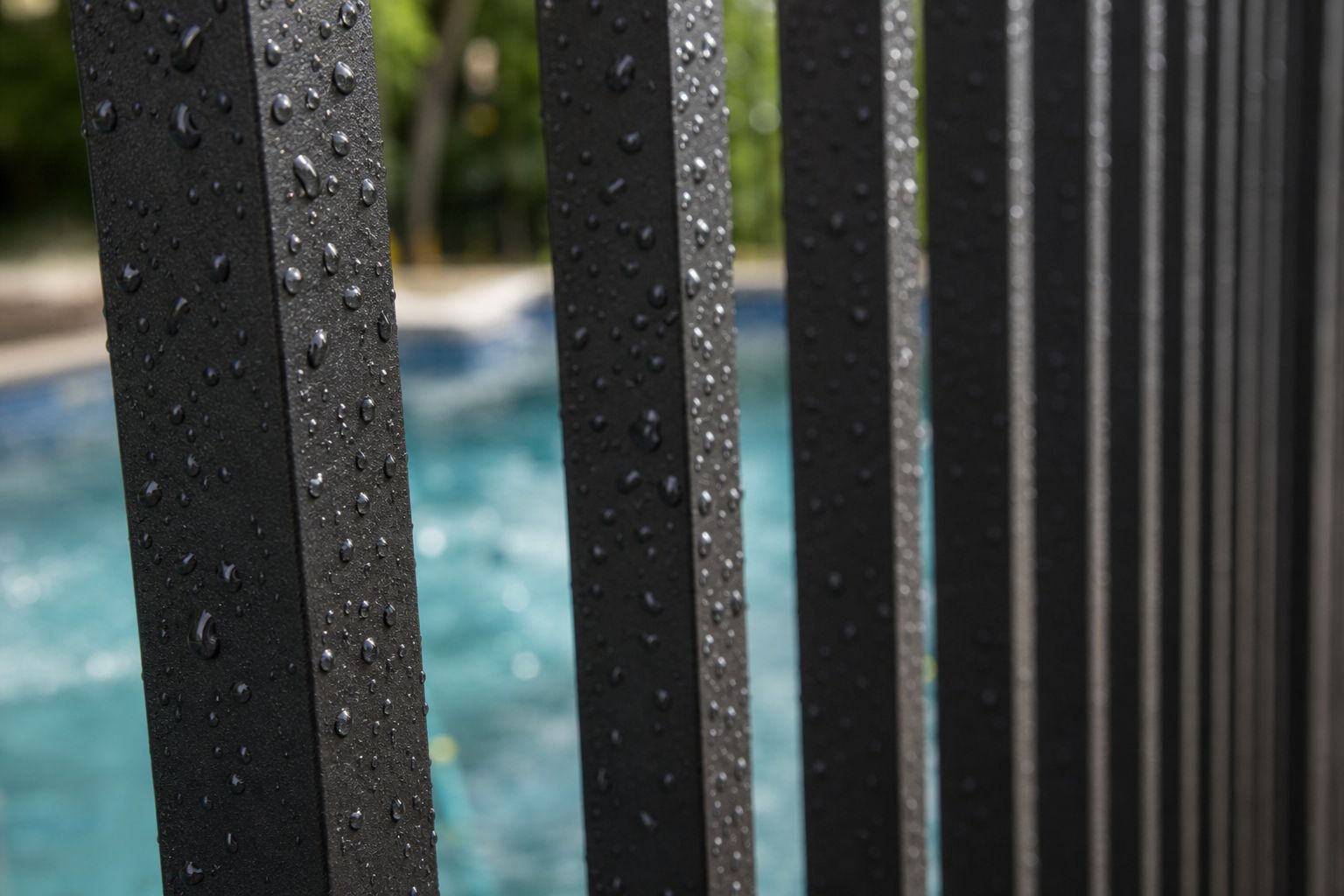
Pool Fencing That Meets New York Code and Actually Looks Good
What You Get With Pool Fencing From Portillo
A pool fence is not optional in New York. State law requires a barrier that keeps unsupervised children away from the water, and local municipalities across the Hudson Valley and lower Westchester add their own requirements on top of that. If the fence is not installed correctly, you can face fines, failed inspections, and real liability exposure.
When you hire Portillo Fences and Gates, you get a pool enclosure built to code from day one. We measure the pool area, verify local requirements for your specific town or city, and install fencing with self-latching, self-closing gates that meet the standards inspectors look for. You are not left guessing whether you passed.
Beyond compliance, a well-built pool fence also just looks right. We offer aluminum, vinyl, chain link, and custom options so the enclosure fits your backyard instead of fighting it. Clean lines around a pool add to the property, and a gate that works properly keeps everyone safer without making pool access a hassle every time you use it.
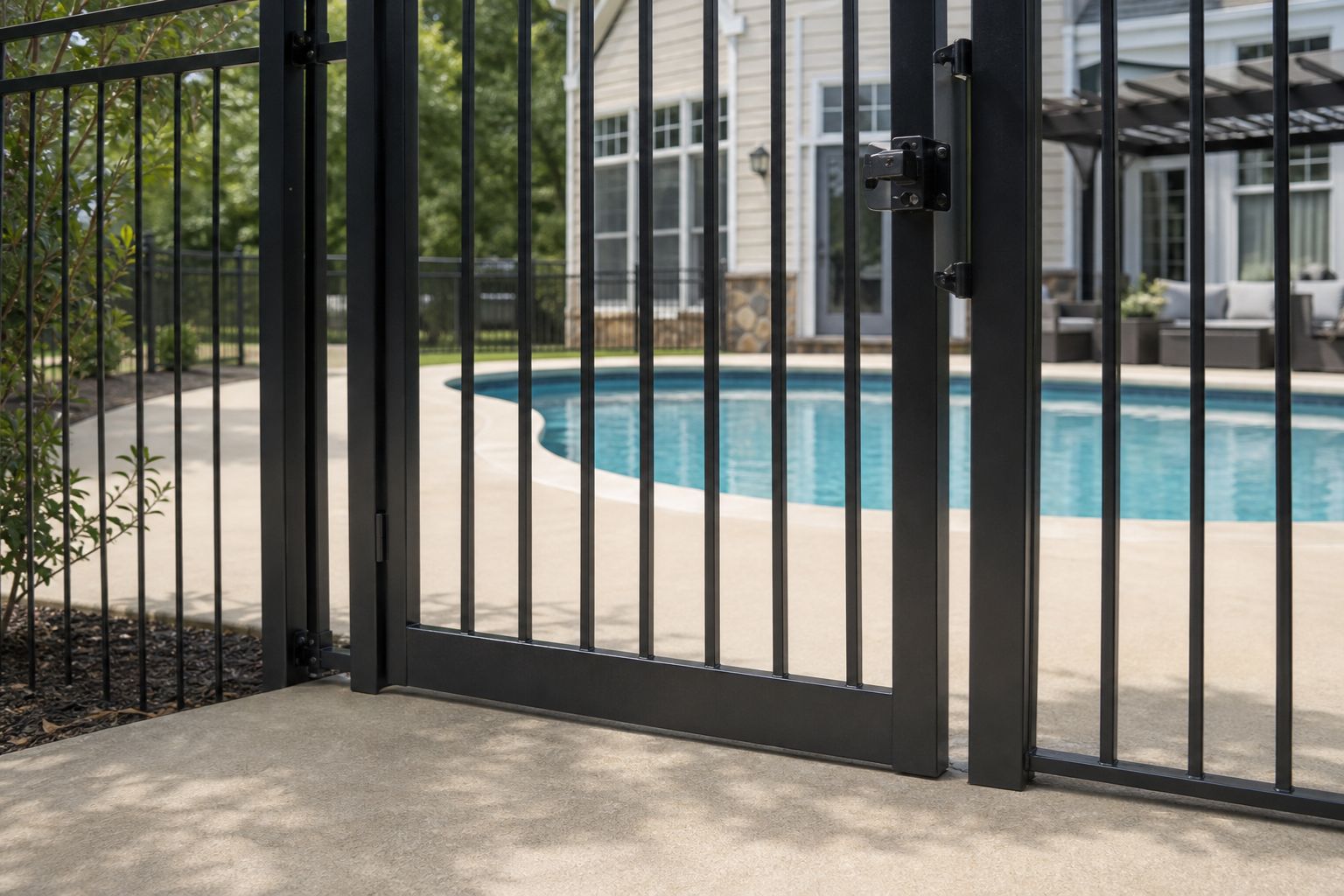
Why Pool Fencing Is Not a DIY Project in New York
The New York State Uniform Fire Prevention and Building Code requires that any outdoor in-ground or above-ground pool capable of holding water more than 24 inches deep be completely enclosed by a barrier, and your local building department enforces it. That barrier has to be at least 48 inches tall and designed to prevent a child from climbing or slipping through. The gate requirements are equally specific: latches must be self-closing and self-latching, positioned out of a child's reach, and the gate must swing away from the pool.
On top of the state standard, your municipality may have stricter rules. Westchester County towns, Putnam County, Orange County, and Ulster County each have their own inspection processes and setback requirements. A fence that passes in one town can fail in the next. Contractors unfamiliar with local code differences often leave homeowners caught between what they built and what the inspector expects.
There is also the post depth question. Pool fence posts need to be anchored properly to handle lateral pressure, and in many parts of New York, that means going well below the frost line. Improper post depth leads to leaning sections over time, which creates gaps at the base, and gaps are exactly what pool barrier codes are written to prevent.
Getting this right the first time is cheaper and less stressful than fixing it after a failed inspection. That is the practical case for hiring someone who installs pool fencing specifically, not just fencing in general.
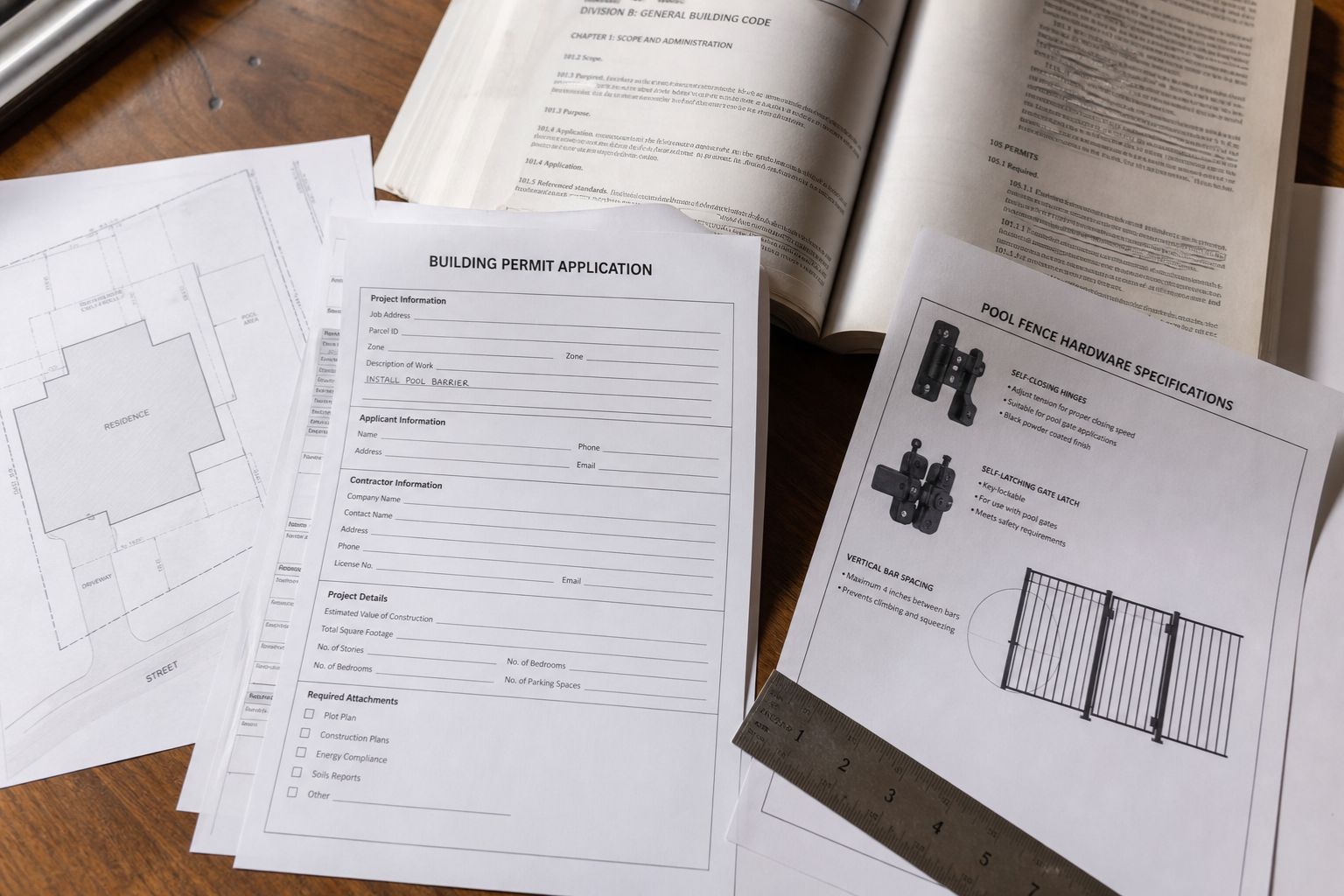
Materials We Use for Pool Enclosures
We work with several materials for pool fencing, and the right choice depends on your budget, your yard layout, and what you want the finished product to look like. Each option below meets New York pool barrier requirements when installed correctly.
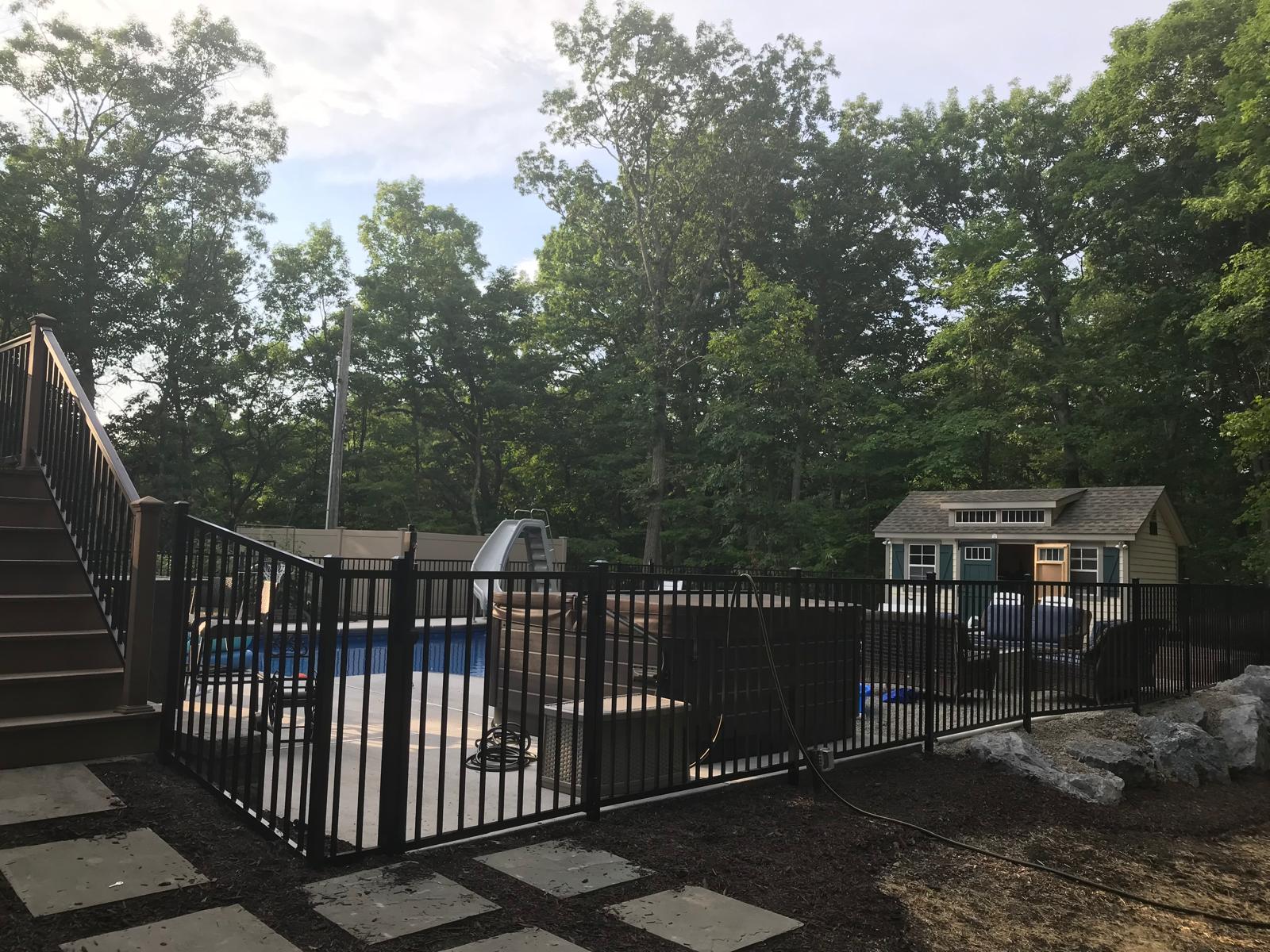
Aluminum is the most popular material for residential pool enclosures in the area. It does not rust, holds its finish through wet conditions and chlorine exposure, and comes in several styles and colors. Powder-coated black aluminum in a flat-top or spear-top profile gives pools a clean, modern frame that most homeowners are happy with for years.
Vinyl is a solid choice if you want a privacy option around your pool area or prefer a fence with no exposed metal components. It stands up to UV exposure without fading quickly, requires very little maintenance, and will not splinter or corrode. Vinyl pool fencing works well on larger lots where the enclosure also serves as a privacy screen from neighboring properties.
Chain link is a practical, cost-effective option that meets code requirements and holds up well in outdoor pool environments. It is not the most decorative choice, but for a vacation property, a rental, or a situation where budget is the primary factor, galvanized or vinyl-coated chain link gets the job done without cutting corners on safety or durability.
If you have an irregular pool shape, a sloped yard, or design preferences that standard panel sizes do not accommodate, we build custom sections to fit. Custom pool fencing follows the same code standards as any other pool barrier; it just means the materials and dimensions are configured around your specific site conditions rather than a standard layout.
Self-Latching Gates: The Part That Gets Inspected Most
Inspectors look at the gate first. It is the most common point of failure in a pool barrier inspection because gates are what people use every day, and improper hardware or incorrect swing direction can turn a code-compliant fence into a liability overnight.
New York also requires a pool alarm. Any pool installed or substantially modified after December 14, 2006 needs an approved alarm meeting ASTM F2208, separate from the barrier itself. It is the requirement homeowners are most often unaware of, and we flag it during the code review so nothing surprises you at inspection.
A self-latching gate means the latch engages automatically every time the gate swings closed. You do not have to remember to latch it. The mechanism does it for you. For pool barriers, New York code puts the latch release at least 54 inches above grade. If it sits lower than that, it has to be on the pool side of the gate, at least 3 inches below the top, with no opening wider than half an inch within 18 inches of it. The gate also has to swing away from the pool, so that if a child pushes against it from outside, the gate does not open inward toward the water.
We use hardware rated for exterior, wet conditions so the latch mechanism does not corrode and stick over time. A gate that should self-latch but has a frozen or stiff mechanism is functionally no different from one that was never installed correctly. Part of our installation process is testing every gate under actual use conditions before we consider the job complete.
If you already have a pool fence but the gate hardware is failing, worn, or not code-compliant, we also handle gate repair and hardware replacement as a standalone service. You do not necessarily need to replace the entire enclosure if the structure is still sound.
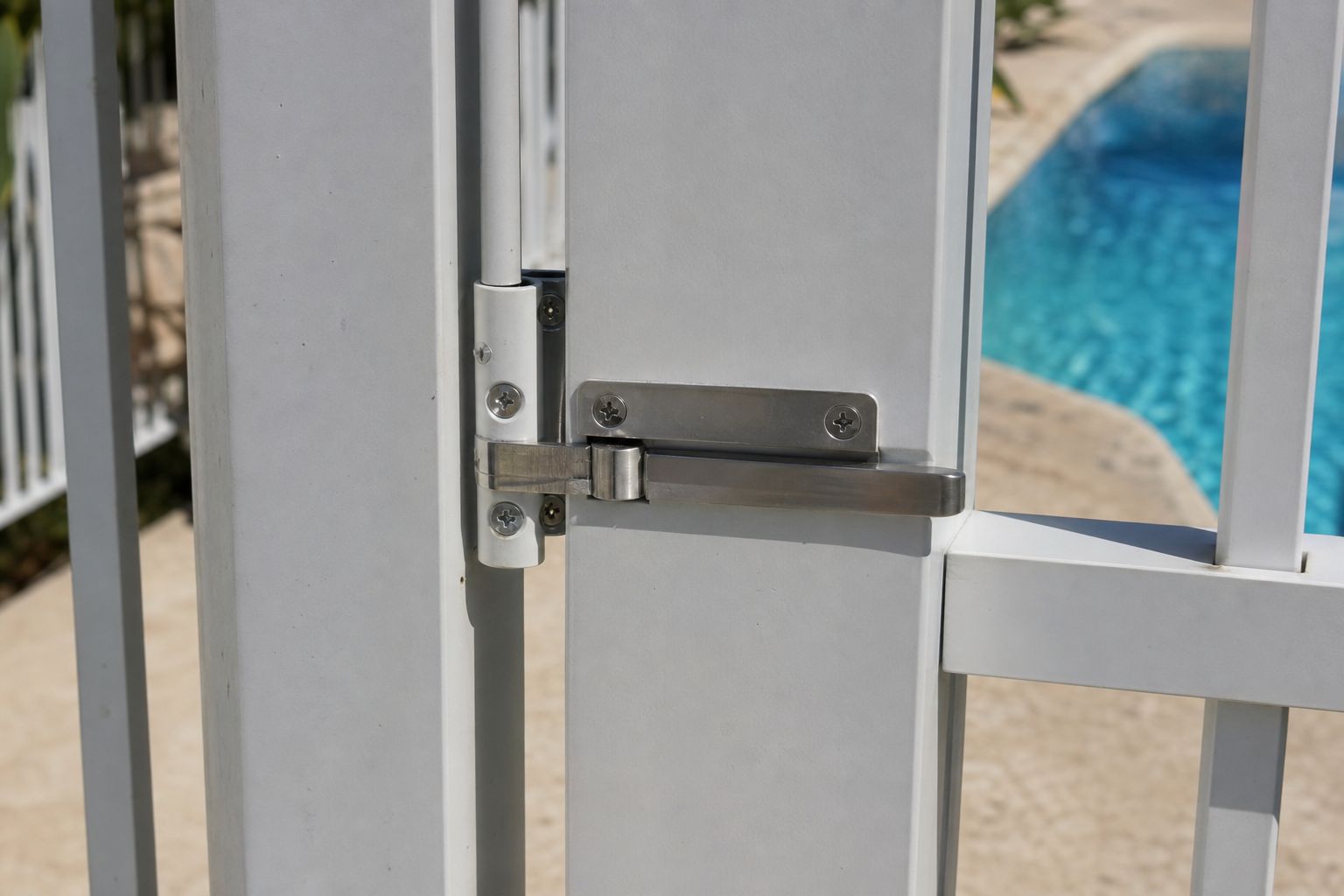
How the Installation Process Works
Here is what to expect from the time you contact us to the day your pool fence is installed and ready for inspection.
Scroll the steps sideways to follow the full process.
What Makes Portillo Fences and Gates the Right Fit
There are a lot of fencing companies serving the Hudson Valley and lower New York region. Here is what separates the experience of working with Portillo from what you get with a general contractor or a company that treats pool fencing as an add-on.
New York State sets the baseline for pool barriers, but your town or county sets the actual inspection standard you have to meet. We serve homeowners across Brewster, Carmel, Mahopac, Pawling, Beacon, Poughkeepsie, Wappingers Falls, Newburgh, Middletown, New Paltz, Kingston, White Plains, Port Chester, Ossining, Peekskill, Mount Kisco, Tarrytown, New City, Spring Valley, Suffern, and Yonkers. We know what local inspectors look for in each area because we have been installing pool fences there.
We are not a general contractor who fences on the side. Portillo Fences and Gates focuses entirely on fencing, gates, and related metalwork. Pool fence installation, gate hardware selection, and post depth calculations are not tasks we hand off to a subcontractor with less experience. Every job comes from the same team.
We are a licensed and insured fencing contractor. For pool work specifically, this matters because pool barrier installation touches both your property and your liability. Hiring someone without proper coverage on pool fencing work can affect your homeowner's insurance and your legal standing if something goes wrong.
A self-latching gate that feels like a fight to open every time you go to the pool is going to get propped open eventually. We select hardware and gate configurations that are code-compliant and genuinely functional for everyday use. A gate people do not mind using is a gate that actually protects the pool.
We give you a clear scope before work starts and keep you informed if anything changes on site. Pool fencing projects occasionally turn up unexpected grade issues or property line questions that affect the layout. When that happens, we tell you right away rather than working around it.
Pool Fencing FAQ
These questions come up regularly with pool fence projects across our service area. The answers below cover specifics that are not always easy to find.
Does a deck or patio count as part of the pool barrier?
Yes, but only if it meets specific code requirements. Where a wall of the house forms part of the barrier, the code treats the doors into the pool area as the weak point: they need an alarm meeting UL 2017, or self-closing and self-latching hardware with the release at least 54 inches up, or a powered safety cover meeting ASTM F1346. We confirm which option your building department accepts before we design around the house wall. The door from the house onto the deck must also have an alarm or self-latching device meeting pool barrier standards. If the deck does not qualify, the fence has to run continuously around the full pool perimeter, including across any deck access points.
What is the minimum fence height for a pool in New York?
New York State requires a minimum barrier height of 48 inches on the outside face of the fence, measured from the grade on the side a child would approach from, not from the pool deck side. Some municipalities require more than 48 inches, so the local standard may be higher depending on your town. We check the specific requirement for your location before ordering materials.
How much clearance is allowed at the bottom of the fence?
New York pool barrier code allows a maximum of 2 inches of clearance between the bottom of the fence and the ground on grass, gravel, or other non-solid surfaces, and up to 4 inches over a solid surface such as a concrete pool deck. A gap larger than the limit for your surface is a code violation because it creates enough space for a small child to slide under. On sloped or uneven ground, this is one of the more technically demanding parts of the installation. Custom-cut panels and grade-following techniques are how we keep the bottom clearance consistent around an irregular perimeter.
Can I use my existing fence as the pool barrier if it is already installed?
Sometimes, but it depends on the height, the material, and whether the structure passes inspection. A fence that pre-dates the pool installation may not meet current height requirements, may have horizontal rails that make it climbable, or may have openings greater than 4 inches. We can evaluate an existing fence and tell you whether it meets pool barrier standards or what modifications would bring it into compliance. In some cases, repairs and hardware changes are enough; in others, replacement sections are needed.
Do above-ground pools need the same fencing as in-ground pools?
New York law applies the same barrier requirement to above-ground pools with water depth exceeding 24 inches. However, an above-ground pool with sides that are at least 48 inches tall and not climbable can sometimes serve as its own barrier if the access ladder is lockable and removed when the pool is not in use. The ladder or step system has to be designed specifically for this purpose and still meet gate-access code requirements. This is worth confirming with us before you assume the pool wall itself qualifies as the barrier.
What happens if my pool fence fails inspection?
You will receive a notice listing the specific deficiencies, and you will need to correct them before the pool can be used legally. Common reasons for failure include incorrect gate swing direction, a latch that does not self-engage, horizontal rails that allow climbing, bottom clearance gaps over the limit for the surface, or fence height that falls short of the local requirement. Portillo handles corrective installations for other contractors' failed pool fence work. We can assess the specific deficiencies noted by the inspector and fix them efficiently.
How long does pool fence installation typically take?
Most residential pool enclosures take one to two days of installation time, not counting the concrete cure period for posts. Smaller pools with straightforward layouts are often installed in a single day. Larger or more complex projects, particularly those with significant grade changes, irregular pool shapes, or custom panel sections, may take two days. We give you a realistic timeline before the job starts so you know what to plan for.
Areas We Serve
Portillo Fences and Gates installs pool fencing throughout the Hudson Valley and lower New York region, including Brewster, Carmel, Mahopac, Pawling, Beacon, Poughkeepsie, Wappingers Falls, Newburgh, Middletown, New Paltz, Kingston, White Plains, Port Chester, Ossining, Peekskill, Mount Kisco, Tarrytown, New City, Spring Valley, Suffern, and Yonkers.
Each of these areas has its own local building department and inspection process. What passes in Poughkeepsie may have a slightly different standard in White Plains or Newburgh. Our familiarity with inspection expectations across these municipalities is one of the practical advantages of working with a contractor who has installed pool fencing specifically in your region.
- Brewster, NY
- Carmel, NY
- Mahopac, NY
- Pawling, NY
- Beacon, NY
- Poughkeepsie, NY
- Wappingers Falls, NY
- Newburgh, NY
- Middletown, NY
- New Paltz, NY
- Kingston, NY
- White Plains, NY
- Port Chester, NY
- Ossining, NY
- Peekskill, NY
- Mount Kisco, NY
- Tarrytown, NY
- New City, NY
- Spring Valley, NY
- Suffern, NY
- Yonkers, NY
Get a Quote on Your Pool Fence
Call us at (845) 282-3336 or send a message through our contact form. We serve homeowners and property owners throughout the Hudson Valley and greater Westchester area.