

Gate Repair Service That Gets Your Gate Working Again
Your Gate Is Broken. Here's What That Actually Means.
An automatic gate that won't open, won't close, or moves unpredictably isn't just an inconvenience. It's a security gap, a liability, and depending on your setup, it could mean a vehicle is stuck inside or outside your property until someone fixes it. That's a problem that needs a real answer, not a temporary workaround.
Gate repair covers a wide range of issues, from a simple limit switch adjustment to a failed control board sending the wrong signals to your entire system. The tricky part is that the symptom you see, like a gate that reverses halfway through its cycle, often isn't the component that's actually failing. A tech who only replaces what looks broken misses the underlying cause, and the problem comes back.
Portillo Fences and Gates handles gate repair for residential and commercial automatic gate systems of all brands. We diagnose the full system, operators, control boards, safety sensors, wiring, and mechanical components, and we fix what's actually wrong. You get a gate that works reliably, not one that limps along until the next failure.
Common Gate Problems We Fix
Most gate failures fall into a handful of categories. If you're dealing with any of these, you're in the right place.
The cause could be a dead battery in the remote, a tripped circuit breaker, a failed receiver, or a burned-out motor. We trace the signal path from input to output to find exactly where it stops.
When a gate starts to move and then reverses, the safety sensor system is usually involved. An obstruction sensor, a loop detector, or a misaligned safety edge can trigger a reversal even when nothing is in the way. Misadjusted limit switches can cause the same behavior.
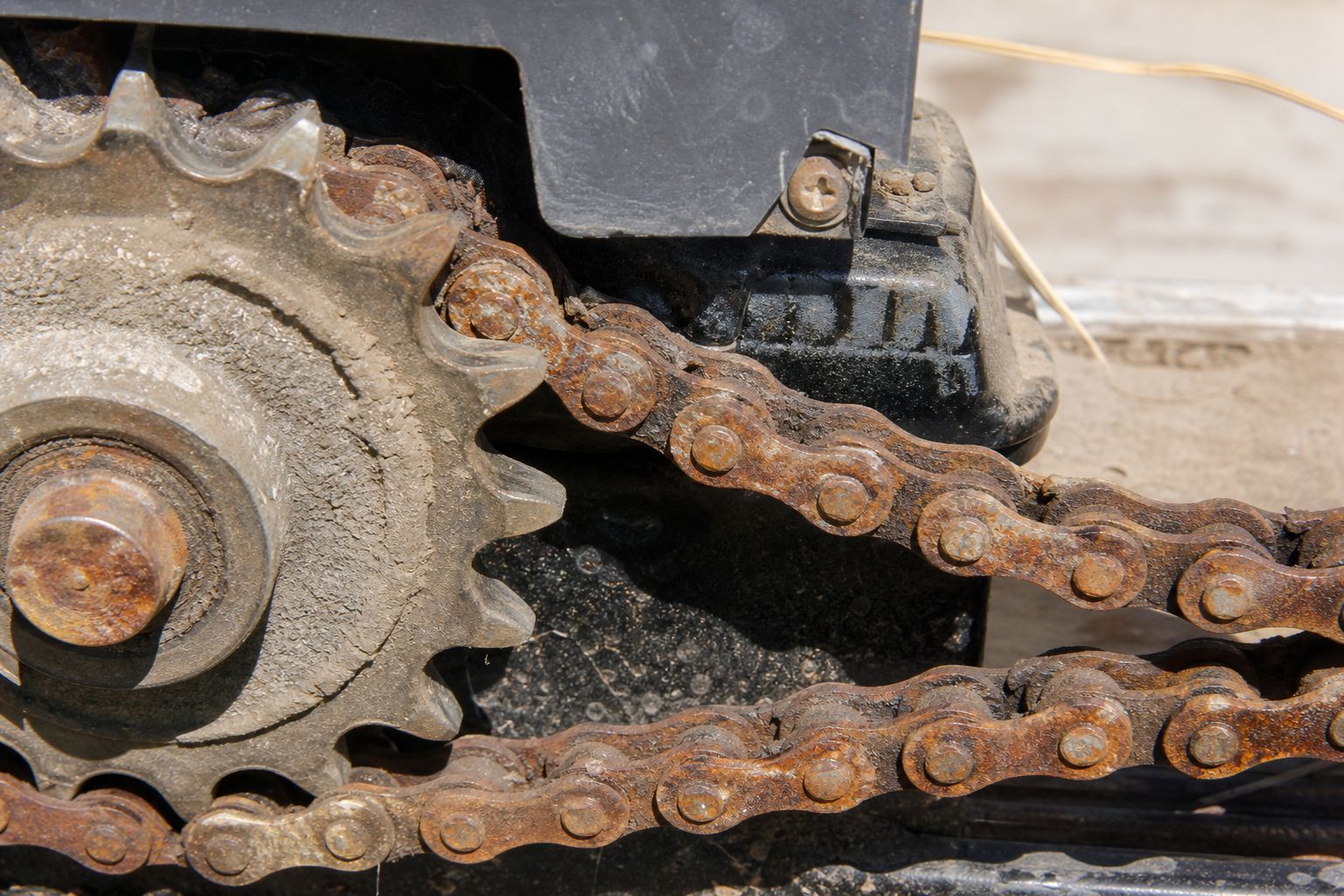
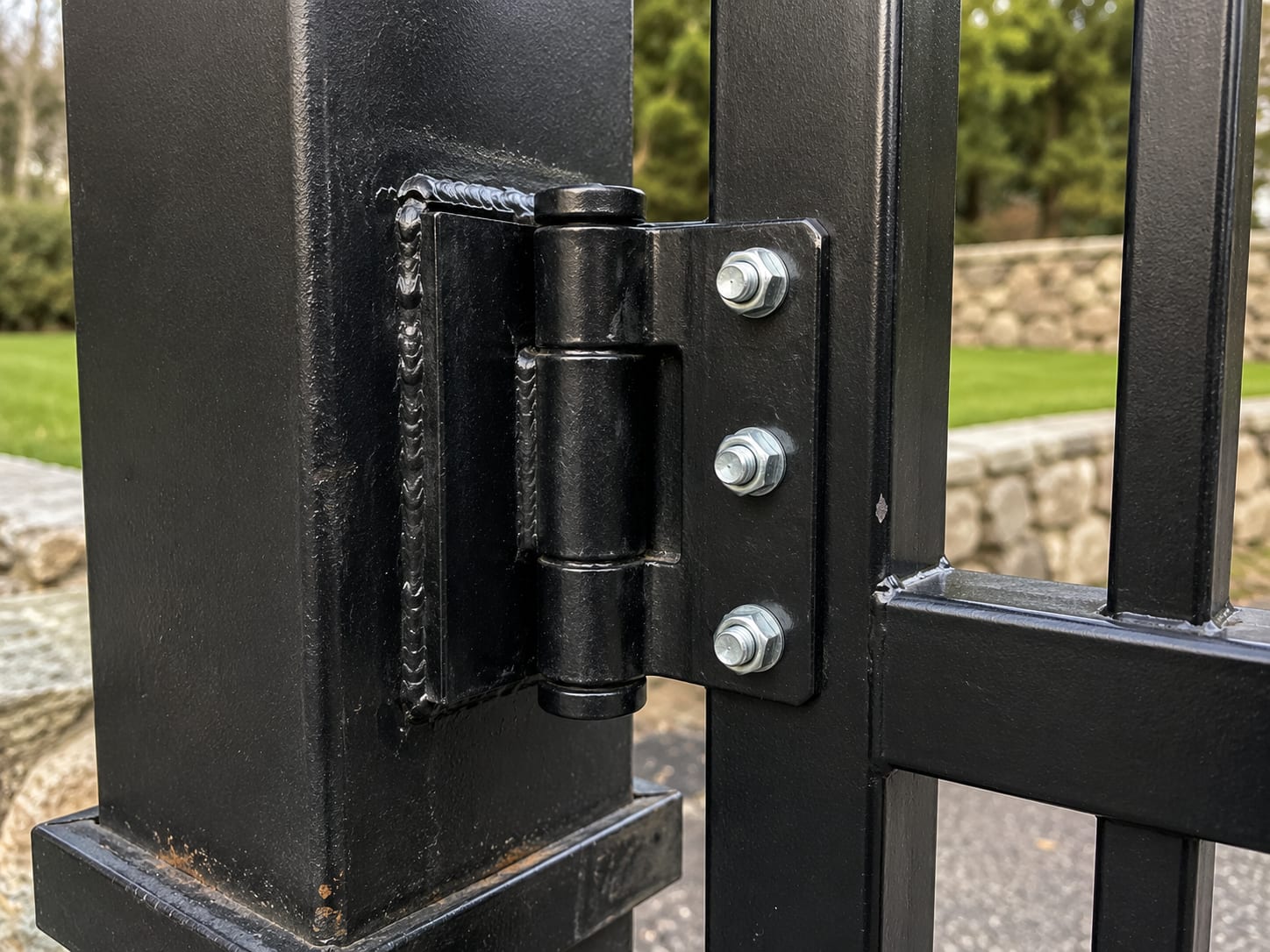
Slow movement and unusual sounds usually point to mechanical wear. Drive chains and cables stretch over time, rollers and wheels wear out on slide gates, and hinges on swing gates corrode or loosen. A laboring motor draws more current and fails faster, so this isn't a cosmetic issue.
Before assuming the remote is the problem, the receiver board, antenna, and power supply all need to be checked. A receiver that responds to some transmitters but not others often has a frequency interference issue or a programming error, not a hardware failure.
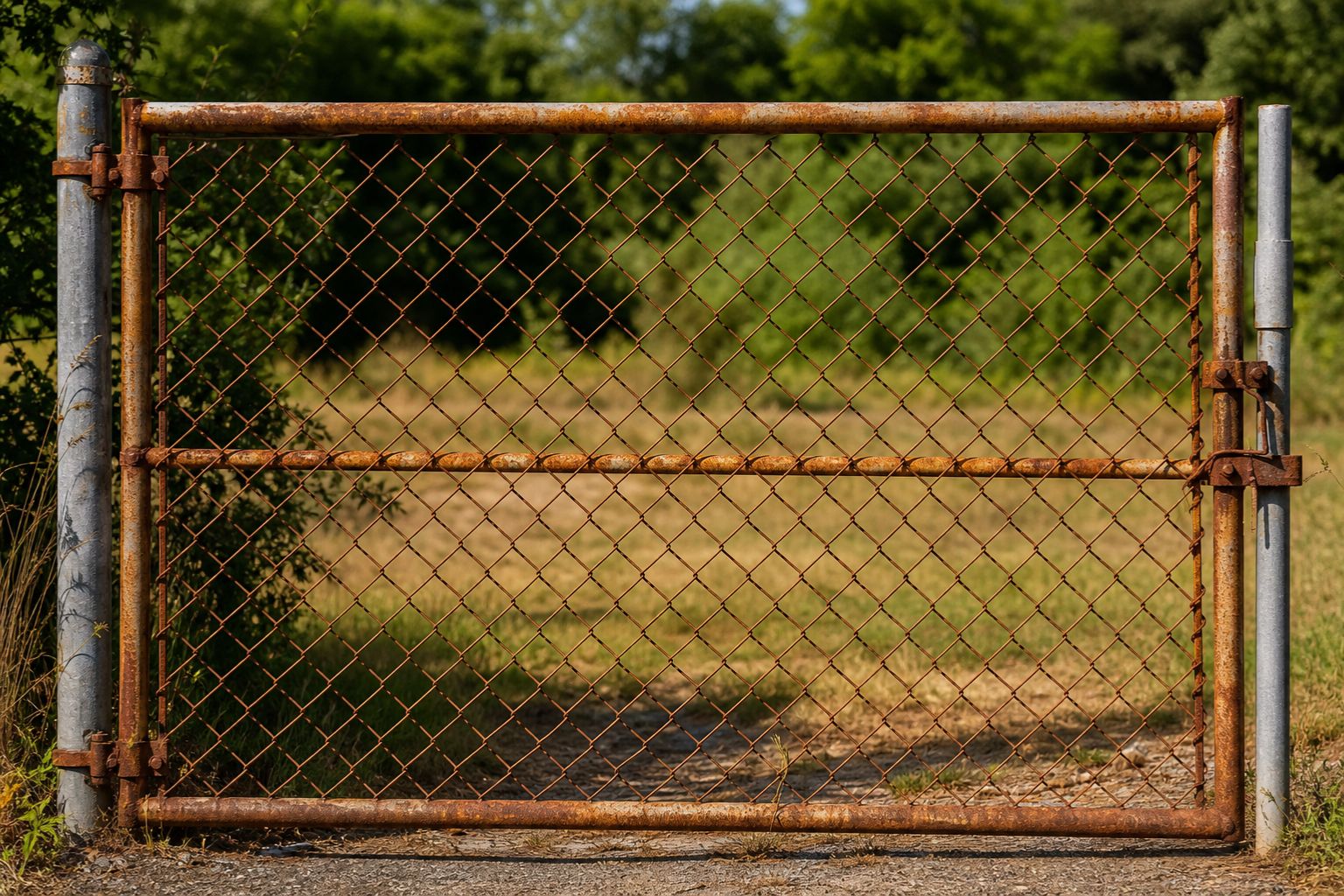
Post movement, hinge failure, or a damaged gate frame changes the geometry of the system. When the gate body is out of alignment, even a properly functioning operator can't do its job. This requires both mechanical and structural attention.
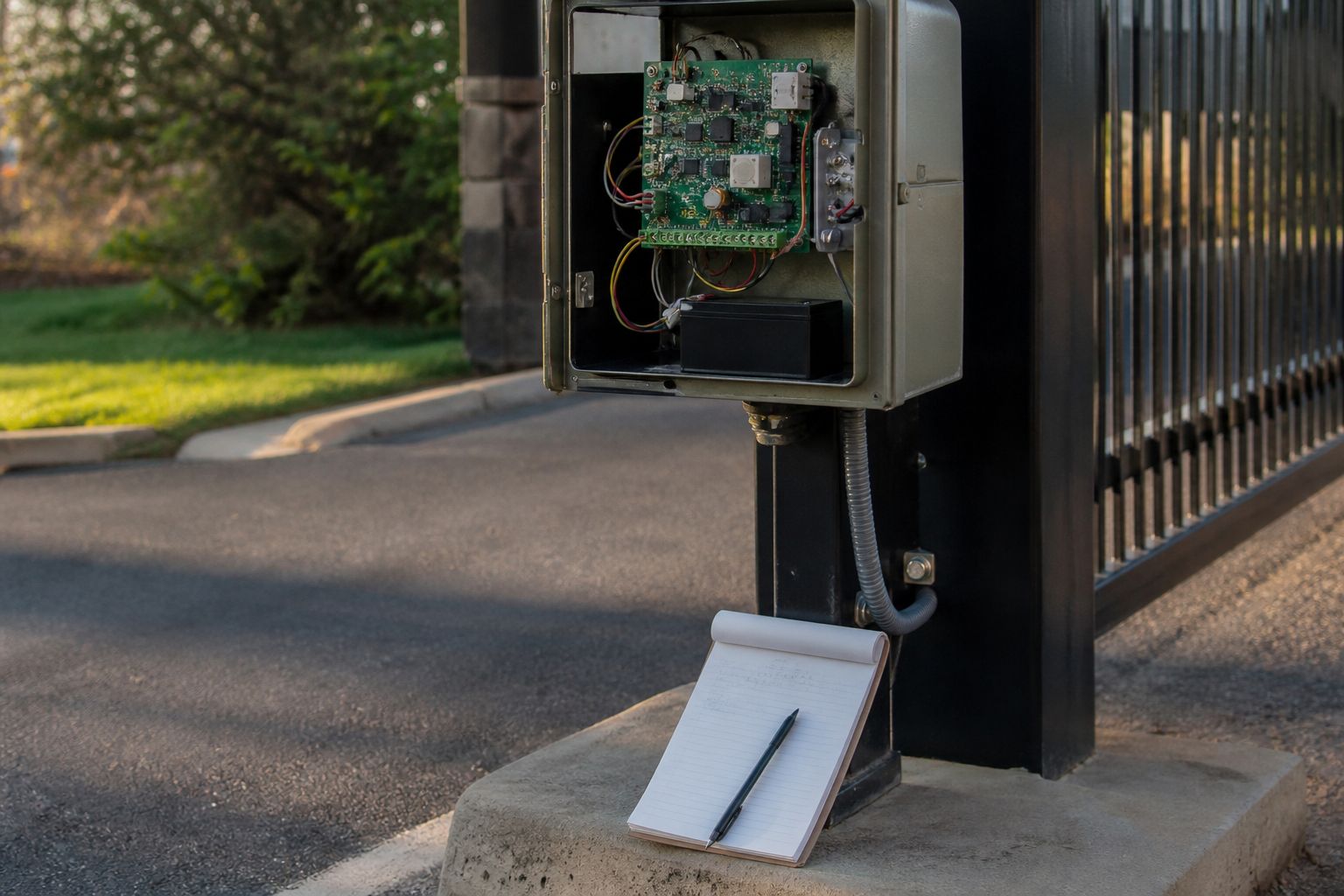
The control board is the brain of the system. Power surges, moisture, and age all take a toll on circuit boards. When the board goes, the gate may behave erratically, fail to respond to commands, or stop entirely. We diagnose and replace control boards across a wide range of manufacturer platforms.
What Makes Gate Repair More Complicated Than It Looks
Automatic gate systems involve more moving parts than most people realize. At the surface level, you have the gate itself, the operator, and the control hardware. Underneath that, you have safety devices, loop detectors buried in the pavement, intercoms, access control connections, and power wiring that often runs through conduit underground. A failure at one point can create symptoms that look like a failure somewhere else entirely.
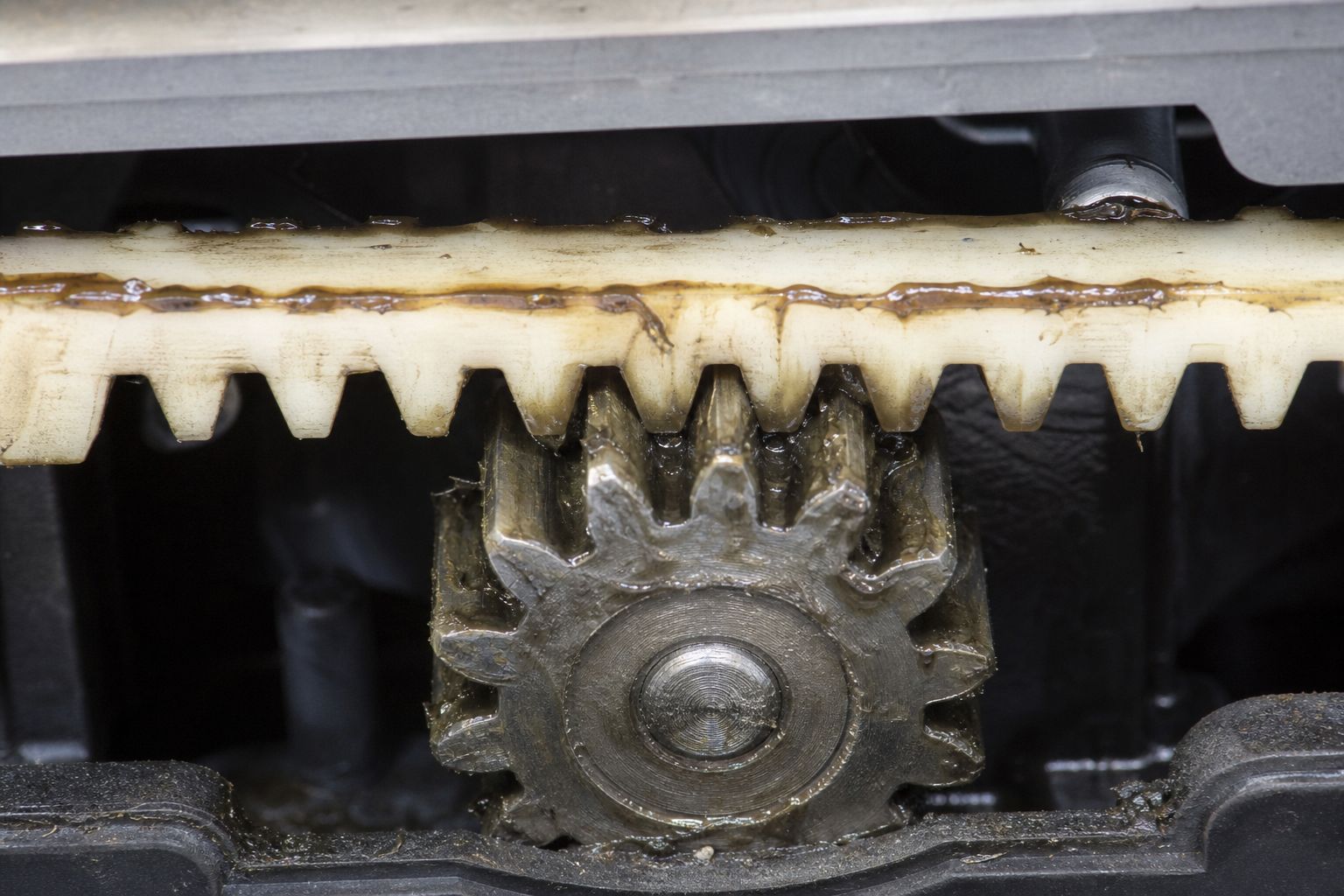
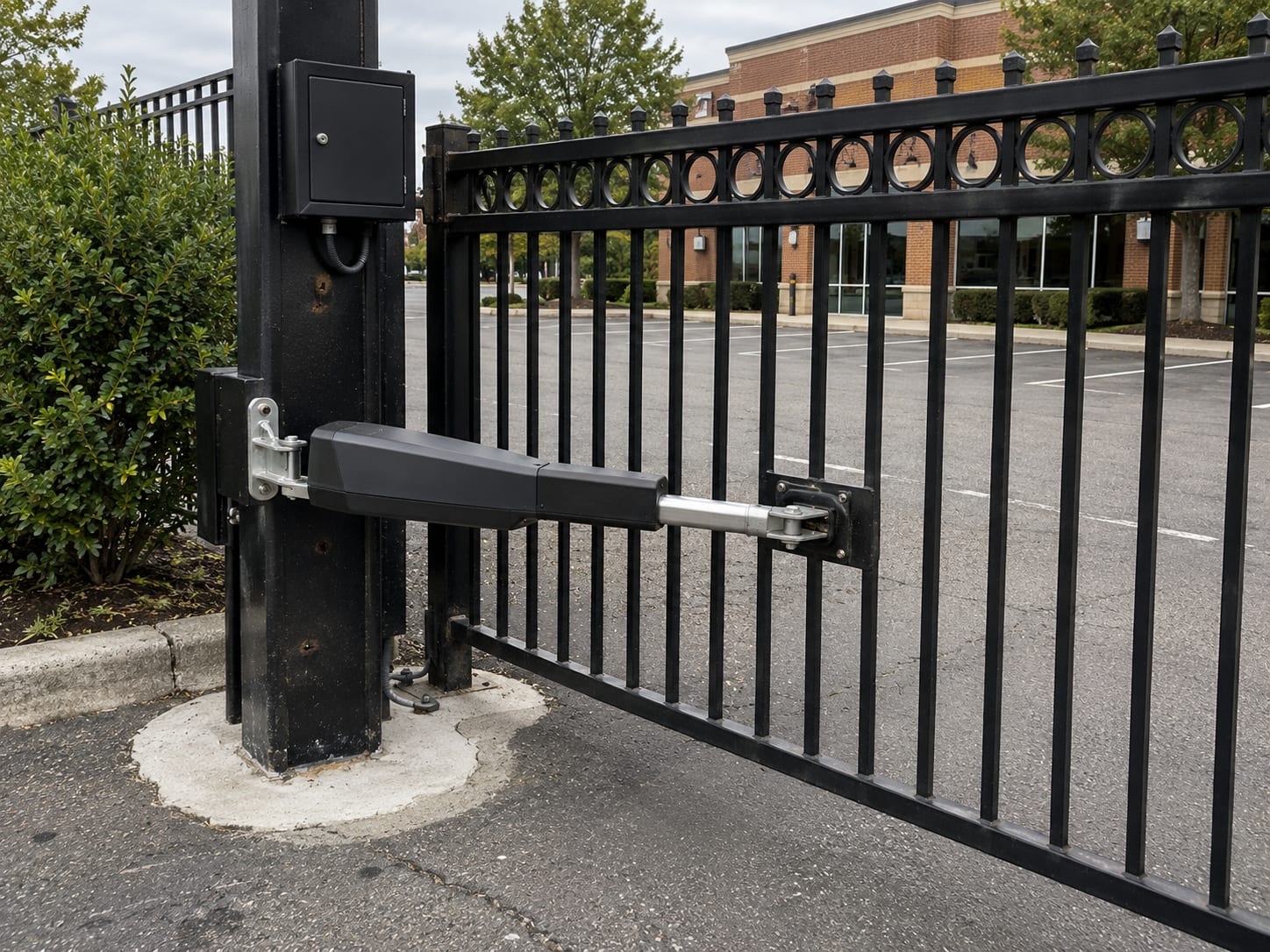
Arm operators and slide operators each have their own mechanical characteristics and failure modes. An arm operator driven by a rack and pinion system fails differently than one using a screw drive, and both fail differently than a hydraulic setup. Slide operators on commercial properties take more abuse from heavy gates and higher cycle counts, so worn rollers, stretched chains, and fatigued drive sprockets are common. Understanding what type of system you have shapes the entire diagnostic process.
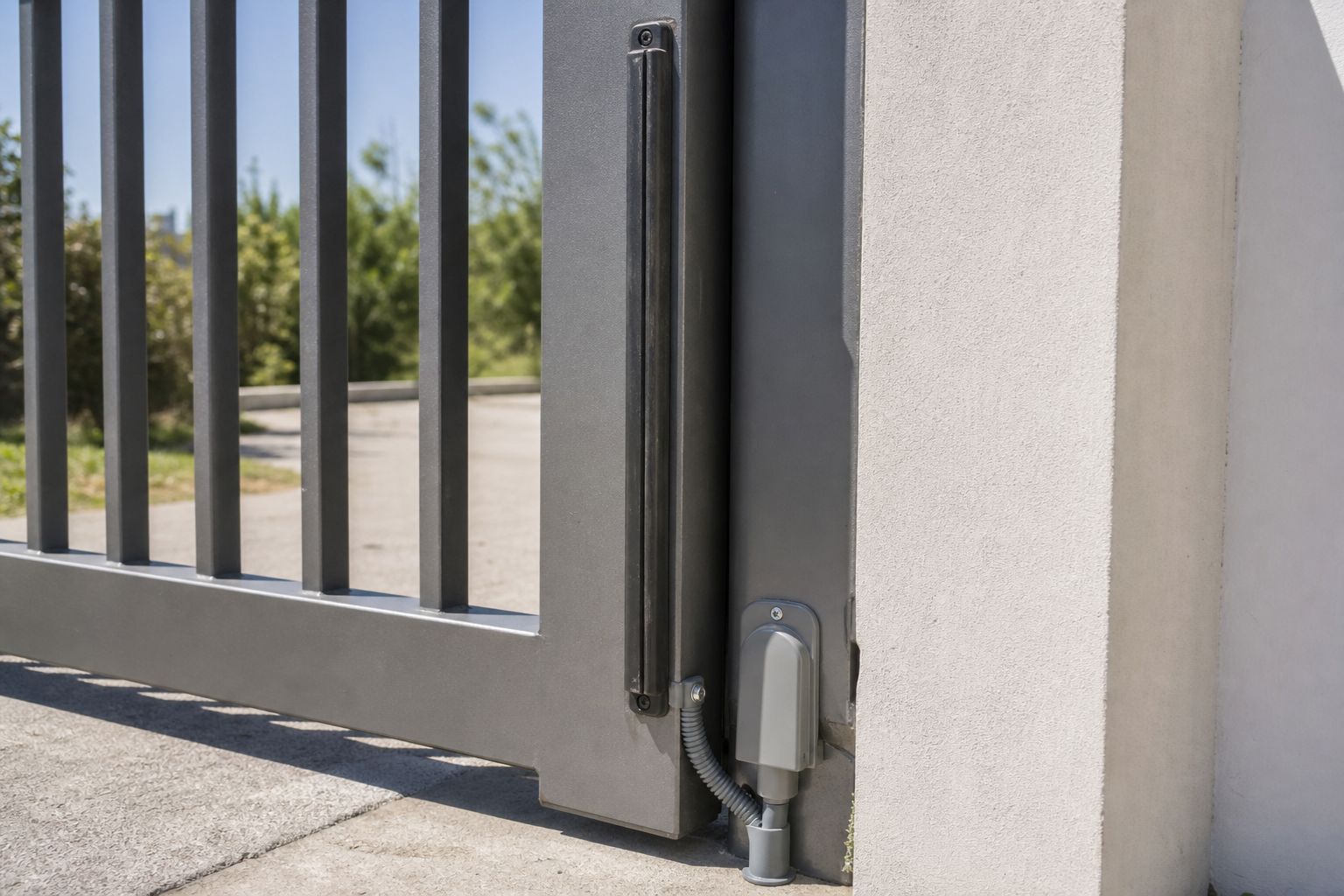
Safety sensor systems add another layer of complexity. Properties that see vehicle traffic need loop detectors embedded in the pavement to prevent the gate from closing on a vehicle. These detectors fail when pavement shifts, when water intrudes into the conduit, or simply from age and use. A gate that reverses unexpectedly, even when the driveway is clear, often has a failing loop detector sending false signals to the control board. That's a sensor problem, and replacing the operator won't fix it.
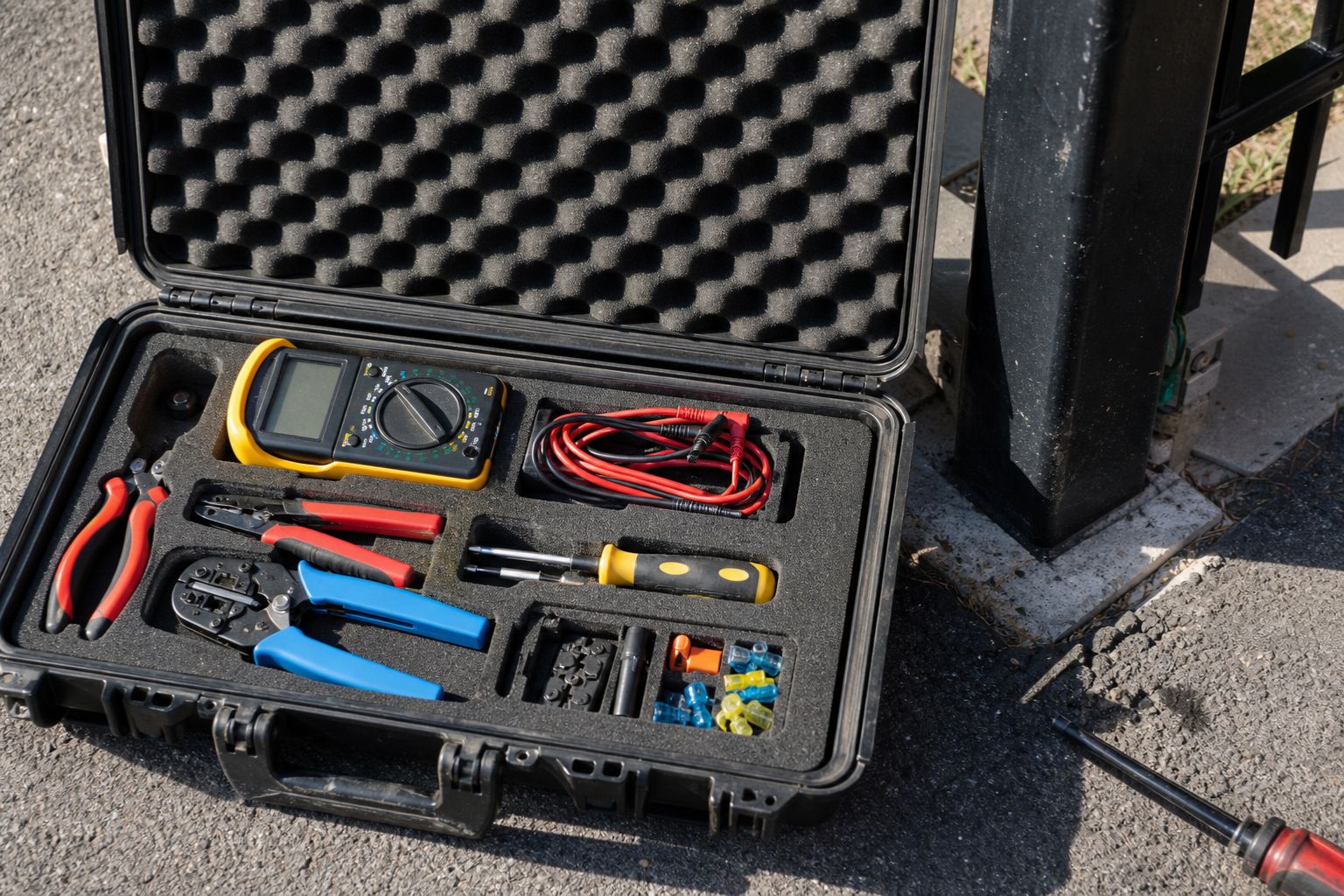
Power issues are also commonly misdiagnosed. A gate that works intermittently might have a loose wire connection at a terminal block, a corroded ground, or a transformer that underperforms under load. These problems don't always show up with a simple voltage test. Checking the system under load, while the gate is actually operating, reveals what a static check misses.
How Our Gate Repair Process Works
We follow a consistent diagnostic and repair process because skipping steps is how people end up replacing parts that weren't broken. Here's what to expect when you call us.
Scroll the steps sideways to follow the full process.
Brands and System Types We Work On
One of the more frustrating situations homeowners and property managers run into is calling for gate repair only to hear the contractor doesn't service their brand. Portillo Fences and Gates works on automatic gate systems regardless of the manufacturer, covering residential swing gate operators, commercial slide gate operators, and overhead-track and cantilever slide configurations, and pedestrian gate hardware across all major platform types.
We service arm operators common for residential driveways and swing gates, slide operators used on heavier commercial gates and high-cycle applications, and inground motors, which are the buried hydraulic or electromechanical units often found on decorative estate-style swing gates where no visible hardware is preferred.
Control board compatibility is one area where brand knowledge matters most. Boards vary significantly in architecture, programming interfaces, and failure characteristics. Having worked across multiple manufacturer platforms, we're able to read fault codes, adjust programming parameters, and source compatible replacement boards when the original is no longer serviceable. This means you're not forced into a full system replacement just because one board is out of production.
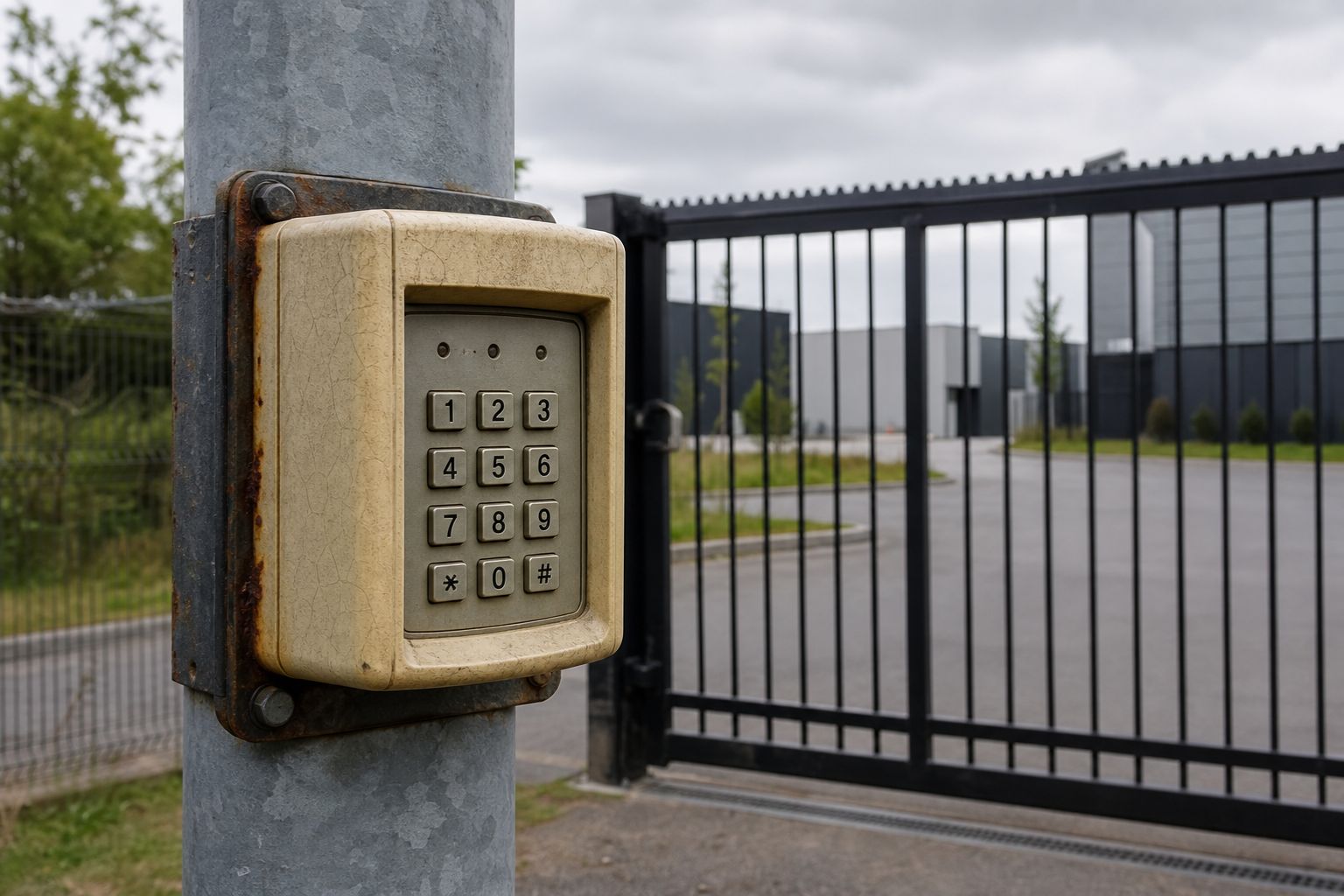
We also service and integrate with access control components on gate systems. If your gate is connected to a DoorBird system, a keypad, a card reader, or a telephone entry system, we work with those components as part of the repair. A gate system connected to access control needs to be tested as a whole, not in pieces.
Why Property Owners in the Hudson Valley Call Portillo
There are plenty of fencing contractors in the area. Here's what sets Portillo Fences and Gates apart when it comes to gate repair specifically.
The easiest answer to any gate failure is to recommend a full replacement. It's faster to install a new system than to properly diagnose and repair an existing one. We take the time to diagnose correctly because many gate systems have years of life left in them, and a proper repair costs significantly less than a new installation.
We don't limit our service to the brands we install. If you have an older system from a manufacturer we didn't put in, that doesn't automatically mean it's time to start over. We assess the actual condition of what you have before any recommendations are made.
A single-family driveway gate and a commercial sliding gate on a busy parking facility have very different requirements. We work on both, and we understand that a commercial property often can't afford to wait days for a repair. We take response time seriously across all property types.
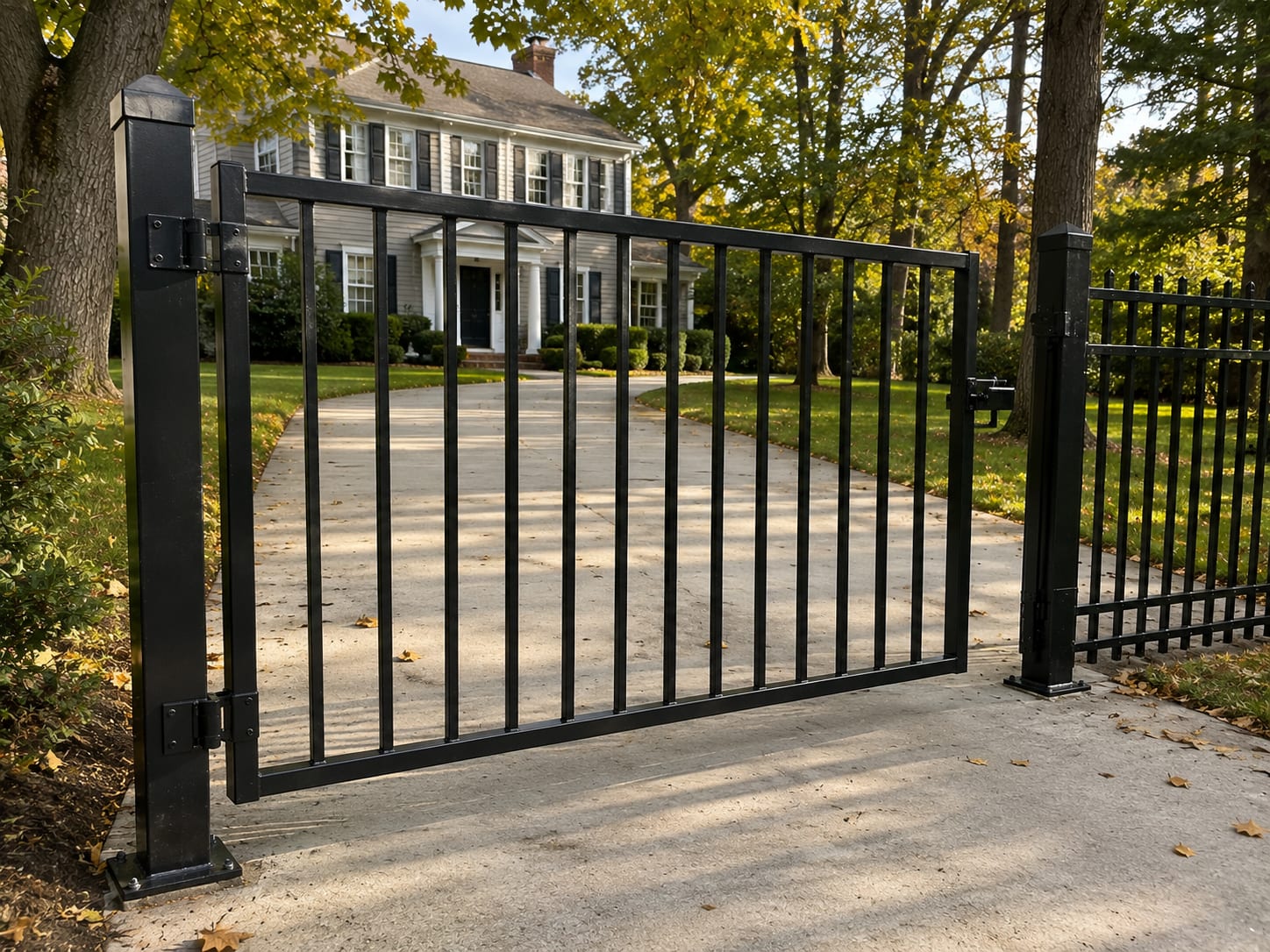
Portillo Fences and Gates operates fully licensed and insured. When a contractor is working on your gate, they're working near your property line, your driveway, and often near electrical systems. You want someone whose work is backed by real credentials, not just a handshake.
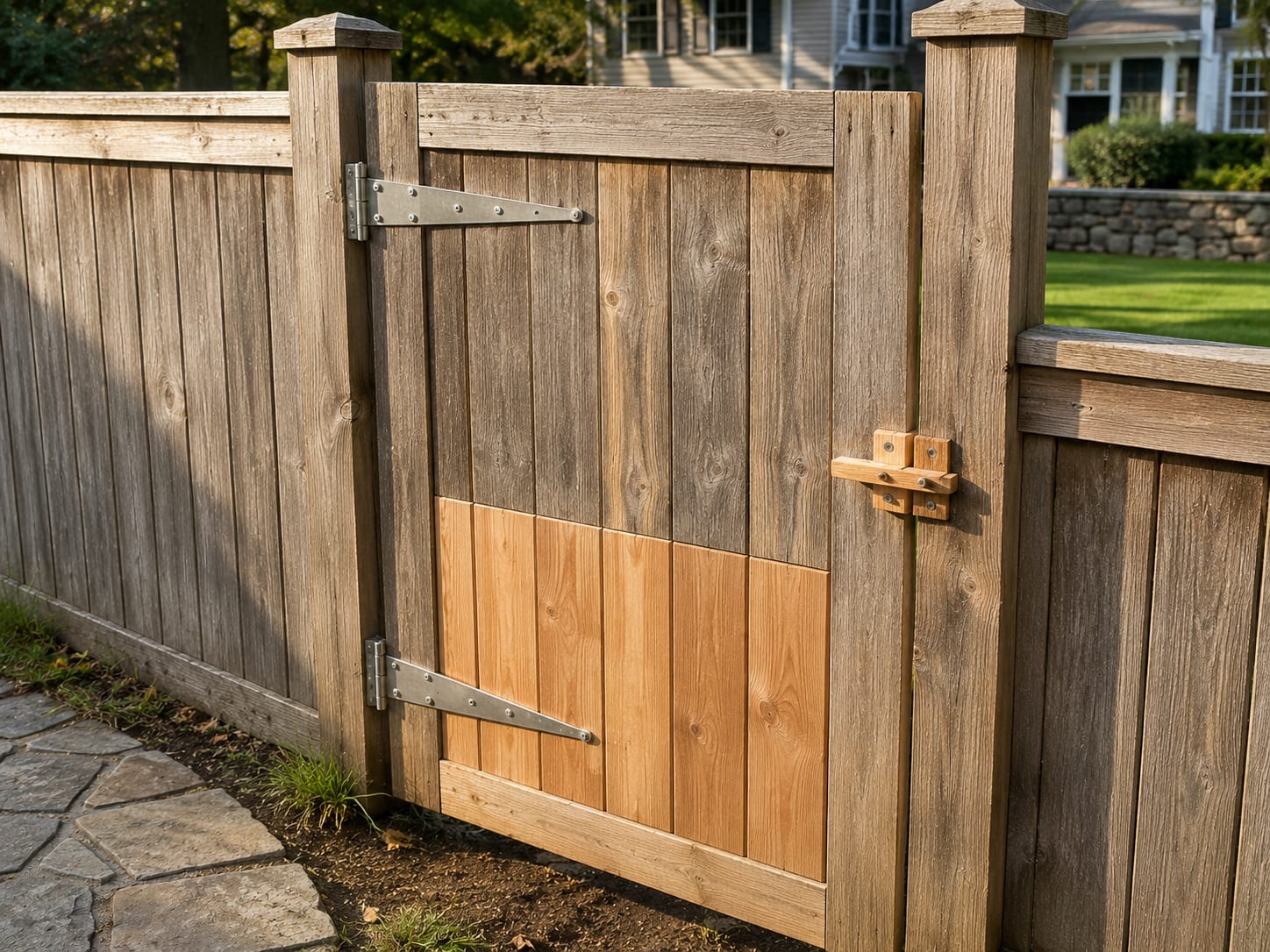
If your gate operator is at end of life and a repair doesn't make financial sense, we'll tell you directly. If a repair will solve the problem for years, we'll tell you that too. We'd rather give you the honest picture than oversell a repair or push an unnecessary replacement.
We're based in the region and serve communities throughout Putnam, Westchester, Dutchess, Orange, Ulster, and Rockland counties. When you call with an urgent gate problem, we're not dispatching from hours away. Local presence means faster scheduling and technicians who know the area.
Gate Repair FAQs
Real questions about gate repair, with answers that help you make decisions.
How do I know if my gate needs repair or full replacement?
A few factors point toward replacement rather than repair: the gate body itself is structurally compromised, the operator is more than 15 years old and parts are no longer available, or repair costs are approaching 60 to 70 percent of replacement cost. In most other cases, a proper repair makes sense. The only way to know for certain is an honest on-site assessment, which we provide before recommending anything.
My gate stopped working after a power surge or storm. What happened?
Surges frequently damage control boards and receiver circuits. The board may show no visible signs of damage, but the logic circuits fail internally. Storm damage can also affect buried wiring, loop detector leads, and sensor connections if water infiltrates conduit. After a storm or surge event, a full system diagnostic is the right first step rather than just replacing the most obvious component.
Can you repair a gate if you don't know the brand or model?
Yes, and this situation comes up regularly, especially with older properties or when a previous owner had work done without leaving documentation. Most operators have model information on a label inside the housing. Even without that, an experienced technician can identify system components by inspection and diagnose from there.
What is a loop detector and how does it affect my gate?
A loop detector is a sensor made from wire embedded in a cut loop in your pavement, typically in front of and behind the gate. It detects the presence of a vehicle using electromagnetic induction and signals the control board to prevent the gate from closing when a vehicle is in the detection zone. When a loop detector fails, it can either stop triggering, meaning the gate may close on a vehicle, or trigger constantly, preventing the gate from closing at all. Replacing a failed loop requires cutting the pavement, installing new wire, and reconnecting to the board.
My gate works fine with the remote but not the keypad. What's causing that?
The remote and keypad are separate input devices that both send signals to the control board. When one works and the other doesn't, the issue is almost always isolated to the non-functioning input device, its wiring connection, or its specific input channel on the board. In most cases this means a keypad that needs to be reprogrammed, rewired, or replaced, rather than anything wrong with the operator itself.
Do I need a permit to repair my existing gate?
Straight mechanical repairs usually do not need a building permit. Anything involving the electrical circuit generally does, and replacing an operator outright is a bigger job than it sounds: current UL 325 operators will not run without monitored safety devices connected, so a swap often means bringing the whole entrapment protection setup up to standard. We tell you which category your repair falls into before we start. Permits are more commonly required for new gate installations or significant structural changes. Local codes vary by municipality and HOA rules vary by community. We can help clarify what applies to your specific address.
How long does a typical gate repair take?
Many common repairs, including limit switch adjustments, safety sensor replacements, remote receiver replacements, and minor mechanical fixes, are completed in a single visit of two to three hours. Control board replacements and loop detector repairs typically take longer, and in some cases require a parts order if the specific board is not in stock. We give you a realistic time estimate after the diagnosis, before any work begins.
Can you add access control features while repairing my gate?
Yes. If you're already having repair work done, that's a practical time to add or upgrade access control components. We install keypads, card readers, and DoorBird intercom systems that integrate with your gate operator. Adding these during a repair visit is more efficient than scheduling a separate appointment, and it means the full system gets tested together once the work is done.
Serving Gate Repair Customers Across the Region
Portillo Fences and Gates provides gate repair service throughout Putnam, Westchester, Dutchess, Orange, Ulster, and Rockland counties. We work in Brewster, Carmel, Mahopac, Pawling, Beacon, Poughkeepsie, Wappingers Falls, Newburgh, Middletown, New Paltz, and Kingston, as well as White Plains, Port Chester, Ossining, Peekskill, Mount Kisco, Tarrytown, New City, Spring Valley, Suffern, and Yonkers.
This part of New York presents specific conditions that affect gate systems. Hard freeze and thaw cycles shift pavement and affect buried components. Properties across the Hudson Valley tend to be larger, with longer driveways and heavier gate applications than you'd find in more urban settings. In communities with HOAs or historic districts, aesthetic considerations matter alongside mechanical ones. We understand these realities because we work here every day.
Whether you have a single-family residential gate at the end of a private driveway or a commercial sliding gate on a parking facility, we have the experience and equipment to get it working correctly. Call (845) 282-3336 to schedule a diagnostic visit.
Get Your Gate Fixed the Right Way
Call (845) 282-3336 or use our contact form