

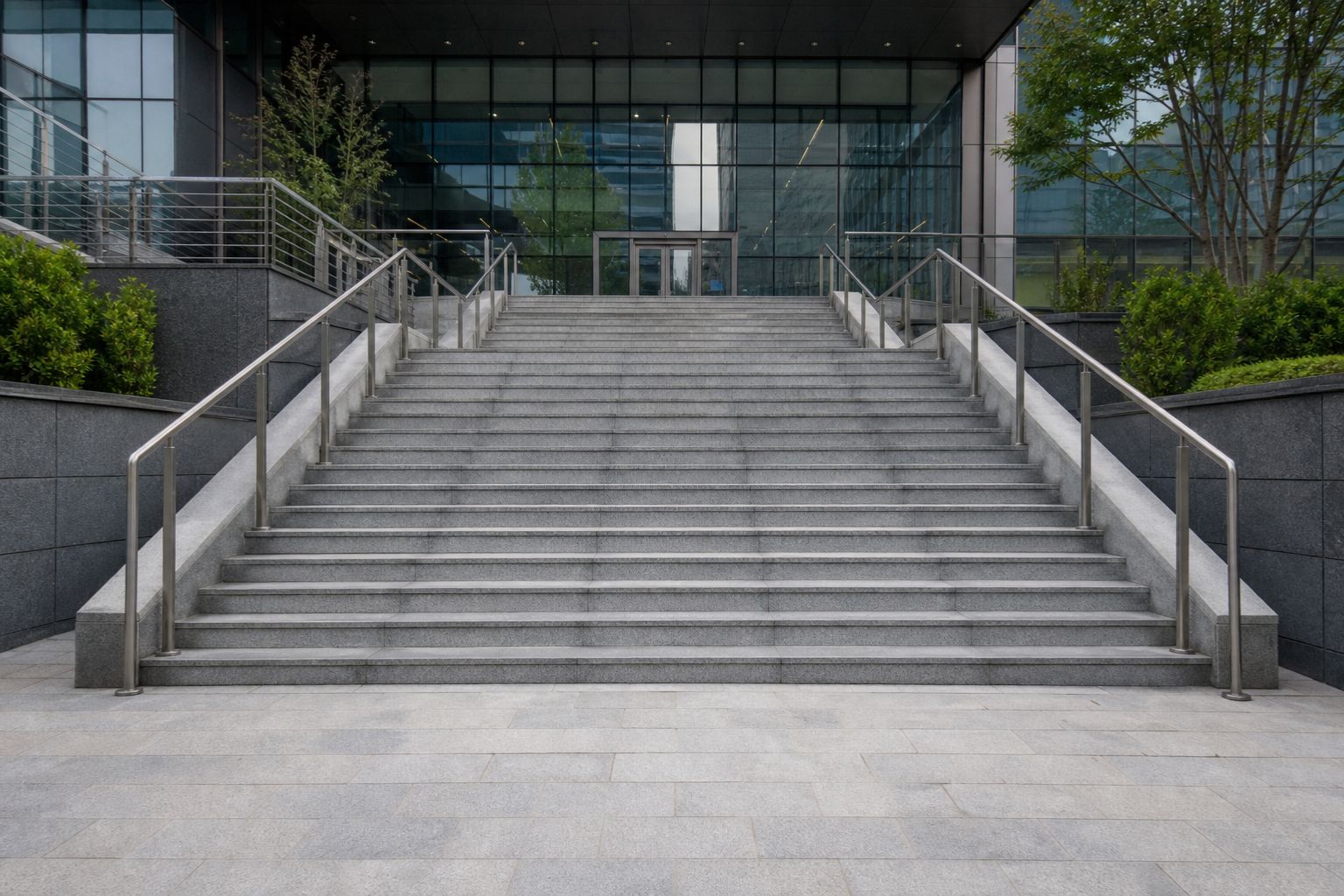
Custom Steel Railings Fabricated and Installed Right
What You're Actually Getting with Custom Steel Railings
A steel railing is one of the first things people see when they approach your home or property, and it says something about the quality of everything else on the premises. When it's rusted, wobbly, or obviously generic, that impression sticks. When it's solid, straight, and well-made, it blends into the architecture and quietly does its job for decades.
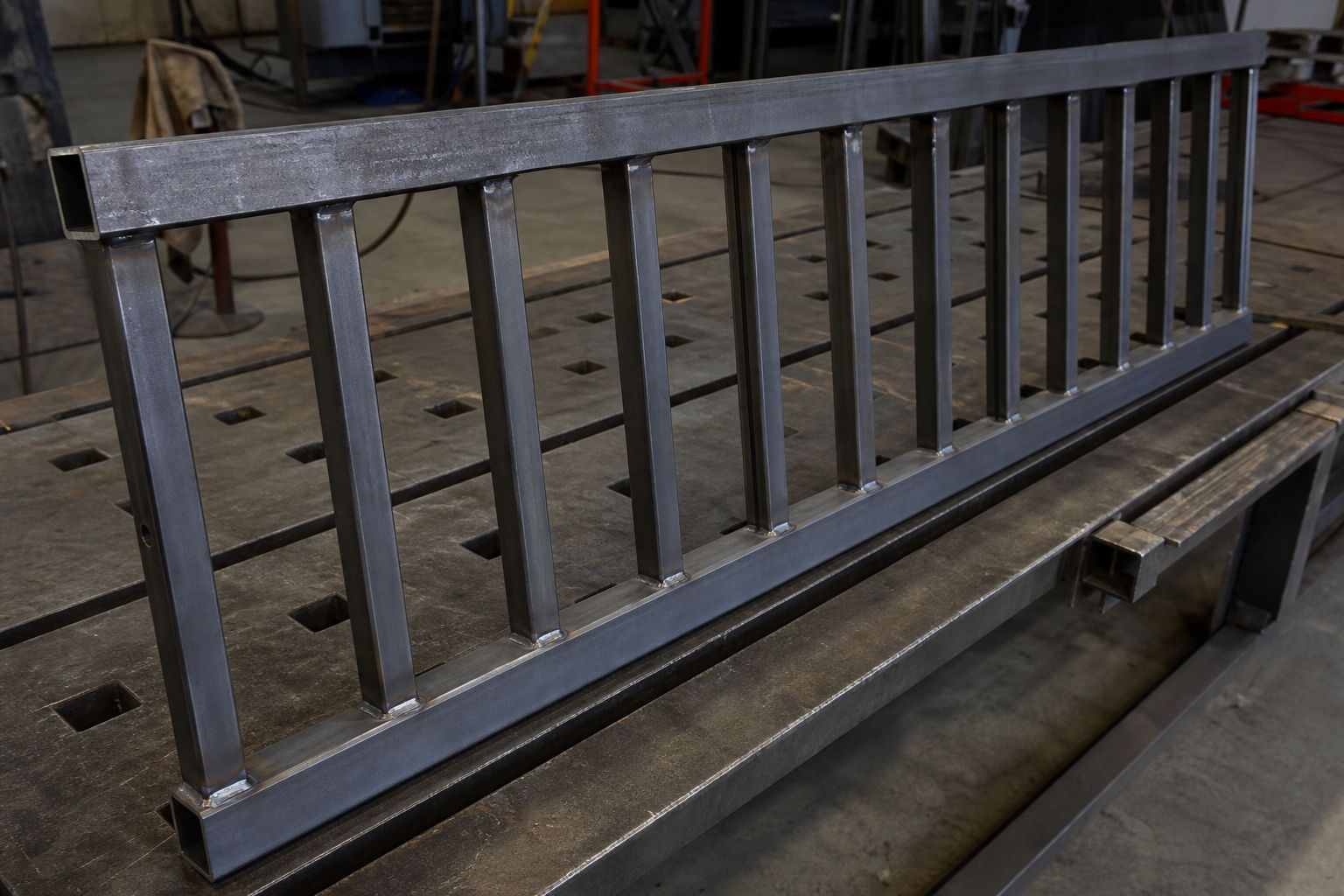
At Portillo Fences and Gates, steel railings are fabricated and installed by the same crew. There's no handoff between a shop and a separate installer, and no gaps in accountability. You get a railing designed for your specific staircase, deck, or commercial entryway, welded to the correct dimensions, and set in place with attention that makes it look like it always belonged there.
Whether you need a single run of railing for a front stoop in Brewster, a multi-level deck railing in Poughkeepsie, or a commercial handrail system for a property in Yonkers, the process is the same: measure, fabricate, install, finish. No shortcuts, no subcontracting out the hard parts. Call (845) 282-3336 to schedule a consultation.
Why Steel Makes Sense for Railings
Steel holds up in ways that other railing materials don't. Here's what that means in practical terms.
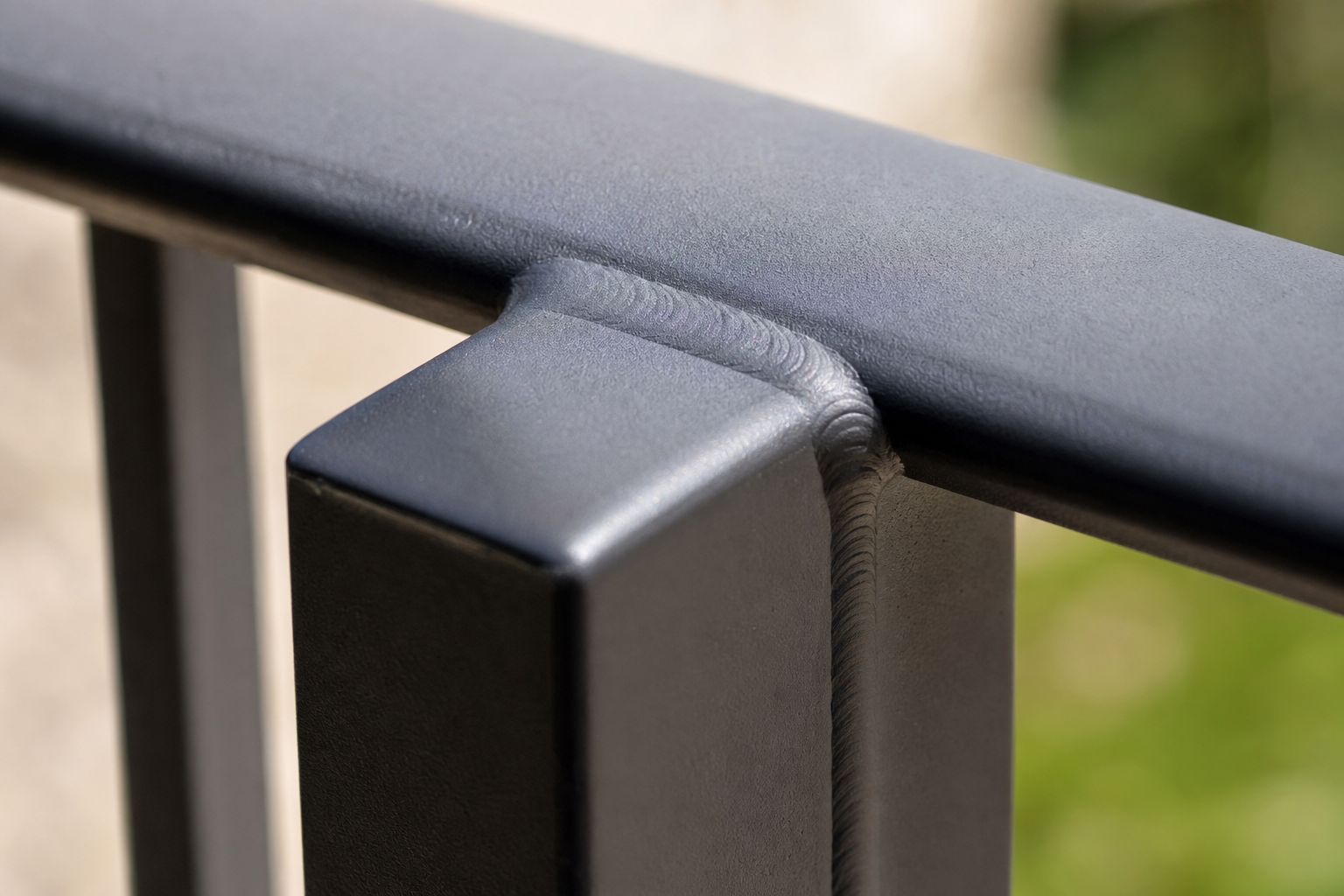
Steel railings don't flex, wobble, or give way under load. For stairs that get heavy daily use, whether in a family home or a commercial building, that rigidity matters. A properly welded steel railing is one of the most structurally sound options available for any application.
New York winters are hard on exterior materials. Steel railings, when properly finished and optionally galvanized, hold up against freeze-thaw cycles, road salt drift, and sustained moisture that causes wood to rot and aluminum to pit over time. The right finish extends the lifespan well beyond what most homeowners expect.
Pre-made railings are built for average situations. If your staircase has an unusual angle, your deck has a non-standard height, or your property has a commercial-grade load requirement, off-the-shelf options often don't fit correctly or meet code. Custom-fabricated steel railings are made to your actual measurements, so there's no forcing pieces together or compromising the final result.
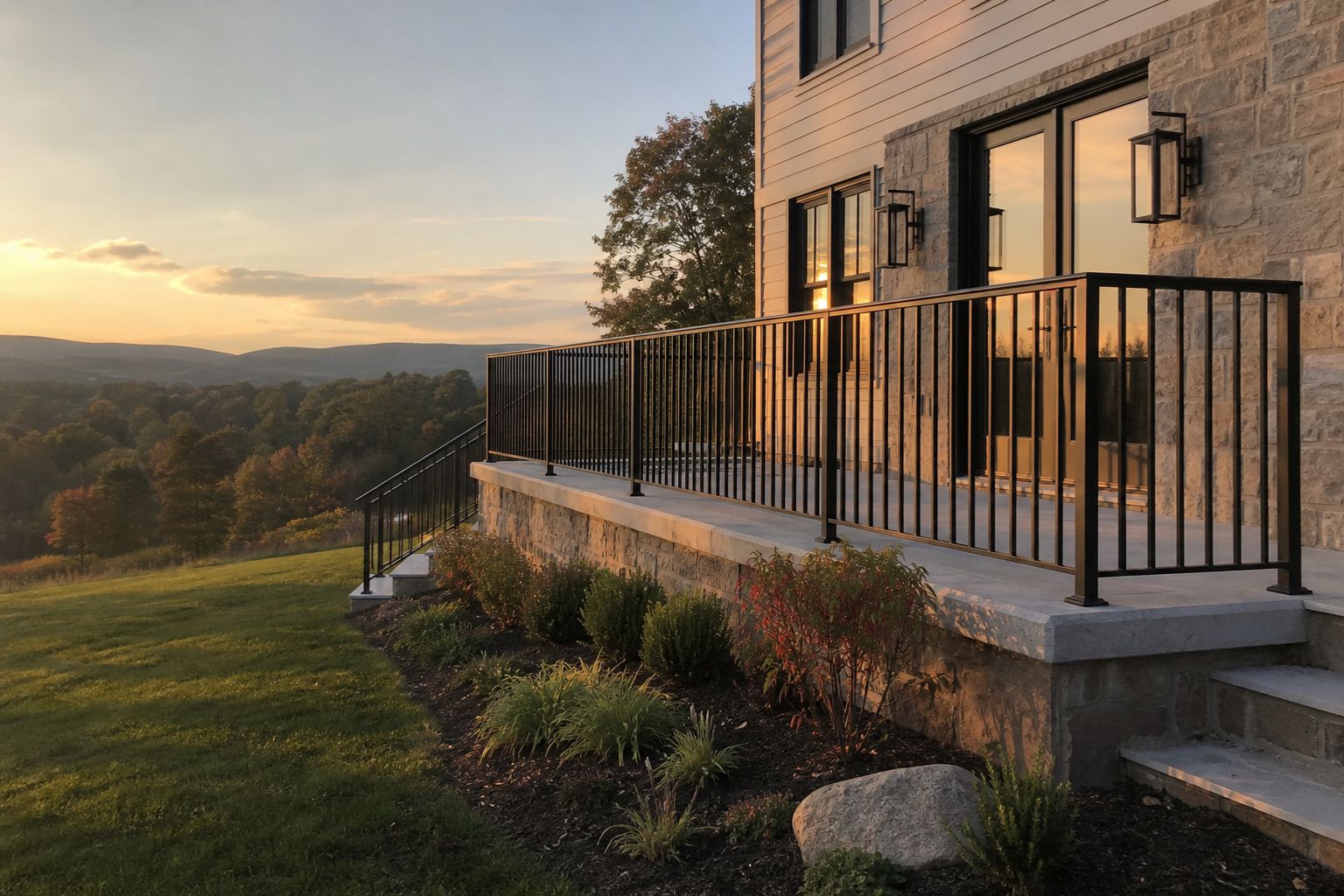
Steel can be worked into clean modern lines, traditional vertical picket patterns, or more decorative profiles depending on what suits the property. The design conversation happens before fabrication begins, so the finished railing reflects the style of your home or building rather than competing with it.
Residential and commercial railing codes in New York specify height minimums, baluster spacing, load capacity, and graspability requirements. A railing that doesn't meet these standards can fail a home inspection or create liability exposure for a commercial property owner. Every railing Portillo installs is built to meet applicable local codes from the start.
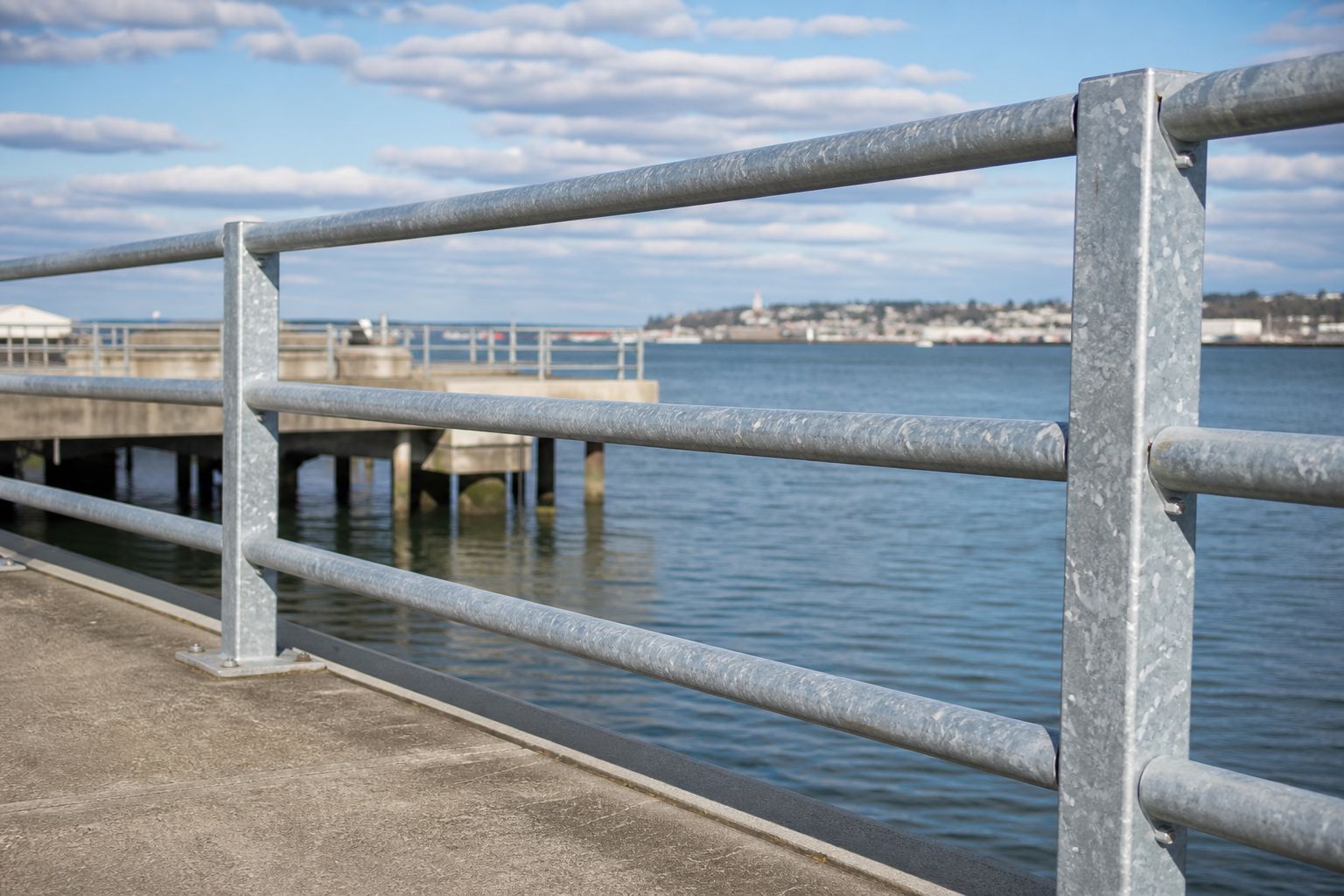
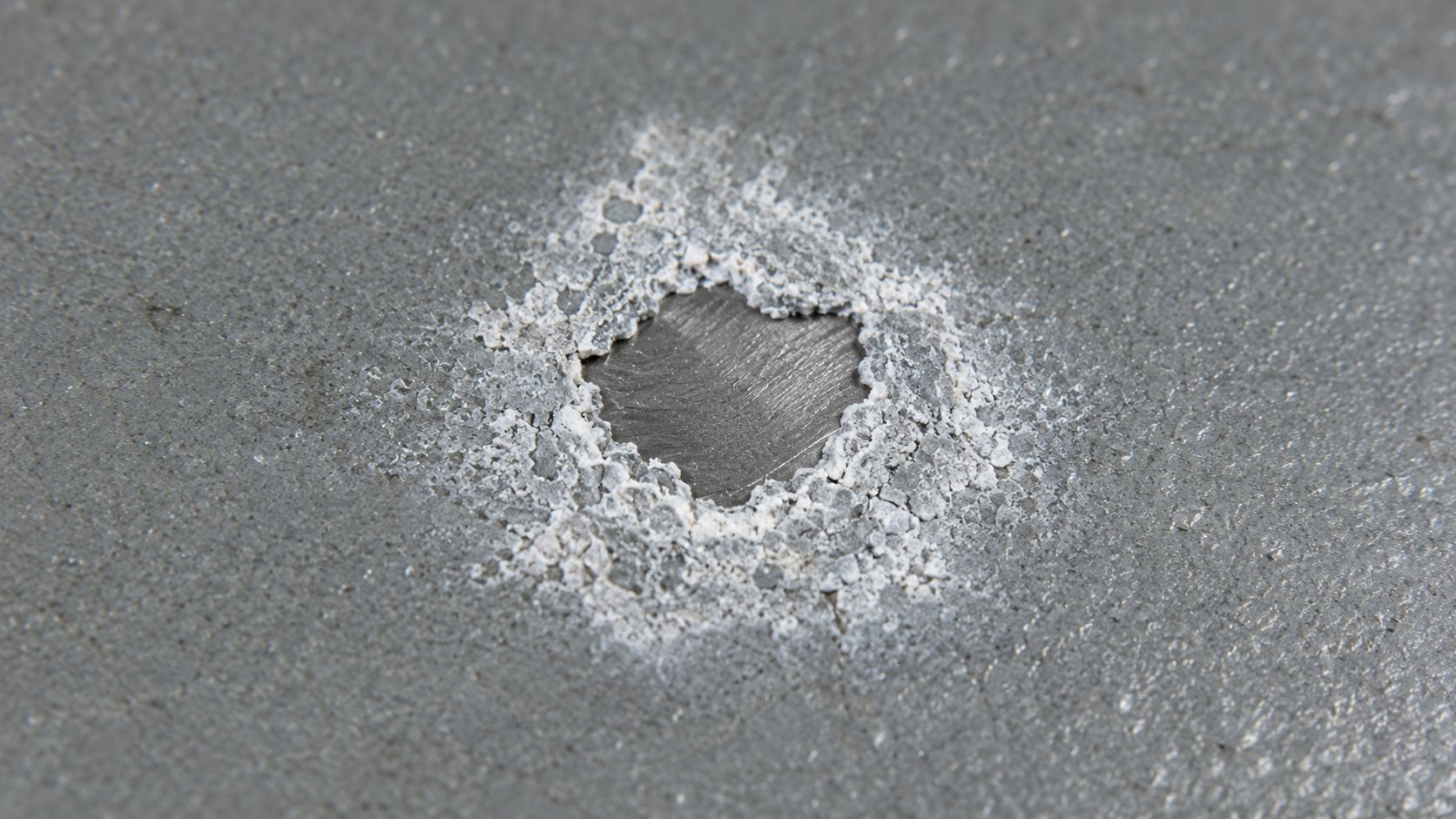
For railings in particularly exposed locations, including waterfront properties, commercial settings with high moisture exposure, or any application where rust prevention is a priority, galvanizing is available. Hot-dip galvanizing bonds a layer of zinc to the steel at the metallurgical level, creating corrosion resistance that paint or powder coat alone can't match.
What the Process Looks Like
From the first conversation to the finished installation, here's exactly how a steel railing project comes together with Portillo Fences and Gates.
Scroll the steps sideways to follow the full process.
Residential Steel Railings
For homeowners, the most common steel railing applications are front entry stairs, rear deck perimeters, and interior or basement staircases. Each has different aesthetic goals and different structural requirements, but the need for a well-made, properly anchored railing is consistent across all of them.
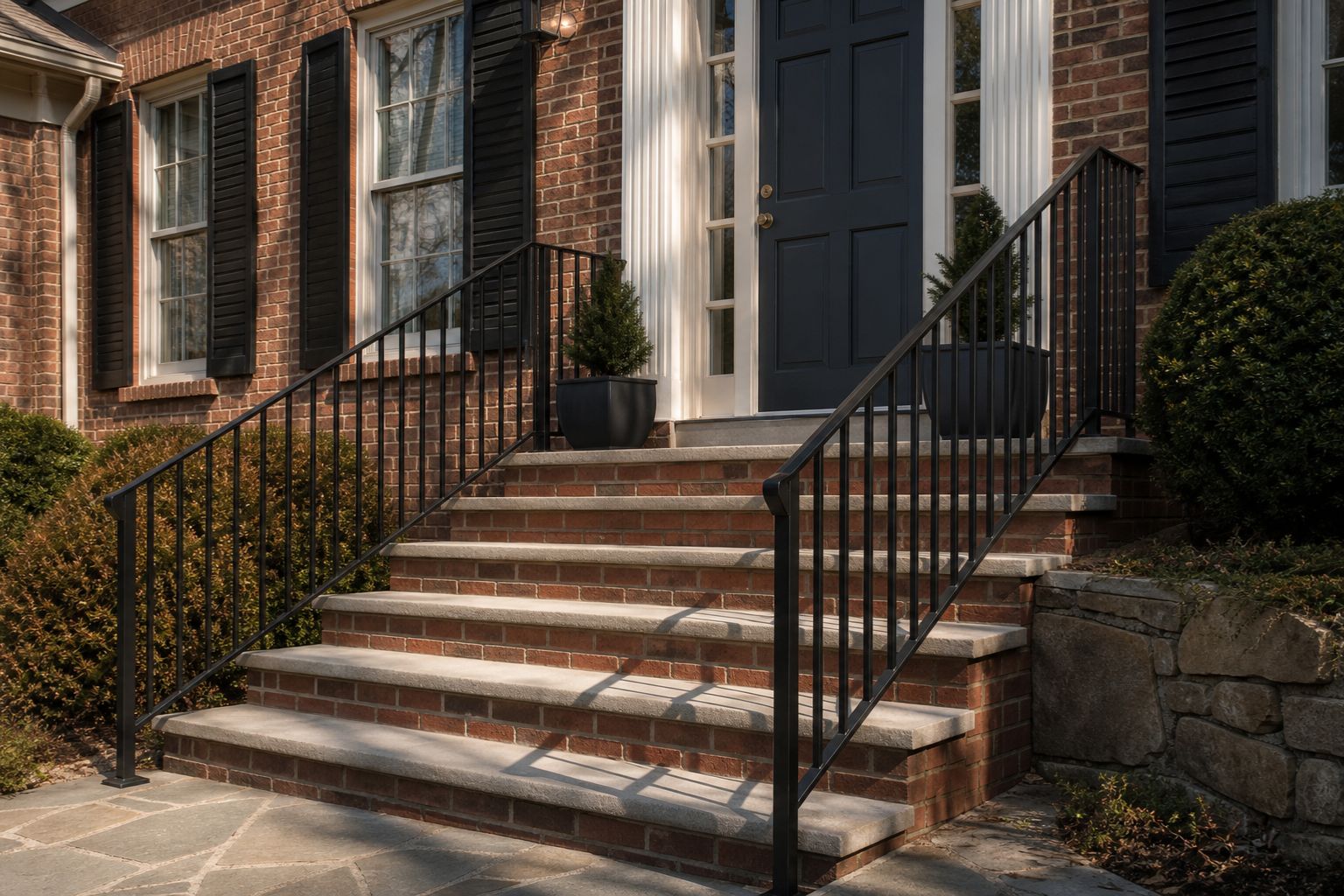
Front entry railings are highly visible and set the tone for the entire exterior. A powder-coated black steel railing with clean vertical pickets is one of the most popular choices right now because it reads as modern and intentional without being flashy, and it complements almost any home style from traditional colonials to more contemporary builds common across Westchester and Putnam counties.
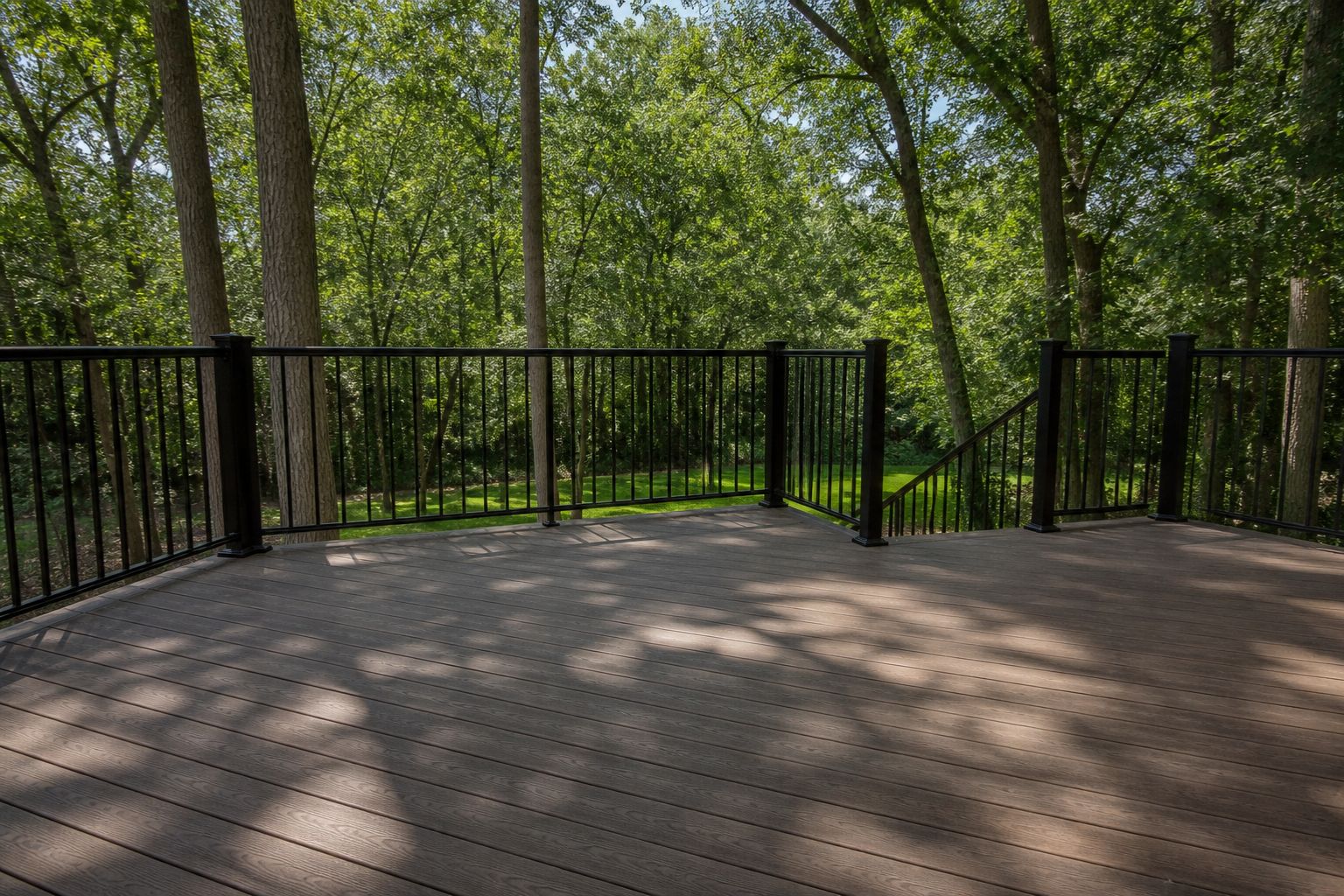
Deck railings involve more linear footage and more complex geometry, especially on multi-level decks or properties with grade changes. New York's residential code requires a guard on any deck, porch, or landing more than 30 inches above the grade below, at a minimum height of 36 inches, with commercial guards under the IBC at 42 inches, with baluster spacing that prevents a 4-inch sphere from passing through. These requirements are built into every railing from the design stage.
Interior steel railings, particularly on open staircases or loft-style spaces, have become a popular design choice for homeowners who want a modern industrial look inside the home. Steel pairs well with wood treads, concrete floors, and open-concept layouts, and it can be fabricated in profiles that feel intentional rather than utilitarian.
Commercial Steel Railings
Commercial railing requirements are more demanding than residential ones, and the stakes for getting them wrong are higher. ADA compliance, IBC load requirements, and local building department inspections all apply to commercial handrail and guardrail installations. A railing that doesn't meet these standards can result in failed inspections, required rework, and liability exposure.
Portillo Fences and Gates installs commercial steel railings for office buildings, retail properties, apartment complexes, industrial facilities, and other commercial sites across the service area, from Newburgh down through Yonkers and across to Kingston and New Paltz. The fabrication process for commercial work accounts for the higher load ratings required by code, the graspability profile for ADA-compliant handrails, and the finish durability needed for high-traffic environments.
For commercial clients, the permitting process is often more involved than on residential projects. Having a contractor who understands what the building department is looking for, and who builds the railing to those specifications from the start, reduces the back-and-forth that can slow down a project timeline and push costs up.
If you manage multiple properties or are working as a general contractor who needs a reliable subcontractor for railing work on a larger project, the team at Portillo can work within your project schedule and coordinate installation around other trades.
Galvanizing: When and Why It Matters
Galvanizing is a corrosion-protection process where steel is coated with zinc through a hot-dip process. The zinc bonds metallurgically to the steel surface, creating a barrier that resists rust from the outside and, importantly, from cut edges and welds where bare metal is otherwise exposed.
For exterior railings in the Hudson Valley, galvanizing is worth considering for any application where the railing will face sustained moisture, salt exposure, or conditions where paint or powder coat alone might eventually chip or wear through. Waterfront properties, rooftop decks, commercial facilities near roadways that get heavy salt treatment in winter, and marine-adjacent environments are the most obvious candidates.
Galvanizing is also a smart choice for railings that will be difficult to repaint or refinish after installation, such as those set deep into masonry or in hard-to-access commercial locations. The long-term protection it provides reduces the maintenance burden over the life of the railing and generally makes the total cost of ownership lower than a finish that requires periodic touch-up.
The galvanizing option is available on custom-fabricated steel railings and can be discussed during the design consultation. Not every project needs it, but for the ones that do, it's a meaningful upgrade in durability that shows in the finished product for years.
Why Portillo Fences and Gates
There are a lot of contractors who say they install steel railings. Here's what actually sets Portillo apart on a project-by-project basis.
Portillo doesn't source generic pre-made railing sections and adapt them to your space. Railings are fabricated to your specific measurements and installed by the same team. When something needs to be adjusted, it gets handled directly, not passed off to a third party.
The difference between a welded steel railing and a mechanically assembled one shows over time. Welds are permanent connections. Assembly hardware can loosen, corrode, and fail. Welded railings stay tight, stay aligned, and don't develop the rattle and wobble that assembled systems eventually do.
The service area spans from Yonkers and Port Chester in the south to Kingston and Newburgh in the north, covering municipalities with different building codes, permit requirements, and inspection processes. Portillo works in these jurisdictions regularly and understands what each one requires for railing installations.
Every project is covered. That's not a throwaway line; it's the baseline for any contractor doing structural work on your property. You shouldn't have to wonder whether the crew on your site has current insurance. With Portillo, you don't have to ask.
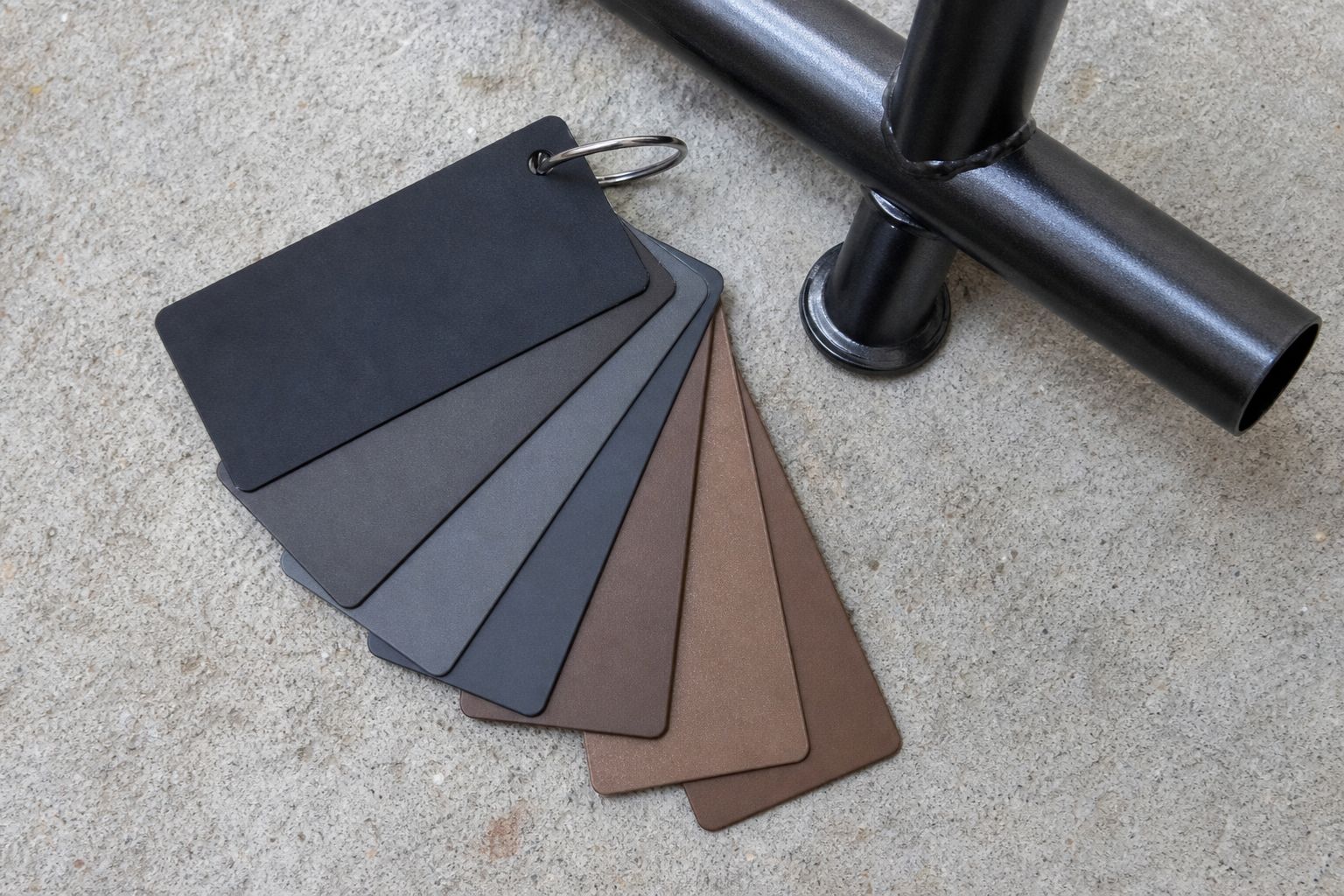
Powder coat in a range of colors, paint, or galvanizing for high-exposure applications. The finish conversation happens before fabrication, so the railing you see installed is the one you agreed to, not a surprise.
Whether your property is in White Plains, Mahopac, Middletown, Suffern, or anywhere in between, Portillo serves the full Hudson Valley and lower New York region without inflating pricing for distance. Local work done by a team that knows the area.
Frequently Asked Questions About Steel Railings
These are the questions that come up most often when homeowners and commercial clients are planning a steel railing project.
Do I need a permit for a steel railing in New York?
It depends on the municipality and the scope of work. Replacing an existing railing in kind often doesn't require a permit, but installing a new railing, changing the configuration significantly, or doing commercial work almost always does. Requirements vary by town and county, and Portillo is familiar with the permitting process across the full service area. If a permit is needed for your project, that gets confirmed before work begins.
What's the difference between a handrail and a guardrail?
A handrail is the graspable element you hold while using a staircase. Code specifies its diameter, graspability, and height. A guardrail is the protective barrier at the edge of a deck, balcony, or elevated walkway that prevents falls. Both can be steel, and both carry their own code requirements around height, load capacity, and infill spacing. Many stair installations include both: a guardrail on the open side and a handrail to grip.
How long does a steel railing installation typically take?
A straightforward residential stair railing can often be fabricated and installed within a week or two of finalizing the design. Larger commercial projects or those requiring galvanizing take longer because of the additional processing steps. Timeline estimates are provided during the consultation, and Portillo communicates clearly if anything changes.
Can steel railings be installed on concrete stairs or masonry?
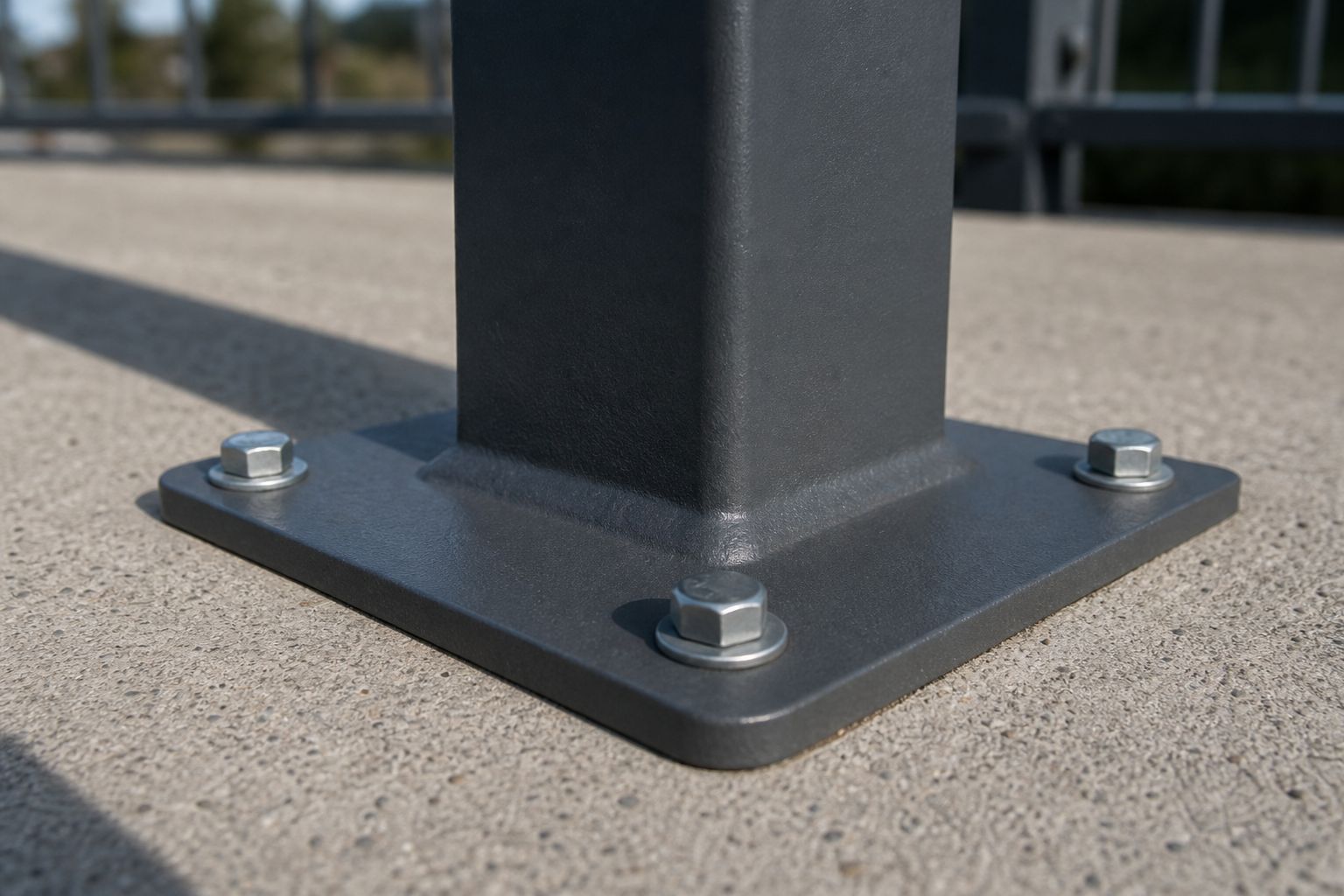
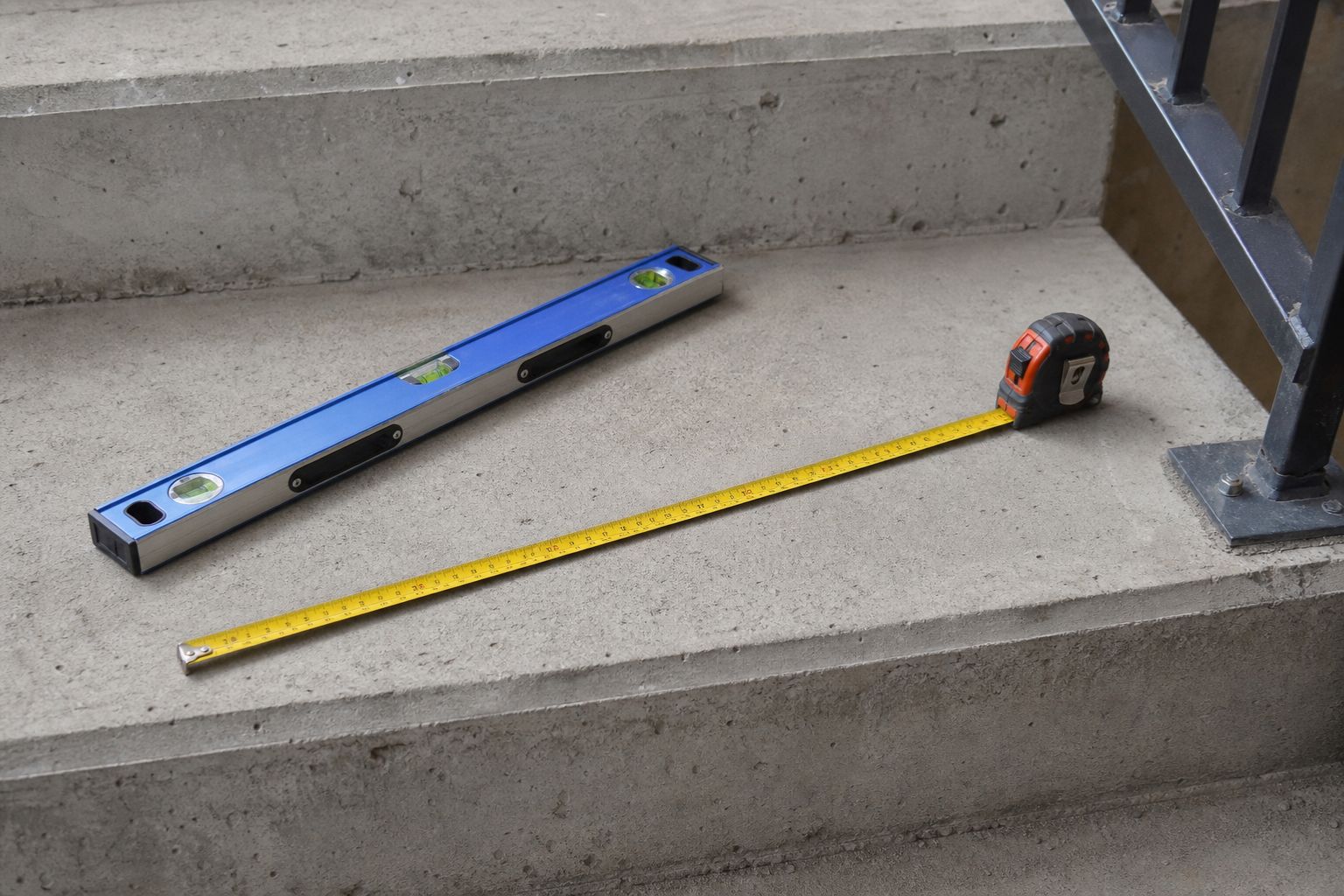
Yes, and this is one of the most common applications. Posts or base plates are anchored into concrete or masonry using expansion anchors or core-drilling and setting in grout, depending on the specific conditions. The anchoring method is chosen based on substrate material, load requirements, and the finished look needed. A properly anchored steel post set into concrete or masonry is extremely secure and won't loosen over time the way surface-mount brackets sometimes do.
What finish options are available, and how do they hold up outdoors?
Powder coat is the most common exterior finish and comes in a wide range of colors, with black being the most popular for modern and traditional properties alike. It's baked onto the steel surface and resists chipping, fading, and peeling better than standard paint over time. For maximum corrosion resistance in exposed or high-moisture applications, galvanizing is available. Paint is also an option, typically for interior applications or as an intermediate finish before a topcoat.
Can you match an existing railing style on my property?
In most cases, yes. If you're adding a new railing run to match an existing section, or replacing a portion of an older railing and want the new section to blend in, Portillo can work from photos, measurements, and samples of the existing railing to get as close a match as possible. Custom fabrication makes this far more achievable than trying to find a pre-made section that happens to match.
What areas do you serve for steel railing installations?
Portillo Fences and Gates installs steel railings throughout the Hudson Valley and surrounding communities, including Brewster, Carmel, Mahopac, Pawling, Beacon, Poughkeepsie, Wappingers Falls, Newburgh, Middletown, New Paltz, Kingston, White Plains, Port Chester, Ossining, Peekskill, Mount Kisco, Tarrytown, New City, Spring Valley, Suffern, and Yonkers.
Get a Quote on Your Steel Railing Project
Ready to move forward or just want to know what a custom steel railing would cost for your property?