

August 15, 2026
- Chain Link Fencing
- Brewster NY
- Fence Permits
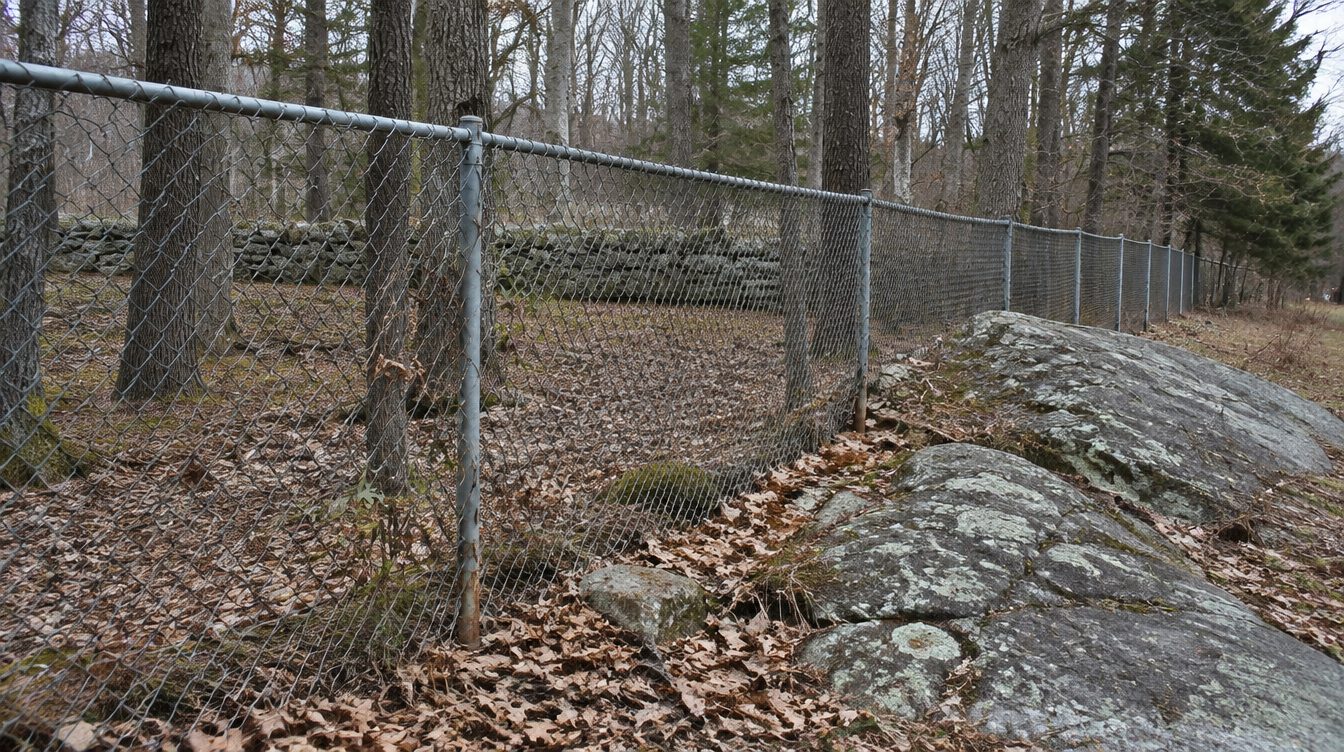
Neither the Village of Brewster nor the Town of Southeast restricts chain link as a material. What limits it is height and location: 4 feet in a village front yard, 6 feet in a village rear yard, and 36 inches across the front property line in the Town's listed residential districts. The permit is the other rule, issued by the Village Code Enforcement Officer inside the village and by the Town Building Inspector in the rest of Southeast, including Brewster Hill, Dykemans and Deans Corners.
If the fence will enclose a pool, the mesh size is the one code question with two answers, and it is covered below.
Key Takeaways
No material ban
neither the Village nor the Town fence rules restrict chain link as a material
Village permit fee
$100 for fences and walls over 36 inches on the schedule dated April 4, 2019, plus $5 per thousand of demolition cost
Town front-yard limit
36 inches across the front property line, plus a set distance along each side line, 35 feet in R-20, 50 feet in R-40, R-60 and R-80, and 100 feet in R-160
Post depth
ASTM F567 frames a minimum of 24 inches plus 3 inches per foot of height over 4 feet, and local conditions decide the footing
Pool mesh
2-1/4 inch in the 2020 state code with slats, 1-3/4 inch in the 2025 code and the 2024 pool code
Installed prices
$15 to $25 for 4-foot galvanized in an Orange County estimate, $8 to $14 in a national flat-ground table
What the Village and Town rules say
The Village caps a fence at 4 feet in a front yard or a side yard in front of the building line and at 6 feet in a rear yard or a side yard behind it. The finished side must face outward, and a fence may not contain glass, sharpened metal or other sharp or hazardous material. Tennis-court fencing may reach 10 feet and dumpster enclosures 8 feet.
In the Town, Chapter 138 requires a permit and compliance with the height and setback rules. Its fence article creates no chain-link rule. Commercially zoned and nonresidential properties go through the Architectural Review Board, and residential fences in residential districts are exempt. The Town's fence FAQ gives a 36-inch maximum across the front property line, plus a set distance along each side line: 35 feet in R-20, 50 feet in R-40, R-60 and R-80, and 100 feet in R-160. No fence may stand on public property or in a road right-of-way.
Barbed wire, razor wire and electrified fencing are not named in either code. Because the Village bars sharpened or hazardous material, ask the Code Enforcement Officer about any wire along the top before you order.
Permit offices, fees and inspections
The Village Building Department is at 50 Main Street, (845) 279-3760, with appointments Monday and Wednesday from 9:00 a.m. to 3:00 p.m. and Friday and Saturday by request. Village Code Chapter 263 requires the permit before installation and an inspection of the completed fence. The Village schedule dated April 4, 2019 lists a $100 permit fee plus $5 per thousand of demolition cost for fences and walls over 36 inches high, and a separate $100 Certificate of Occupancy or Compliance. The Village has posted a revised schedule since, so confirm the current amount.
The Town Building Department is at 1 Main Street, (845) 279-2123, open Monday through Friday from 9:00 a.m. to 4:30 p.m. Its 2026 schedule lists $150 for a small project under $10,000, $330 from $10,000 to $30,000, $330 plus $6 per thousand above that, a $55 Certificate of Occupancy and Compliance, and a $75 re-inspection fee. There is no fence-only line, so ask whether yours bills as a small project. The Building Inspector examines the plans and the premises, and the Town describes inspections only at required construction intervals, so ask which inspection must happen before the post footings are covered.
Posts in rocky ground
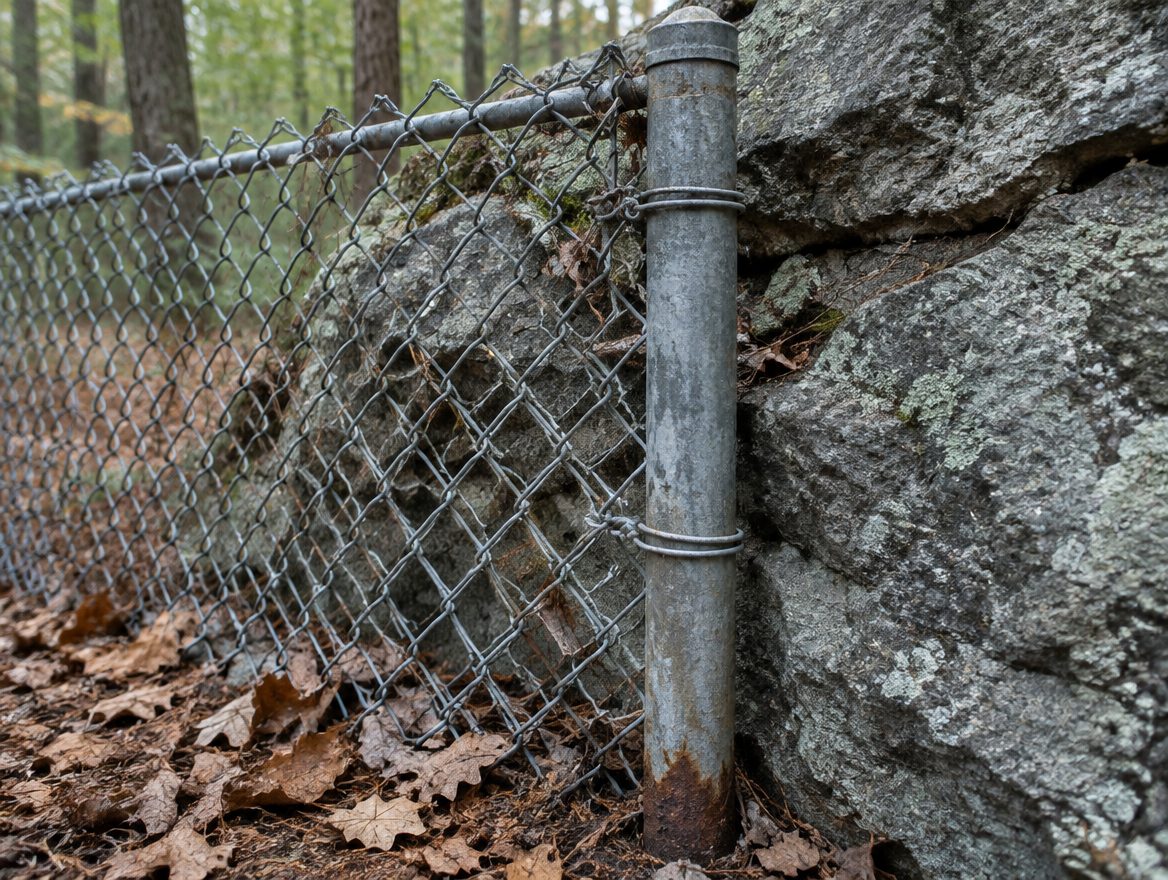
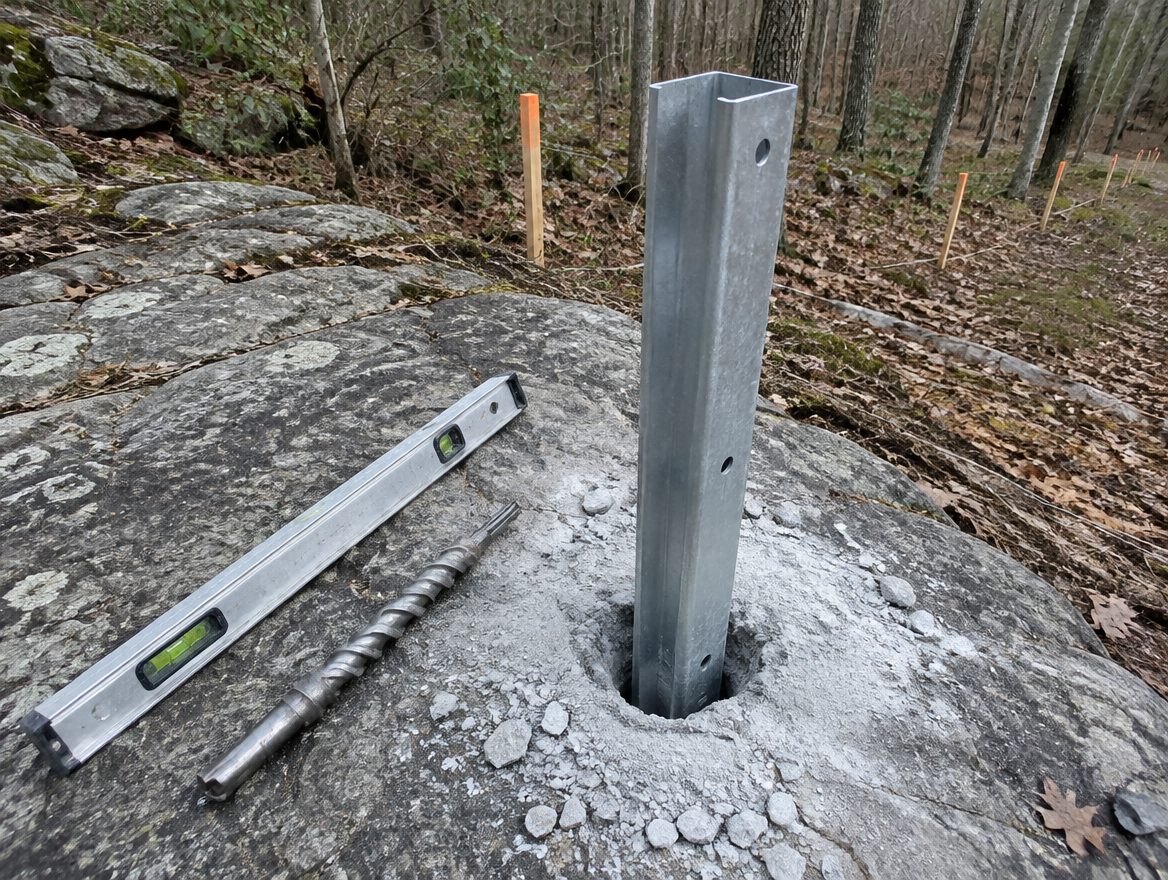
ASTM F567, the installation practice for chain-link fence, says intended use and local conditions set the footing dimensions. As a general minimum it gives 24 inches of post-hole depth plus 3 inches for each foot of fence height over 4 feet, up to 60 inches total on fences as tall as 20 feet. For a 6-foot fence that works out to 30 inches. That is a framework, and the frost depth entered by the Village or Town for your address governs. New York leaves that number to each municipality, so ask the inspector for it before excavation.
The Town's Brewster Yards soil study lists map units that include Charlton-Chatfield and Chatfield-Charlton complexes labelled very rocky, Leicester loam labelled stony, Ridgebury complex labelled very stony and two units that include rock outcrop. USDA series descriptions give depth clues: Charlton soils are very deep, Chatfield bedrock generally sits within 50 to 100 centimeters (about 20 to 39 inches), and Hollis bedrock within 25 to 50 centimeters (about 10 to 20 inches). The study covers its own parcels and does not classify every address in the village core, Brewster Hill or Dykemans. Run your parcel through USDA Web Soil Survey and expect to adjust hole locations or drilling methods where rock shows.
Pool barriers and the mesh question
Chain link around a pool carries two readings of the opening size. The 2020 Residential Code of New York State, Section R326.4.2.5, allows a maximum mesh of 2-1/4 inches square unless vertical slats fastened at the top and the bottom reduce the openings to no more than 1-3/4 inches. The 2025 code, Section R328.4.2.5, sets the maximum mesh at 1-3/4 inches square, with slats that reduce openings to 1-3/4 inches. The 2024 International Swimming Pool and Spa Code, Section 305.2.8, also reads 1-3/4 inches. A mesh of 1-3/4 inches or smaller satisfies either reading.
The local building official's interpretation controls which reading applies to your permit, so submit the mesh and slat details to the Village or Town office before you order materials. Our chain link pool barrier guide walks through the sections, and the pool fencing page covers the full barrier.
Fabric, coatings and framework
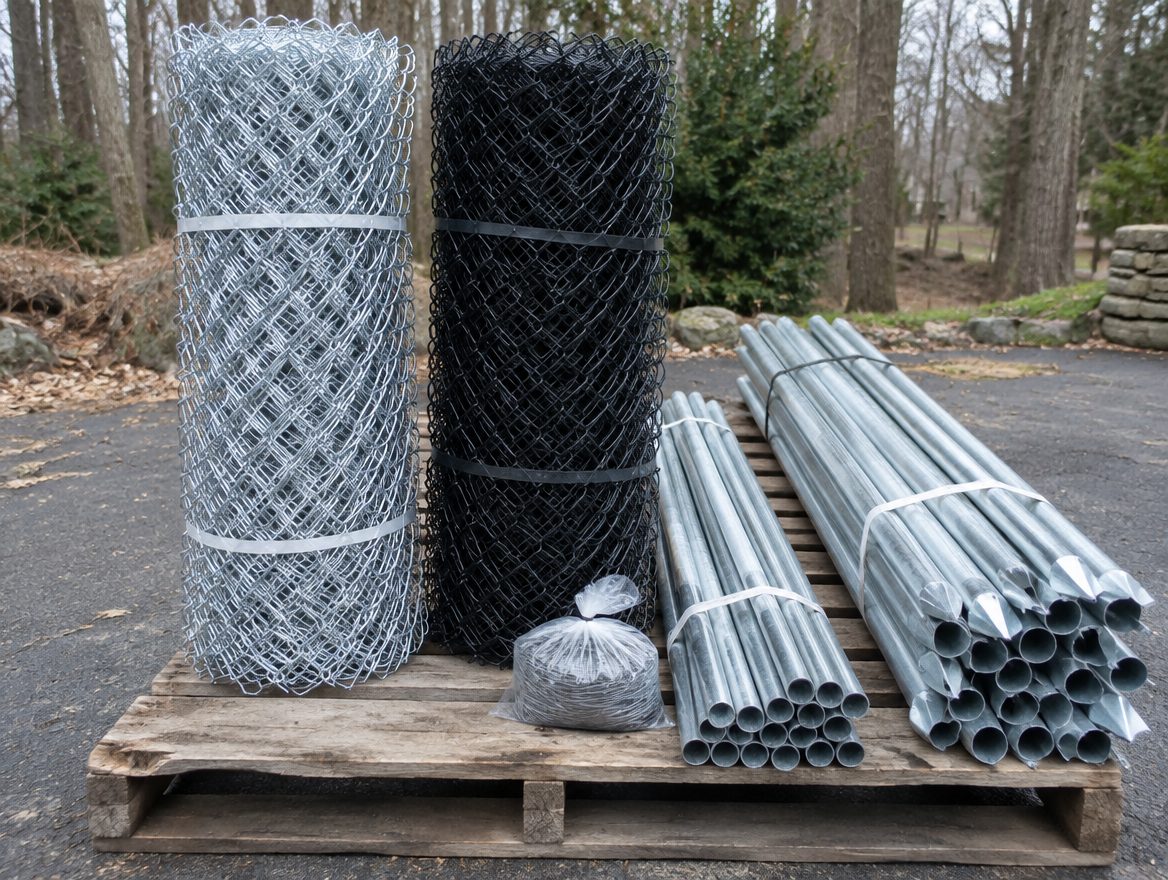
ASTM sets the product standards a spec sheet should name:
- A392: zinc-coated steel fabric, covering mesh size, wire size, selvage and zinc coating weight in Class 1 or Class 2
- F668: polymer-coated fabric, with Class 2a extruded and adhered, and Class 2b fused and adhered
- F567: installation practice, from post location to terminal bracing, rails, tension wire, ties and gates
- F1083: galvanized steel pipe framework, with F900 covering swing gates and F626 covering fittings
An Iowa DOT specification built on those standards lists line posts at 2 inches, terminal posts at 2-1/2 inches and rail braces at 1-1/4 inches for fences 48 inches and under. Posts step up to 2-1/2 and 3 inches for fences from 48 to 96 inches, and to 3 and 4 inches above 96 inches. Privacy slats and windscreen are add-ons, and slats add wind load, which can call for stronger posts.
What chain link costs
Two sources set the range. An Orange County estimate for 2026 puts 4-foot galvanized at $15 to $25 per linear foot installed and 6-foot vinyl-coated at $20 to $35, with gauge, top rail, tension wire, gate size, post size and coating color as the price factors. A 2026 national table prices standard residential installs on flat terrain. For regional context, see our chain link fence cost guide.
Published chain link prices per linear foot installed, by source
Installed price: $15 to $25
Source and scope: 2026 practice estimate
Tap a row to open it.
The national table counts materials and labor for a standard residential install and leaves out gates, demolition, ledge, slopes and difficult access. Ask a contractor to price each of those separately. Neither source is a Brewster quote.
Check yourself
1. What permit fee does the April 4, 2019 Village schedule list for fences and walls over 36 inches high?
2. How far along each side property line does the Town's FAQ extend its limit in R-20?
3. What minimum post-hole depth does ASTM F567 give for a fence 4 feet tall or less?
4. What maximum mesh size does the 2025 state code set for chain link around a pool?
Frequently Asked Questions
Q: Can I put chain link in my front yard? A: In the village, a front-yard fence is capped at 4 feet. In the Town's listed residential districts the limit is 36 inches across the front property line.
Q: Can I add barbed wire on top? A: Neither code names barbed wire, and the Village bars sharpened metal and hazardous material. Send the wire detail to the Code Enforcement Officer or Building Inspector before you order materials.
Q: Does chain link need a permit in Brewster? A: Yes. The Village Code Enforcement Officer issues it inside the village, and the Town Building Inspector issues it elsewhere in Southeast.
Q: How deep are the posts set? A: ASTM F567 frames 24 inches plus 3 inches per foot over 4 feet, so 30 inches at 6 feet. The Village or Town inspector gives the depth that applies at your address.
Q: Is 2-1/4 inch mesh allowed around a pool? A: The 2020 state code allowed it when slats cut the openings to 1-3/4 inches, and the 2025 code sets 1-3/4 inches. Submit your mesh and slat details to the building official before ordering.
Q: What do privacy slats add? A: A 2026 national table lists $3 to $6 per linear foot installed, and windscreen at $1.50 to $3. Slats add wind load and can call for stronger posts.
A chain link quote reads clearly once it names the gauge, coating, height, post sizes, gates and what happens when the post hole meets rock. Settle the permit office and the pool mesh question first, since both can change what you order.
At Portillo Fences and Gates, we install chain link across Putnam, Westchester, Dutchess, Orange, Ulster and Rockland Counties, including chain link fencing, pool fencing, residential fencing and fence repair. Contact us for a free estimate, or call (845) 282-3336.