

August 12, 2026
- Pool Fencing
- Chain Link
- Building Code
The mesh opening is the number that decides whether chain link passes as a pool barrier in New York, and the code documents do not give one answer. The 2020 Residential Code of New York State allows a 2-1/4 inch mesh, provided slats reduce the openings to 1-3/4 inches. The 2025 Residential Code and the 2024 International Swimming Pool and Spa Code both set 1-3/4 inches.
Which reading your building department applies to your permit is a question to settle before you buy fabric, because the two sizes are different rolls of wire.
Key Takeaways
2020 RCNYS, Section R326.4.2.5
chain link mesh up to 2-1/4 inches square, unless vertical slats reduce the openings to no more than 1-3/4 inches
2025 RCNYS, Section R328.4.2.5
a 1-3/4 inch maximum, and slats must leave openings no greater than 1-3/4 inches
2024 ISPSC, Section 305.2.8
openings not more than 1-3/4 inches, including openings reduced by slats
Local pages differ
Ossining lists a 2.25 inch maximum, while Kent and Port Chester still cite the 2020 section
Confirm in writing
get the code edition, the section and the accepted mesh opening from your building department before ordering
Three documents, two answers
Each document and the section that carries its mesh rule:
Section: R326.4.2.5
Maximum mesh: 2-1/4 inch square
With slats: Openings reduced to no more than 1-3/4 inch
Tap a row to open it.
The 2025 code became fully effective on December 31, 2025, and the Department of State points to Section R328 as the home of residential pool, hot tub and spa requirements. The 2020 edition carried the pool barrier rules in Section R326. Older references sometimes point to Appendix G, but in the New York residential code the pool barrier rules sit in the body of the code, not in an appendix.
These documents describe the mesh differently, and a town can still be working from either edition. A local government may adopt a stricter standard under Executive Law Section 379, but the Department of State says a standard more restrictive than the Uniform Code has to be approved by the Code Council before it is enforced. If you think a building department is misreading the code, 19 NYCRR Part 1205 sets out the variance and appeal process.
What your town's own pages say
Local pages do not all say the same thing, which is why the call to the building department matters.
- Town of Ossining (Westchester): chain link used as an enclosure needs a maximum mesh of 2.25 inch squares. Pool gates must be self-closing and self-latching, and openings near the latch may not exceed 1/2 inch within 18 inches of the latching device.
- Town of Kent (Putnam): a permanent barrier has to comply with the 2020 Residential Code Section R326.4.2, and a temporary barrier is required during construction until then.
- Village of Port Chester (Westchester): the pool permit packet asks for a plan showing the temporary and permanent barrier in conformance with RCNYS 2020 Section R326.
- Town of Carmel (Putnam): Zoning Code Section 156-23 requires private pools to be fully enclosed by a fence or wall that complies with the New York State Building Code, and a building permit is required.
- Town of Patterson (Putnam): permits are required for pools capable of holding 24 inches or more of water, and the town code treats a fence that is part of a pool enclosure differently from an ordinary fence.
- Village of Tarrytown (Westchester): the pool permit procedure calls for a four-foot fence or wall with a self-closing, self-latching gate.
- Town of Ulster (Ulster County): the building department publishes a document titled "Swimming Pool Barrier Code." Ask the department for the current copy.
The Village of Brewster and the Town of Southeast both require a fence permit through their building offices, and the county health departments in Putnam, Dutchess, Orange, Ulster and Rockland issue operating permits for public and regulated pools rather than approving a homeowner's backyard barrier. For a town not on this list, the building department is the office to call.
What the wire itself looks like
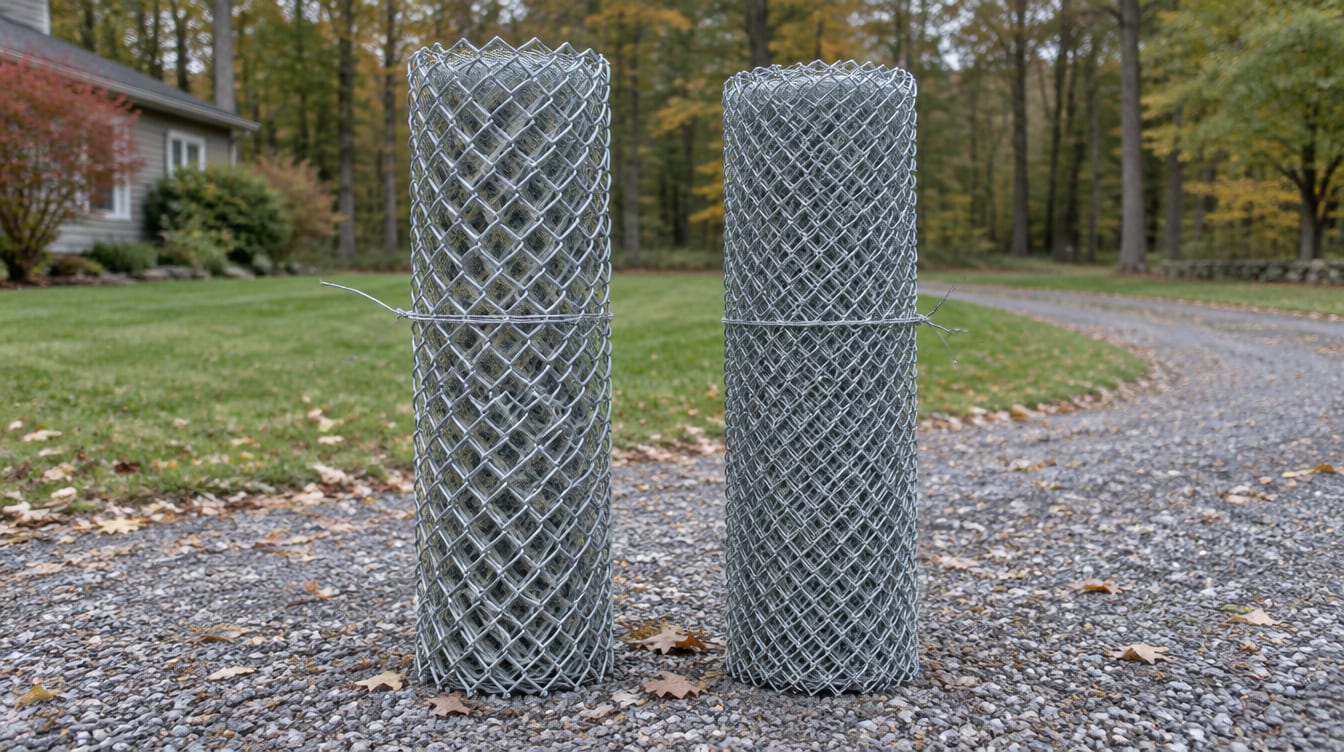
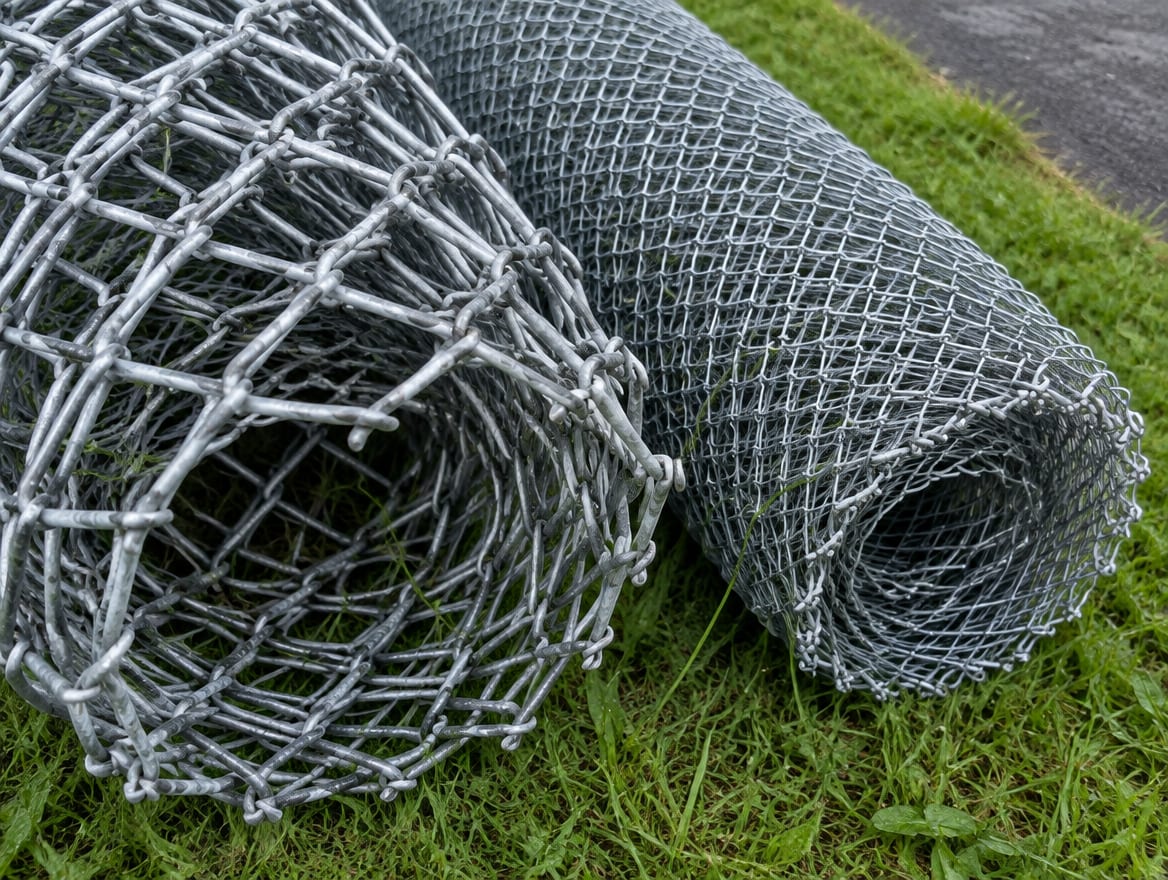
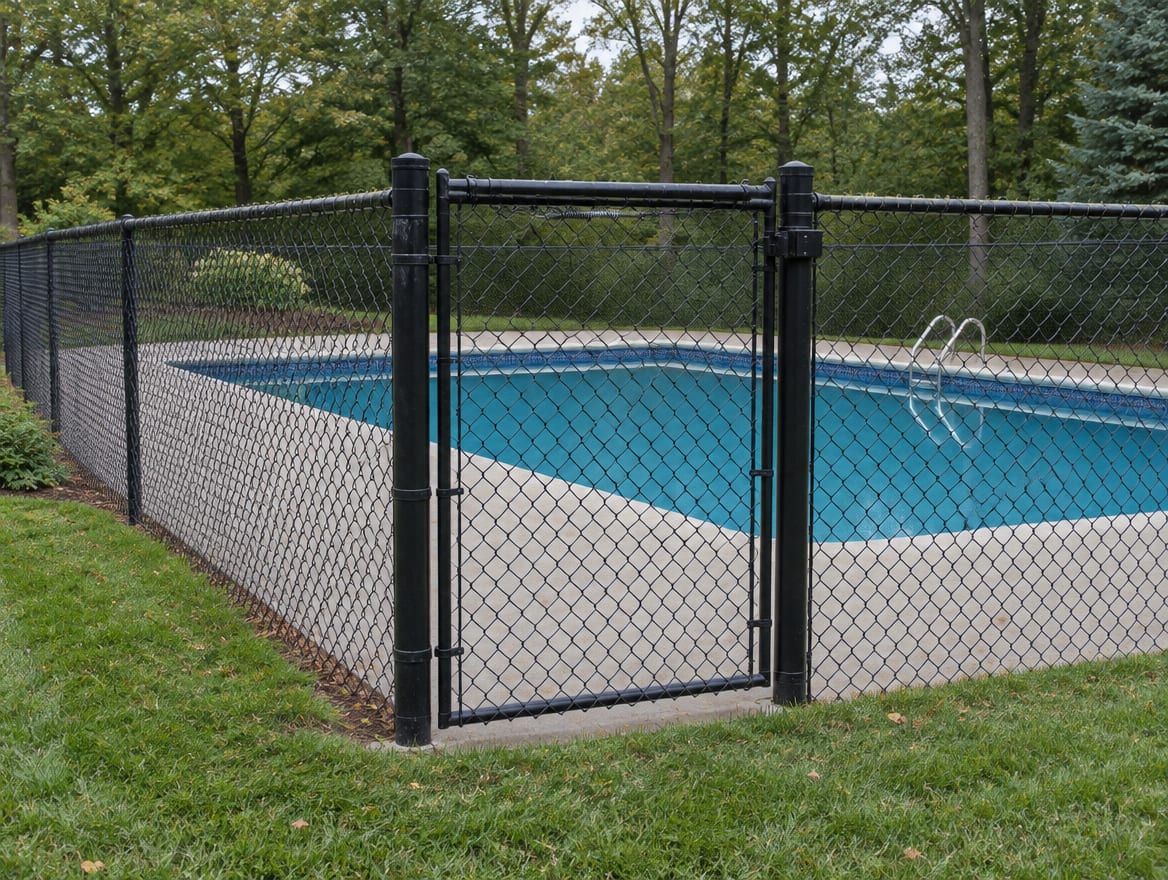
Chain link fabric is sold in several mesh sizes, and the one on the roll has to match the opening your code reading allows. The Chain Link Fence Manufacturers Institute product manual lists these examples:
- 2-1/4 inch mesh: 11-1/2 gauge, 0.113 inch wire
- 2 inch mesh: 11 gauge, 0.120 inch wire
- 1-3/4 inch mesh: 11 gauge at 0.120 inch, or 9 gauge at 0.148 inch
- 1-1/4 inch mesh: 11 gauge, listed for residential and swimming pool use
Mesh size is the clear distance between parallel wires forming the diamond. Gauge numbers run backward, so a lower number is thicker wire, and for polymer-coated fabric the gauge describes the steel core wire, not the finished coated diameter.
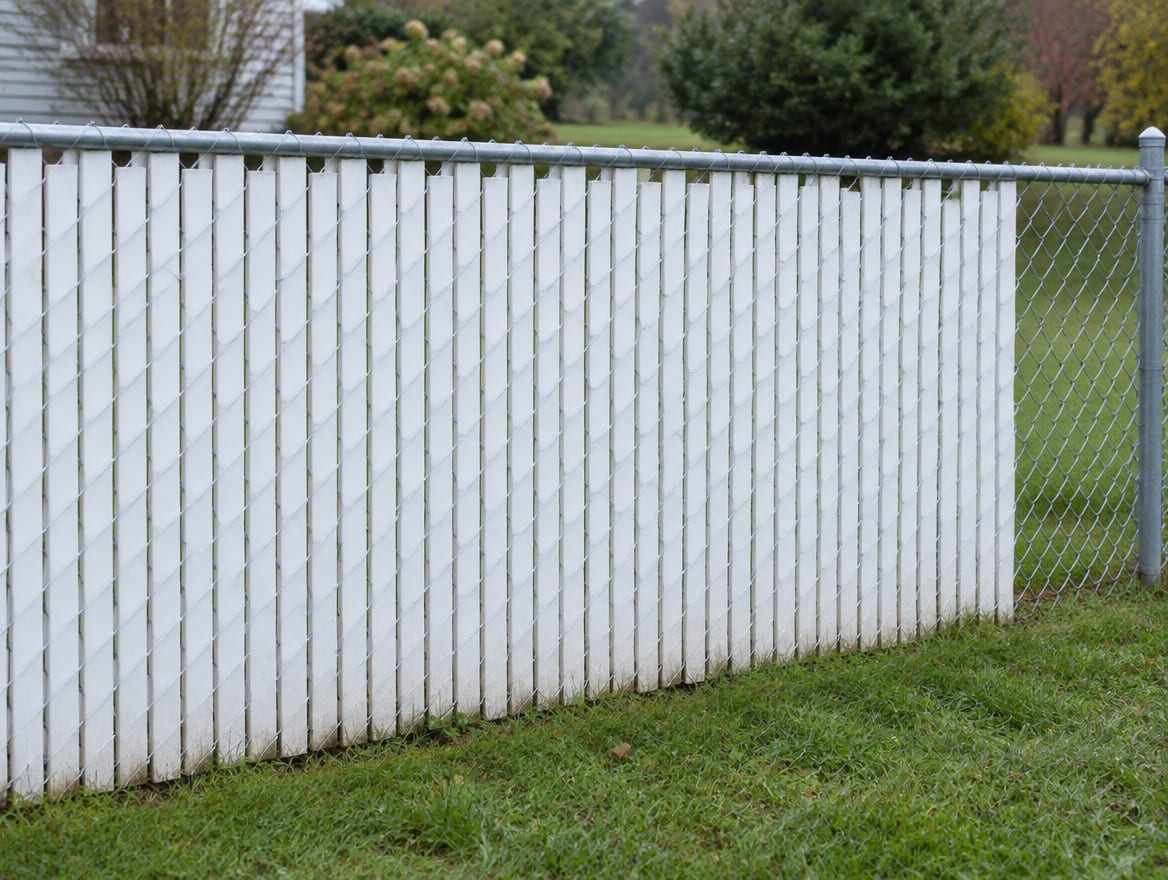
Slats are sold in PVC for 1-3/4, 2 and 2-1/4 inch diamond sizes. Every one of the three code documents in the table measures the opening left after the slat goes in, so a slat only helps if the finished opening meets the number your building department accepts. ASTM F567-23 covers chain link installation and fabric, but its public summary does not publish a pool barrier mesh limit.
Other measurements that apply
Mesh is one of several dimensions in the barrier section. Under the 2025 code, Section R328.4.2.1 puts the top of the barrier at least 48 inches above grade, measured on the side facing away from the pool, and allows no more than 2 inches of vertical clearance between grade and the bottom of the barrier. Those two figures matter on a slope or a graded yard, where chain link fabric can ride up or sag away from the ground.
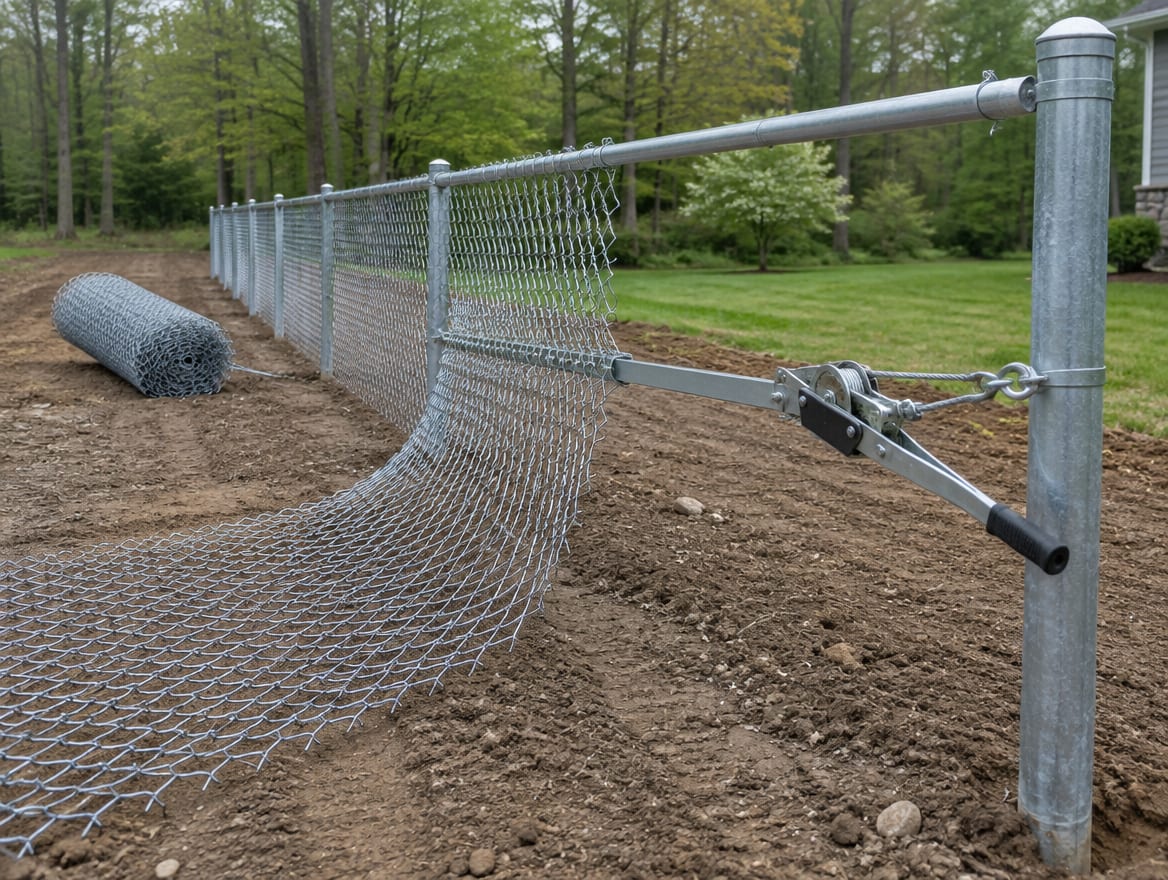
Climbing is a separate question from mesh. Section R328.4.4 asks for the barrier to be located so that permanent structures, equipment or similar objects cannot be used to climb it. The code does not say that a particular wire gauge or a privacy insert makes a fence unclimbable, so the position of the fence relative to the pool equipment, a deck rail or a shed matters as much as the fabric.
Get the answer in writing
The Department of State tells people buying, installing or substantially modifying a pool to read the Uniform Code and to consult the local laws, ordinances and codes of the municipality where the pool goes. For a chain link barrier, ask the building department for a written determination that names four things: the code edition, the pool barrier section, the accepted mesh opening, and whether slats or inserts are accepted. An approved pool permit plan that shows those items works as well.
Hold the fabric order until that paper is in hand. Fabric bought to the wrong mesh size has to be replaced, not adjusted.
Check yourself
1. How high must the top of a pool barrier be above grade under Section R328.4.2.1 of the 2025 code?
2. How much vertical clearance can there be between grade and the bottom of the barrier?
3. Which chain link wire is thicker?
4. According to Section R328.4.4, what keeps a pool barrier from being climbed?
Frequently Asked Questions
Q: Is 2-1/4 inch chain link allowed around a pool in New York? A: The 2020 Residential Code Section R326.4.2.5 allows it when slats reduce the openings to 1-3/4 inches or less. The 2025 code and the 2024 ISPSC set 1-3/4 inches. Ask your building department which applies to your permit.
Q: Does adding slats change the answer? A: In all three documents the opening that counts is the one left after the slats are installed, and it has to be 1-3/4 inches or less. The 2020 code is the one that pairs a 2-1/4 inch mesh with slats.
Q: How high does a chain link pool fence need to be? A: The 2025 code, Section R328.4.2.1, sets the top of the barrier at 48 inches or more above grade, measured on the side facing away from the pool.
Q: How much space can there be under the fence? A: No more than 2 inches of vertical clearance between grade and the bottom of the barrier, under Section R328.4.2.1.
Q: Can I keep the chain link fence I already have? A: Only if it meets the dimensions your building department applies. Ask for the written determination, then have the mesh, height, bottom clearance and gate hardware measured against it.
A chain link pool barrier is a small set of measurements, and the mesh size is the one most likely to be bought wrong. Once the building department has named the code edition and the number, the rest of the job is installation.
At Portillo Fences and Gates, we install and repair fencing across Putnam, Westchester, Dutchess, Orange, Ulster and Rockland Counties, including chain link and pool fencing with self-closing, self-latching gates. We confirm the mesh, height and clearance your town accepts before we order material. Contact us for a free estimate, or call (845) 282-3336.