

Gate Installation in Brewster and the Hudson Valley
What You Get With a Professional Gate Installation
A gate controls who comes in, shapes how your property looks from the street, and sets the tone for everything behind it. When it is installed right, it works quietly and reliably for years. When it is not, you are dealing with sagging hinges, misaligned latches, and a gate that either will not open or will not stay closed.
Portillo Fences and Gates installs gates for residential driveways, commercial properties, pool enclosures, and custom entrances across Brewster, Carmel, Mahopac, Poughkeepsie, White Plains, Yonkers, and the surrounding communities. We work in wood, steel, and aluminum, and we can match your gate to an existing fence or design something that stands on its own.
Every installation starts with a real conversation about how you use your property. A family that needs to keep kids and pets contained has different priorities than a commercial property manager who needs vehicle access control. We ask the right questions before we start, so the gate we install is the one you actually needed. Call us at (845) 282-3336 to schedule a site visit.
Gate Types We Install
The right gate configuration depends on your driveway width, slope, available space, and how you plan to use it. Here is a breakdown of what we install and where each option works best.
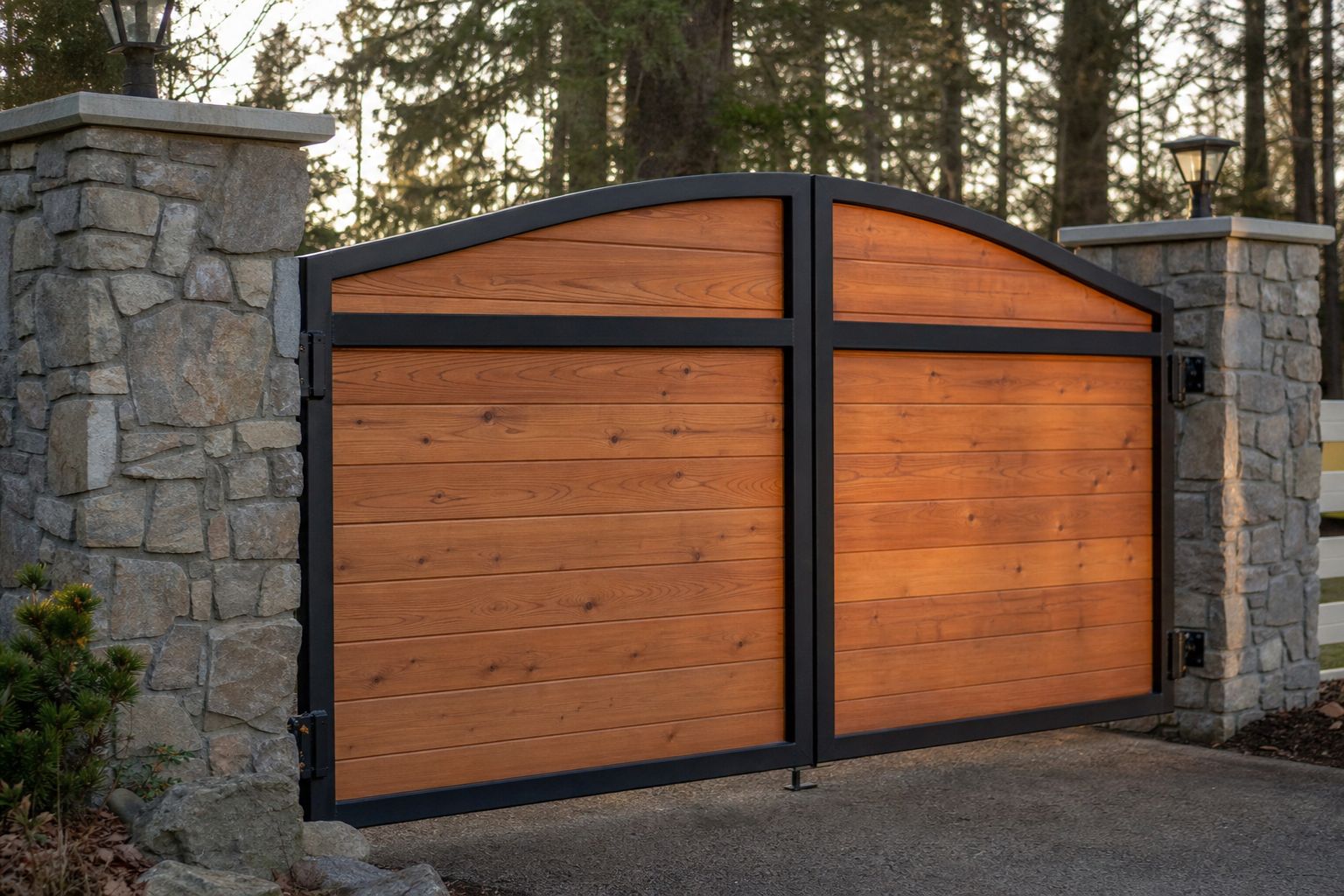
Swing gates open inward or outward on hinges anchored to posts or a wall. They work well on flat driveways with enough clearance on the swing side. Single swing gates suit narrower openings; dual swing gates handle wider driveways and give a symmetrical, formal look that works especially well in wood or ornamental aluminum.
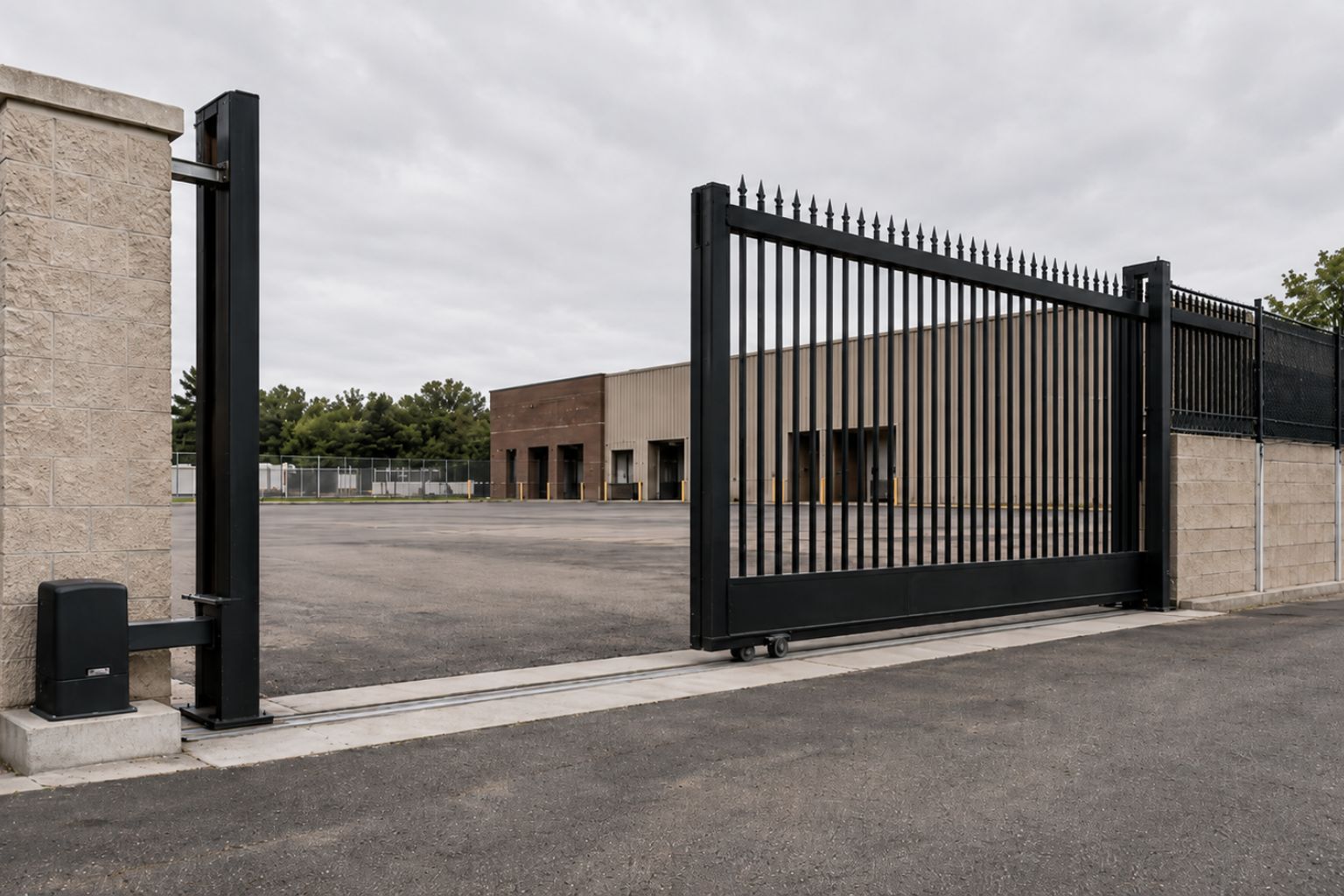
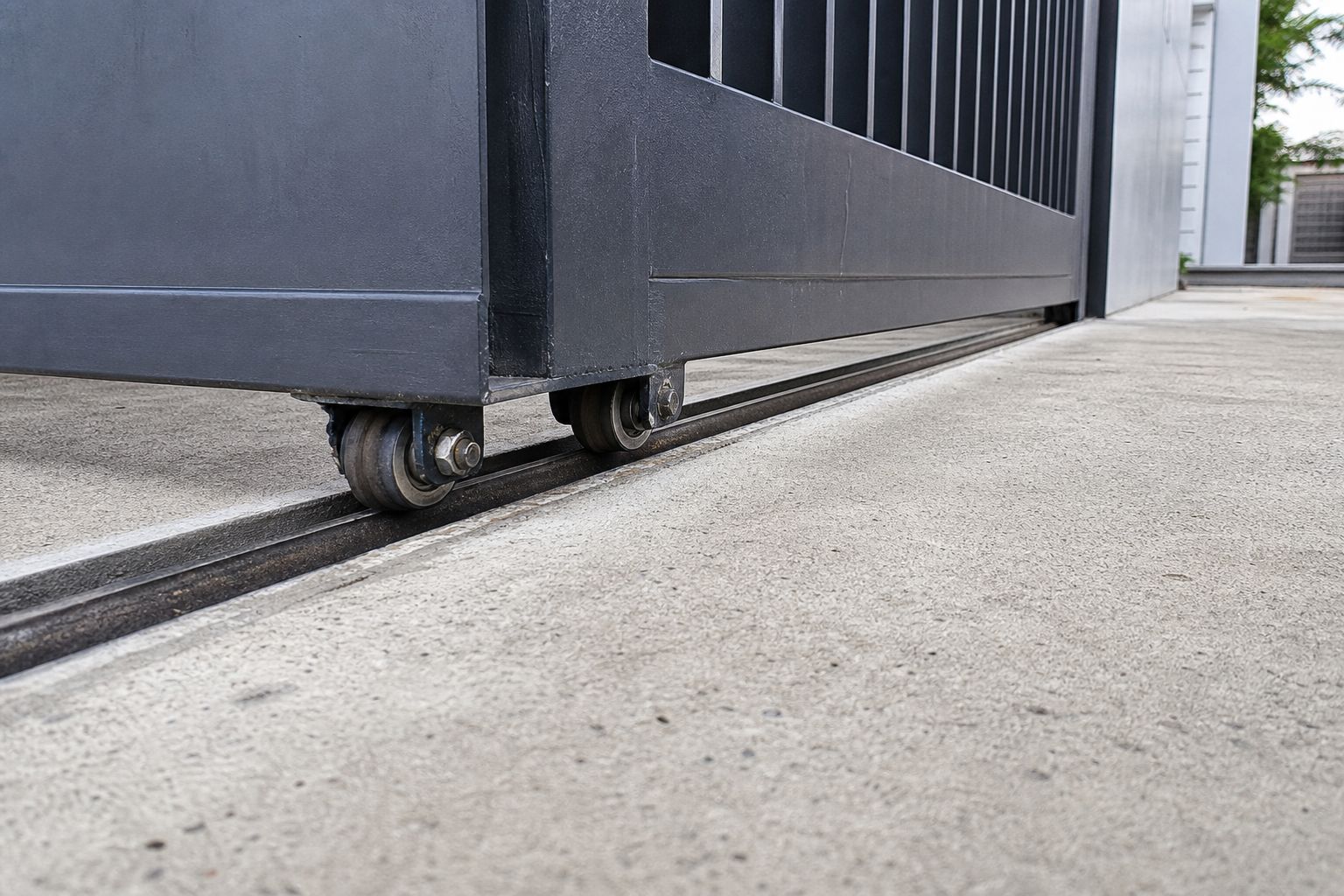
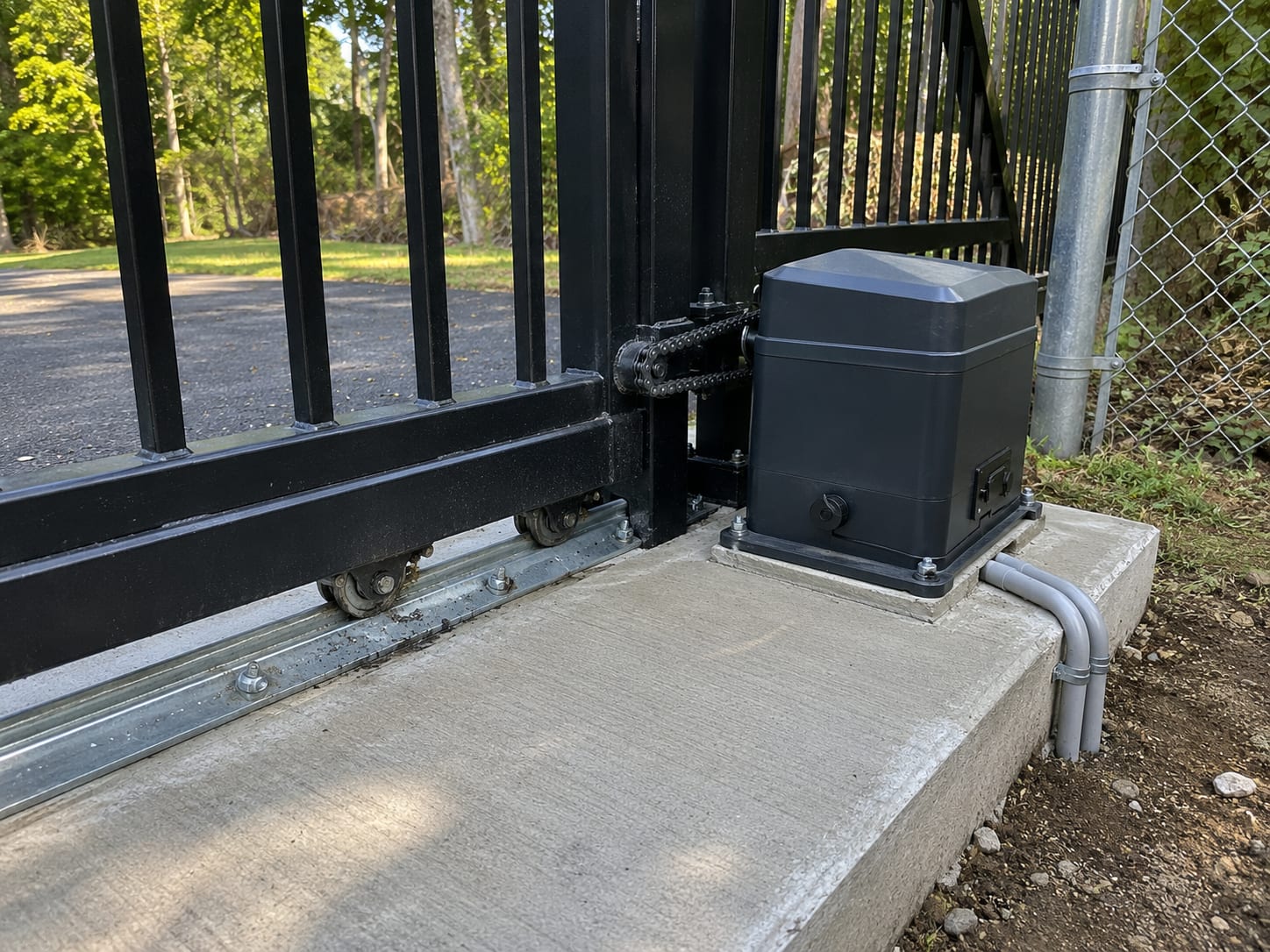
Sliding gates roll horizontally along a track rather than swinging open. They are the practical choice when your driveway slopes toward the street, when space on either side is tight, or when you need to automate a wide commercial entrance. Sliding gates require a concrete track foundation and enough lateral run space for the panel to retract fully.
Cantilever gates ride on roller trucks mounted to posts beside the opening, carried by a counterbalance tail section rather than a ground track, so they clear the ground entirely. Plan on roughly half the opening width again in extra fence line for the tail. This makes them a good fit for gravel driveways, areas where snow accumulation would jam a ground track, and commercial sites where heavy equipment needs a smooth, unobstructed path.
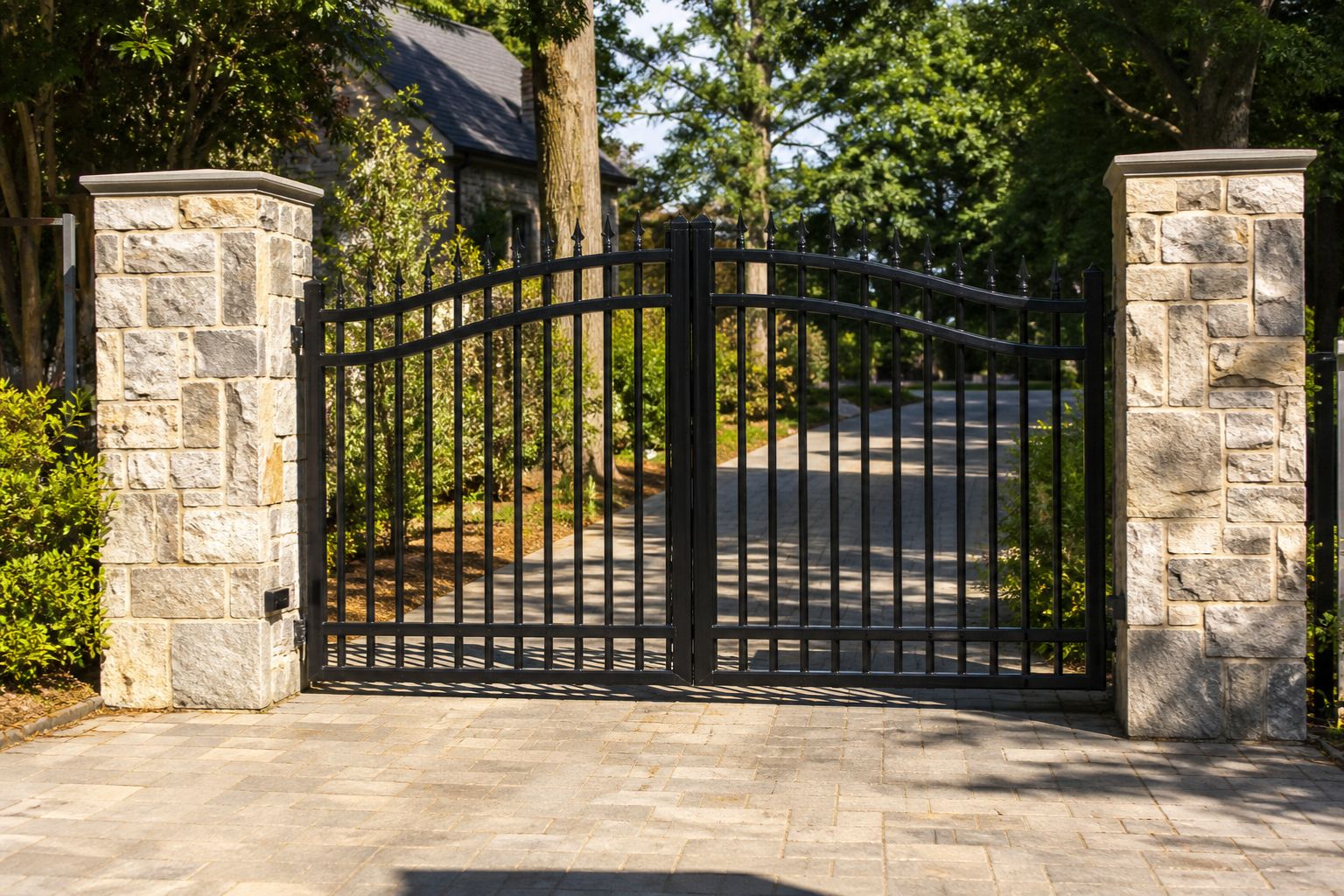
If you have a specific look in mind, a specific opening size, or a material combination that standard products do not cover, we fabricate custom gates. This includes double-swing driveway gates with steel frames and wood infill, arched aluminum gates with decorative pickets, and heavy-gauge steel gates for commercial or industrial entrances.
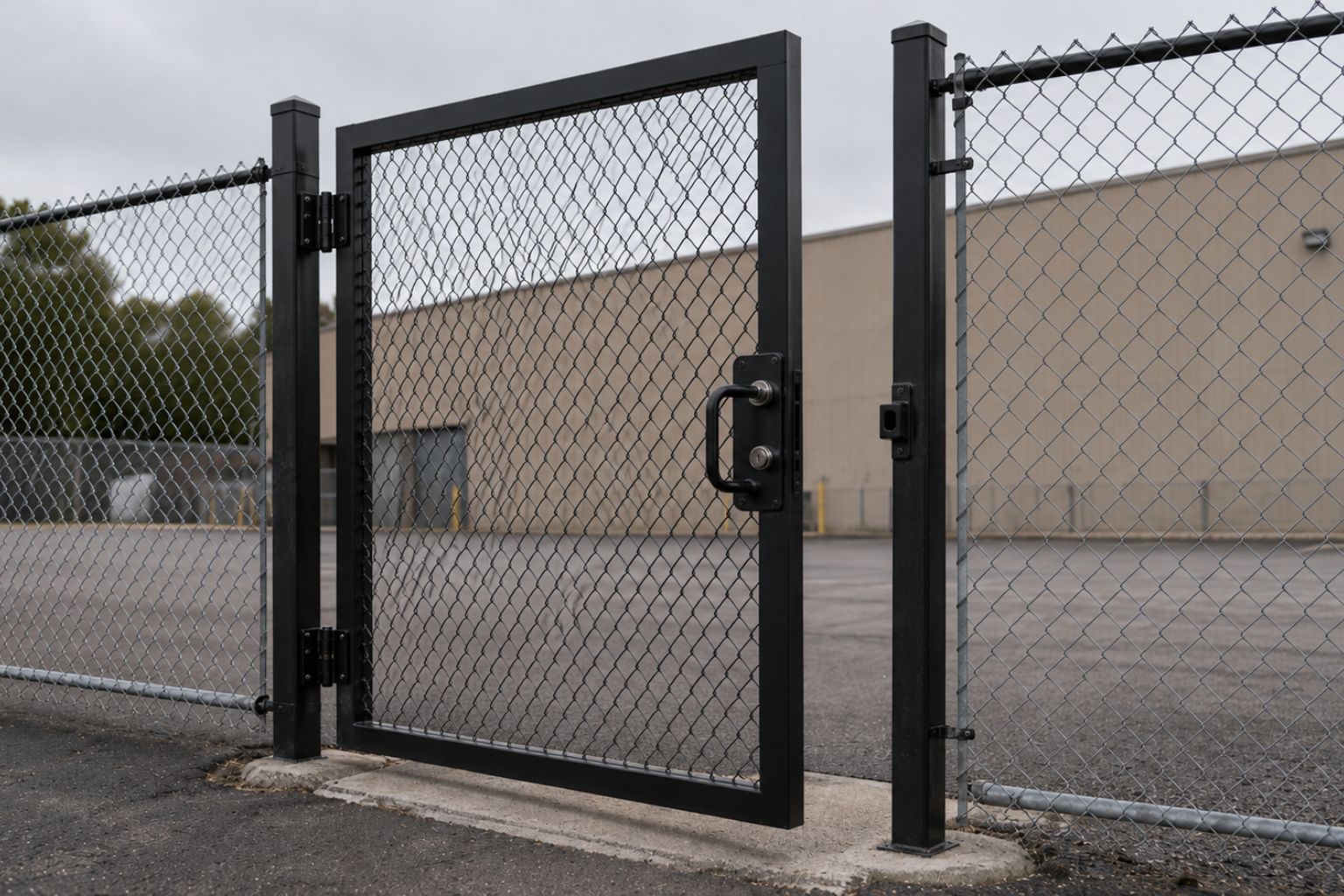
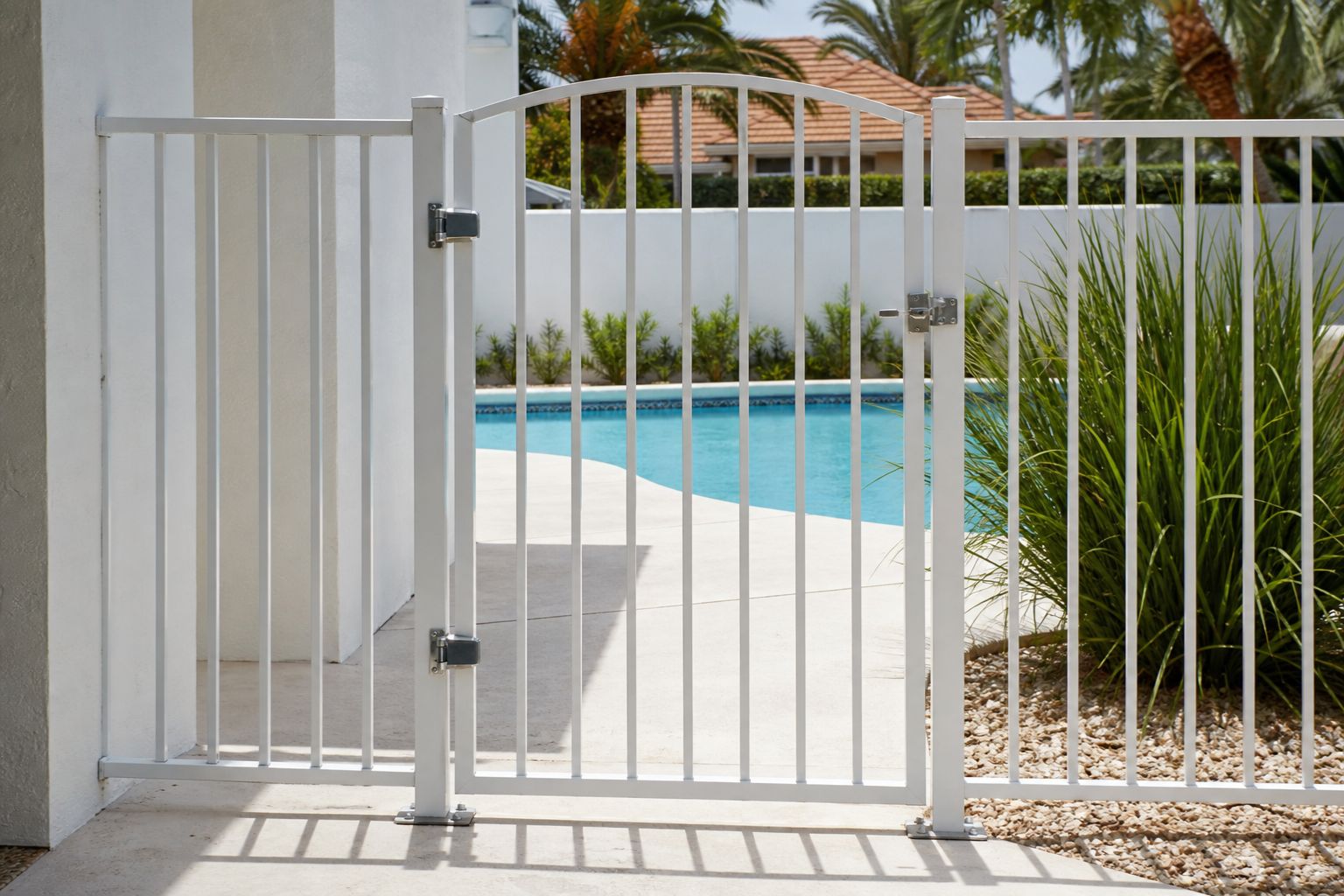
Pedestrian gates provide foot-traffic access separate from your main vehicle entrance. They are standard on fenced residential properties, pool enclosures, and commercial sites where employees and visitors need a dedicated walkway entry that does not require the main driveway gate to open.
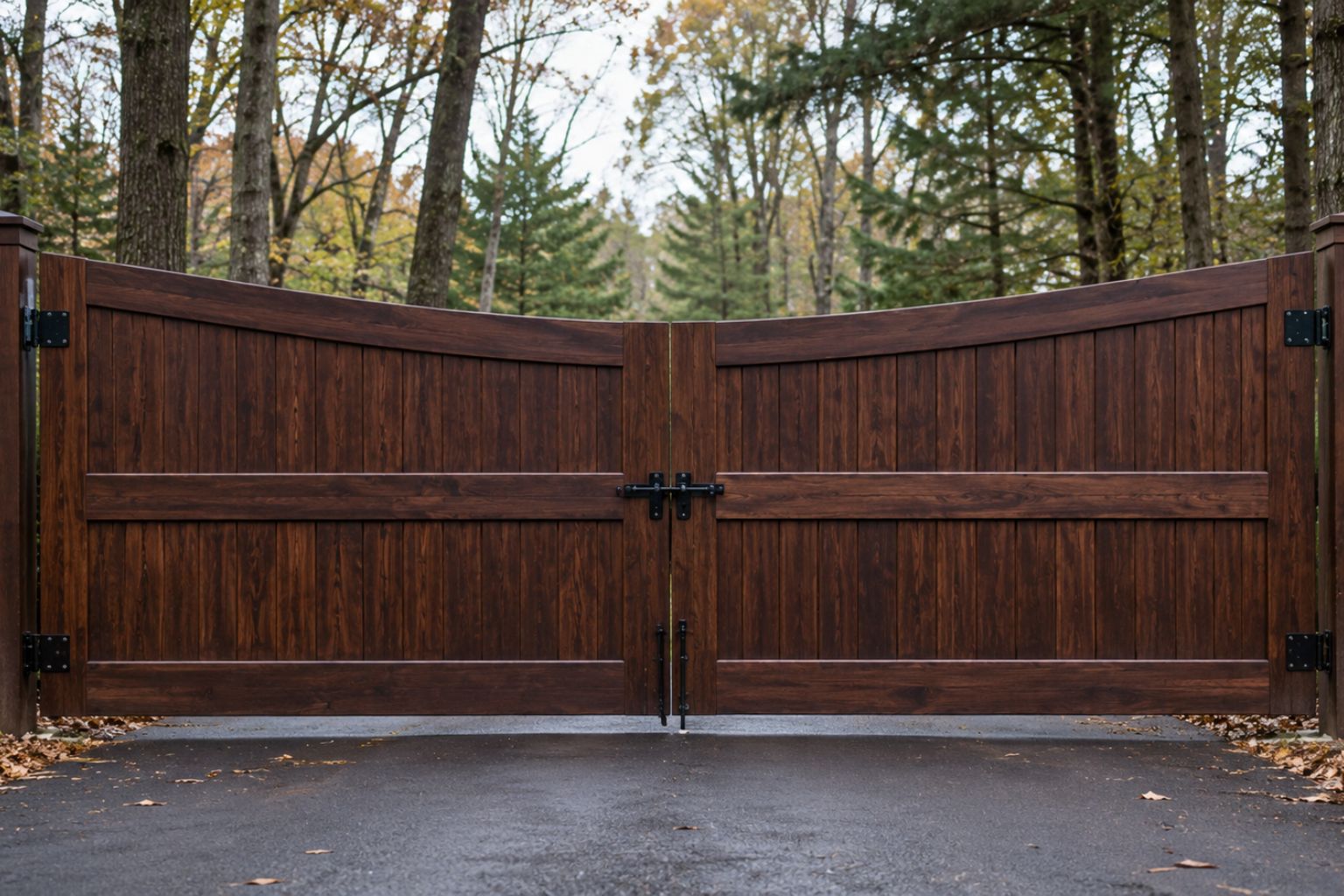
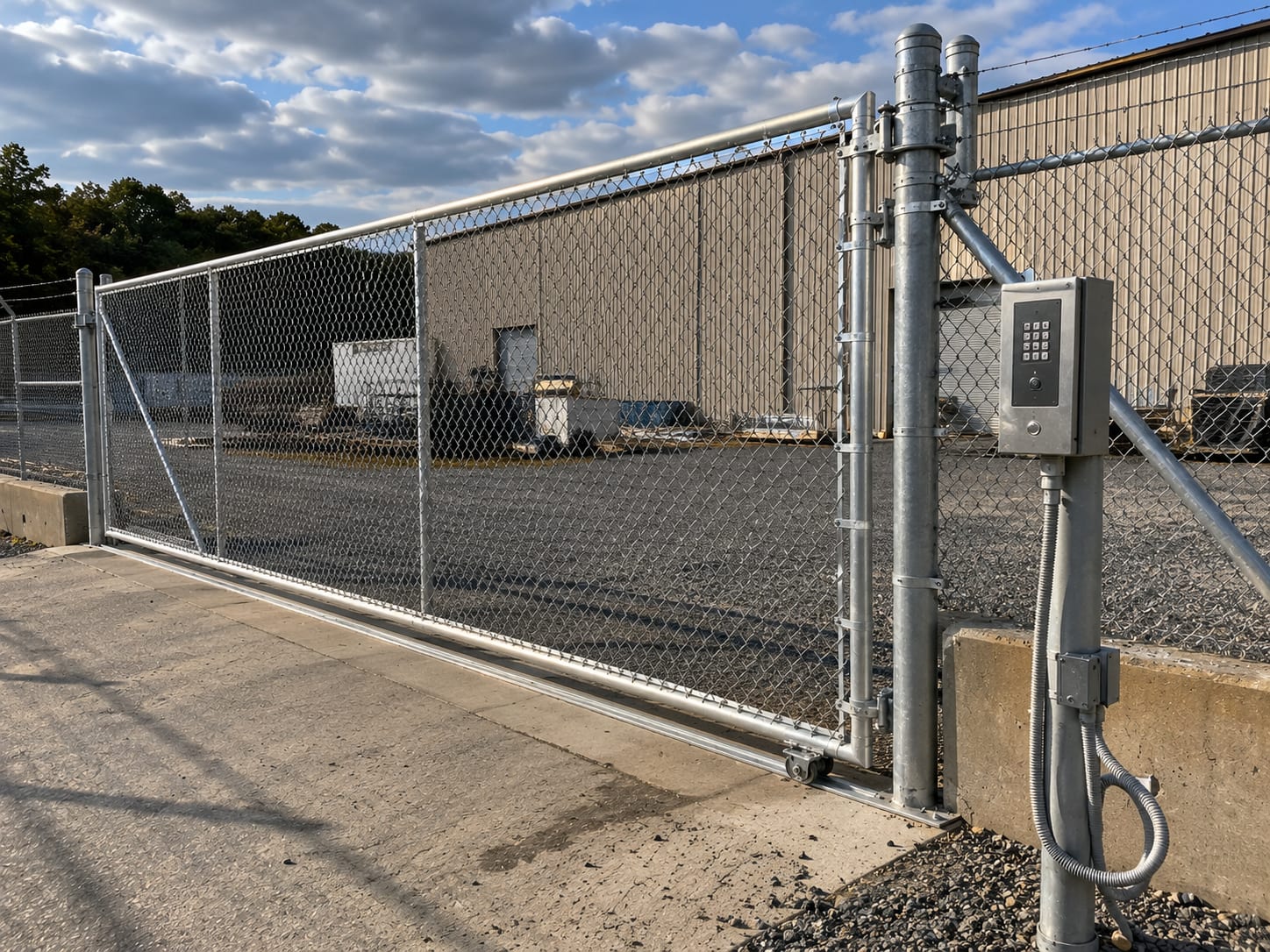
Any gate type above can be paired with an automatic operator. We install arm operators for swing gates and slide operators for sliding and cantilever gates. Automation can be tied into keypads, remotes, phone-based access control, or DoorBird intercom systems so you can manage entry from anywhere.
Materials: Wood, Steel, and Aluminum
The material you choose affects how your gate looks, how long it lasts, and how much maintenance it needs over time. We work with three primary materials and will give you a straight comparison so you can make the right call for your property and budget.
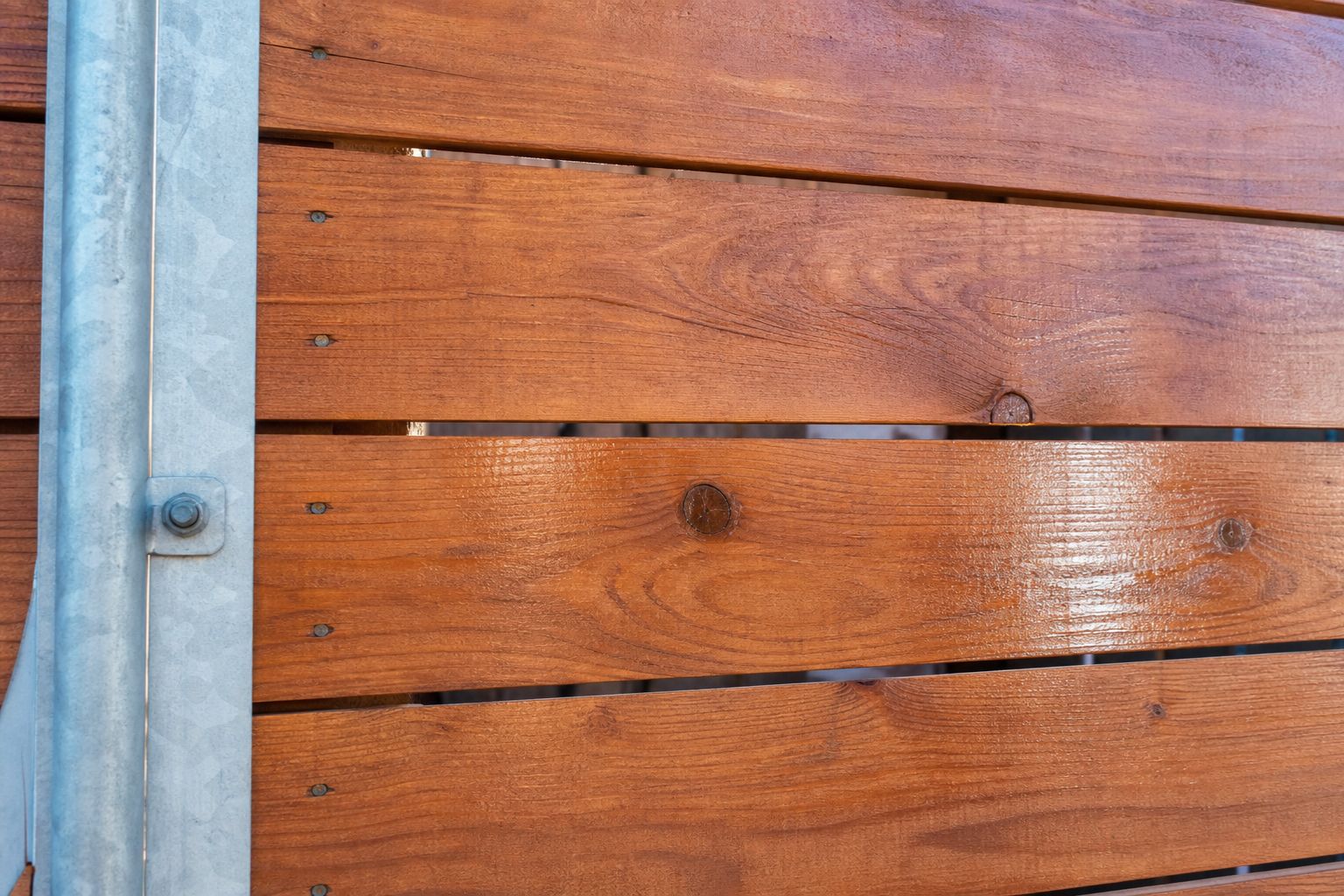
Wood gates offer a warm, traditional look that is hard to replicate in metal. Cedar and pressure-treated lumber are common choices in the Hudson Valley because they handle moisture and temperature swings reasonably well. Wood gates need periodic sealing or staining to stay in good shape, and they are heavier than aluminum, which matters when sizing an automatic operator. A well-built wood gate on properly set steel posts is a solid, long-lasting installation.
Steel gates are the strongest option we offer. We use galvanized or powder-coated steel for commercial entrances, high-traffic driveways, and custom fabrications where you need a gate that will not flex or deform under regular use. Steel requires a proper coating to resist rust, but when it is built and finished correctly, it is essentially maintenance-free for years.
Aluminum gates give you the look of ornamental metal at a lighter weight. They are rust-proof by nature, which makes them a popular choice along the Hudson River corridor where humidity can accelerate corrosion on uncoated steel. Aluminum is also easier on automatic operators since the reduced weight puts less strain on the motor and hardware. We carry aluminum in styles ranging from flat-top privacy panels to spear-topped ornamental designs.
Why the Foundation Work Matters More Than the Gate Itself
Most gate failures come back to the same root cause: posts that were not set properly. A gate is a heavy, moving object on a lever arm. Every time it swings or slides, it puts stress on the posts and hardware. If those posts are undersized, set too shallow, or not anchored in concrete, the whole thing starts to shift within a season or two.
In the Hudson Valley, frost heave is a real issue. Soil that freezes and thaws repeatedly through the winter will push shallow posts upward, throwing your gate out of alignment. We set gate posts below the frost line and use concrete footings sized to the weight and width of the gate. It takes more time and material upfront, but it is why our installations stay plumb and level when other gates are sagging.
The same logic applies to sliding gate track work. A track that is not perfectly level will cause your gate to bind, wear unevenly, and eventually fail at the rollers. We take the time to get the concrete foundation right before setting any hardware, because once the track is in, fixing a bad pour means starting over.
This is the part of a gate installation you cannot see once the job is done. It is also the part that determines whether you are calling us back for adjustments in six months or whether the gate just keeps working.
How the Installation Process Works
Here is what to expect from the first call through the day we pack up and leave your property.
Scroll the steps sideways to follow the full process.
Automatic Gates, Operators, and Access Control
Automating a gate adds real convenience, especially on a driveway you use multiple times a day. You pull up, the gate opens, and you drive through without getting out of your car. In wet or cold weather, that matters more than most people expect before they have it.
We install arm operators for swing gates and slide operators for sliding and cantilever gates. Operator selection depends on the weight and width of your gate panel, how many cycles per day it will see, and whether it will be exposed to heavy weather. A residential driveway gate that opens a few times a day has very different requirements than a commercial entrance with constant vehicle traffic.
For access control, we work with keypads, remote clickers, loop detectors, and DoorBird intercom systems. DoorBird lets you see who is at your gate from your phone, speak to them, and open the gate remotely without going outside. It integrates with most smart home platforms and keeps a log of entry events, which is useful for both convenience and security.
We also install inground motors for swing gates where a surface-mounted arm operator is not ideal aesthetically or physically. Inground motors sit in a sealed concrete foundation box buried at the gate's hinge point, keeping the hardware out of sight. They are a popular choice on stone pillar entrances and high-end residential driveways where a visible arm operator would disrupt the look of the installation.
Every automated gate we install includes a manual release so the gate can be operated by hand during a power outage.
Properties We Work On
We install gates on a range of property types across Putnam, Dutchess, Orange, Ulster, Rockland, and Westchester counties. Each setting comes with its own practical requirements.
Single and double-swing driveway gates are among our most common installations. We work on everything from straightforward suburban driveways to long private lanes on larger lots in Carmel, Pawling, and New Paltz where a formal entrance gate makes both practical and aesthetic sense.
Commercial entrances handle more traffic and need more durable hardware. We install heavy-duty sliding and cantilever gates for warehouses, storage facilities, car dealerships, and industrial properties across Newburgh, Middletown, Poughkeepsie, and Yonkers. Commercial jobs typically involve loop detectors for vehicle activation and access control systems for employee entry.
Pool gates in New York must meet specific code requirements, including self-closing, self-latching hardware and latch placement that prevents children from reaching it. We install code-compliant pool gates as part of pool fencing projects throughout the region.
If your neighborhood has a shared entrance gate, we handle both new installations and upgrades to existing systems. This often includes replacing aging operators, updating access control hardware, and bringing the gate configuration into compliance with current codes.
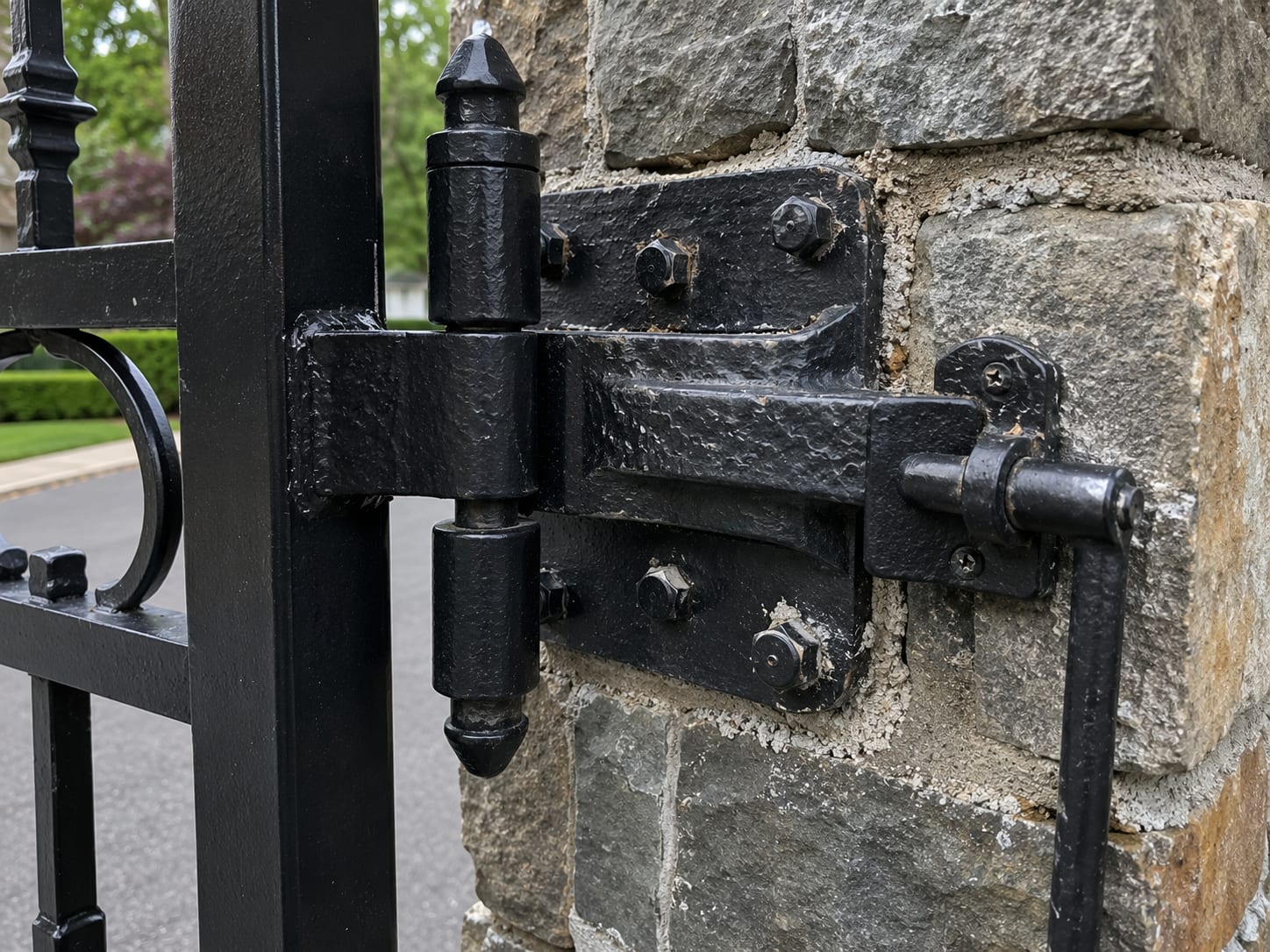
For properties where the entrance is part of the curb appeal, we fabricate custom gates in steel or aluminum with decorative details, custom sizing, and finishes matched to the existing architecture. Stone pillar entrances, circular driveways, and long private lanes all have design requirements that standard catalog gates do not always address.
Why Choose Portillo Fences and Gates
We are a licensed and insured fencing contractor serving the Hudson Valley and Lower Hudson Valley. That matters practically. It means you have recourse if something goes wrong, and it means the workers on your property are covered. A lot of gate installations in this region are done by unlicensed crews, and the homeowner does not find out until the work fails inspection or the posts start to lean.
We handle gate work as a specialty, not a side job. Our team installs swing gates, sliding gates, custom entrances, and automated systems regularly, so we are not learning on your project. We know how operators behave in cold weather, what hardware holds up on a gate that gets used twenty times a day, and what to do when a driveway grade complicates a standard installation.
We also work across all materials rather than steering you toward whatever we happen to stock. If wood fits your project better than aluminum, we will tell you that. If your driveway slope makes a swing gate impractical, we will say so before you buy one. The goal is an installation that works well for your specific property.
Our service area runs from Yonkers and White Plains in the south to Kingston and New Paltz in the north, including Ossining, Tarrytown, Mount Kisco, Peekskill, Port Chester, New City, Spring Valley, Suffern, Wappingers Falls, Beacon, Brewster, Carmel, Mahopac, and the communities throughout Putnam County.
Frequently Asked Questions About Gate Installation
These are the questions we hear most often before and during the estimate process.
Do I need a permit to install a driveway gate?
It depends on your municipality and the specifics of your installation. Automated gates, new structural post installations, and gates above a certain height often trigger permit requirements. Requirements differ across Westchester, Rockland, Putnam, Dutchess, Orange, and Ulster counties, and can vary town to town within the same county. We research the requirements for your specific address and let you know before we start.
My driveway slopes toward the street. Can I still have a swing gate?
Sometimes, but it depends on the degree of slope. A swing gate that opens inward will hit the pavement before reaching a full 90 degrees if the slope is steep enough, which limits how wide a vehicle can enter. In those cases, a sliding or cantilever gate is usually the better solution. We assess slope during the site visit and give you a clear answer before you decide on a configuration.
What is the difference between an arm operator and an inground motor?
An arm operator mounts on the surface of the post and connects to the gate with an articulating arm, so it is visible when the gate is open. An inground motor sits in a sealed foundation box buried at the hinge point and is essentially invisible once installed. Inground motors are more expensive and require excavation at each hinge point and a drainage path for the foundation box. They are typically chosen for aesthetic reasons on high-end entrances where visible hardware would disrupt the look.
How long does a gate installation take?
A straightforward single swing gate on existing posts can be completed in a day. A new installation with post setting requires a return visit after the concrete cures, which typically means the full installation spans two to three days spread over about a week. Automated gate installations with access control wiring generally take two full days on site. Custom fabrications add lead time before the installation date, depending on the complexity of the design.
Can you automate a gate I already have?
Often yes, but it depends on what you have. We assess the existing gate for weight, width, and structural integrity, and we check whether the posts are solid enough to handle the torque of an operator. If the gate and posts are in good shape, adding an operator is usually straightforward. If the gate is warped, the hinges are worn, or the posts have shifted, it usually makes more sense to address those issues before adding automation.
What happens to an automatic gate during a power outage?
Every automatic gate we install includes a manual release mechanism. Depending on the operator type, this is either a release key or a disconnect lever that disengages the motor so the gate can be pushed or pulled open by hand. We show you how to use it before we leave the site. Some operators also support battery backup, which keeps the gate functional through a short outage without any manual intervention.
How do I maintain a wood gate versus an aluminum gate?
Wood gates need periodic cleaning and a fresh coat of sealant or stain every two to three years, depending on sun and moisture exposure. Skipping this step allows water to penetrate the wood and accelerate rot, especially at the bottom rail and around hardware. Aluminum gates are much lower maintenance. They do not rust and hold their finish well in the Hudson Valley climate. An occasional rinse and a check of the hinges and latch are usually all that is needed.
What is a DoorBird system and how does it work with a gate?
DoorBird is a video intercom system that mounts at your gate and connects to your smartphone via Wi-Fi. When someone arrives, you get a notification, can see them on camera, speak to them through the app, and open the gate remotely with a button press. It keeps a history of visitors and integrates with access control keypads and smart home systems. It works whether you are inside your house or across the country.
Get a Quote on Your Gate Installation
Call (845) 282-3336 or use our contact form