

September 10, 2026
- Fence Height
- Zoning
- Hudson Valley
New York State sets no maximum residential fence height. The 2025 Residential Code, in effect since December 31, 2025, leaves permit exemptions to each local code-enforcement program, and your town's zoning code sets the height. In the municipalities below, front-yard limits run from 3 to 4 feet and side and rear limits from 6 to 8 feet.
A fence can be exempt from a building permit and still be over the zoning limit, so the height you plan has to be checked against the zoning code itself.
Key Takeaways
No statewide height limit
Section R105.2 of the 2025 Residential Code of New York State delegates permit exemptions to the local authority, and local zoning decides height
Front yard
4 feet in most of the codes below, 3 feet in the Town of Southeast
Side and rear yard
6 feet in most, 8 feet in Poughkeepsie and, away from a street, Kingston
Corner lots have two front yards
in Southeast, Suffern and Spring Valley, so the lower front-yard limit applies on both street sides
Retaining walls count
Carmel adds the height of an underlying berm or wall to the fence height, and White Plains requires a permit for any retaining wall
Which rule wins
Local governments can adopt building standards that are higher or more restrictive than the state Uniform Code under Executive Law Section 379, and the state's permit rules do not authorize work that violates local zoning. The Village of Suffern's zoning law states the same principle directly: where two rules conflict, the more restrictive one prevails. In practice, the height limit on your parcel is the one in your municipality's zoning code, whether or not a permit is required.
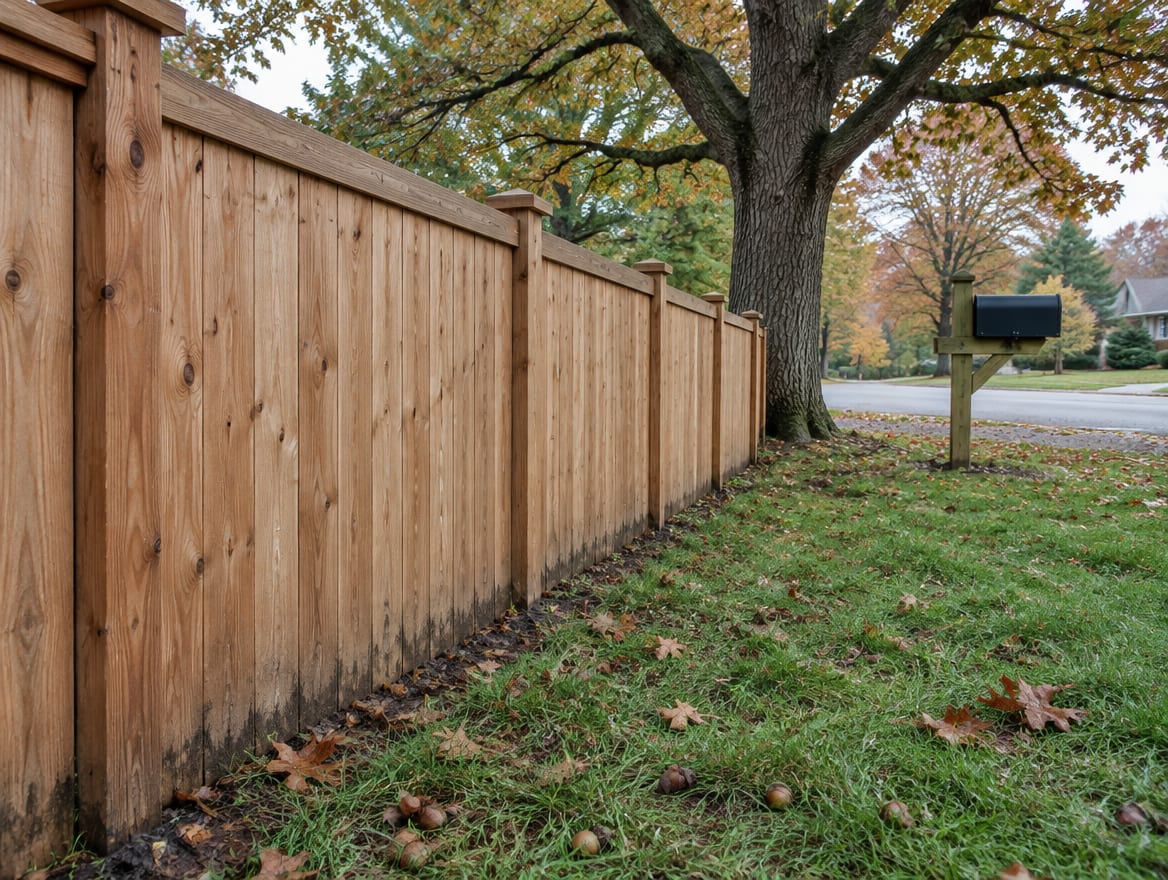
Height limits in 11 municipalities
Height limits in 11 municipalities
Front yard: 3 feet along any lot line in the required front yard
Side and rear yard: 6 feet behind the required front yard
Code section: Section 138-27(C)
Tap a row to open it.
The exceptions are specific to each code:
- Southeast allows a fence or wall over 6 feet, up to 10 feet, if it is set back from the lot line by two-thirds of the setback.
- Clarkstown allows a solid fence over 4 1/2 feet if it is set back from the lot line by two-thirds of its height.
- Yonkers lets certain nonresidential fences that are at least 75 percent open reach 8 feet. Suffern allows the same 8 feet, and Spring Valley 12 feet.
- Newburgh allows a chain-link exception up to 8 feet when the Building Inspector approves it for public safety.
- Poughkeepsie measures height from finished grade to the top of the fence, wall or hedge, and gives certain sports courts a 10-foot exception.
Corner lots
On a corner lot the question is which yards count as front yards.
- Southeast treats each street-facing yard as a front yard, and the site plan designates the rest. The 3-foot front limit applies on both street sides.
- Suffern and Spring Valley also treat each lot line that abuts a street as a front lot line, so both street-facing yards are required front yards. The owner designates the remaining yards as side and rear.
- Carmel counts all yards along street lines as front-yard setbacks for setback purposes, and allows the Building Inspector to permit a fence within one front yard on a corner lot, installed at the required yard setback line.
- Poughkeepsie deems one yard other than the front yards the rear yard on a corner lot, and the others side yards.
- Middletown requires a side-street yard on a corner lot equal in depth to the required front-yard depth on that street.
Before you order panels, confirm with the zoning official which street-facing area is the front yard for your parcel.
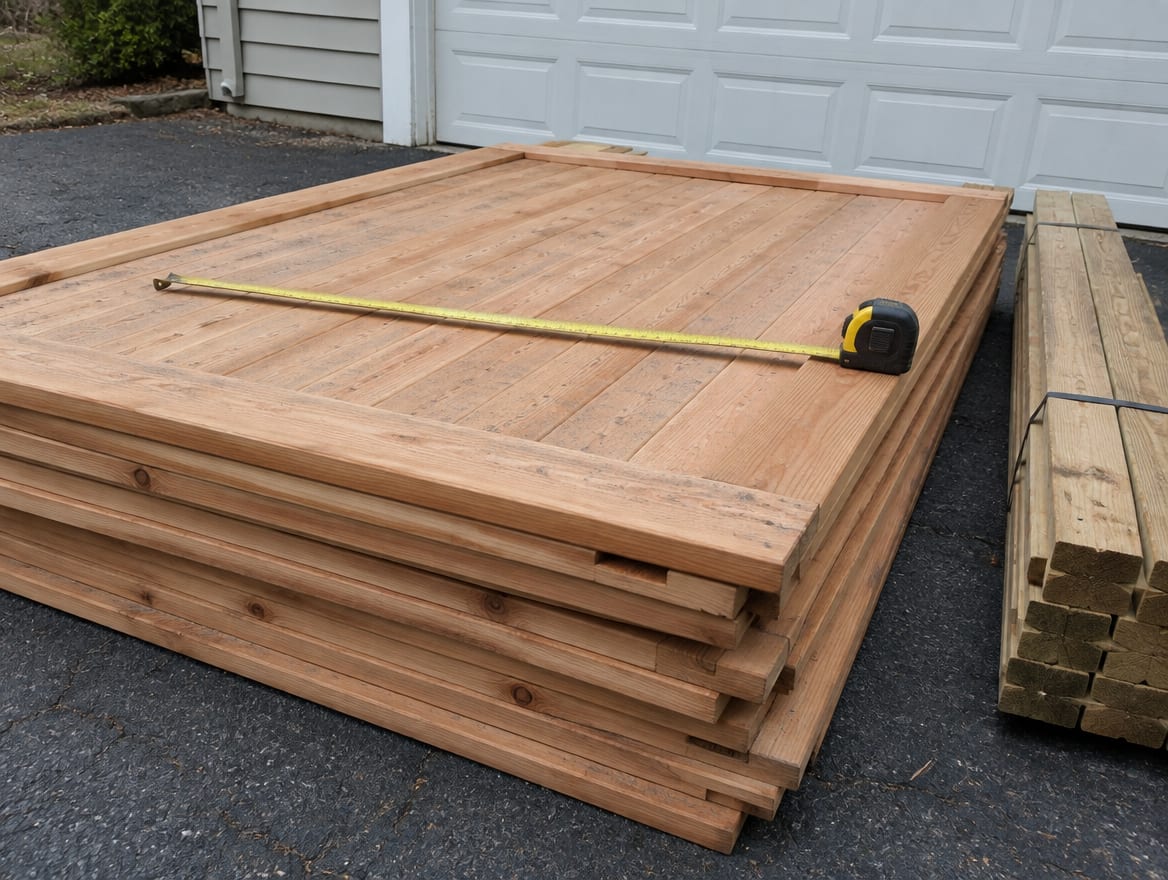
Sight triangles at corners and driveways
Near an intersection the limit drops, whatever the district:
- White Plains: nothing over 30 inches in the triangle formed 45 feet from the intersection
- Yonkers: 4 feet maximum in the triangle formed by the street lines and a diagonal connecting points 75 feet from the intersection along each street center line
- Poughkeepsie: nothing over 30 inches above curb level in the triangle formed by street lines and a line connecting points 20 feet from the intersection, and fences, walls and hedges should not sit within 5 feet of a driveway or street intersection
- Spring Valley: nothing over 3 feet in the triangle formed by street right-of-way lines and points 75 feet from the intersection, measured above the road surface at the nearest edge of the traveled way
- Suffern: a clear sight line within the triangle formed by the street line and a line between points at least 25 feet back from the intersection
- Kingston: fences, trees, shrubs and walls must not obstruct motorists' sight lines
Southeast limits a fence or wall to 3 feet above the apex at the street center line inside the triangle in its Sketch A, so ask the Southeast Building Department for the dimensions. Yonkers also prohibits a fence or wall that blocks driver vision at a driveway opening. For Carmel, Newburgh, Middletown and Clarkstown, ask the local building or engineering office about intersection and driveway sight distance.
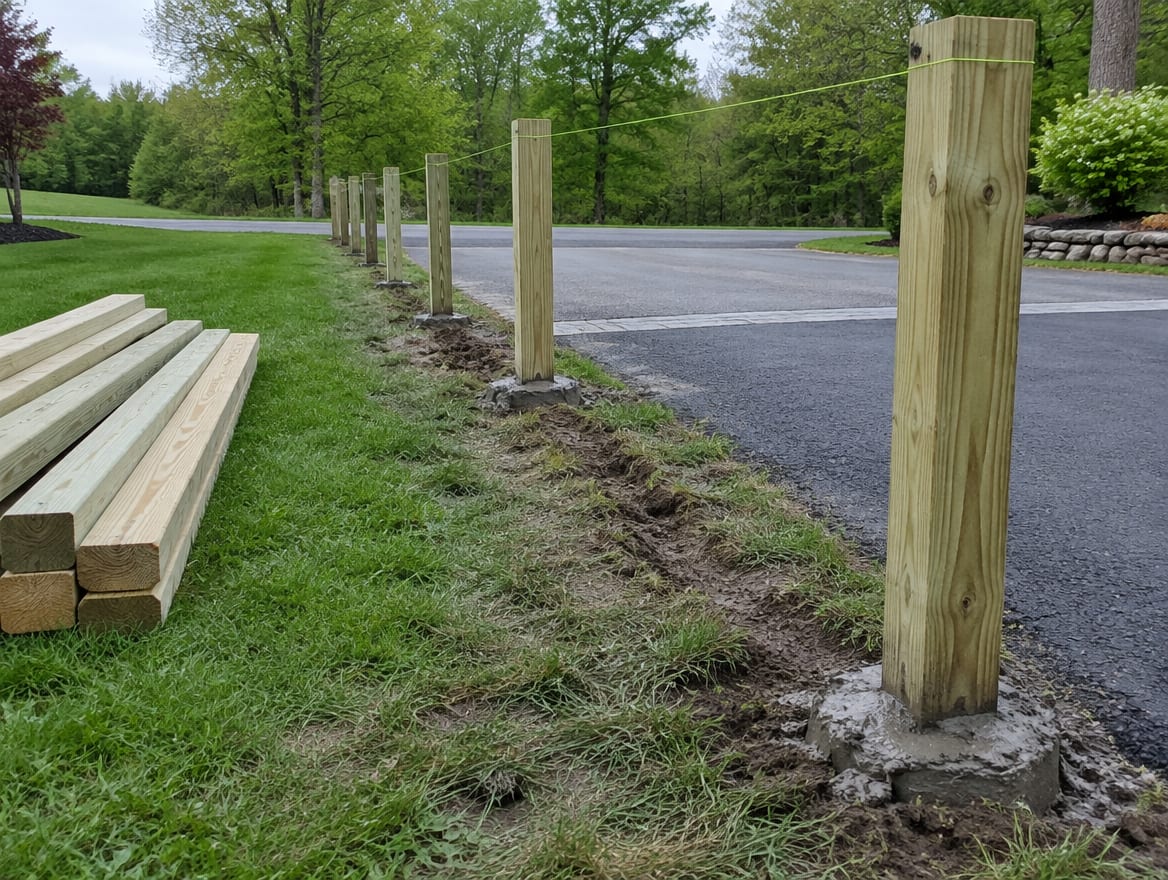
Finished side and retaining walls
White Plains, Suffern and Spring Valley require the finished or more attractive side to face the neighbor or the street. Poughkeepsie and Kingston require the finished side to face outward, with the bracing or posts on the inside.
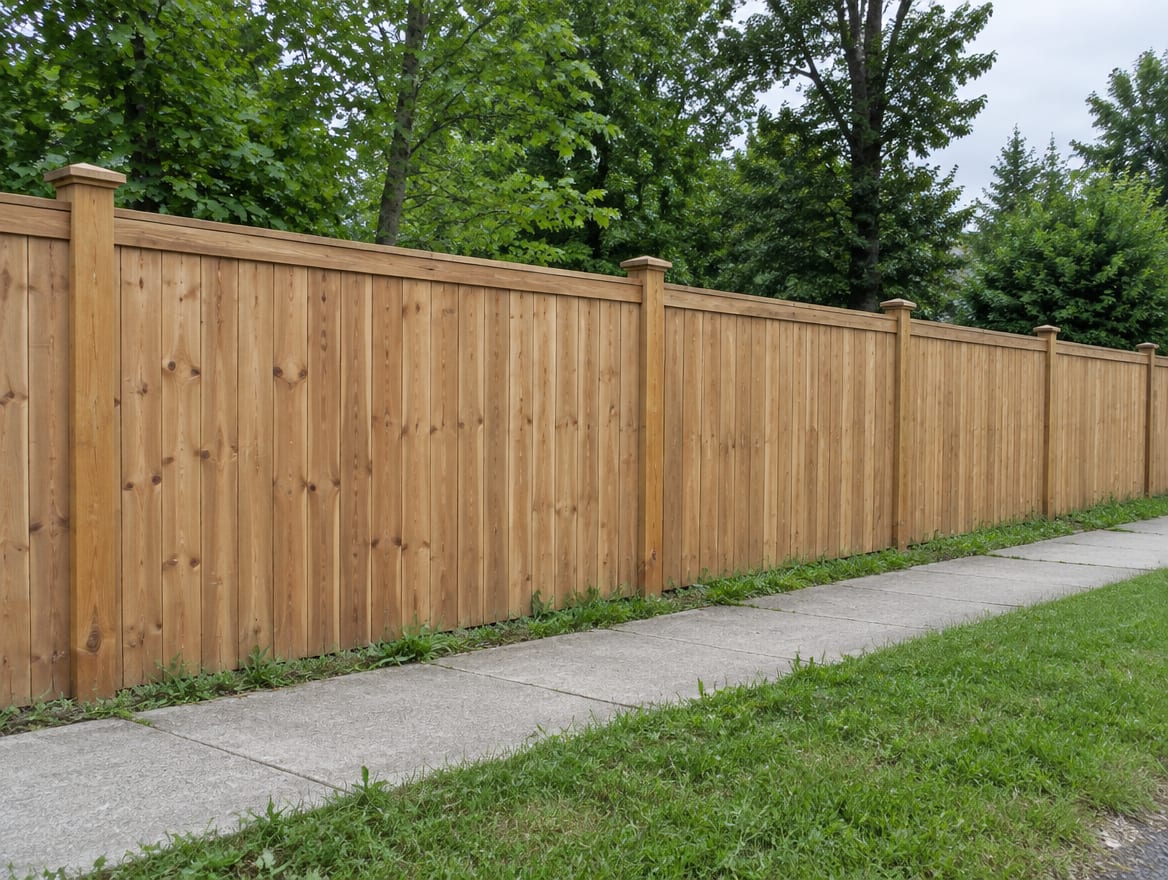
Retaining walls change the math. Carmel adds the height of the berm or retaining wall under a fence to the fence height. White Plains requires a building permit for any retaining wall. Yonkers and Spring Valley allow an open safety fence of up to 4 feet on top of a retaining wall that exceeds the ordinary height limit when the commissioner or building inspector requires it, and Yonkers calls for that fence to be at least 75 percent open. For any wall-and-fence combination, confirm the combined height calculation with the local zoning or building official.
Check yourself
1. Does New York State set a maximum residential fence height?
2. What is the front-yard fence limit in the Town of Southeast?
3. Which municipality adds the height of an underlying berm or retaining wall to the fence height?
4. What is the White Plains height limit inside the sight triangle formed 45 feet from a corner intersection?
Frequently Asked Questions
Q: What is the maximum fence height in New York? A: There is no statewide maximum. The 2025 Residential Code delegates permit exemptions to local programs, and zoning sets height. In the 11 municipalities above, the most common limits are 4 feet in front and 6 feet on the sides and rear.
Q: Can I build a 6-foot privacy fence in my front yard? A: Not in any of the codes above. Front-yard limits there are 3 to 4 feet, and Clarkstown allows up to 4 1/2 feet for a solid fence.
Q: Is a 6-foot fence always allowed in the back yard? A: Often, but not always. Poughkeepsie and Kingston allow up to 8 feet in some yards, and Middletown limits residential side yards to 4 feet. Check your own code.
Q: Does a fence on a retaining wall count toward the height limit? A: In Carmel, yes. The berm or wall height is added to the fence height. Confirm the combined height with your zoning office wherever a wall is involved.
Q: If no permit is required, can I ignore the height rule? A: No. A permit exemption does not remove the zoning limit. A fence over the limit can be ordered lowered or removed.
Q: Which side of the fence faces the neighbor? A: In White Plains, Suffern and Spring Valley the finished side faces the neighbor or street. In Poughkeepsie and Kingston it faces outward.
The height number is the easiest fact to check and the most expensive one to get wrong. Pull your municipality's zoning section, find your yard on the plan, and confirm the number with the building office before the fence is ordered.
At Portillo Fences and Gates, we install and repair fencing across Putnam, Westchester, Dutchess, Orange, Ulster and Rockland Counties, from wood and vinyl to aluminum and residential fencing. We check your municipality's height rules before we quote. Contact us for a free estimate, or call (845) 282-3336.