

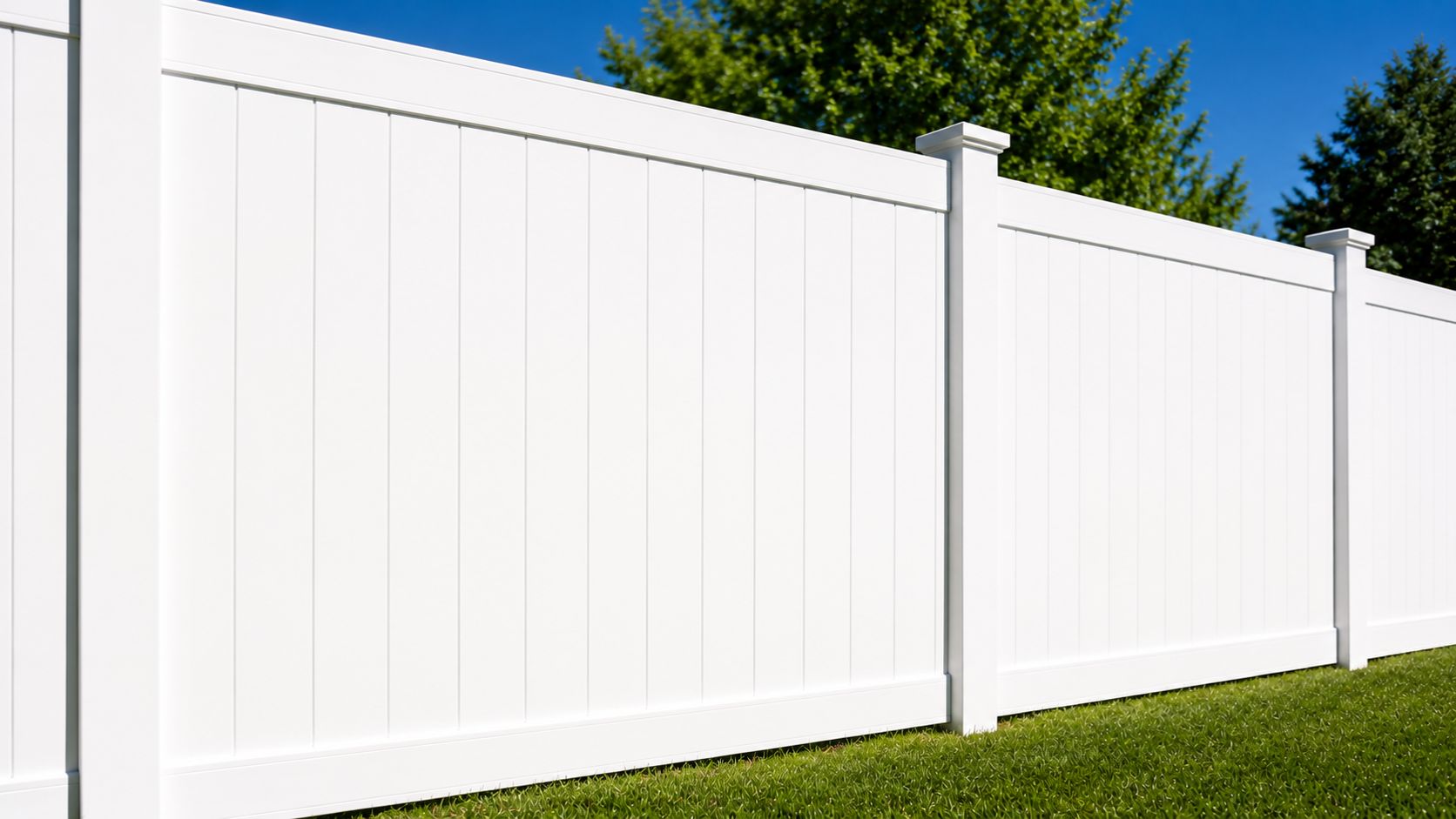
Vinyl Fencing That Looks Great and Lasts Even Longer
What Vinyl Fencing Actually Gives You
Vinyl fencing is one of the smartest choices a homeowner can make, and not because of marketing. The material resists moisture, insects, and temperature swings without losing its shape or color over time. If you've ever dealt with a wood fence that started cupping, cracking, or turning gray after a few winters, you already know why this matters.
What you get with a vinyl fence is a clean, finished look that stays that way with almost no effort. No sanding, no staining, no annual sealing. A light rinse with a garden hose handles most of what New York weather throws at it, saving homeowners a meaningful amount of time and money over the life of the fence.
Vinyl also comes in a wider range of styles than most people expect: privacy panels with a tight board-on-board layout, picket styles for front yards and classic suburban lots, split-rail designs for open properties, and semi-privacy options that give you airflow without sacrificing seclusion. Whether your goal is to define your property line, contain pets and kids, or add visual separation between you and a neighbor, there's a configuration that fits.
At Portillo Fences and Gates, we work with residential and commercial property owners across Brewster, Mahopac, Poughkeepsie, White Plains, Newburgh, and the rest of our service area. We handle the full installation from property assessment to final post, and we make sure the fence you end up with is exactly what you had in mind when you called. Reach us at (845) 282-3336 to schedule a site visit.
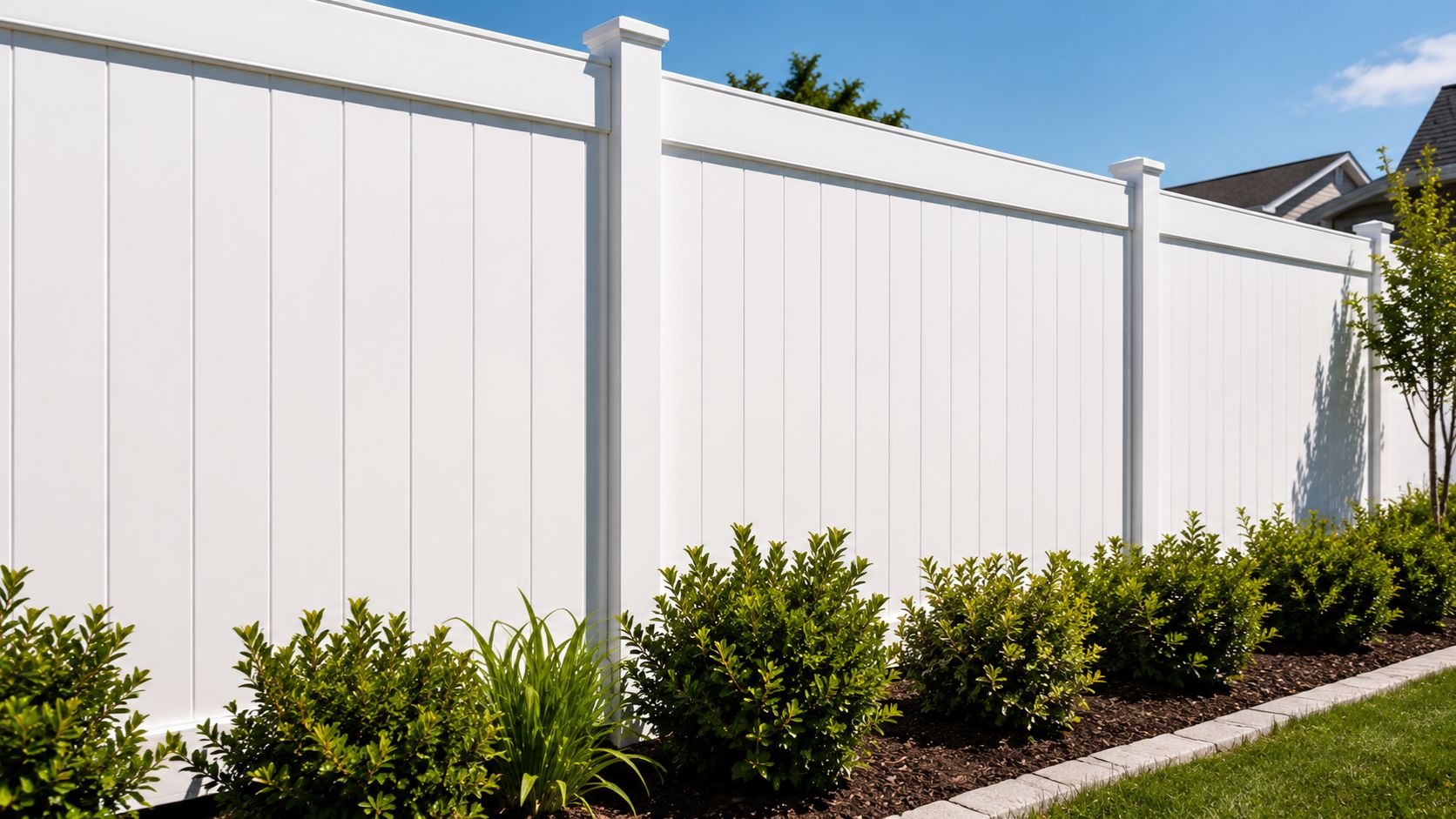
Why Vinyl Makes Sense in New York
New York winters are rough on outdoor structures. Freeze-thaw cycles, heavy rain, summer humidity, and UV exposure all work against materials that aren't built to handle them. Vinyl is. Here's what makes it a particularly good fit for properties in this region.
Vinyl doesn't absorb moisture the way wood does, so it won't swell, rot, or develop soft spots after a wet season. There's no metal hardware to rust out on the posts or rails, and the smooth surface means no splinters if kids or pets are around it regularly.
Vinyl's color runs through the material itself rather than sitting on top of it. UV exposure won't peel or chalk it out the way painted wood eventually does. White stays white, tan stays tan, without scraping and repainting every few years.
When posts are set properly below New York's frost line, vinyl holds up through repeated freeze-thaw cycles without cracking or shifting. The material has a small amount of built-in flex that works in its favor when temperatures swing hard between seasons.
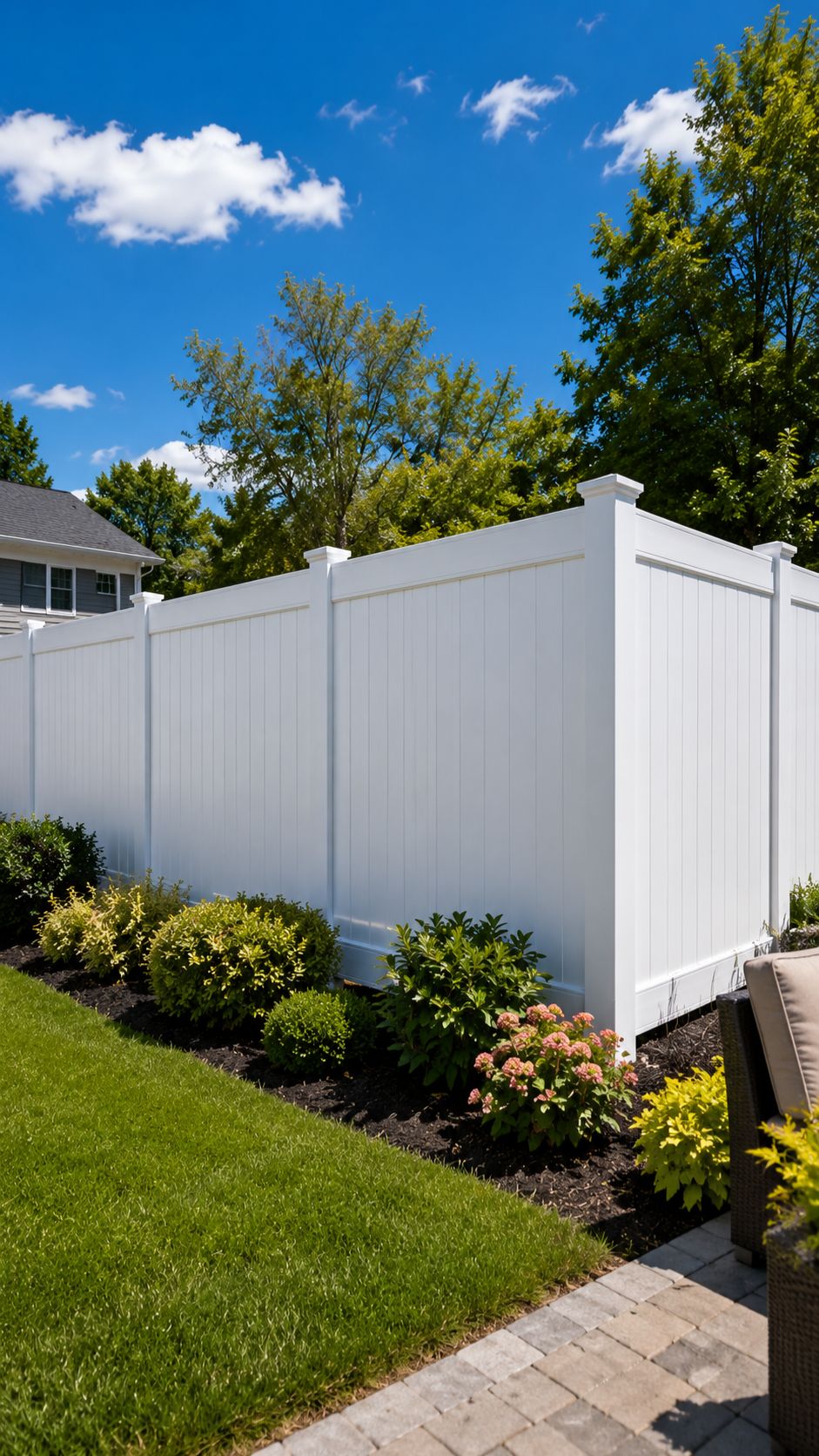
Once a vinyl fence is installed correctly, ongoing maintenance is minimal. An occasional rinse removes dirt, pollen, and mildew before it can set. There's no resealing schedule, no annual treatment, and no need to budget for professional upkeep the way you sometimes do with wood.
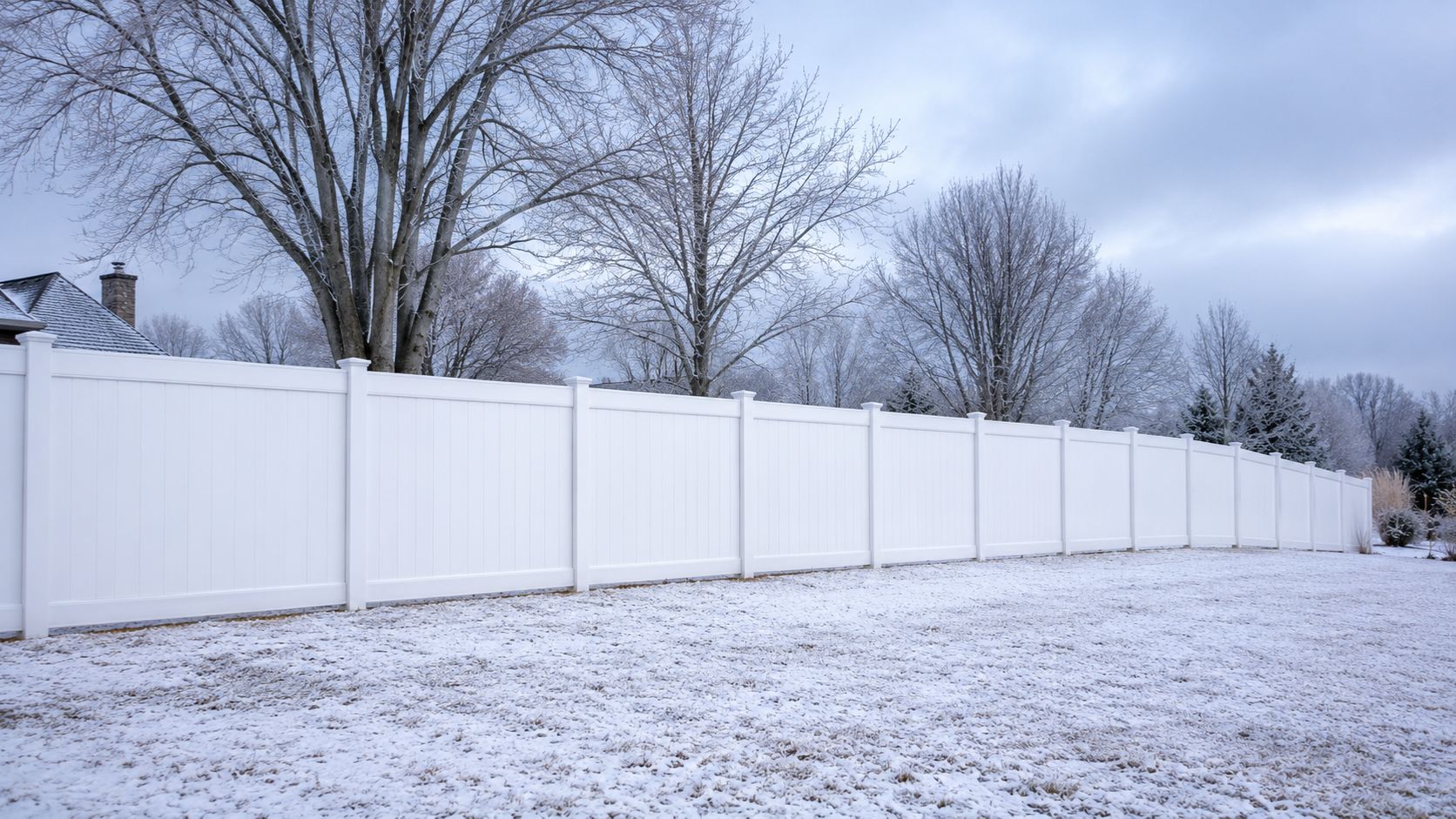
Quality vinyl fence systems use thick-walled profiles and steel-reinforced posts where needed. That structure holds up well against wind loading, which matters on open suburban lots and larger properties across the Hudson Valley where gusts have more room to build.
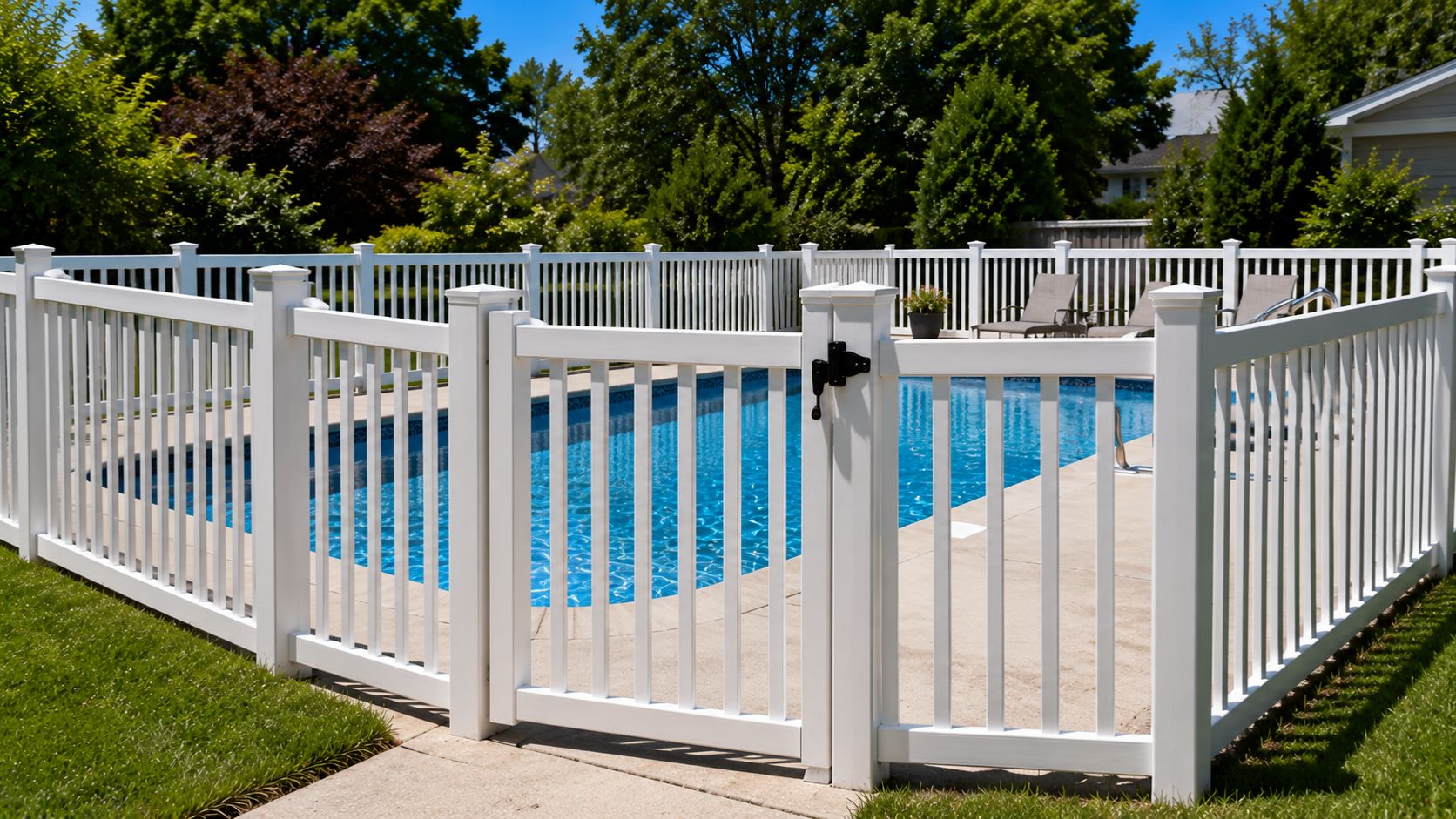
A vinyl fence looks sharp from day one and keeps looking that way without effort. Whether you're planning to sell in a few years or just want something that doesn't distract from your landscaping, vinyl delivers a tidy, finished appearance that reads as intentional and well-maintained.
Vinyl Fence Styles We Install
Not every property needs the same thing, and vinyl gives you real options. Here are the styles we commonly install across our service area, along with what each one does best.
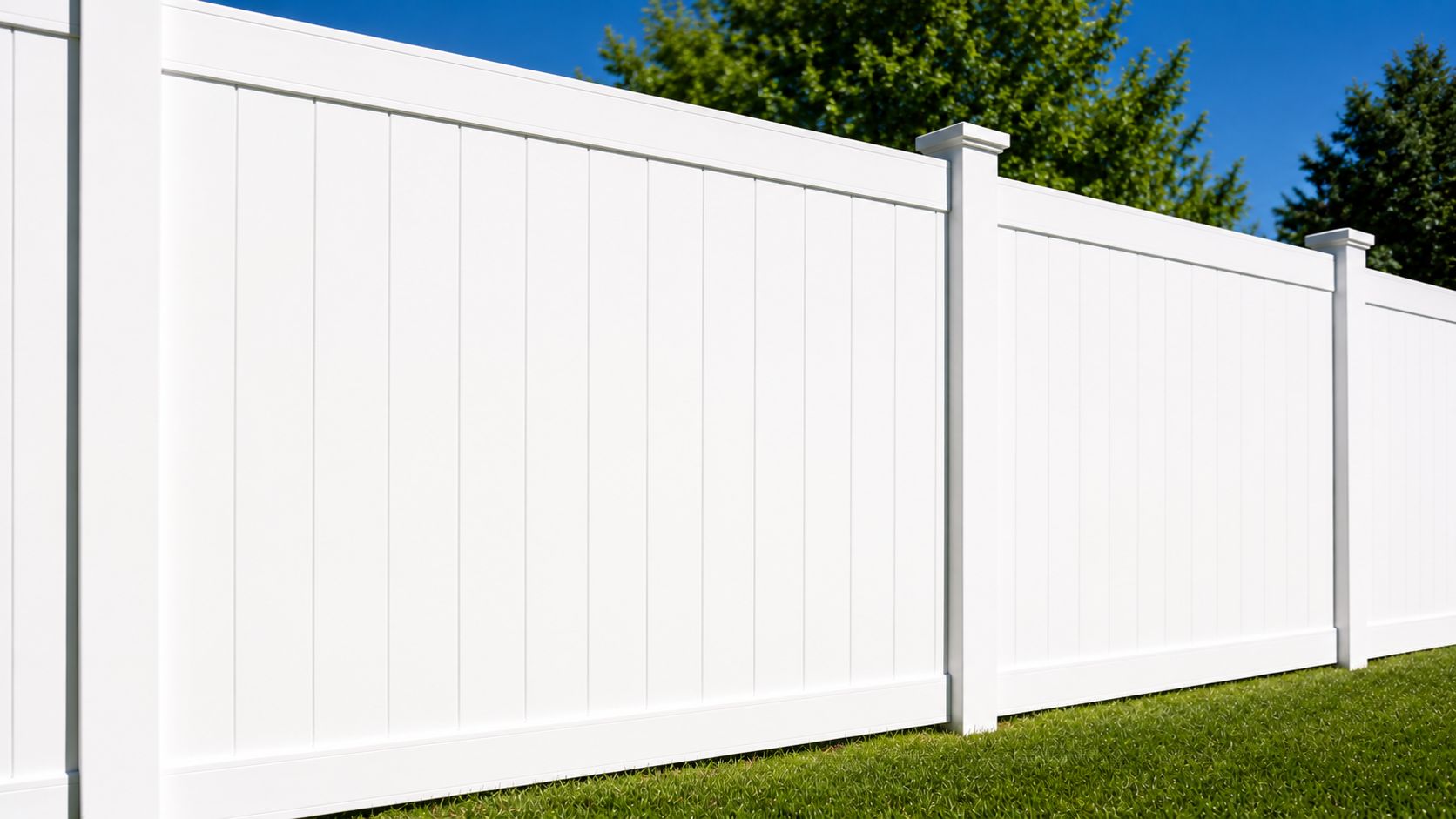
Panels are installed with boards flush against each other, creating a solid visual barrier. This is the right choice if you want a true backyard retreat, need to screen out a road or commercial neighbor, or want your outdoor space to feel fully private. Heights typically run from 6 to 8 feet depending on local zoning. For a deeper look at the process, see our guide to vinyl privacy fence installation in Brewster and the Hudson Valley.
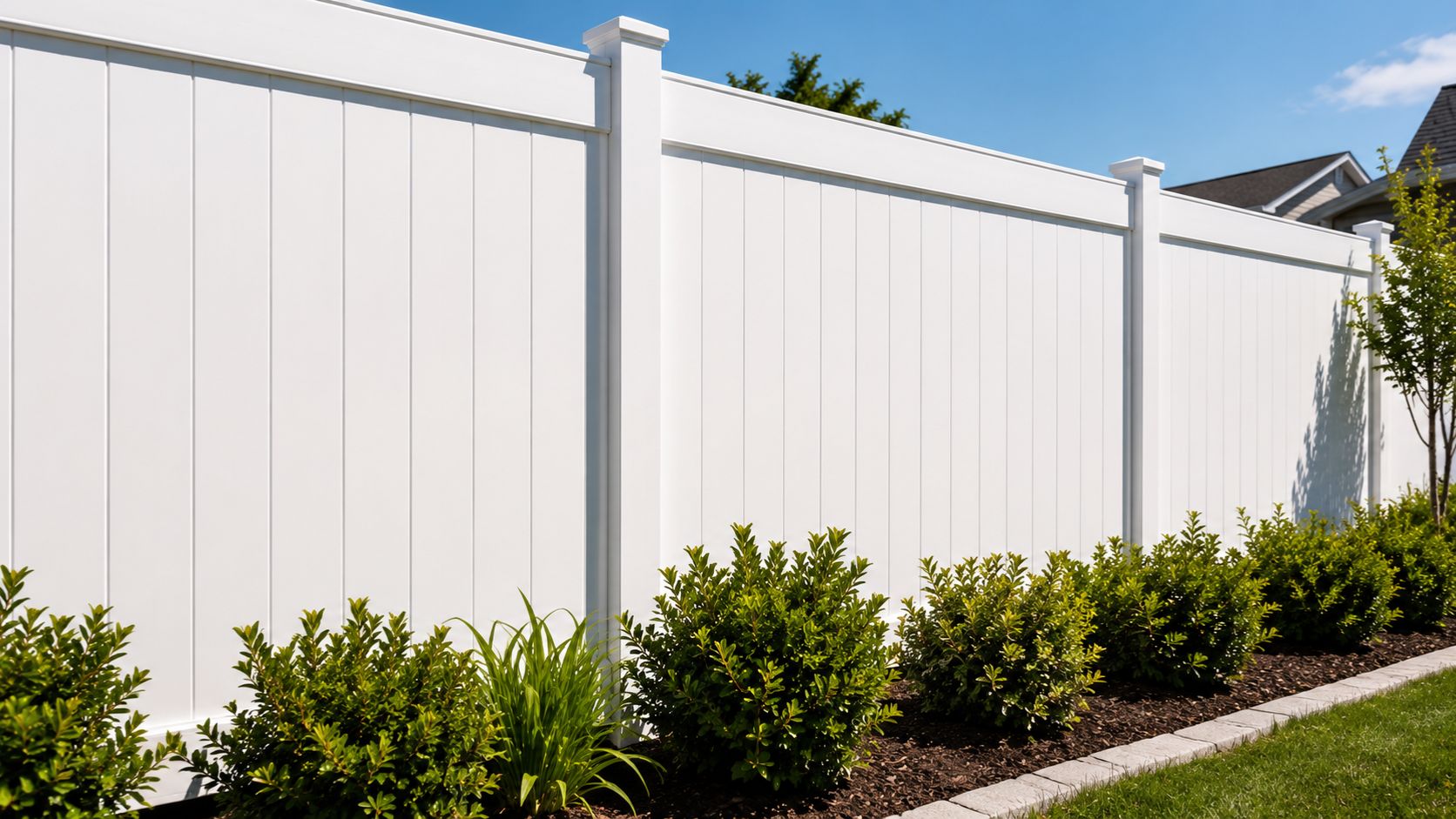
Small gaps between the pickets or slats let air move through while still blocking most sightlines from the street or neighboring yards. It's a good middle ground for homeowners who want privacy without making the yard feel closed in, and it handles wind better than a fully solid panel on exposed lots.
The classic front-yard style with evenly spaced vertical pickets on a horizontal rail. Vinyl picket fences give you a clean, traditional look that defines your property line without blocking light or making the space feel enclosed. They work well around garden areas and open front lawns across Carmel, Pawling, Tarrytown, and similar communities. Our vinyl picket fence installation guide walks through post depth, materials, permits, and what a quality install involves.
Two or three horizontal rails run between sturdy posts without vertical infill. This style works best on larger or rural properties where you want to mark boundaries or create a visual perimeter without blocking views. It's low-profile, simple, and looks right at home on properties in New Paltz, Kingston, and the more rural parts of our service area.
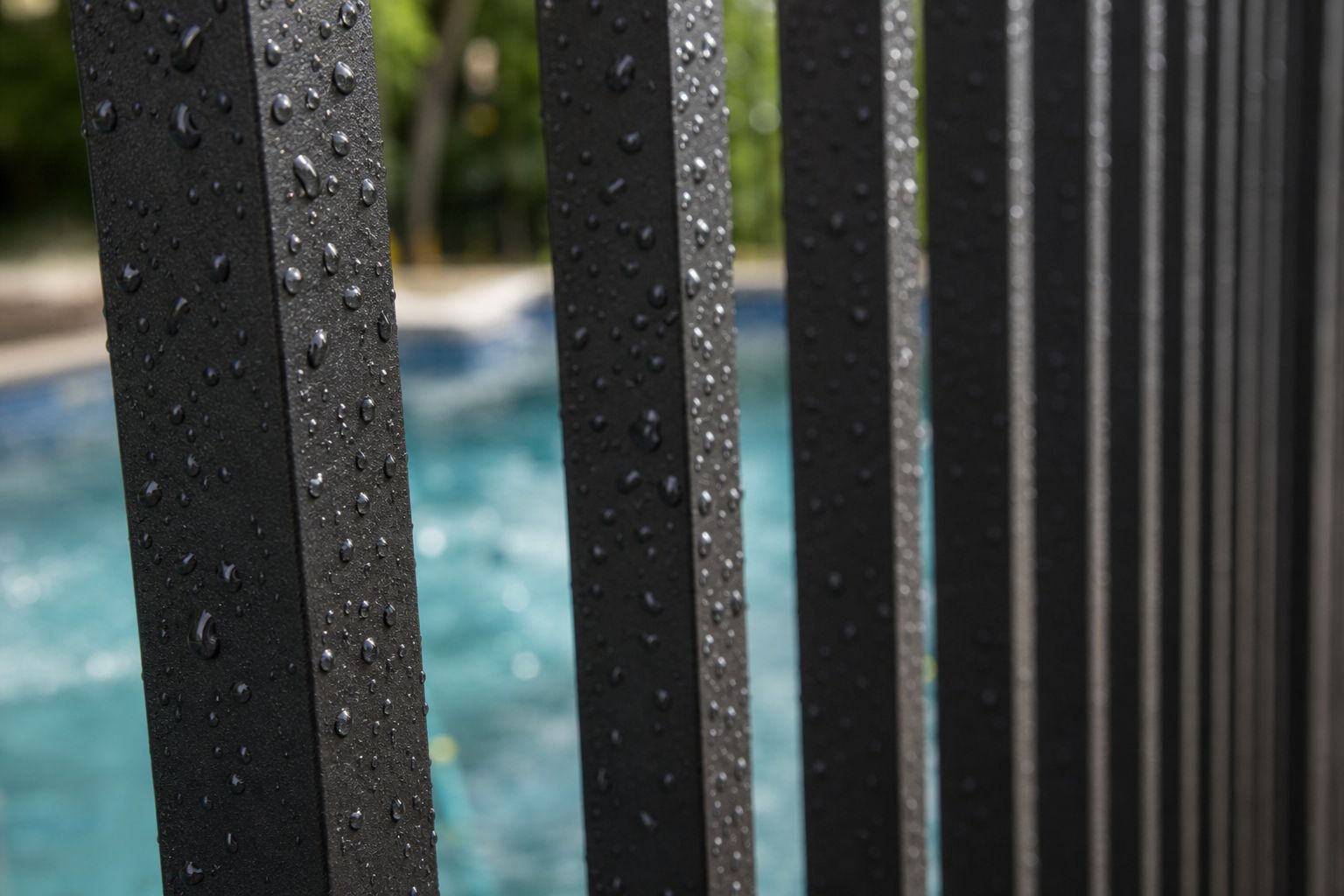
Vinyl is a popular choice for pool enclosures because it doesn't corrode from chlorine or moisture exposure the way some metals can. We install pool fencing to meet New York's code requirements for height, gate self-closing mechanisms, and latch placement so the finished installation is both safe and compliant.
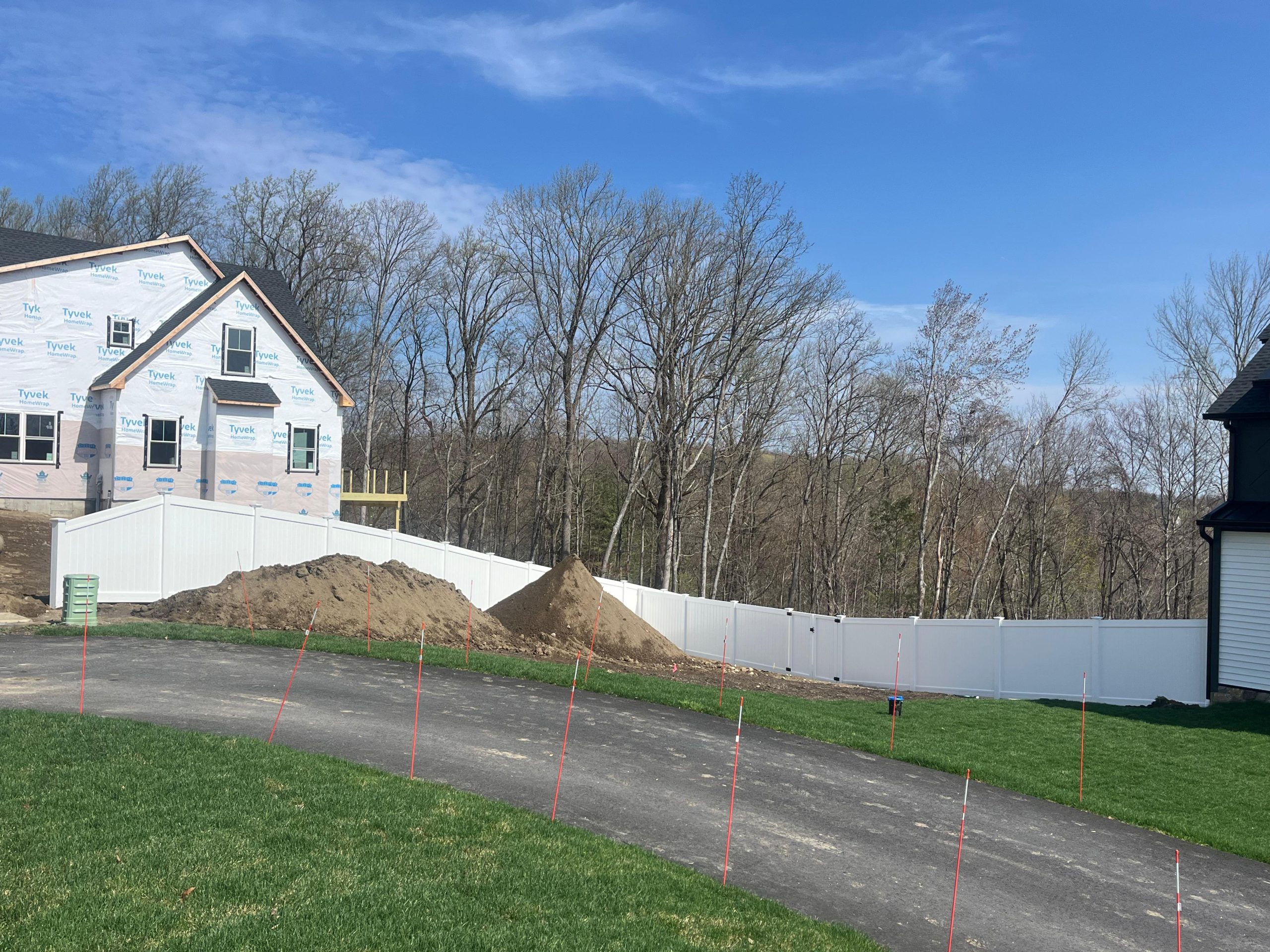
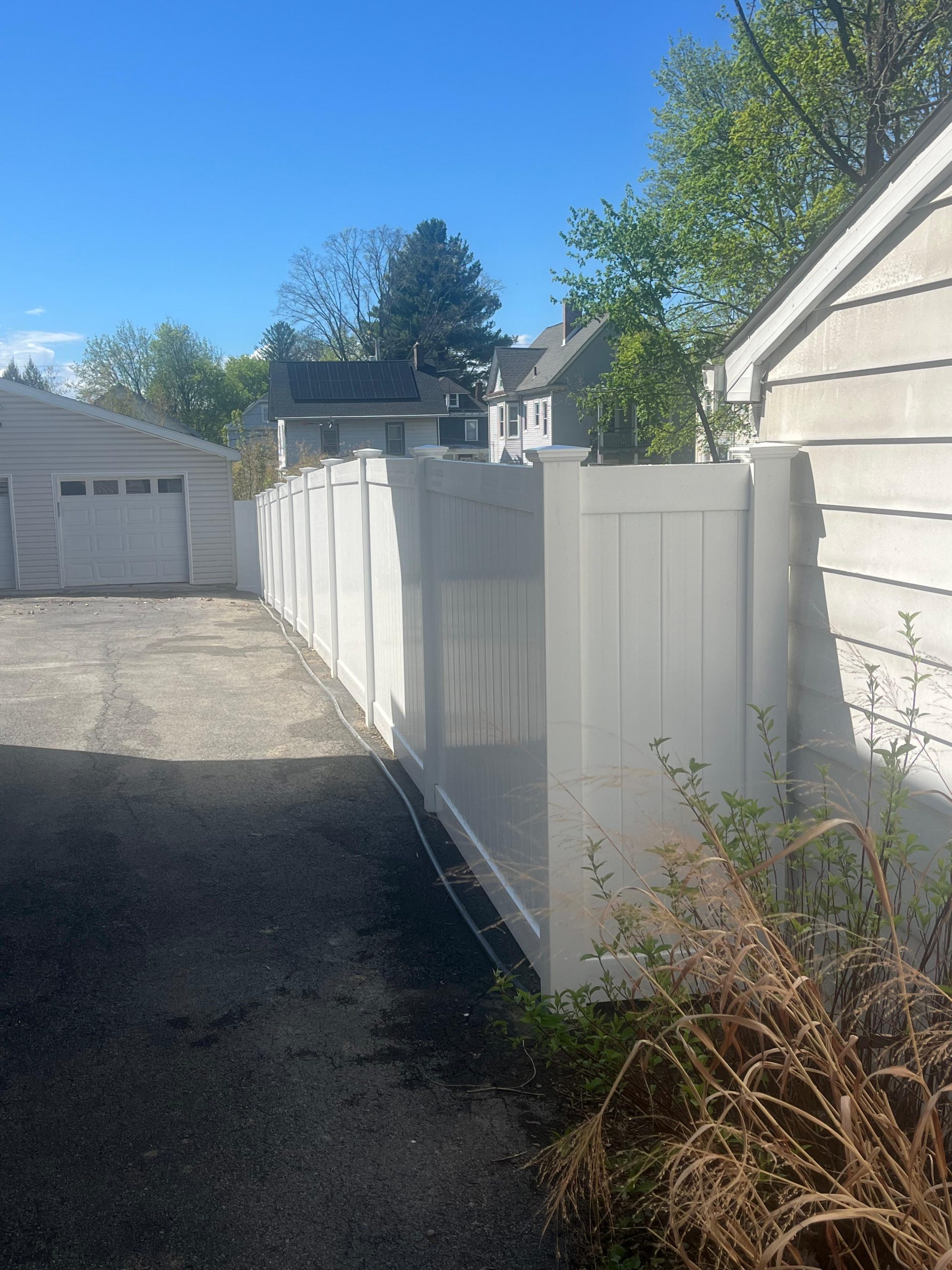
Sloped yards, irregular lot lines, and unusual dimensions sometimes call for a fence that doesn't follow a standard layout. We handle racked installations that follow the grade of your land, stepped sections where the terrain calls for it, and custom heights where zoning permits. If your property isn't a perfect rectangle, that's not a problem.
How the Installation Process Works
We keep the process straightforward from the first call to the last post. Here's what to expect when you hire Portillo Fences and Gates for a vinyl fence installation.
We come out to your property, walk the perimeter with you, and take accurate measurements. This is also when we talk through your goals, style preferences, and any concerns about grade changes, existing structures, or property line questions. Getting the measurement right at this stage prevents problems at every step that follows.
Local municipalities across Putnam, Westchester, Dutchess, Orange, Ulster, and Rockland Counties each have their own rules around fence height, setbacks, and permit requirements. We review what applies to your specific address so you're not caught off guard during or after the installation, and in many cases we can help coordinate the permit process.
Before any digging starts, we confirm that the fence will be installed within your property boundaries. If there's any uncertainty about where the line falls, we'll flag it clearly and recommend a survey if needed. Even a few inches of encroachment onto a neighbor's property can create disputes that are expensive and frustrating to resolve.
Posts are dug below the frost line and set in concrete. This is the most critical part of the installation. Posts that aren't deep enough will shift over time as the ground freezes and thaws, and that movement works its way up through the whole fence. The longevity of the fence starts at the base of each post.
Once the concrete has cured and the posts are solid, we install the rails and panels. On sloped properties, we rack the fence to follow the grade or step it in sections depending on the style you've chosen. Panels are aligned, leveled, and fastened with hardware rated for exterior use.
When the installation is complete, we walk the finished fence with you. We check alignment, gate operation, latch function, and overall appearance. If anything needs adjusting, we handle it before we leave so you're not calling us back for issues we could have caught on the day of installation.
Why Homeowners in the Hudson Valley Choose Portillo
There are plenty of fencing companies working in this region. What separates a good experience from a frustrating one usually comes down to a few things: clear communication before the project starts, real craftsmanship during installation, and someone who stands behind the work when questions come up afterward.
Portillo Fences and Gates has been doing residential and commercial fencing across the Hudson Valley and lower New York since 2018. We are licensed and insured, and we work in Yonkers and Mount Kisco just as comfortably as we do in Middletown and Spring Valley. The municipalities are different, the lot sizes are different, and the code requirements change by town. We've seen enough of those variations to handle them without passing the confusion on to you.
We also focus on fitting the right style to the right property. If a full-privacy fence is going to look out of place on your corner lot, we'll tell you that. If the slope of your yard makes a standard installation impractical, we'll explain your options before you commit. The goal is a fence you're still happy with five winters from now, not just one that looks fine in the photos on the day we leave.
Serving These Communities Across New York
We install vinyl fencing for residential and commercial customers throughout Brewster, Carmel, Mahopac, Pawling, Beacon, Poughkeepsie, Wappingers Falls, Newburgh, Middletown, New Paltz, Kingston, White Plains, Port Chester, Ossining, Peekskill, Mount Kisco, Tarrytown, New City, Spring Valley, Suffern, and Yonkers.
Each of these communities has its own character and its own local requirements. Westchester properties often sit on tighter lots with stricter aesthetic guidelines. Properties farther north tend to have more open land, steeper grades, and different zoning tolerances. We know the difference and adjust our approach accordingly.
If you're not sure whether we service your specific address, give us a call. In most cases we can tell you quickly, and if you happen to be just outside our regular area we'll be straightforward about it rather than waste your time.
Frequently Asked Questions About Vinyl Fencing
These are questions we hear regularly from homeowners in our service area.
Can vinyl fencing handle the weight of a heavy snowfall?
Vinyl panels are designed to flex slightly under load rather than crack, which helps in high-snowfall areas. The bigger concern is actually frost heave, not snow weight. Ice accumulation can add stress to caps and rails over time, but proper post depth and concrete setting are what protect the structure through repeated freeze-thaw cycles.
How does vinyl hold up compared to wood over 10 to 15 years?
Wood fences in this region typically need restaining or repainting every two to three years and may need partial board replacement within the first decade, especially in shaded or damp areas where rot sets in at the base. A properly installed vinyl fence over that same period will generally show very little change in appearance and won't need any of that remediation. The upfront cost of vinyl is usually higher, but the total cost of ownership over a decade is often lower once you factor in avoided maintenance.
What happens if a section of the vinyl fence gets damaged?
Individual panels and pickets can usually be replaced without disturbing the rest of the fence. If a car backs into a section or a falling branch damages a few boards, you don't have to pull the entire run. We carry a range of profiles and can match existing sections in most cases, especially on fences we've installed.
Does vinyl fencing add value to a home?
It contributes to curb appeal and reduces the maintenance burden, both of which matter to buyers. A fence that looks new after years of use is a real selling point compared to one that visibly needs work. The return varies depending on the neighborhood and how buyers in a particular market weigh outdoor features, but a well-maintained vinyl fence rarely hurts resale value and often supports it.
Do I need a permit to install a vinyl fence in my town?
It depends on your municipality and the height of the fence. Towns and villages across Putnam, Westchester, Dutchess, Orange, Ulster, and Rockland Counties each handle this differently. Some require a permit for fences over four feet; others have no permit requirement at all for residential fence replacement. We review this before we start your project so there are no surprises after the installation is complete.
Can vinyl fencing be installed on a sloped yard?
Yes, and this is one of the more common challenges we handle. The two main approaches are racking, where the fence panels follow the slope continuously, and stepping, where the panels drop in level increments like stairs. Which method works better depends on the fence style, the degree of slope, and your preference for how the finished product looks. We'll assess the grade during the site visit and recommend the approach that makes the most sense for your property.
How long does a typical vinyl fence installation take?
For most residential jobs, the installation itself runs one to two days. Larger properties or those with significant grade changes, custom configurations, or complex layouts may take longer. The permit process, if required, can add time before installation begins, and concrete needs adequate cure time after post setting. We'll give you a realistic timeline when we scope the project so you can plan around it.
Ready to Get Your Vinyl Fence Installed?
Portillo Fences and Gates serves Brewster, Carmel, Mahopac, Poughkeepsie, White Plains, Newburgh, and communities throughout the Hudson Valley and lower New York.