

June 4, 2026
- Vinyl Fencing
- Picket Fence
- Fence Installation
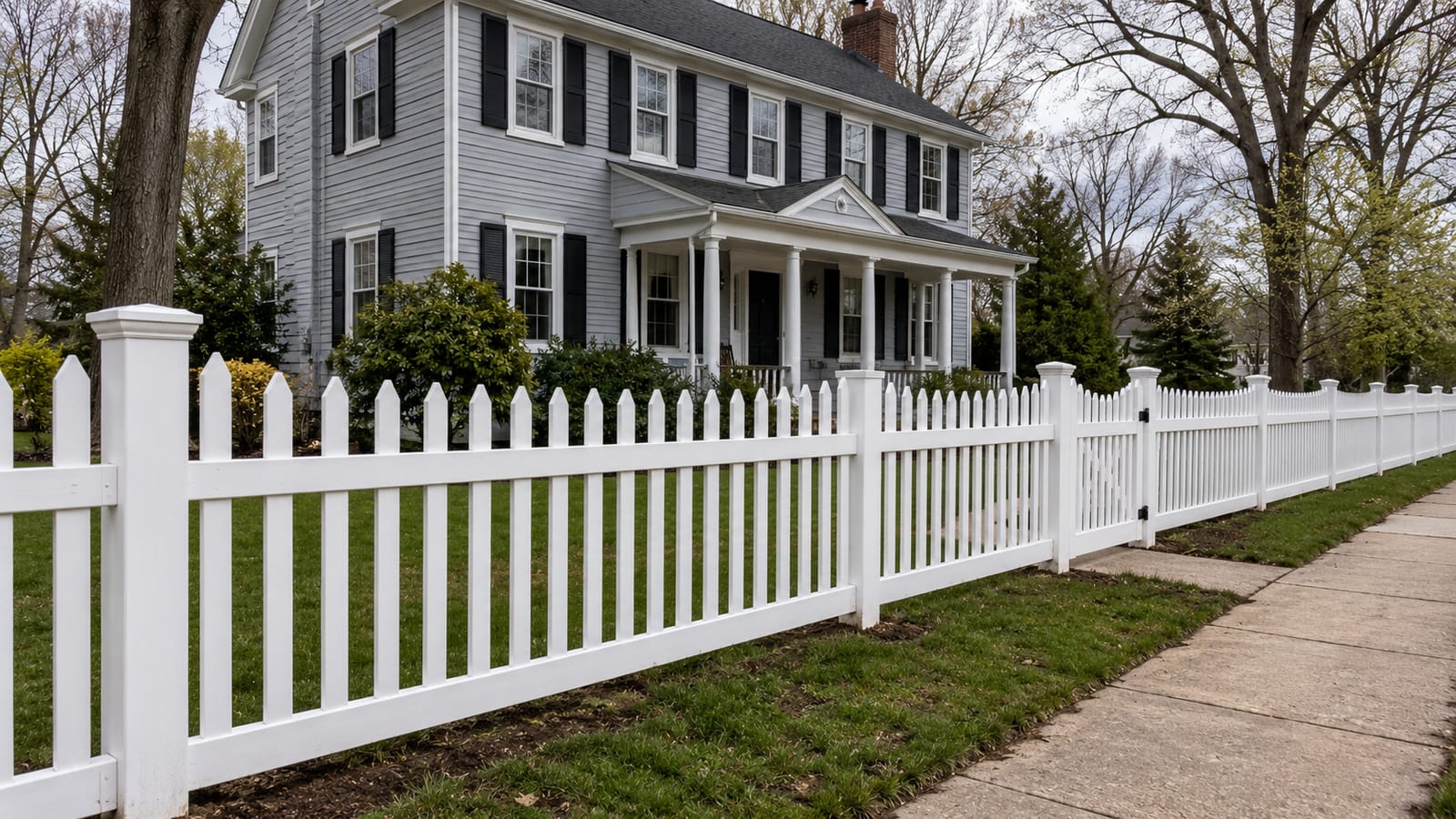
You want the classic white picket fence look for your front yard, but the idea of sanding, painting, and replacing rotted boards every few years is enough to make you reconsider the whole project. Vinyl picket fence installation solves that problem directly. Unlike wood, vinyl holds up through humid summers, freezing winters, and everything in between without demanding much from you in return. For homeowners across Greater NY, that combination of curb appeal and low upkeep is exactly what makes vinyl the smart choice.
But getting a vinyl fence right takes more than buying panels and digging a few holes. Post depth, material quality, local permits, and proper concrete curing all determine whether your fence stands straight for 20 years or starts leaning before the second winter. If you've been burned by a rotting wood fence before, or if you're putting up a fence for the first time and want to do it once and do it right, the information below will help you make confident decisions every step of the way.
Key Takeaways
- Vinyl lasts 20 to 30+ years: Unlike wood fences that rot and warp after 10 to 15 years, vinyl maintains its appearance and structural integrity for decades
- Zero maintenance required: Never paint, stain, or refinish. Just wash with soap and water a few times a year
- Post depth is critical: Greater NY's freeze-thaw cycles require 30 to 36 inch post depth to prevent heaving
- Permits are mandatory: Most Greater NY municipalities require building permits for fence installation, typically costing $50 to $300
- Cost ranges $14 to $60 per linear foot: Installed vinyl picket fence costs vary by height, quality, and site conditions
- Professional installation prevents costly mistakes: Improper post depth, alignment, or concrete curing leads to leaning or collapsed fences
Why Vinyl Beats Wood in Greater NY
Greater NY's climate is genuinely hard on outdoor structures. Humid summers, cold winters, and heavy precipitation create the perfect conditions for wood to rot, warp, and attract pests. Traditional wood fences may look great the first year or two, but the maintenance cycle starts quickly. Repainting every three to five years, staining every two to three years, and replacing rotted boards adds up to hundreds of dollars annually before you even account for your time.
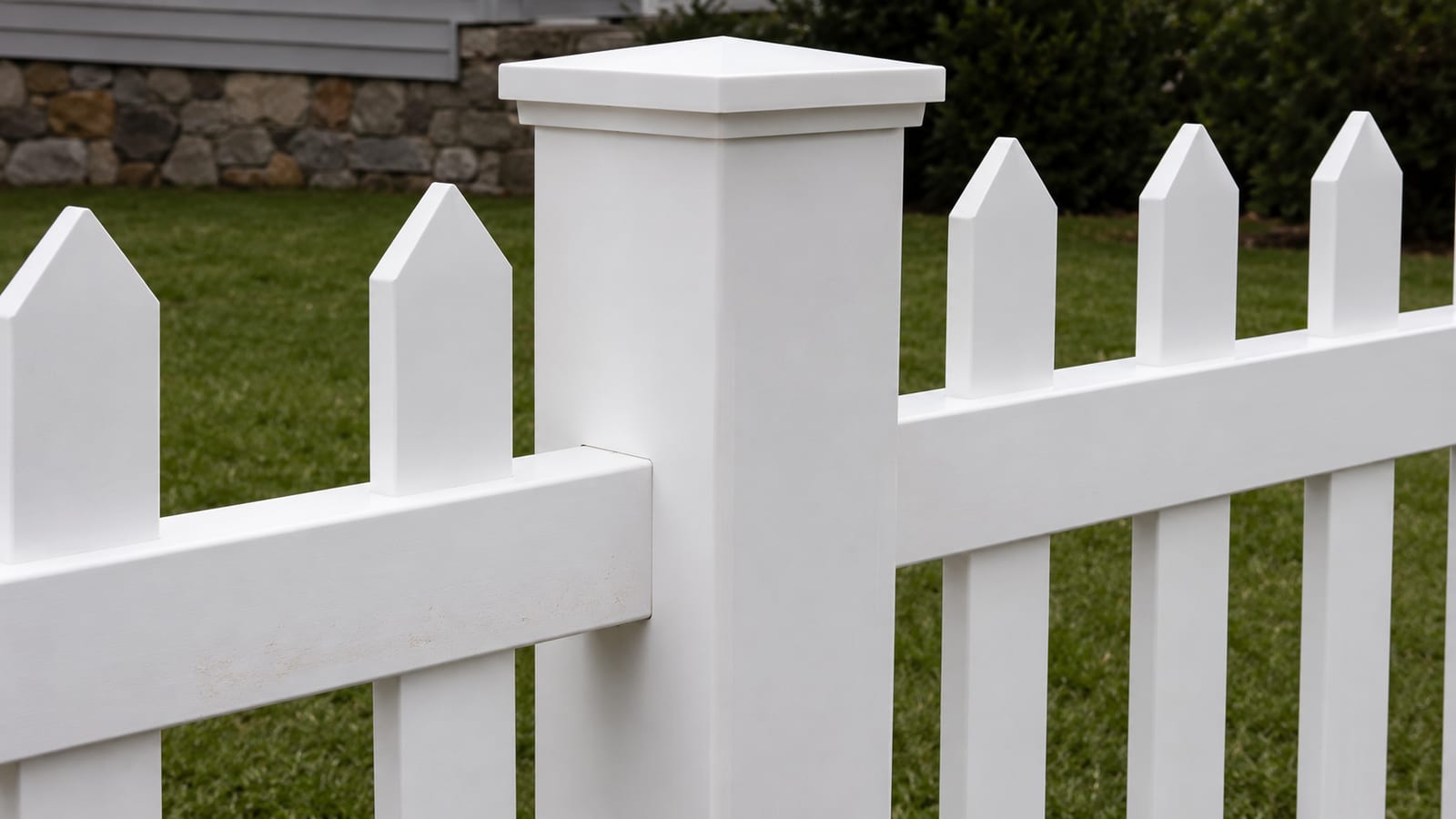
Vinyl fencing addresses all of that. It does not absorb moisture, resists termites and carpenter ants, and does not warp under temperature swings. The white picket fence you install today can look essentially the same a decade from now with very little effort. For Greater NY homeowners who want curb appeal without an ongoing maintenance commitment, vinyl picket fencing is the most practical option available.
The Real Cost of Wood Over Time
Wood fences are appealing upfront because material costs are often lower than vinyl. What homeowners frequently underestimate is the long-term expense. Painting and staining alone can run $500 to $1,500 per year when you factor in materials and labor. Add termite treatments, board replacements, and occasional post repairs, and a fence that seemed affordable quickly becomes one of the more expensive choices on your property.
The savings in maintenance costs typically offset vinyl's higher upfront installation price within five to seven years, then continue paying off for another decade or more. For homeowners in Westchester and Putnam Counties and surrounding areas where property values and curb appeal carry real weight, that math matters.
Signs It's Time to Switch to Vinyl
Most homeowners start researching vinyl fencing when their current fence gives them a visible reason to act. A board that has gone gray and soft, a post that leans after a wet spring, or a section that looks tired next to a freshly painted house are all signals it's time to make a change. Recognizing these signs early saves you from throwing more money at repairs that won't last.
Wood fences exposed to Greater NY's moisture typically start showing rot and warping within five to ten years, sometimes sooner in shaded or low-drainage areas. Once rot sets in, it spreads. Replacing individual boards helps temporarily, but the underlying posts and rails are usually degrading at the same time. At some point, repair costs exceed replacement costs, and that tipping point often comes faster than homeowners expect. If you've been spending several hundred dollars a year keeping a wood fence painted and intact, that number alone may be the clearest signal that a switch makes sense.
Key Considerations Before You Start
Getting a vinyl picket fence to last in Greater NY requires attention to a few specific factors before and during installation. The region's climate creates real challenges that don't apply everywhere, and shortcuts that work in milder areas will cause problems here.
Post Depth and the Frost Line
Greater NY's frost line reaches 30 to 36 inches below the surface in most areas. When you set vinyl fence posts above the frost line, the ground freezes around them in winter, expands, and pushes the posts upward. When the ground thaws in spring, posts settle unevenly. This heaving cycle repeats every year, and within a few seasons, posts that started plumb and straight will lean noticeably.
The fix is straightforward: set every post at least 30 to 36 inches deep for a standard four-foot vinyl picket fence in Greater NY. Gate posts and corner posts should go even deeper, since they carry more load. This is one area where cutting corners will cost far more later, since resetting posts requires breaking concrete and potentially replacing panels.
Material Quality and Vinyl Grade
Not all vinyl fence panels are made from the same material, and the difference between budget and professional-grade vinyl becomes obvious over time. Cheap vinyl made from recycled materials may crack within five to seven years, especially in cold weather when the material becomes brittle. Premium virgin vinyl, made with titanium dioxide UV stabilizers and high-impact modifiers, resists yellowing, cracking, and weathering for 20 to 30 years or more.
When comparing materials, look for a minimum wall thickness of 0.070 inches, UV stabilizers, and a lifetime transferable warranty. A lifetime warranty from the manufacturer signals the product is built to handle real weather conditions. For residential vinyl fence installation in Greater NY, this quality standard is not optional.
Legal and Regulatory Requirements
Vinyl fence installation in Greater NY is subject to building permits in almost every municipality. Skipping the permit process may seem like a time-saver, but unpermitted fences can be ordered removed at the homeowner's expense and create complications during home sales.
Typical regulations across Greater NY towns set a four-foot height limit for front yard fences and a six-foot limit for backyard fences, though this varies by municipality. Setback requirements commonly range from five to ten feet from property lines or street rights-of-way. Permit fees generally run $50 to $300 depending on the town, with a review period of one to three weeks.
HOA rules can add another layer on top of municipal codes. Some communities restrict fence colors, styles, or materials, and violating those rules can result in fines or required removal. Before ordering any materials, confirm the specific requirements for your town and community. A professional fence contractor familiar with local codes can handle permit applications and inspections on your behalf.
The Installation Process, Step by Step
A properly executed vinyl picket fence installation follows a clear sequence, and skipping or rushing any phase creates problems that compound later. The process takes three to five days for a professional crew working on a typical 100-foot residential fence. DIY installations working on weekends typically take one to two weeks.
Step 1: Pre-Installation Planning and Permits
Before any digging begins, call 811 to have underground utilities marked on your property. This free service is legally required and takes two to three business days. Hitting a gas line or buried electrical cable is dangerous and can result in thousands of dollars in repairs plus legal liability. Along with the 811 call, hire a surveyor to confirm your property lines if there is any uncertainty about where your fence can legally go. Obtain building permits from your town, review any HOA restrictions, and talk to your neighbors before installation starts to prevent disputes along shared property lines.
Step 2: Digging Post Holes and Setting Posts
Post holes for Greater NY installations should be 10 to 12 inches in diameter and 30 to 36 inches deep for a four-foot vinyl picket fence. Add six inches of gravel to the bottom of each hole before setting the post; this drainage layer prevents water from pooling around the post base and reduces frost heave risk. Set posts in quick-set concrete, checking plumb on two adjacent sides while the concrete is still wet. Concrete begins setting within 20 to 30 minutes, so adjustments must happen quickly. Overfill the hole slightly and slope the concrete surface away from the post to direct water drainage. Wait at least 24 hours, and ideally 48, before installing rails or panels.
Step 3: Installing Rails and Pickets
Measure the distance between post centers and add three inches to account for 1.5 inches of rail insertion into each post. Insert the bottom rail at an angle into the first post's routed slot, then lower and slide the opposite end into the second post. Slide pickets into the bottom rail's pre-routed holes and interlock them as you work across the section. When you reach the end of a panel, cut the final picket to fit using a table saw with a fine-tooth blade. Once all pickets are in place, install the top rail by working it down over the picket tops and sliding both ends into the post slots. Secure rails with manufacturer-recommended vinyl screws.
Step 4: Gate Installation and Final Touches
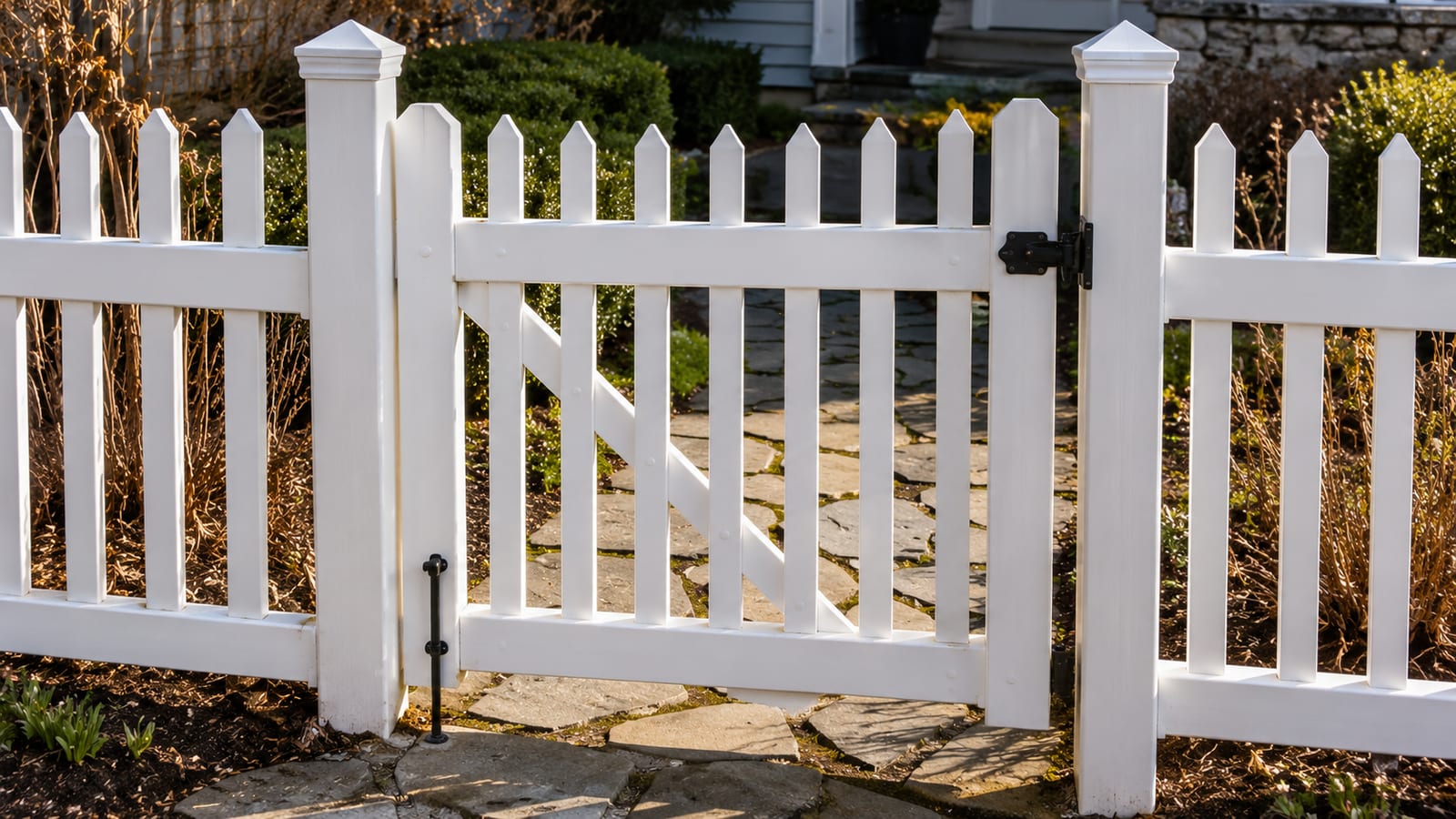
Gate posts take more stress than standard line posts, so reinforce them with pressure-treated 2x4s inserted inside the hollow vinyl post before hardware installation. Set gate posts six inches deeper than line posts for added stability. Install hinges four to six inches from the top and bottom of the gate, pre-drilling holes to avoid cracking the vinyl. Leave a 5/8-inch gap on each side of the gate for hardware clearance. Once the gate is hung and tested for smooth operation, apply post caps using vinyl adhesive applied inside the cap rather than on the post. Press each cap down firmly for ten seconds, wipe any excess adhesive immediately, and allow 24 hours before rain exposure.
Long-Term Maintenance
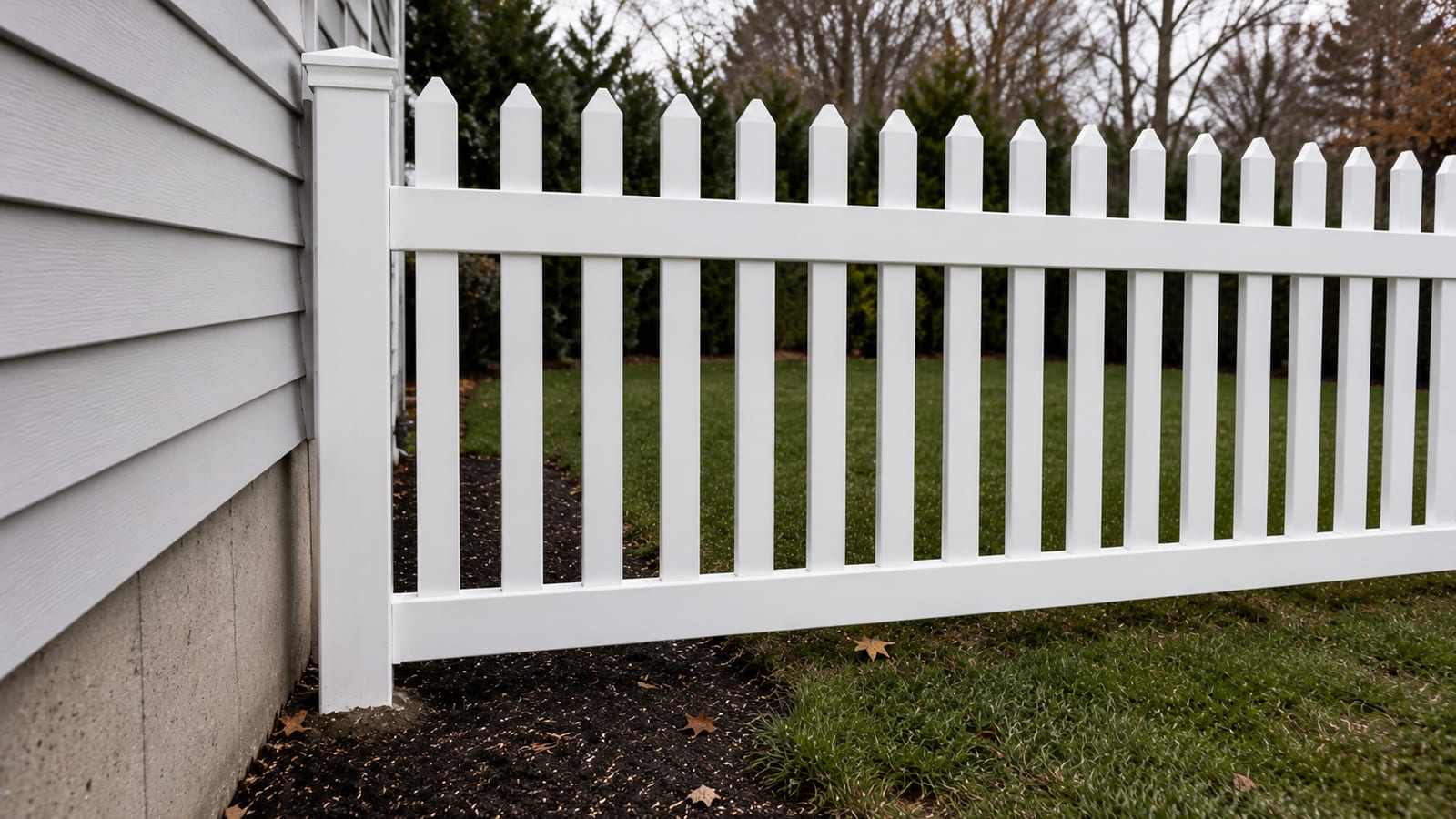
One of the main reasons homeowners choose vinyl over wood is the near-zero maintenance requirement. A small amount of regular care will keep a vinyl picket fence looking its best and extend its lifespan even further.
- Clean 2 to 4 times yearly: Hose down the fence, scrub with a mild soap and water solution using a soft brush, and rinse thoroughly. This removes pollen, mildew, and road grime before they have a chance to build up
- Avoid pressure washers: High-pressure water can damage the vinyl surface and force moisture into post tops. A garden hose with a spray nozzle is all you need for routine cleaning
- Inspect annually: Walk the fence line each spring after the ground thaws and check for loose fasteners, gate binding, or any post shifting. Catching small issues early prevents larger repairs later
- Winter care: Clear snow from the fence gently using a soft broom or by hand. Avoid snow blowers or heavy equipment near the fence line, since vinyl becomes more brittle below 20 degrees Fahrenheit
Common Pitfalls
Most installation mistakes are avoidable, but they tend to be expensive to fix after the fact.
- Digging posts too shallow: An 18 to 24 inch hole depth will cause heaving in Greater NY. Posts need to go 30 to 36 inches deep to stay below the frost line
- Not checking plumb immediately: Once concrete sets, posts cannot be adjusted. Check plumb on two sides within the first 20 to 30 minutes, every single time
- Skipping the 811 call: Hitting underground utilities is dangerous, illegal, and costly. This step is non-negotiable
- Not allowing concrete to cure: Installing rails before 24 hours have passed puts stress on posts before the concrete has reached working strength, causing shifts that will be visible in the finished fence
- Covering routed post holes with concrete: If concrete fills the slots where rails insert, the rails won't fit and the posts will need to be replaced entirely
- Measuring rails incorrectly: Always add three inches to the distance between post centers to account for insertion depth on each end. Rails cut to the exact gap will be too short to seat properly
Frequently Asked Questions About Vinyl Picket Fence Installation
Q: How much does vinyl picket fence installation cost in Greater NY? A: A basic four-foot vinyl picket fence typically runs $14 to $30 per linear foot installed. Premium six-foot privacy options range from $30 to $60 per linear foot. For a 100-foot fence, total installed costs commonly fall between $1,500 and $7,800 depending on style, height, and site conditions. Factors like rocky soil, sloped terrain, or multiple gates can add to the base price.
Q: How deep should vinyl fence posts be in Greater NY? A: Posts for a four-foot vinyl picket fence should be set 30 to 36 inches deep across most of Greater NY. This depth places the post below the frost line and prevents heaving during the freeze-thaw cycles that occur every winter. Gate posts and corner posts should go even deeper for added strength.
Q: Do I need a permit for vinyl fence installation in Greater NY? A: Yes. Nearly all Greater NY municipalities require building permits for fence installation. Permit fees typically range from $50 to $300 depending on the town, and approval generally takes one to three weeks. Installing without a permit can result in fines and a requirement to remove the fence at your own expense.
Q: How long does vinyl picket fence installation take? A: A professional crew can typically complete a 100-foot vinyl picket fence installation in three to five days. DIY installations working on weekends generally take one to two weeks when accounting for concrete curing time between phases.
Q: Does vinyl fence require maintenance? A: Vinyl fence maintenance is minimal. Washing with mild soap and water two to four times per year is generally all that's needed. There is no painting, staining, or refinishing required at any point in the fence's lifespan.
Q: How long does a vinyl picket fence last? A: With proper installation and quality materials, a vinyl picket fence can last 20 to 30 years or more. Wood fences in the same conditions typically show significant rot and warping within 10 to 15 years, making vinyl a longer-lasting choice for most Greater NY properties.
Vinyl picket fence installation done right gives you everything a classic wood fence promises without the cycle of repairs, painting, and replacement that wood demands. Post depth, material grade, permit compliance, and proper concrete curing are what separate a fence that holds up from one that becomes a problem within a few years. A well-installed vinyl picket fence adds real curb appeal, can increase property value, and provides lasting boundary definition with almost no ongoing effort. Investing in quality materials and proper installation up front pays off every year for the next two to three decades.
At Portillo Fences and Gates, we serve homeowners throughout Greater NY, including Westchester, Putnam, and Rockland Counties and the surrounding communities. We handle everything from permit applications and utility marking coordination to post setting, panel installation, and gate hardware, covering residential vinyl picket and privacy fences, pool fencing, automatic gates, and gate repair. If you're ready to replace a failing wood fence or install a new one from scratch, contact us for a free estimate. We'll walk your property, confirm local code requirements, and give you a clear picture of what the project involves before any work begins.