

August 1, 2026
- Aluminum Fencing
- Wrought Iron
- Ornamental Fence
Installed aluminum ornamental fence runs $30 to $55 per linear foot in Dutchess County and $30 to $58 in Rockland County, according to 2026 price guides. The same Rockland guide lists "wrought iron" at $50 to $95 per linear foot. Height is not stated on that Rockland line item, and the guide does not say whether the product is true wrought iron or modern ornamental steel.
That last point is the one to settle first, because the base metal and the coating decide what the fence needs from you every winter.
Key Takeaways
Aluminum pricing
$30 to $55 per linear foot for a 4-foot pool fence in Dutchess County, $30 to $58 in Rockland County, and $32.56 for a 4-foot fence statewide in New York
"Wrought iron" pricing
$50 to $95 per linear foot in Rockland County, with a possible rocky-soil surcharge of $5 to $15 per foot
Most new "wrought iron" is steel
the estimate should name the base metal, the fabrication and the coating
Aluminum washing is quantified
at least once a year, and monthly where the fence is directly exposed to ice-melting agents under one maker's warranty
Coated steel needs repair on a schedule
touch up scratches, cut ends and weld areas as they appear
What each product is
True wrought iron is nearly pure iron, traditionally forged rather than cast, with less than 1% carbon and 1% to 4% slag. The National Park Service describes it as soft, malleable, tough and fibrous. Mild steel, with no more than 2% carbon, is now used for new hand-worked metalwork and for repairs to old wrought iron, and it is less corrosion-resistant than wrought iron or cast iron.
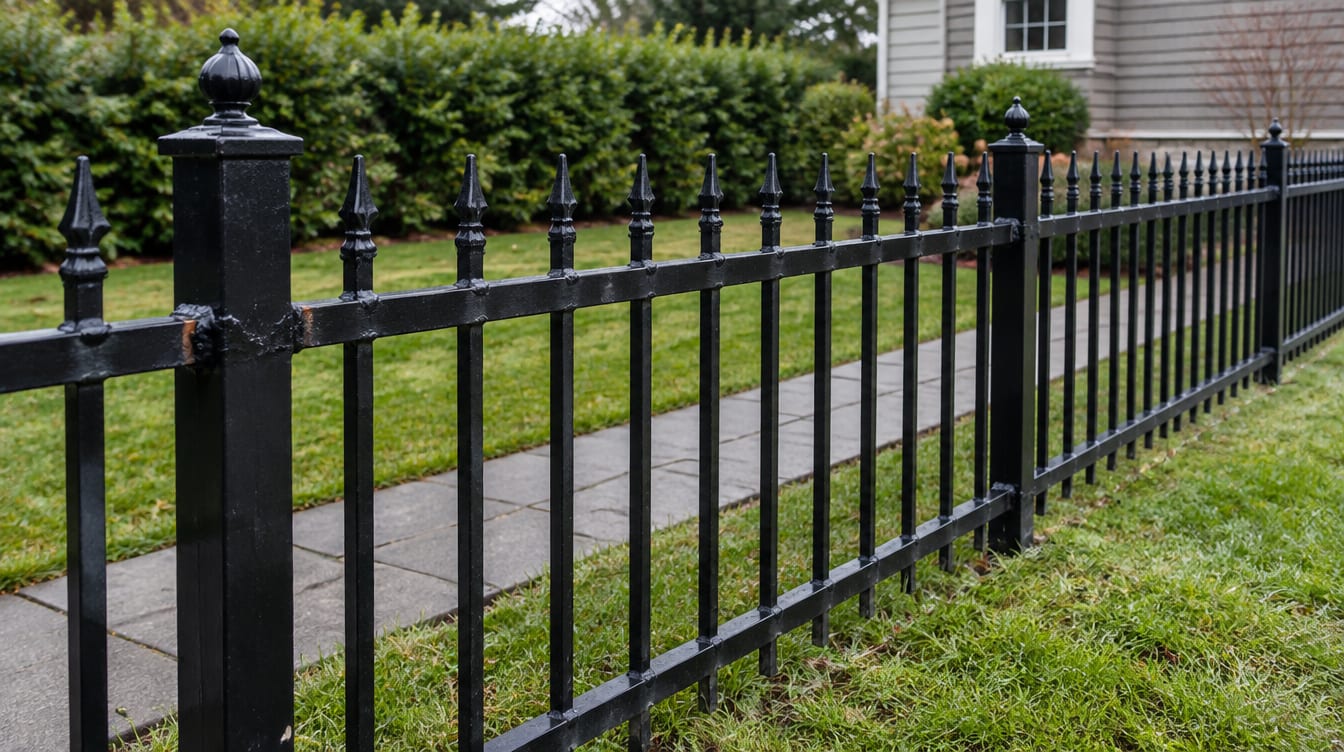
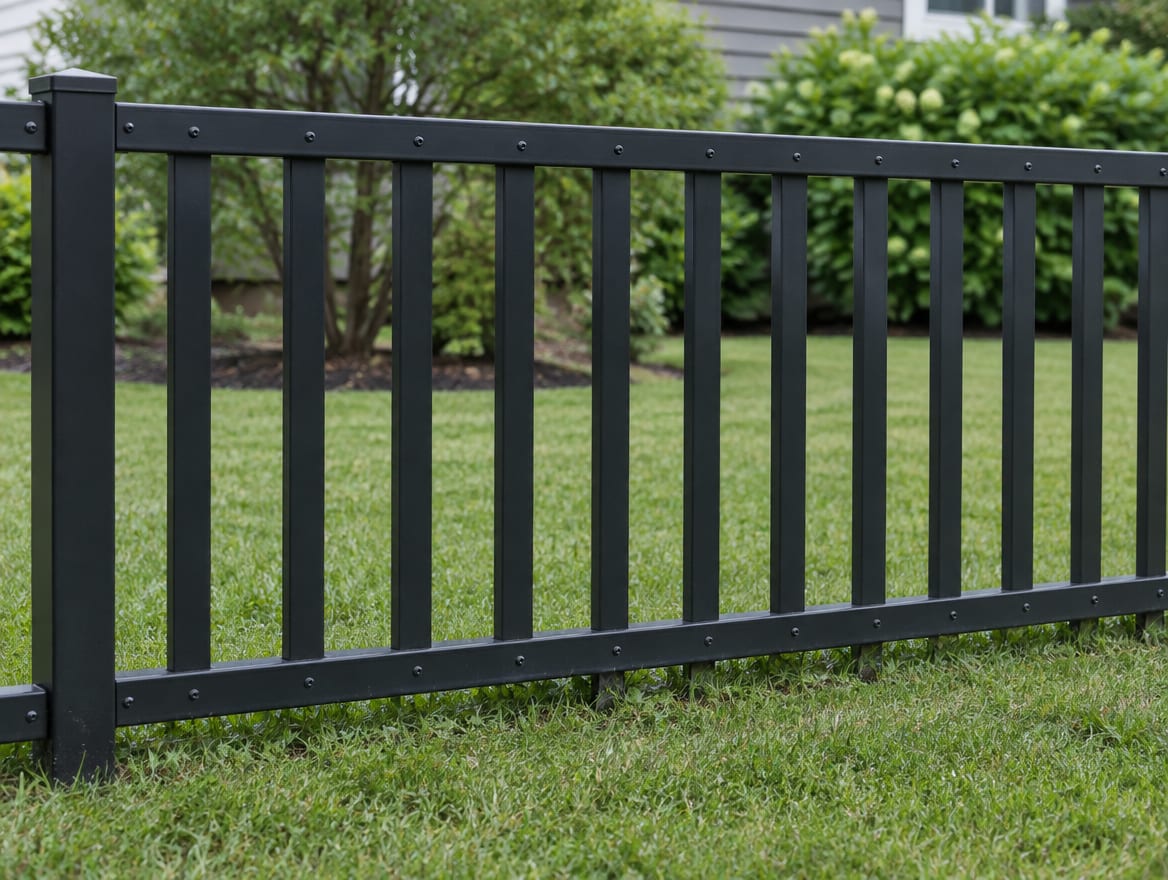
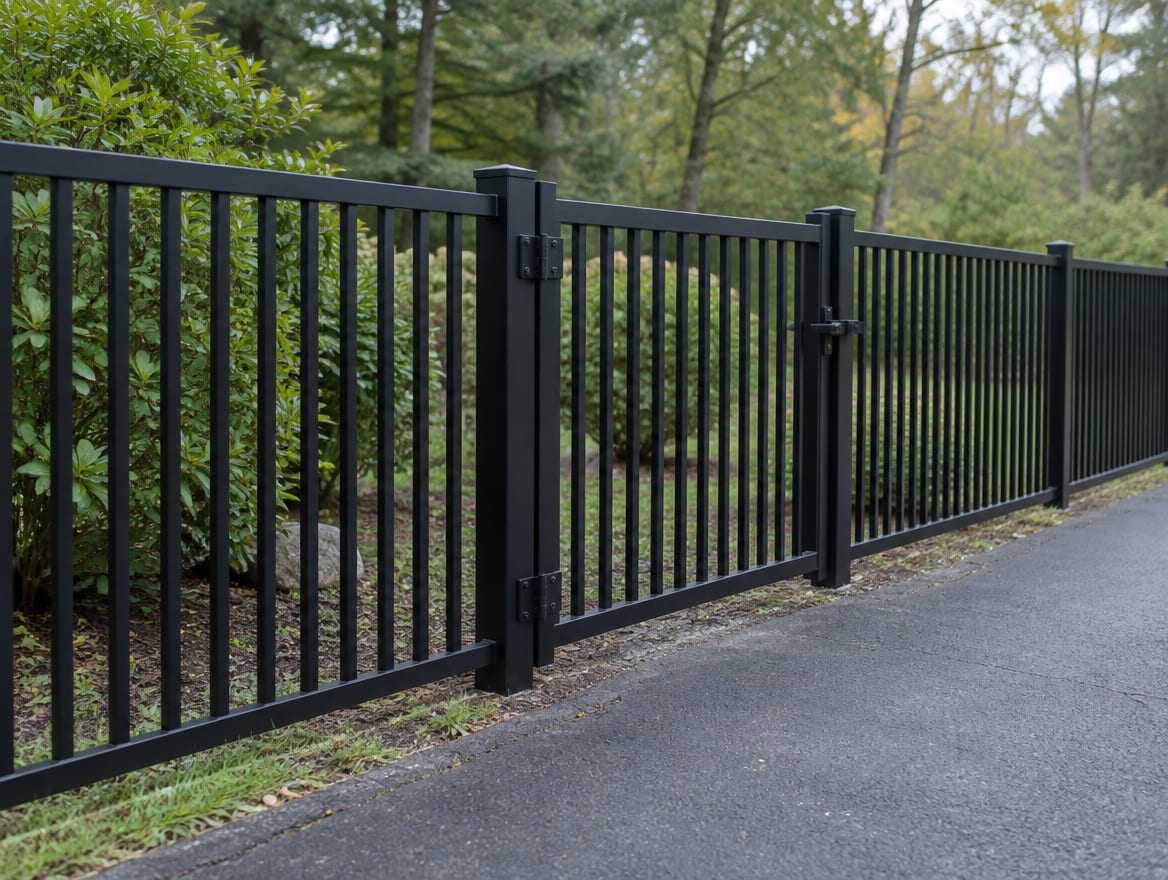
Fencing sold today as "wrought iron" is usually ornamental steel, which may be welded, galvanized, e-coated and powder-coated. Call it historic wrought iron only when the paperwork says so. Aluminum ornamental fence is an extruded or fabricated nonferrous product. It does not rust, though its finish can be scratched, stained or chipped, and corrosion can set in under aggressive conditions.
Aluminum specifications
Manufacturers publish wall thickness in inches, not gauge numbers. Eastern Ornamental Fence lists:
- Posts: 6061-T6 alloy, 2 by 2 inches, 0.060-inch wall
- Gate posts: 2 by 2 inches, 0.125-inch wall
- Rails: 6061-T6, with a 1-inch top wall at 0.055 inch and a 1-inch side wall at 0.082 inch
- Pickets: 6063-T5, 5/8-inch square, 0.050-inch wall
- Heights: 48, 54 and 60 inches
A different maker's Colonial and Colonial Plus aluminum lines, in a July 2022 specification, list 5/8-inch pickets at 0.045-inch wall, rails at 0.055 and 0.082 inch, posts at 0.060 inch, gate posts at 0.125 inch, and Colonial Plus 3/4-inch pickets at 0.053 inch. Two lines with the same look can have different walls, which is why the quote should name the product line.
Coatings, with their numbers
Powder coating is rated under AAMA specifications, and the published figures describe test performance, not a promise for a fence in the Hudson Valley:
Exposure test: 1 year South Florida
Dry-film thickness: 0.8 mil minimum
Salt spray and humidity: 1,500 hours each
Tap a row to open it.
Steel gets zinc. ASTM A123 covers hot-dip galvanizing on iron and steel products. For pipe and tubing, the American Galvanizers Association table lists a minimum average coating of 45 microns, or 1.8 mils, on steel under 1/8 inch, and 75 microns, or 3.0 mils, on steel from 1/8 to 3/16 inch. E-coat is an electrically deposited coating. Ameristar's Montage Plus steel system uses galvanized steel, zinc phosphate pretreatment, an epoxy primer applied by cathodic electro-coat, and an acrylic topcoat.
What the warranties say
- Ameristar Echelon Plus (aluminum): lifetime limited against cracking, peeling, chipping, blistering or corroding under normal use. Physical damage, abrasion and salty environments are excluded, along with removal and installation costs.
- Ultra Aluminum: guaranteed for life against defects in workmanship and materials, with the Powercoat finish guaranteed for life against cracking, peeling or chipping. Excludes improper installation, misuse, extreme environmental conditions, coastal installations, and ice-melting products when the cleaning requirements are not followed.
- Eastern Ornamental Aluminum: a limited lifetime finish warranty against rusting, blistering, peeling, flaking, abnormal weathering or discoloration. Labor and installation costs are excluded.
- Ameristar Montage Plus (steel): the electro-coated surface is guaranteed for 5 years within 1 mile of salt water, 10 years from 1 to 10 miles, and 20 years more than 10 miles away. Heavy salt spray, physical damage, owner cutting or welding, and failure to seal cut surfaces are excluded, and labor coverage is limited to five years.
Where coated steel rusts first
Rust shows up where the coating is breached. The documented weak points are:
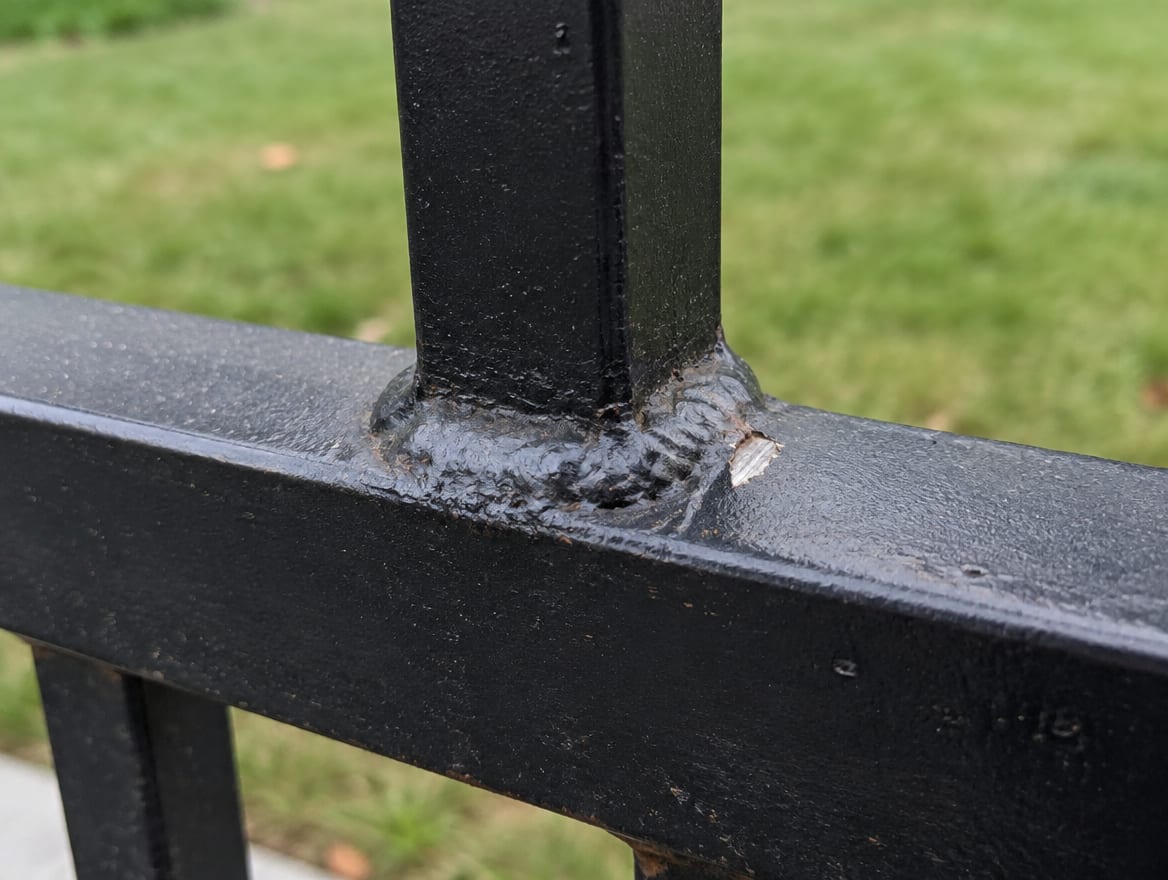
- Welds: welding can damage or remove the zinc around the weld, and the Galvanizers Association says restoration should follow ASTM A780 with zinc-dust paint, zinc-based solder or sprayed zinc
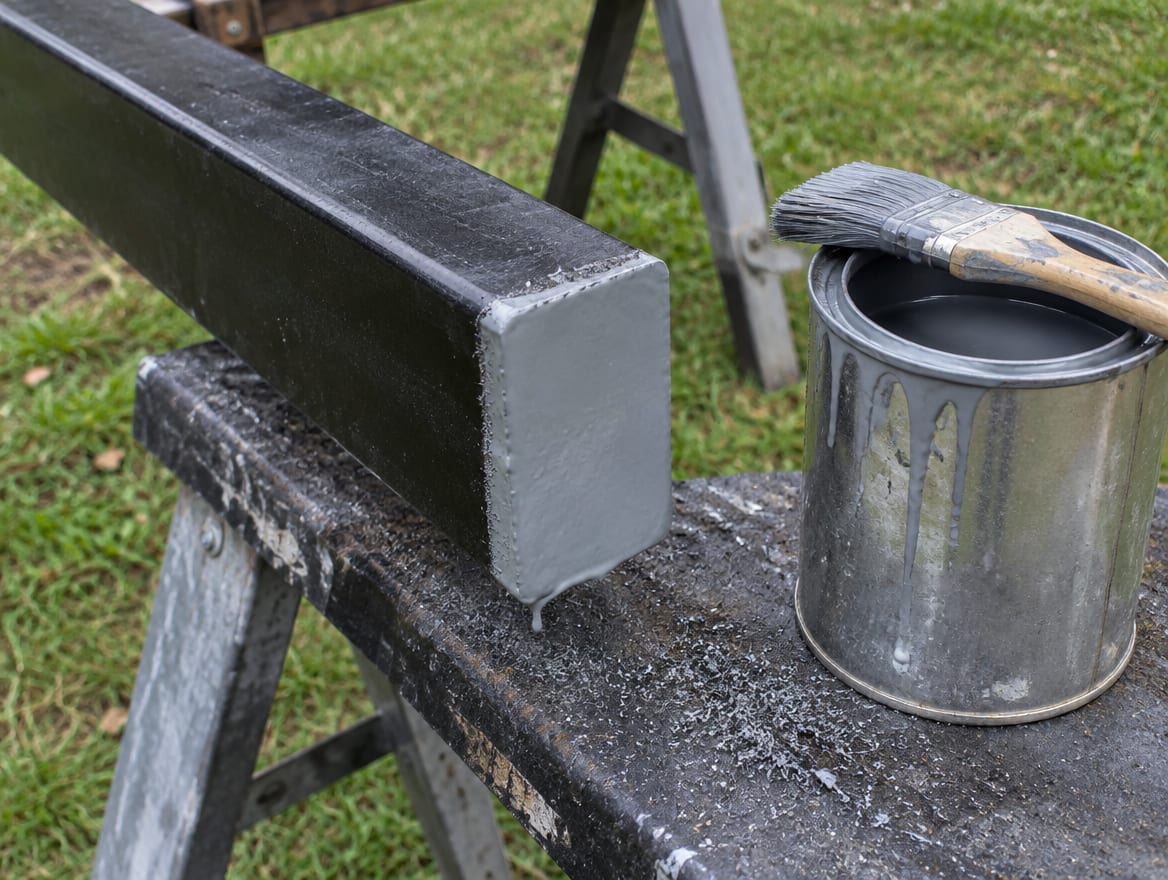
- Cut ends and drilled holes: Ameristar requires zinc-rich primer followed by two coats of matching finish paint, and says failing to seal exposed surfaces voids the warranty
- Scratches and gouges: impact, grinding and cutting expose bare steel
- Post bases: a steel post can corrode at the bottom where moisture collects and protection is inadequate
Inspect all four on a coated steel fence, since rust can start at any of them.
Upkeep in road salt and freeze-thaw
Aluminum. Ideal Aluminum requires cleaning at least once a year with a soft cotton cloth, mild soap and clean water, more often where sodium and hydrocarbon deposits are present, and prohibits solvents and water jet sprayers over 500 PSI. Ultra Aluminum requires cleaning every six months more than 1,500 feet from salt water, every three months within 1,500 feet, and monthly where the fence is directly exposed to ice-melting agents, using warm water, a pH-neutral nonabrasive detergent and a soft cloth, sponge or brush. Touch up deep scratches with the manufacturer's approved paint.
Steel. A contractor maintenance guide recommends washing once or twice a year with mild detergent, rinsing road-salt residue off promptly in spring, inspecting annually and repairing coating damage as it appears, with a full repaint typically every five to ten years. That is contractor practice, not a manufacturer interval. For galvanized steel, the Galvanizers Association lists zinc-rich paint, zinc-based solder and zinc spray as accepted touch-up methods under ASTM A780, with zinc-rich paint at least 2.0 mils for one application. None of those repairs matches the original hot-dip coating.
On a fence along a salted road or a driveway, the practical difference is that aluminum makers put a washing schedule in writing, while coated steel asks for prompt repair of every breach. For the repaint interval on a specific steel fence, follow the manufacturer's maintenance instructions.
Check yourself
1. What range does Rockland County's 2026 guide list for "wrought iron" per linear foot?
2. What is fencing sold today as "wrought iron" usually made of?
3. How often does Ultra Aluminum require washing where a fence is directly exposed to ice-melting agents?
4. Within 1 mile of salt water, how long is the Ameristar Montage Plus electro-coated surface guaranteed?
Frequently Asked Questions
Q: Is a "wrought iron" fence really wrought iron? A: Often it is ornamental steel. Ask the estimate to state the base metal, the fabrication method and the coating system.
Q: Which costs more per foot? A: In Rockland County's published guide, "wrought iron" is $50 to $95 and aluminum $30 to $58. Compare only after confirming material, height, coating, gates, removal, terrain and rock.
Q: Does aluminum rust? A: No, it is nonferrous. Its powder-coated finish can still scratch, stain or chip, and makers exclude physical damage and certain salt conditions.
Q: How often should an aluminum fence be washed? A: Ideal Aluminum requires at least once a year, and Ultra Aluminum sets every six months, every three months near salt water, or monthly under direct ice-melt exposure.
Q: What should I check on a steel fence each spring? A: Welds, cut ends, drilled holes, scratches and post bases, and repair any coating breach promptly.
The two fences cost different amounts at the start and ask for different attention afterward. A quote that names the metal, the coating and the maintenance schedule lets you compare them on the same terms.
At Portillo Fences and Gates, we install and repair fencing across Putnam, Westchester, Dutchess, Orange, Ulster and Rockland Counties, with aluminum fencing, custom fencing and matching gates, plus fence repair for coated steel. We state the base metal and coating on every estimate. Contact us for a free estimate, or call (845) 282-3336.