

September 20, 2026
- Driveway Gates
- Swing Gates
- Slide Gates
Choose by what your driveway and fence line allow. A swing gate needs clear room for the leaf to open across the drive, and a slide gate needs a clear run along the fence or wall beside the opening plus a concrete pad for the operator. The weight and length limits that follow come from named operator models, so they are a guide to how much gate each kind can move, not a rule for every brand.
Key Takeaways
Swing limits depend on length
the LiftMaster RSW12UL moves 1,000 pounds at 6 feet, 800 at 8, 700 at 10, 600 at 12 and 400 at 16, and the FAAC 415 handles a leaf up to 15 feet
Slide limits are weight and travel
the LiftMaster RSL12UL handles 800 pounds and 25 to 50 feet of travel, and the FAAC 741 handles about 2,000 pounds (900 kg) up to 15 metres
Driveway grade is regulated at the street end
Yorktown limits grades to 3% within 30 feet of the right-of-way line, and Carmel sets 6% for 15 feet from the roadway
Emergency access can decide the location
a gate across a required fire apparatus road cannot reduce the 20-foot width, and the emergency-opening method must be approved
Call 811 before the footing is dug
notice goes in 2 to 10 working days ahead, and marks are valid for 10 working days
What each kind needs from the property
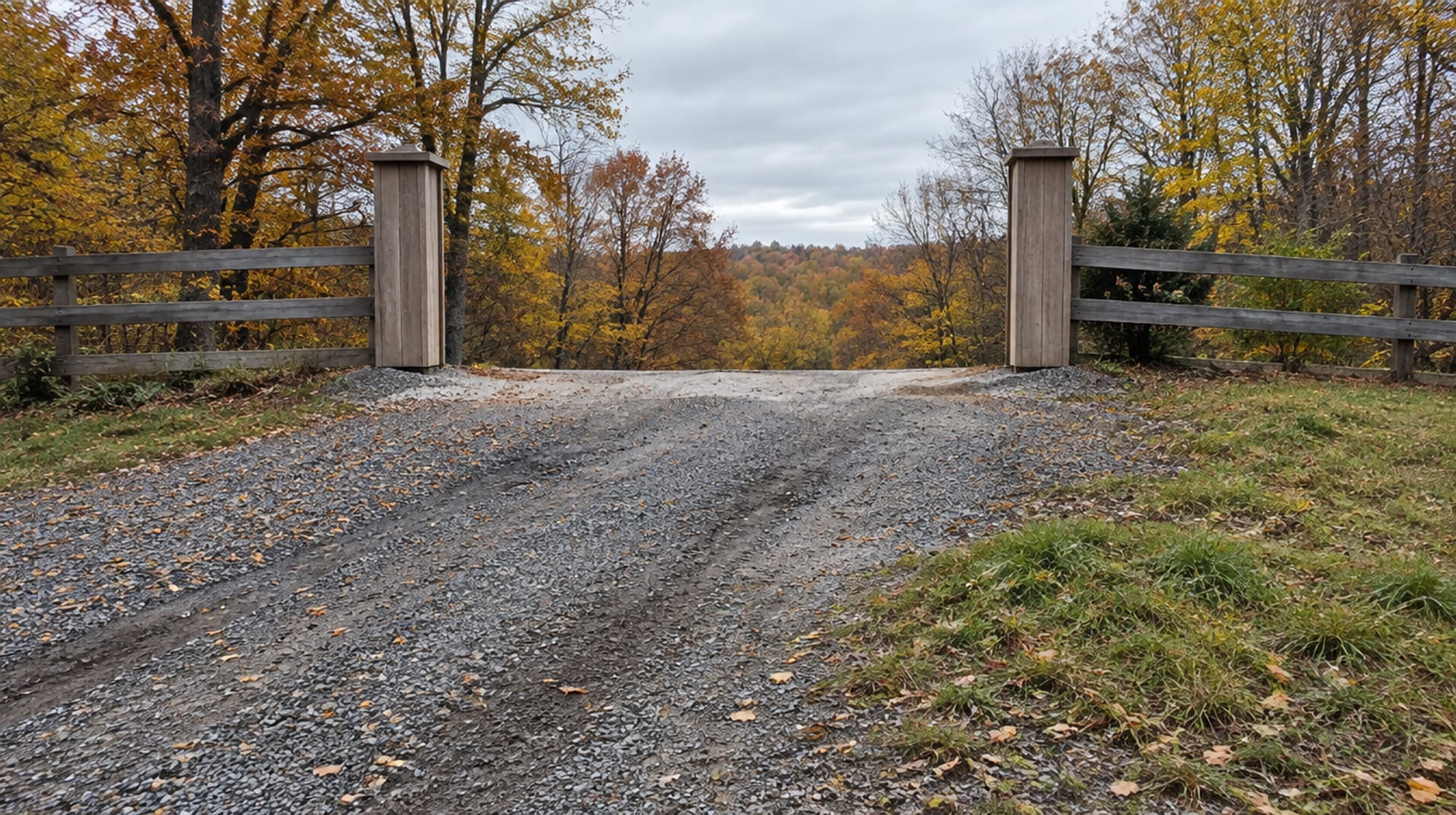
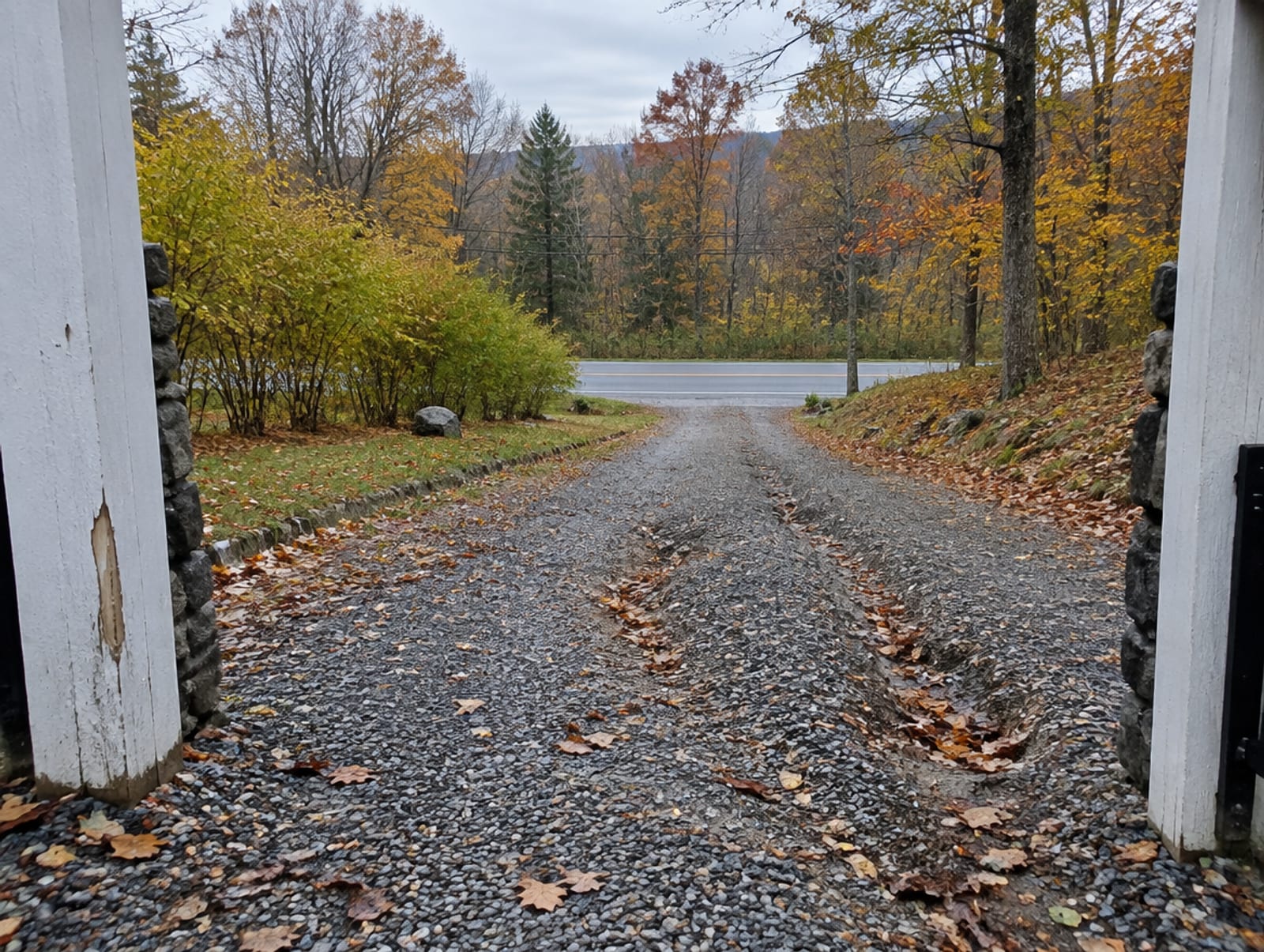
A swing gate hangs on posts and opens through an arc. That arc has to clear the driveway surface the whole way, so the leaf, the grade and the space in front of the gate all matter. The FAAC 415 manual requires the leaf to move by hand without excessive friction before the operator is finished, and requires the operator and brackets to be installed level. A driveway that rises toward the gate can cut the clearance under the leaf as it swings, so check opening and closing clearance over the actual grade.
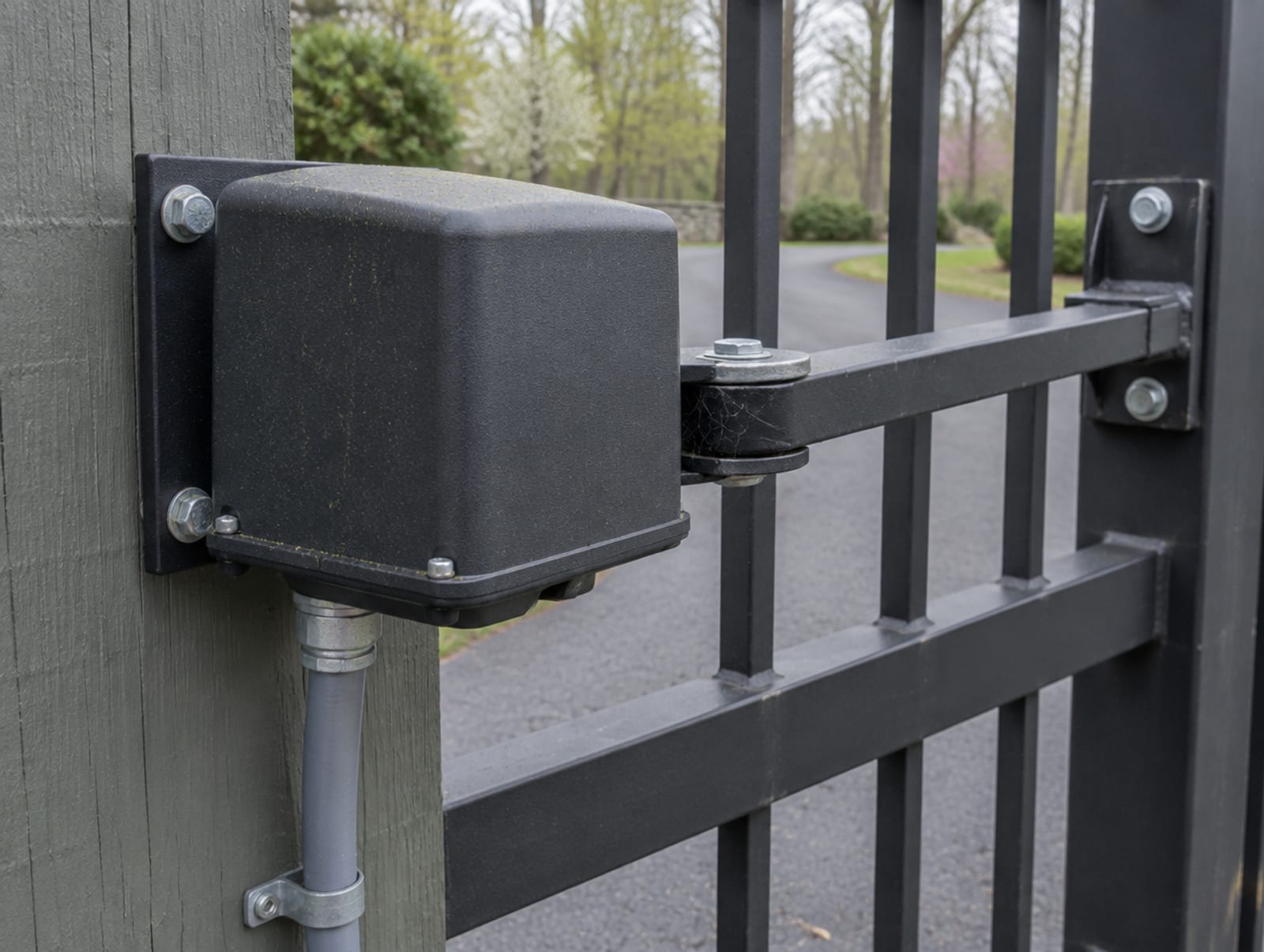
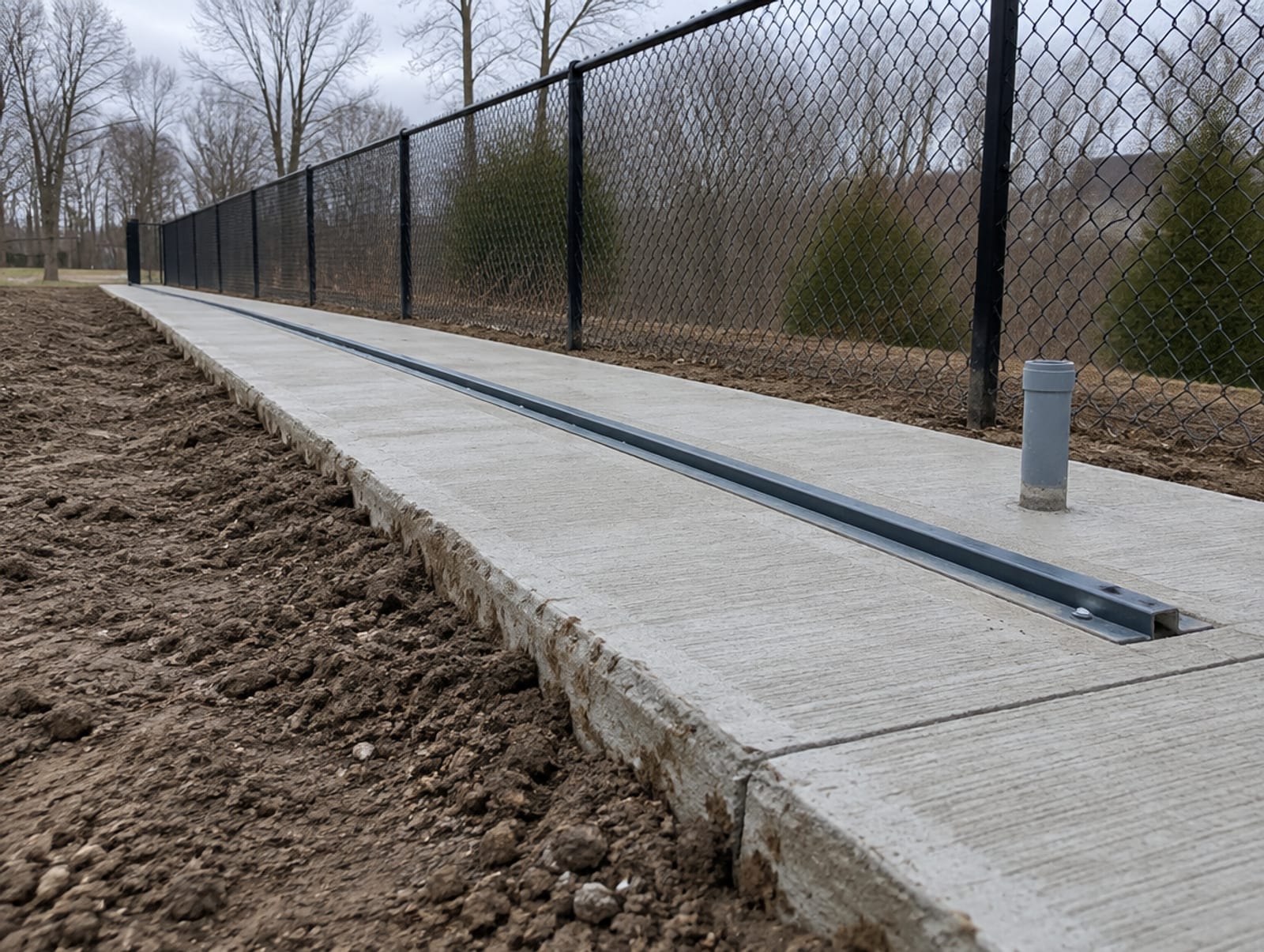
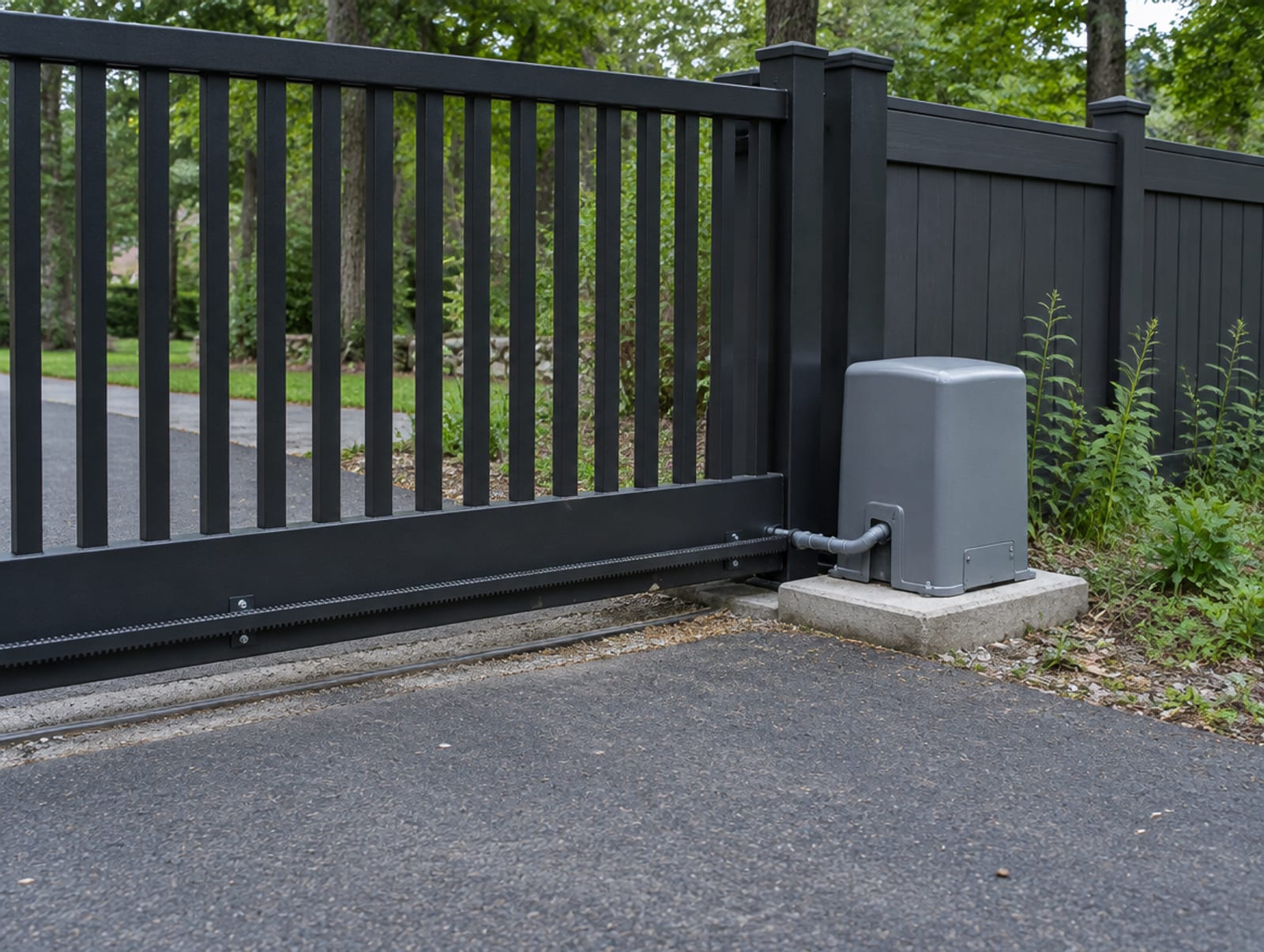
A slide gate rolls along a track or rail beside the opening, so it needs a usable fence line or wall-side travel path in addition to the opening width. The exact side room depends on how the gate is built and how the operator is arranged. The FAAC 740 and 741 manual calls for an upper track, wheels sized to the gate weight, mechanical travel stops and a stable foundation plinth, with the foundation plate level and conduit run through the plinth. For a drive that rises or falls along the fence line, check track alignment, roller support and operator engagement.
Weight and length limits by model
These figures apply only to the named operators.
Swing, LiftMaster RSW12UL
Swing, LiftMaster RSW12UL
1,000 pounds
Tap a row to open it.
The RSW12UL opens through up to 115 degrees. That is an opening-angle limit, not a driveway-grade limit. The FAAC 415 L LS 24V lists a 15-foot maximum leaf length, and the leaf-weight rating for that model is one to ask the dealer for in writing.
Slide
- LiftMaster RSL12UL: 800 pounds maximum, with gate travel of at least 25 feet and at most 50 feet. The operator sits near the front roller or near the back of the open gate, the space between the gate and output sprocket must be at least 4 inches, and it mounts to a concrete pad, reinforced where appropriate
- FAAC 740 and 741: 500 kg (about 1,100 pounds) and 900 kg (about 2,000 pounds), both up to 15 metres (about 49 feet) of gate length
Slope, sag and settling
Operator manuals tie slope to installation checks rather than to a grade number. The FAAC 415 swing manual wants the operator and brackets level, the leaf free of friction, and a manual check before the operator is finalized. The FAAC 740 and 741 slide manual wants the upper track, rack and foundation plate level, with the gate moving without friction while the rack stays engaged with the pinion. The LiftMaster RSL12UL wants the chain level with the idler pulley and parallel to the ground, with sag no more than 1 inch for every 10 feet of chain, and its drive chain stretches over time and gets tightened at the eye bolts.
That tells you what goes wrong in practice. A sagging or rubbing swing leaf raises hinge and operator resistance and can stop the operator before it finishes its travel. A settled slide-gate foundation, track or support can pull the rack out of line with the pinion, or change chain geometry, and the gate drags. Both manuals require the hardware and travel path to be corrected before the operator is relied on.
Local rules that shape where the gate goes
Several towns regulate the driveway end of the property, which is where a gate often sits.
- Yorktown, Article VII, Section 300-47: grades limited to 3% within 30 feet of the street right-of-way line, and no sight obstruction over 2.5 feet in the driveway sight triangle that extends 30 feet from the driveway and street intersection
- Carmel, Article V, Section 156-24: driveways should have a maximum grade of 6% for 15 feet from the roadway and 7% for 30 feet from the house
- Warwick, Chapter A168, Section A168-19: a driveway within the right-of-way has no more than a 1-inch-per-foot grade from the curb or pavement line to the right-of-way line, with at least 15 feet of pavement width at the curb tapering to at least 10 feet at the right-of-way line
- Warwick, Chapter 79, Section 79-1: a permit before installing or substantially changing a driveway entrance onto a town highway, or doing work within 25 feet of the highway center line that affects the highway
- Town of Rochester in Ulster County, Section 140-10F(8): a flag-lot access strip needs a clear right-of-way at least 20 feet wide and a driving surface of at least 16 feet for emergency ingress and egress
None of these sets a single stacking distance for a gate, so the working rule is practical: keep the gate on private property, keep the sight lines open, and do not narrow the usable right-of-way or the emergency-access width.
Fire access
Where a driveway serves as a required fire apparatus access road, the 2020 Fire Code of New York State governs the gate. Section 503.2.1 requires an unobstructed width of at least 20 feet and vertical clearance of at least 13 feet 6 inches. Section 503.5 lets the fire code official require gates across those roads, and requires electric operators to be listed to UL 325 and automatic gates to comply with ASTM F2200. Section 503.6 requires the gate to be approved by the fire code official, to have an approved means of emergency operation, and to stay operational at all times. If your driveway might count as one of these roads, ask the fire code official before the gate type is chosen.
Before the footing is dug
Digging a slide-gate foundation or a swing-gate post footing falls under New York's one-call rules whenever powered or mechanized excavation is used. Under 16 NYCRR Part 753, excavation includes digging, drilling, grading, backfilling and fence-post driving. The notice goes to the one-call system at least 2 working days and no more than 10 working days before work starts, not counting the day of the call. A postponement of 10 working days or less needs no new call, and Dig Safely New York says marks are valid for 10 working days. The markout covers utility-owned lines. Private lines on your property may need a private locating service.
Footing depth comes from your municipality. New York's code leaves the climatic and frost design criteria to each city, town or village, so ask your building department which criteria apply to your parcel, and have the pad or post footing designed to them. Manufacturer requirements add to that: the RSL12UL wants a concrete pad with suitable fasteners, and the FAAC 740 and 741 want a plinth that stays stable with the rack and pinion aligned.
Check yourself
1. What is the maximum leaf weight for a 12-foot leaf on the LiftMaster RSW12UL swing operator?
2. What unobstructed width must be kept where a gate crosses a required fire apparatus access road?
3. How long does Dig Safely New York say utility marks are valid?
4. Yorktown limits driveway grades to what within 30 feet of the street right-of-way line?
Frequently Asked Questions
Q: Which handles a heavier gate? A: It depends on the operator. The RSW12UL swing handles 400 to 1,000 pounds depending on leaf length, the RSL12UL slide handles 800 pounds, and the FAAC 741 slide handles 900 kg. Compare the model your installer names against the weight of your gate.
Q: Can I put a swing gate on a driveway that slopes up toward the gate? A: It can work, provided the leaf clears the grade through its whole arc. The manuals tie slope to level mounting and a leaf that moves freely by hand, so have the opening and closing clearance checked on site.
Q: How much room does a slide gate need beside the opening? A: Enough clear fence line or wall for the gate to travel, which depends on the gate and the operator layout. The RSL12UL specifies 25 to 50 feet of gate travel.
Q: Do I need to call 811 for a gate footing? A: Yes, when powered or mechanized equipment digs the footing. Notice goes in 2 to 10 working days ahead, and the digging waits for the utility marks.
Q: Does my town limit where a gate can sit? A: Several do, through driveway grade, sight-distance and right-of-way rules. Ask your building department, and the fire code official if the driveway serves as a fire access road.
Swing or slide is a site question with a measured answer: the leaf length and weight against the operator limit, the grade against the arc, the fence line against the travel path, and the local rules against the location. A quote that names the operator model and shows those checks is the one to compare.
At Portillo Fences and Gates, we install automatic gates, including swing-gate arm operators and slide operators, across Putnam, Westchester, Dutchess, Orange, Ulster and Rockland Counties. We walk the driveway, check grade and clearance, and confirm what your town requires before work starts. Contact us for a free estimate, or call (845) 282-3336.