

September 18, 2026
- Privacy Fence
- Noise Reduction
- Fence Design
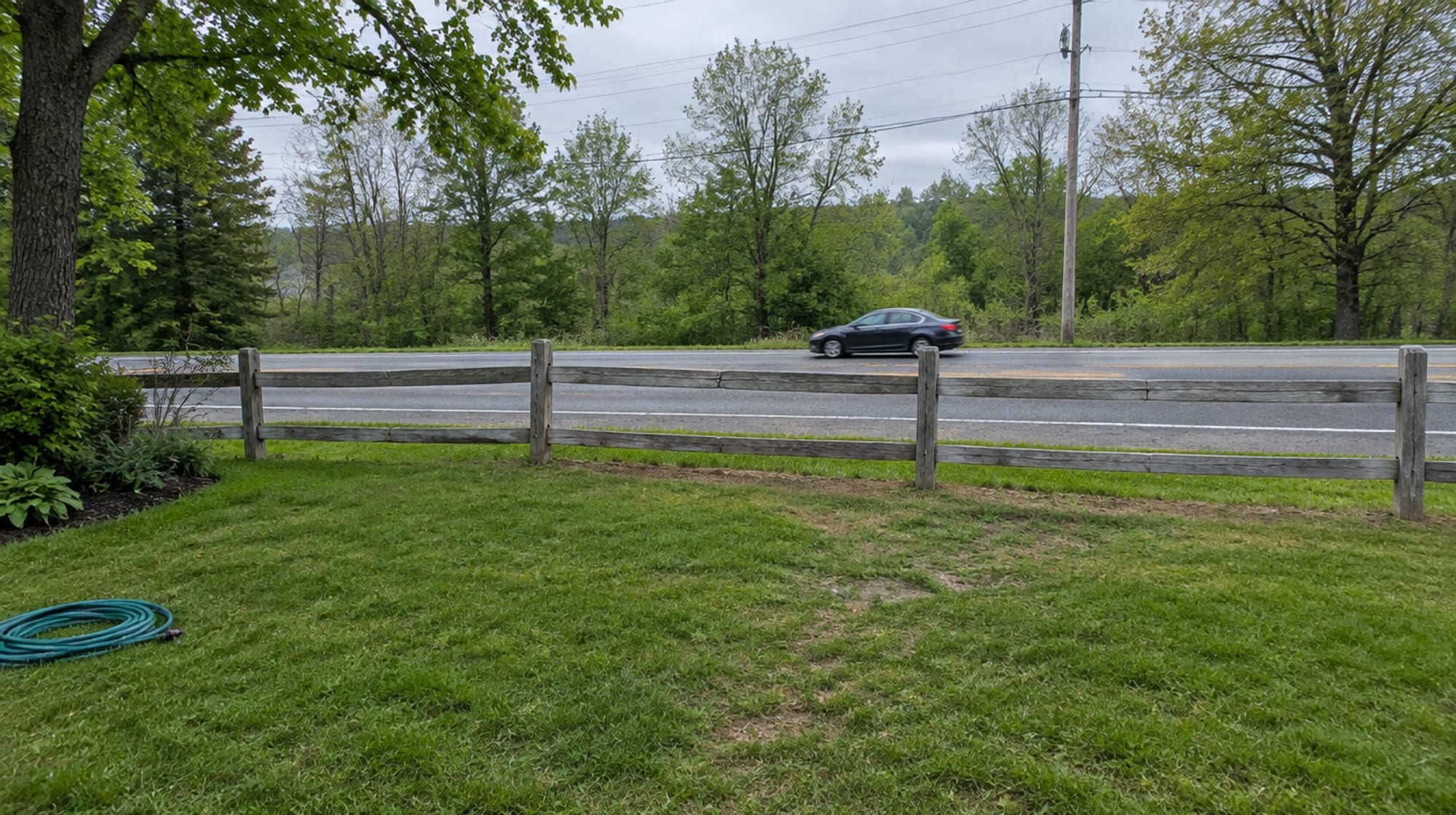
A fence that just breaks the line of sight between a road and your yard cuts the noise by about 5 decibels, and each added meter of height above that line takes off roughly 1.5 more. Those are the Federal Highway Administration's figures for highway barriers, and they set the ceiling for a backyard fence: about 10 decibels for the first row of homes when the barrier is well designed, and 20 is described as nearly impossible.
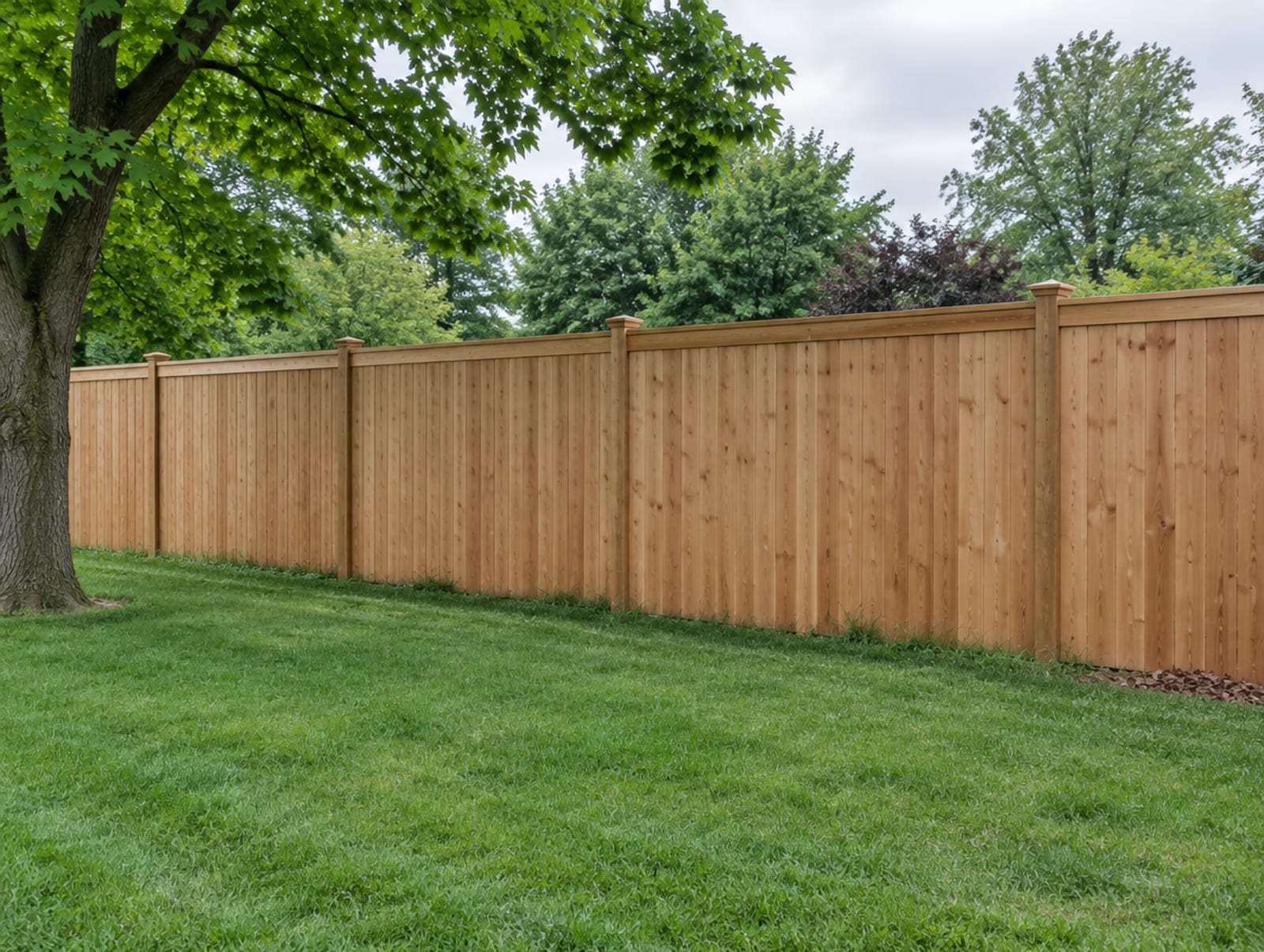
So, the quietest privacy fence is a solid one, as tall as your town allows, with no gaps, placed where it blocks the line of sight to the source.
Key Takeaways
Line of sight is the test
about 5 dB(A) of reduction when a barrier just breaks it, and roughly 1.5 dB(A) more per added meter of height
Weight and gaps
FHWA wants a rigid material of about 4 pounds per square foot or more, with no openings
Wood gaps open over time
shrinkage, warping, splitting and weathering; tongue-and-groove boards reduce them
Local height limits
six feet is the rear-yard limit in Brewster and Putnam Valley, and Southeast allows up to 10 feet with a setback
Hills defeat fences
a fence does very little for a house on a hillside overlooking the road
How a fence blocks sound
A barrier works by interrupting the line of sight between the noise source and the listener. FHWA says the material should be rigid and weigh at least about 4 pounds per square foot, which gives at least 20 dB(A) of transmission loss through the material, leaving sound bending over the top as the main path. Openings and gaps reduce the result, and the approximate material figures assume none.
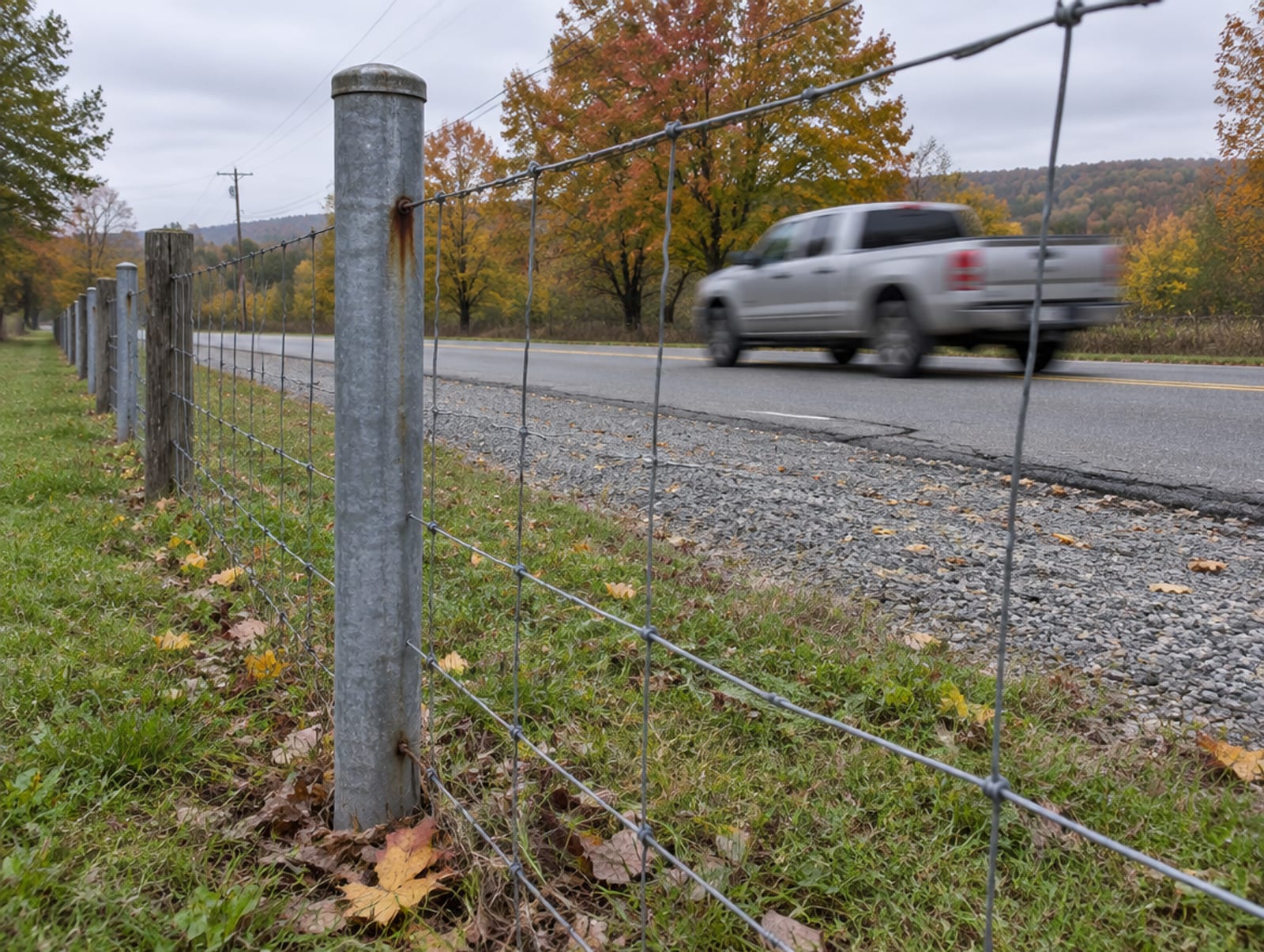
Sound also bends around the ends. Low-frequency sound bends deeper into the shadow zone than high-frequency sound. FHWA recommends extending a barrier roughly four times the distance from listener to barrier in each direction, and another FHWA page gives eight times as a rule of thumb. Driveway openings, gates, intersecting streets and gaps between panels all reduce performance.
What the published numbers say
STC and laboratory transmission loss describe a tested specimen. They do not predict what a particular yard will hear. The published figures follow, with that qualifier attached.
FHWA's approximate values for typical highway traffic sound:
Weight: 1.7 lb/sq ft
Transmission loss: 18 dB(A)
Tap a row to open it.
These are common materials, not ratings for a residential privacy fence as built.
Vinyl. A standard tongue-and-groove PVC privacy fence has no general STC rating by the material name alone. A specialty acoustic PVC product from AcoustiGuard reports up to STC 36 for Silent Protector and up to STC 32 for Tuf Barrier, tested under ASTM E90 and E413. Those figures belong to those products.
Composite. MecoFence WPC and NeoTimber acoustic composite fencing each report STC 29 under ASTM E90-09 and E413-10, and PrimeAlux Horizontal Privacy Plus, at 6 by 6 feet, reports STC 22 and OITC 19 from an Intertek ASTM E90 report. They apply only to the tested products and assemblies.
Masonry. Angelus Block calculates STC for solid-grouted, medium-weight concrete masonry walls: 53 for 6 inches, 57 for 8, 60 for 10 and 62 for 12. Those figures are for solid-grouted wall assemblies, not a decorative masonry fence.
Gaps, boards and the bottom edge
FHWA calls gaps the documented weak point. Wood can open up through shrinkage, warping, splitting and weathering, and FHWA names tongue-and-groove planking as a way to reduce gaps as the wood moves. Openings at the base let sound through as well.
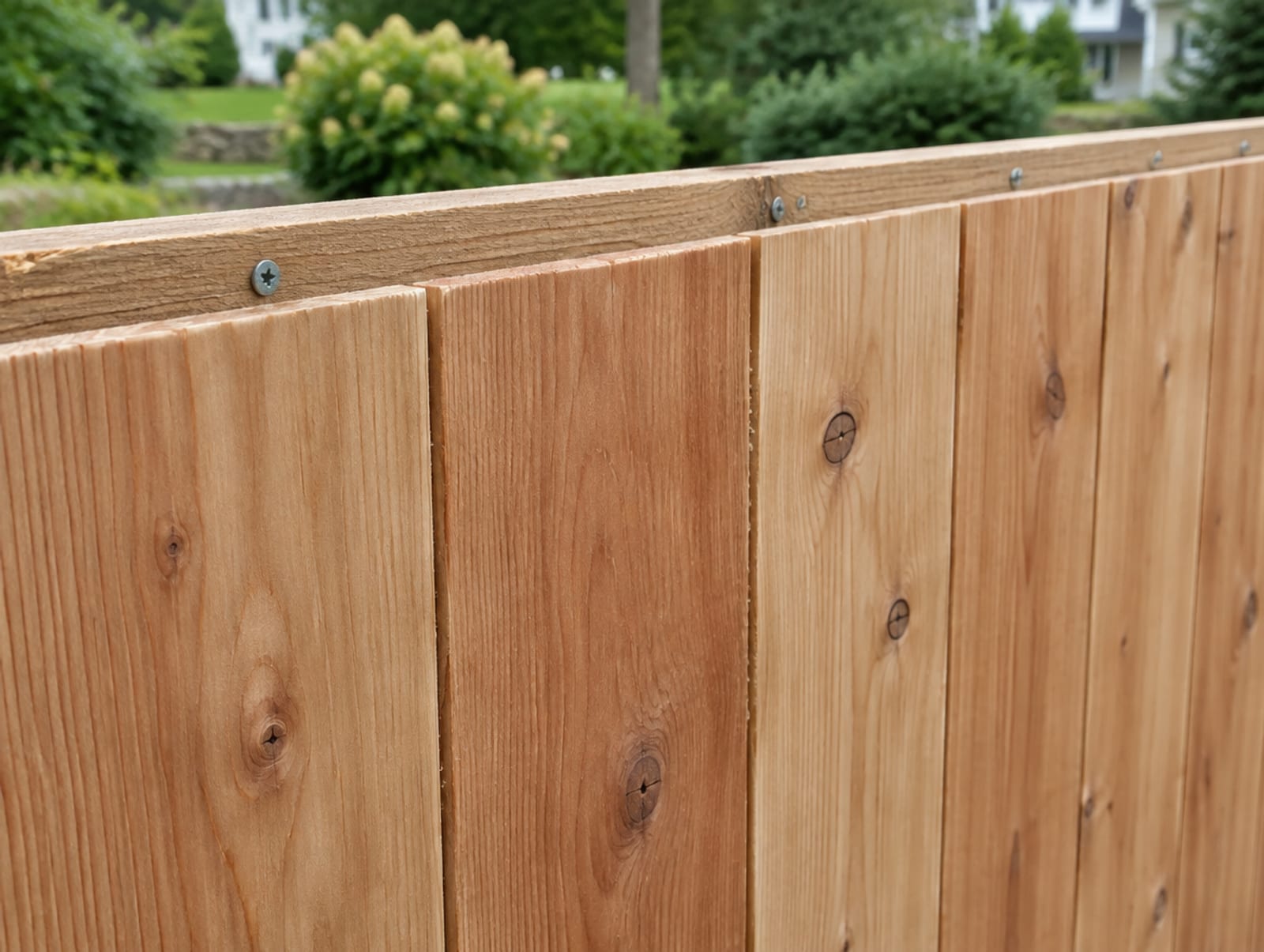
A shadowbox fence alternates pickets on each side of the rails and leaves a space between boards, which gives visual privacy from some angles but not a continuous face. Board-on-board is more closed to the eye, and its result depends on the overlapping boards staying continuous after installation and weathering. A solid bottom rail closes the visible gap to the ground, though a rail alone has no published decibel or STC value. Keep the base continuous where practical, within drainage, grading, property line and local fence requirements.
Height limits where you live
These are local zoning provisions, each from one municipality in Putnam County, not a countywide rule.
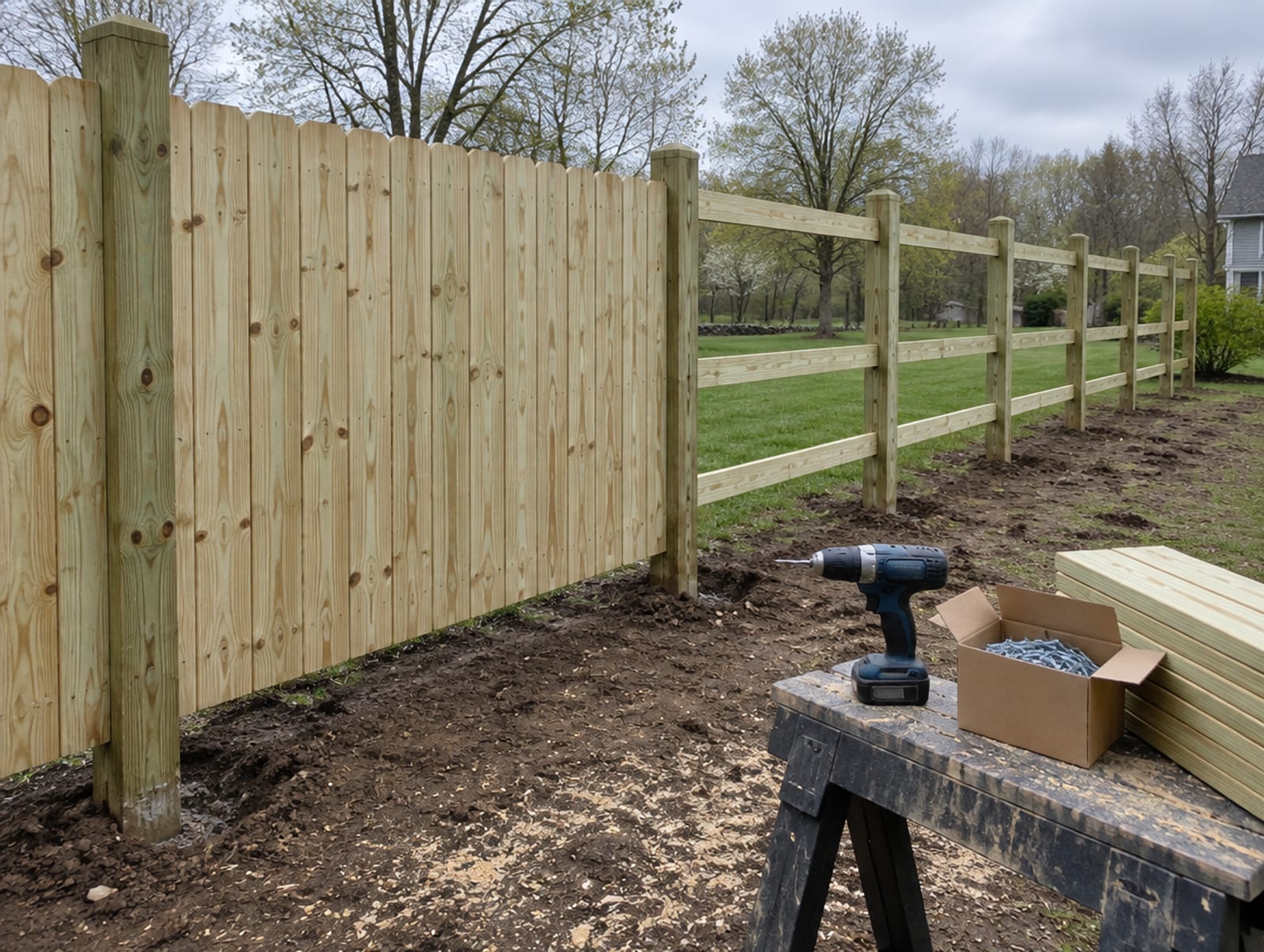
- Village of Brewster, Article V, Section P: no more than four feet in a front yard or a side yard in front of the building line, and no more than six feet in a rear yard or a side yard behind it, measured from ground level to the highest point. The finished side faces away from the interior of the lot, and a permit is required before construction.
- Town of Southeast, Section 138-27(C): no more than three feet along any lot line and no more than six feet along the part of the lot line behind the required front yard. A fence over six feet and up to 10 feet is allowed when set back from the lot line by two-thirds of the setback.
- Town of Putnam Valley, Article VIII, Section I(2): fences in required side or rear yards may not exceed six feet from existing grade. Front property line fences are limited to four feet, and a building permit is required for fences within five feet of a property line or roadway.
A four-foot front-yard fence, or a three-foot lot-line fence, may leave the road or vehicle exhaust in view. A six-foot rear or side-yard fence blocks a lower source better, though the real line of sight depends on grades, road elevation, listener height and distance. In Southeast, a taller fence set back from the lot line may improve that geometry if the setback is available.
Where a fence does not help
A fence is a partial outdoor barrier, not soundproofing for the house. FHWA says barriers do very little for homes on a hillside overlooking a road or for buildings that rise above the barrier. A six-foot fence blocks a low source only when the road and your position put the source's line of sight below the top of the fence, and it does little for a road on higher ground, a tall vehicle or a house sitting above the fence.
Height alone does not decide the result. In one New York State Department of Transportation highway analysis, a proposed 20-foot barrier produced only 1 to 2 dB(A) for some receivers because of site geometry, while other modeled barriers produced 5 to 10 dB(A) at particular nearby receivers.
Vegetation helps less than it looks. FHWA says it usually gives an out-of-sight, out-of-mind effect unless it is at least 15 feet high, at least 100 feet wide and dense enough to block the line of sight completely, and even then up to 5 dB(A), with about 10 dB(A) as the maximum.
Before you promise yourself a reduction, check whether the road, exhaust, commercial equipment or the room you want quiet is higher than the proposed fence. If the line of sight stays open, other measures on the building or the site come into play.
Check yourself
1. About how much does a barrier cut road noise once it just breaks the line of sight?
2. At least how much weight per square foot does FHWA say a rigid barrier material should have?
3. What is the rear-yard height limit in the Village of Brewster?
4. Which wood-fence feature does FHWA name as a way to reduce gaps as the wood moves?
Frequently Asked Questions
Q: How many decibels will a privacy fence cut? A: About 5 dB(A) when it just breaks the line of sight, and roughly 1.5 dB(A) more for each meter above that line, per FHWA. The result depends on your site.
Q: Which fence material is quietest? A: A solid, heavy, gap-free one. Masonry has the highest published figures, and tested acoustic panels report STC 22 to 36 for those specific products.
Q: Does vinyl block noise? A: A standard vinyl privacy fence has no general STC rating. Specialty acoustic PVC panels report up to STC 36.
Q: Does a solid bottom rail help? A: It closes the gap to the ground, and it has no published decibel value of its own.
Q: How tall can my fence be in Putnam County? A: Six feet in a rear yard in Brewster and Putnam Valley, and up to 10 feet in Southeast with a setback. Check your own municipality's code.
A quiet fence is solid, tall enough for the line of sight and long enough that sound cannot slip around the ends. The line of sight is something we can measure on your property before you choose a material.
At Portillo Fences and Gates, we install and repair fencing across Putnam, Westchester, Dutchess, Orange, Ulster and Rockland Counties, including solid wood and vinyl privacy fences and stone walls. We confirm the height your town allows and walk the line of sight with you. Contact us for a free estimate, or call (845) 282-3336.