

September 17, 2026
- Railings
- Brewster NY
- Building Code
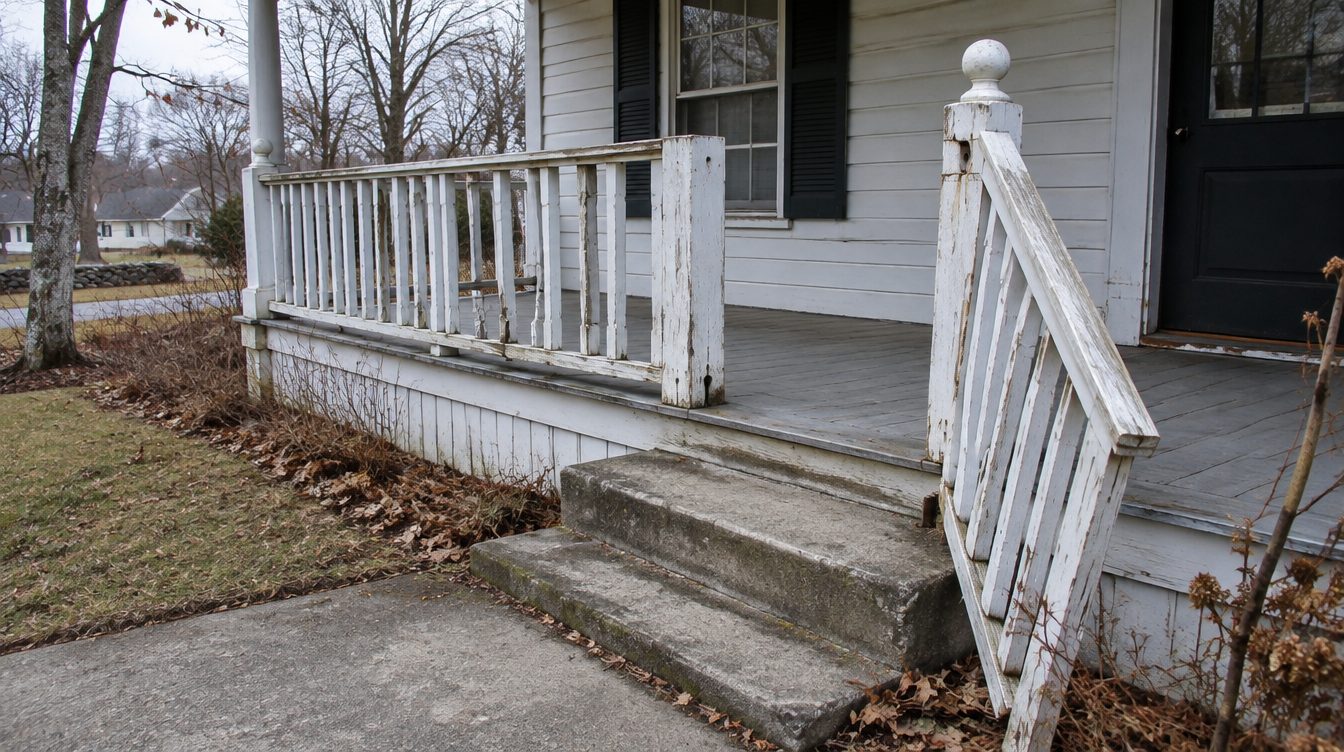
A railing on a Brewster house has to be at least 36 inches high, not 42. That is the guard height in Section R312.1.2 of the 2025 Residential Code of New York State, which covers one- and two-family homes. The 42-inch figure belongs to a different book, the Building Code of New York State, and applies to commercial and multifamily buildings under §1015.3.
Replacing a railing generally needs a building permit, and which office issues it depends on whether your property sits inside the Village of Brewster or in the Town of Southeast.
Key Takeaways
Houses use 36 inches
guards on one- and two-family homes must be at least 36 inches high under R312.1.2
42 inches is for other buildings
commercial and multifamily guards are 42 inches under Building Code §1015.3
The trigger is a 30-inch drop
a guard is required where the walking surface is more than 30 inches above the floor or grade below
A permit is generally needed
Village Code §103-4(A) and Town Code §54-7 both cover replacing a railing
An old building is not exempt
the Existing Building Code asks alterations to meet current code
Which office issues the permit
Inside the Village of Brewster, the Village Code Enforcement Officer handles building permits under Chapter 103. The office is at 50 Main Street, Brewster, NY 10509, phone 845-279-3760, open Monday through Thursday from 8:00 a.m. to 5:30 p.m. and closed Friday.
A property outside the village that still uses a Brewster mailing address, including Brewster Hill, Dykemans and Deans Corners, goes through the Town of Southeast Building Department at 1 Main Street, phone 845-279-2123, open Monday through Friday from 9:00 a.m. to 4:30 p.m. Town Code §54-7 requires the permit application before covered work begins.
Replacing a railing, guard or handrail generally needs a permit because Village Code §103-4(A) covers alteration, improvement or removal of any portion of a building or structure, and Town Code §54-7 covers construction, alteration, improvement or repair. Ask each office for its current review timeline when you call. Village Code §103-5 requires the applicable inspections and a final inspection after the permitted work is complete; ask whether footing or anchorage inspections apply to your railing.
An older house is not exempt
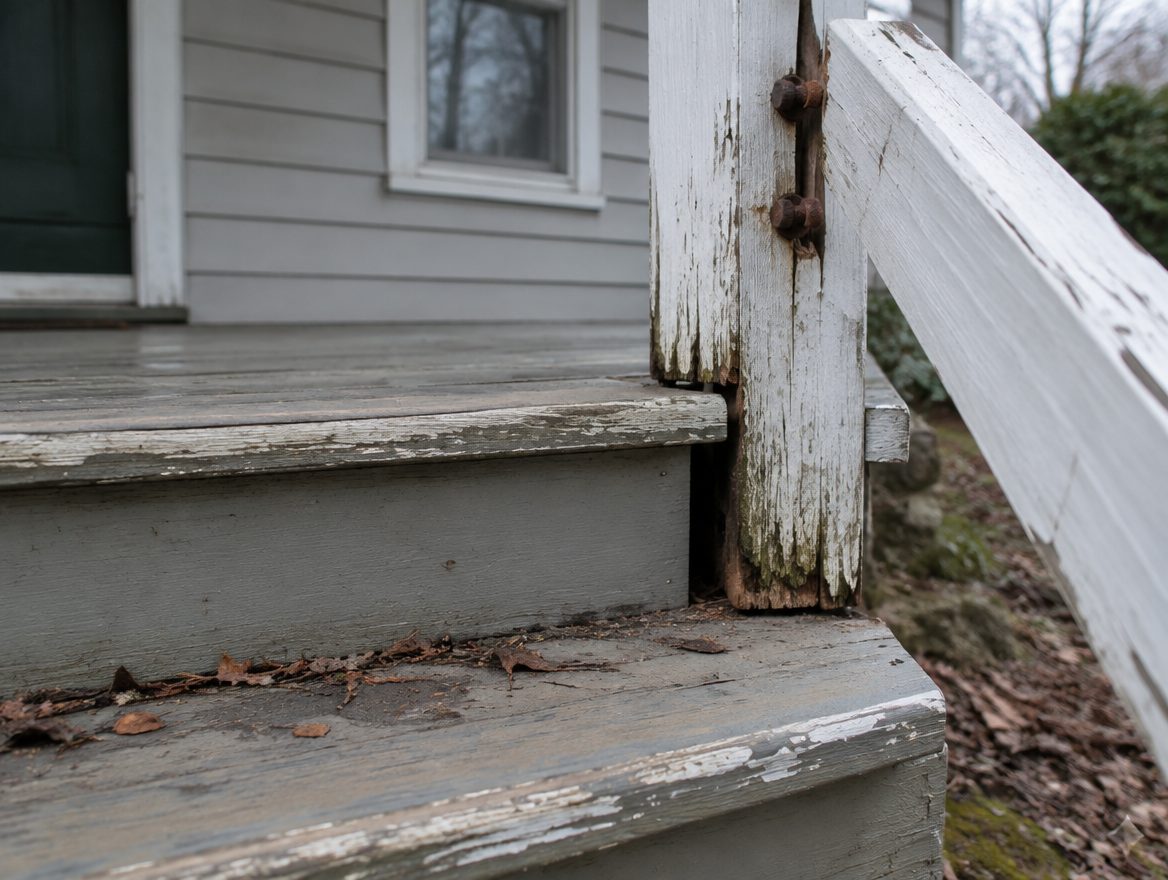
A railing swap on an old house is not automatically a repair. Under the 2025 Existing Building Code of New York State, §503.1, alterations must comply with the Building Code for new construction, while the building may not become less compliant than it was before. There are exceptions for certain existing stairways where the space does not allow a change in pitch, and for handrail extensions under Building Code §1014.7. The permit reviewer decides whether your job is a repair, an alteration or a replacement.
The Town of Southeast also has a Historic Sites Commission under Chapter 83, which reviews changes to listed historic sites, roads and districts through certificates of appropriateness. That review is separate from the building permit. The Old Southeast Town Hall, built in 1896, is one listed landmark, and a railing visible from a listed site or district may need commission review as well. Inside the village, ask the Code Enforcement Officer whether the parcel carries site-plan, landmark or other design review before you order visible work.
On fees, the Village fee schedule lists "FENCES, WALLS, SHEDS, DECKS" including fences and walls over 36 inches high at a $100.00 permit fee plus $5.00 per thousand of demolition cost, and residential alterations at $250.00 plus graduated construction-cost charges. A railing is not named on its own line, so confirm which category and fee apply.
The code figures for a house and for a commercial building
Guard and handrail requirements, residential and commercial
Figure: Walking surface more than 30 inches above the floor or grade below, within 36 inches horizontally of the edge
Section: R312.1.1
Tap a row to open it.
Handrails on a house must be continuous for the full flight (R311.7.8.4) and graspable, with a Type I or Type II profile (R311.7.8.5). A Type I handrail has a circular cross section of 1 1/4 to 2 inches or an equivalent profile. Our guard railing height post goes through the numbers in more detail.
For footings, a 2020 Residential Code climatic table published for a Brewster-area jurisdiction lists a frost line depth of 42 inches. The footing depth for your parcel and permit type is the building department's call, so get it from them before any post hole is dug.
What railings cost installed
Published 2026 figures vary by region and by what each page assumes, so none is averaged here and none is a Brewster quote.
- Northeast contractor pricing, DeckMath calculator (July 2026), mid-style: pressure-treated wood $45 per linear foot, cedar $55, aluminum $98, steel $130, stainless cable $135
- National estimate, Cost Home Book (updated September 2026): pressure-treated wood $30 to $60, cedar $40 to $80, aluminum $60 to $120, steel or wrought iron $70 to $150, cable $80 to $200
- Western New York, Buffalo Fence & Deck: aluminum $60 to $120, cable $100 to $180, wood $40 to $80 per linear foot installed; Western New York is not the Hudson Valley
- National, DeckMath: pressure-treated wood $22, cedar $30, powder-coated aluminum $78, welded steel or iron $95, stainless cable $110, for 36-inch railing including posts, rails, infill and fasteners
Add-ons come on top. Cost Home Book lists removing an existing railing at $5 to $15 per linear foot, post reinforcement to meet code at $75 to $250 per post, and stairs at 20% to 50% more per foot. JoistLedger puts stair railing at 20% to 40% more. Linear Feet Calculator lists each 90-degree corner at about $30 to $60 in labor and connectors, cable corners at $15 to $40 each for tensioning hardware, and curved sections at 40% to 80% over the base price.
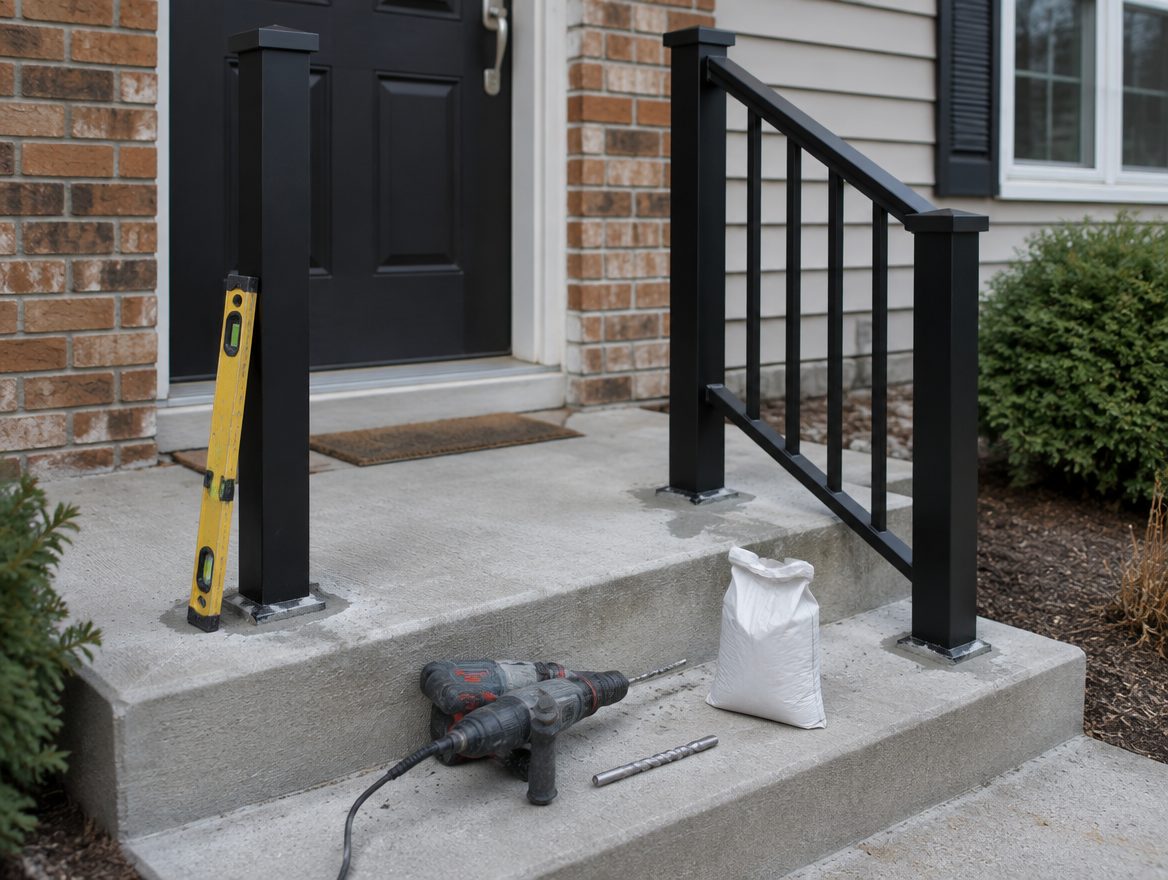
Anchoring posts into stone, brick or concrete is its own line. Ask for a quote that itemizes drilling, anchors, any masonry repair and access.
Finish for exterior steel
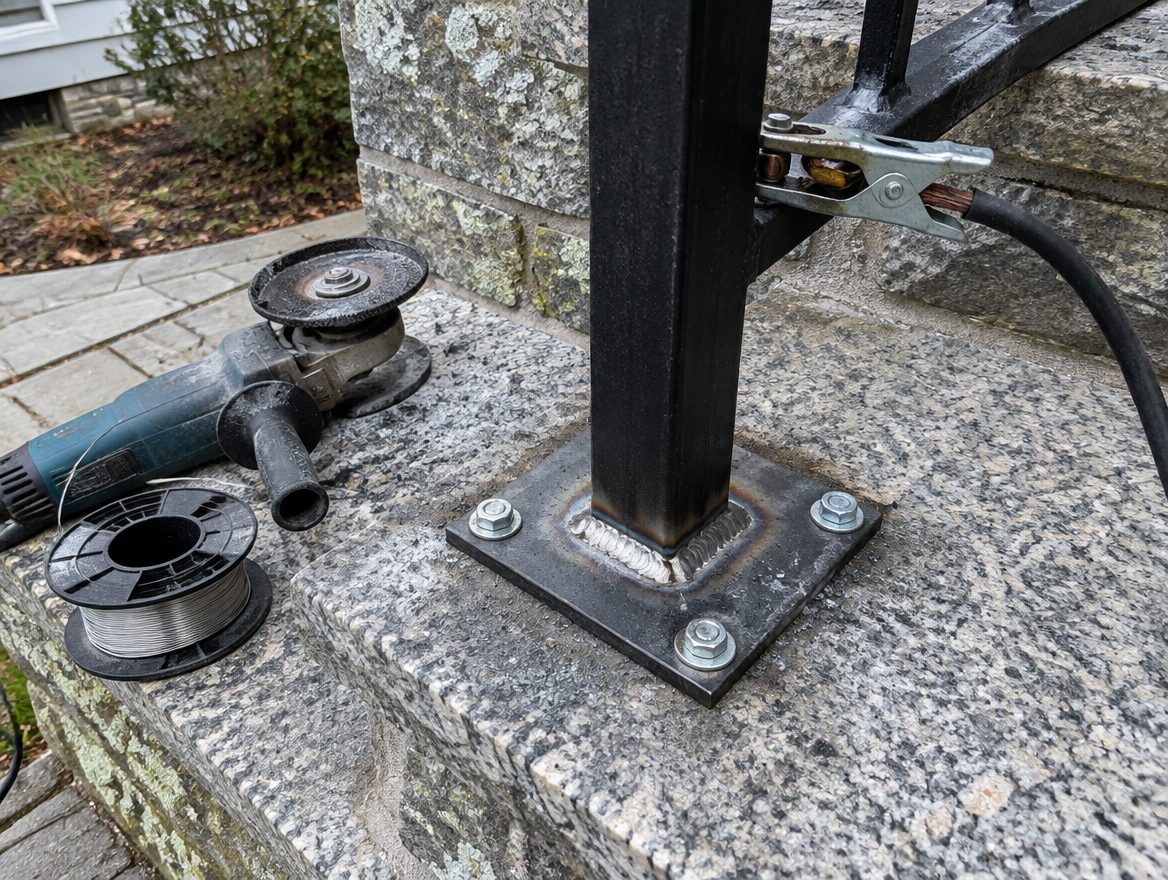
For exposed steel, a New Hampshire State Parks railing specification calls for hot-dip galvanizing after fabrication, to ASTM A123/A123M for railings and A153/A153M for hardware, with corrosion control where steel touches concrete, masonry, wood or other metals. A Northeast project documented by Duncan Galvanizing used hot-dip galvanizing with a powder-coat top layer because of winter sand and de-icing salts. Powder coat alone is a barrier finish, while galvanizing keeps protecting through a scratch because of the zinc layer. Our steel railings page covers the options.
Check yourself
1. What is the minimum guard height on a one- or two-family house under R312.1.2?
2. Where does the 42-inch guard height apply?
3. How far above the floor or grade must a walking surface be before a guard is required?
4. What does the Village of Brewster fee schedule list for fences and walls over 36 inches high?
Frequently Asked Questions
Q: Do I need a permit to replace a railing? A: Generally yes. Village Code §103-4(A) and Town Code §54-7 both cover alteration, improvement or repair. Call the office that covers your lot to confirm the category and the fee.
Q: Is my railing 36 or 42 inches? A: A house is 36 inches under R312.1.2. A commercial or multifamily building is 42 inches under Building Code §1015.3.
Q: How far apart can the balusters be? A: On a house, the opening may not let a 4-inch sphere pass, and stair openings are limited to a 4 3/8-inch sphere, with a 6-inch limit at the triangle formed by the riser, tread and bottom rail.
Q: Does an old house get an exemption? A: Not automatically. The Existing Building Code §503.1 asks alterations to meet current code, with limited exceptions for certain existing stairs and handrail extensions.
Q: Could historic review apply? A: It can, for a railing visible from a listed Town historic site or district. Ask the Town of Southeast whether your parcel is listed.
A Brewster railing job is three answers: the height that applies to your building, the office that issues the permit, and the finish the weather will test. Get those down on paper and the price follows.
At Portillo Fences and Gates, we build and install railings across Putnam, Westchester, Dutchess, Orange, Ulster and Rockland Counties, including railings, steel railings and aluminum fencing. We confirm the code height and the permit with your building office before work starts. Contact us or call (845) 282-3336.