

August 20, 2026
- Fence Inspection
- Pool Barriers
- Building Code
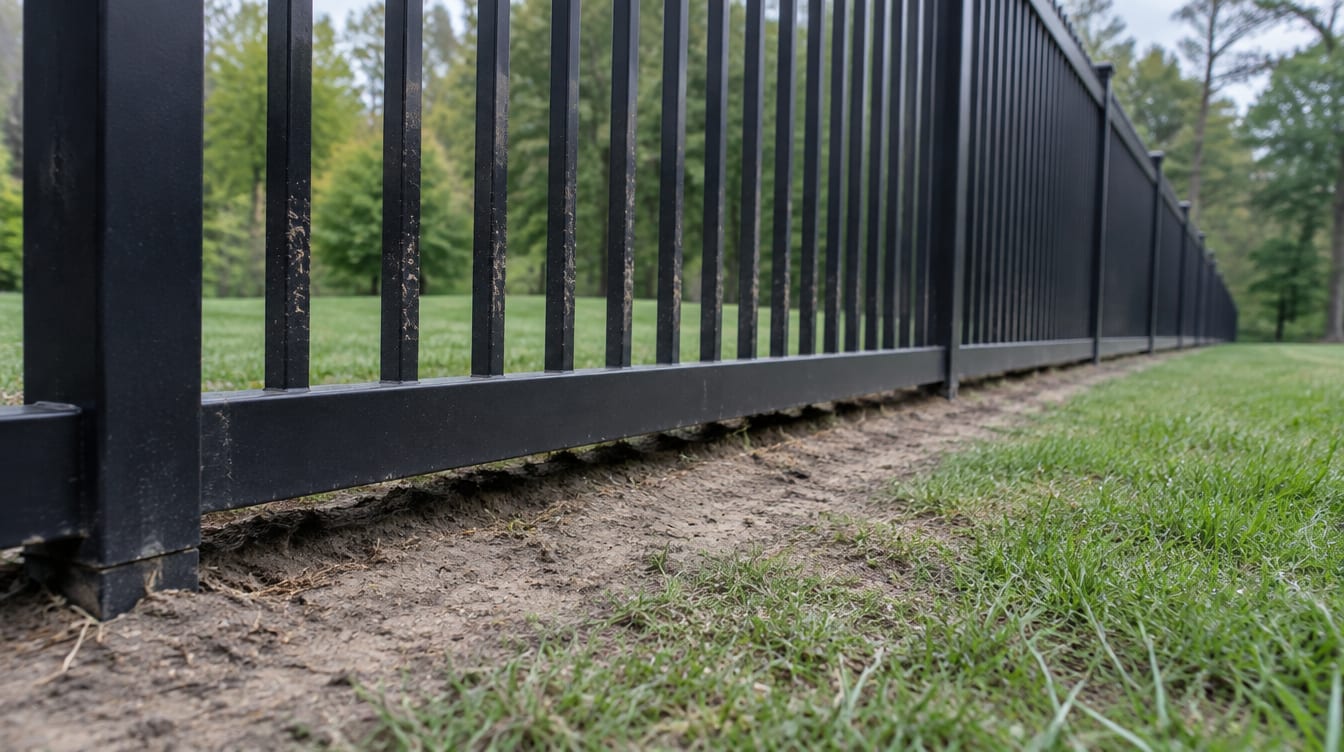
Most ordinary backyard fences are never inspected, because many Hudson Valley towns do not require a permit for one. Where a fence is inspected, the failures are specific: a pool barrier shorter than 48 inches, a gap under it wider than 2 inches, a gate that does not close and latch by itself, or a post set shallower than the town allows.
Know which of those applies to your project before the inspector arrives, because each one costs a rebuild rather than a touch-up.
Key Takeaways
Pool barrier
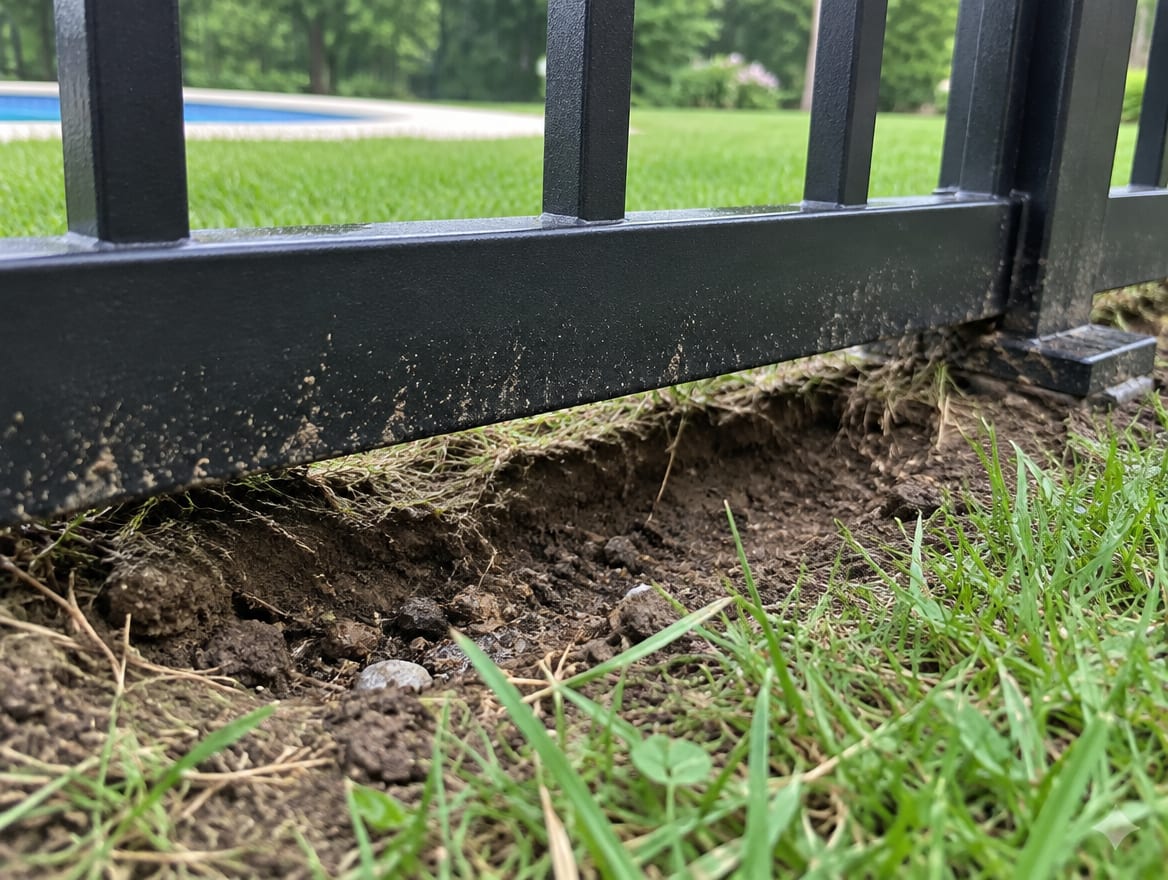
at least 48 inches high, no more than 2 inches of clearance under it, and openings no wider than 1¾ inches in most constructions
Pool gates
self-closing, self-latching and opening outward, with a latch release at least 54 inches above the ground if it is reachable from outside
Automatic gates
the 2025 Building Code calls for ASTM F2200 construction and a UL 325 listed operator
No statewide fence inspection
19 NYCRR Section 1203.3(b) does not name fences as a required inspection, so your town decides
Code edition
the 2025 Residential Code has applied to permit applications since December 31, 2025, and pool barriers are in Section R328
Does your fence get inspected at all
The state's inspection rule, 19 NYCRR Section 1203.3(b), lists what a code-enforcement program inspects: the worksite before permit issuance, footing and foundation, concrete slab preparation, framing, systems, and a final inspection after all work authorized by the building permit is complete. Fences are not named. Permitted work has to stay accessible and exposed until it is inspected and accepted, and the inspector must cite the specific code provision that was not met. A fence is inspected when your local program, permit conditions or an applicable code brings it into the permitted work.
How that plays out by town:
Fence permit: Building permits not required for fences
Inspection: None triggered by a permit; zoning limits of 4 feet front and 6 feet side and rear apply
Tap a row to open it.
For the towns marked "ask," call the building department before you dig and ask whether it wants a footing, post-hole or final inspection, and book it before the concrete is poured. A buried footing cannot be shown to an inspector afterward.
Post depth
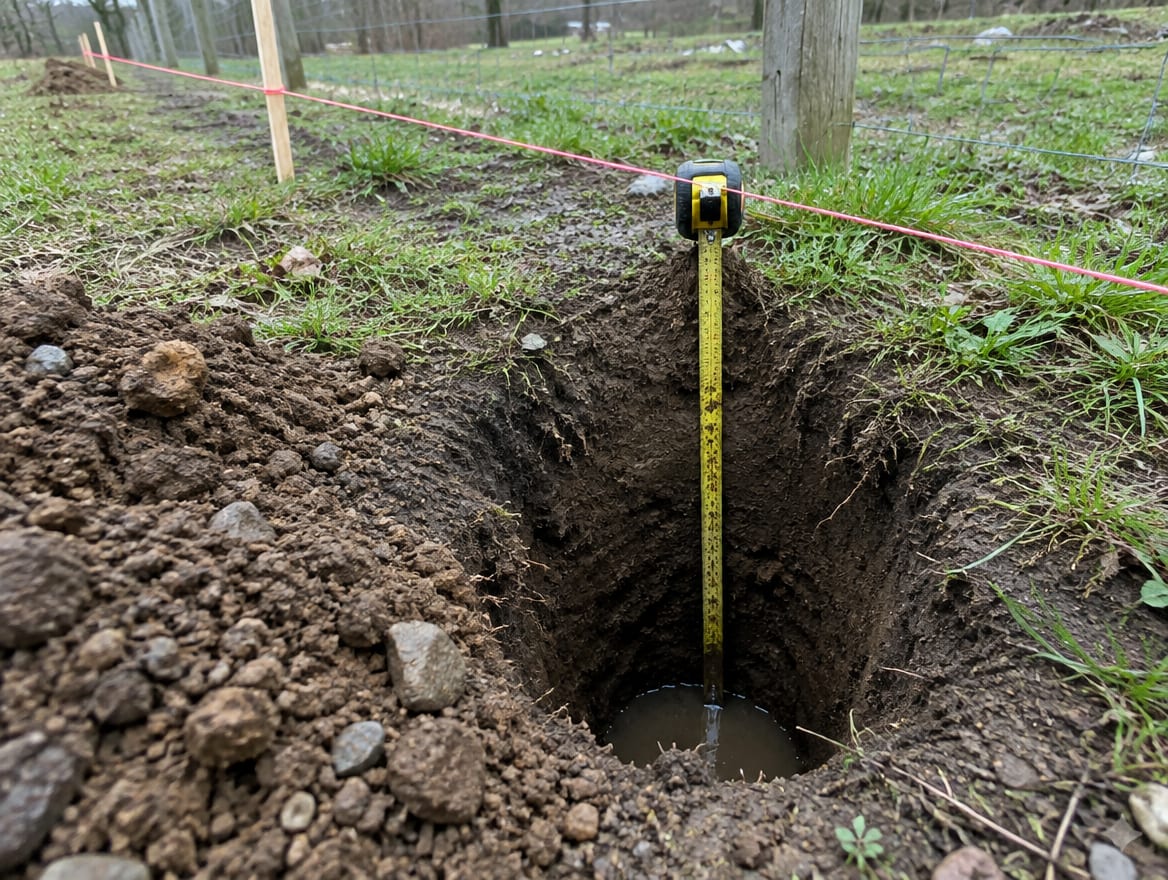
Posts are the first thing an inspector can check and the last thing a homeowner sees. The 2025 Residential Code of New York State does not publish one frost depth for Putnam, Westchester, Dutchess, Orange, Ulster and Rockland Counties. Table R301.2 has the local authority enter the minimum footing depth below finished grade, and Section R403.1.4 requires frost protection for footings. The one published local figure in this set is Newburgh's: its fence permit application requires a minimum hole depth of 2 feet 6 inches for posts on fences 6 feet tall or less. Confirm the footing or post depth with your building department, and follow any depth stated on your permit.
Pool barrier checkpoints
A pool fence is the one fence most inspectors will measure. Under the 2025 Residential Code, Section R328, these are the numbers:
- Height and clearance, R328.4.2.1: the top of the barrier at least 48 inches above grade, and no more than 2 inches between grade and the bottom of the barrier, both measured on the side facing away from the pool
- Closely spaced horizontal members, R328.4.2.3: vertical spacing no wider than 1¾ inches
- Widely spaced horizontal members, R328.4.2.4: vertical spacing no wider than 4 inches, with decorative cutouts still held to 1¾ inches
- Diagonal members, R328.4.2.6: openings no wider than 1¾ inches
- Gates, R328.4.2.7.1 to R328.4.2.7.3: self-closing, self-latching, and securely locked when the pool is not in use or supervised; a pedestrian gate opens outward, away from the pool
- Latch release: at least 54 inches above the ground if it can be reached from outside the barrier and is not self-locking; no higher than 54 inches for a self-locking mechanism; at a private pool, at least 3 inches below the top of the gate if the only release is on the pool side
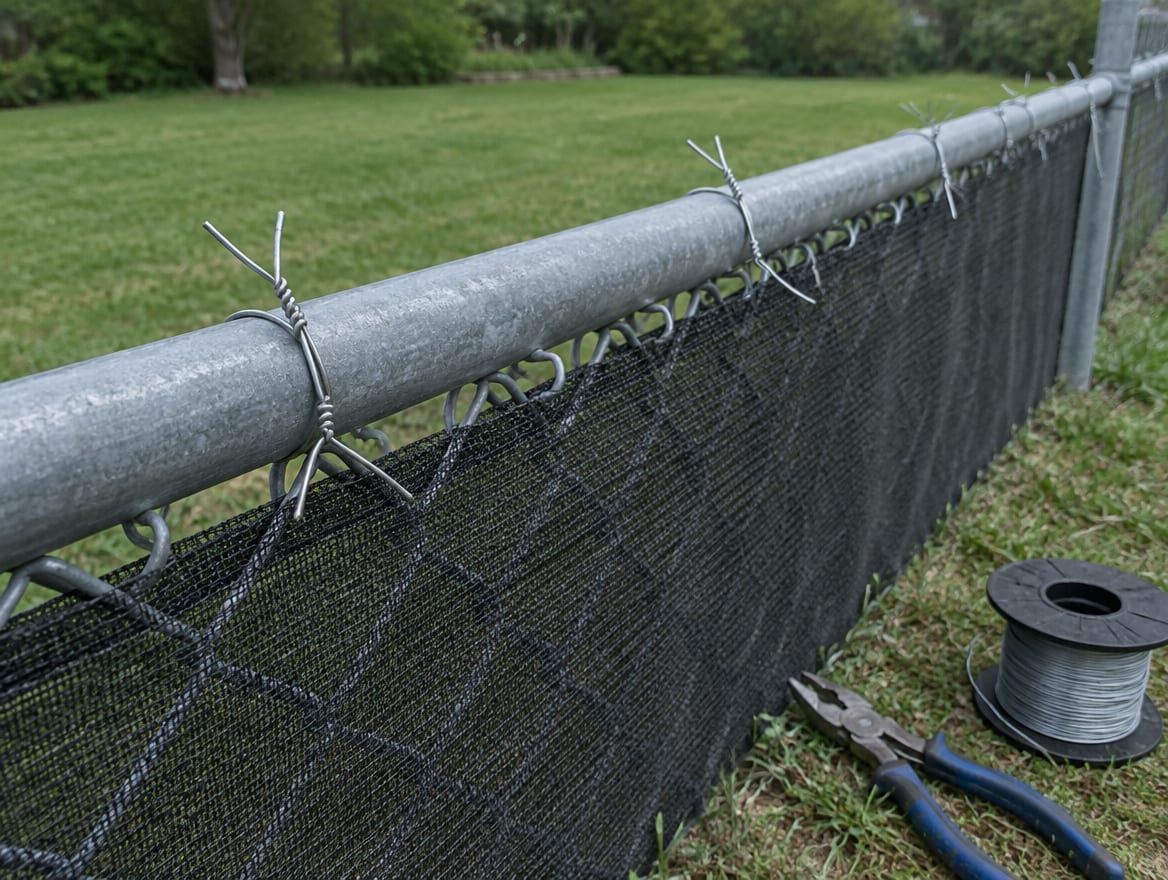
Chain link as a barrier has two readings in the code. Section R328.4.2.5 reads "a 1¾ inch (57 mm) square" for the maximum mesh, with an exception for vertical slats that reduce openings to 1¾ inches. Other RCNYS opening provisions state 1¾ inches (44 mm) as a width, and the International Swimming Pool and Spa Code reading commonly tied to chain link is 1¾ inches. Ask your building department which figure it enforces before you buy mesh; a mesh of 1¾ inches or smaller meets either reading.
The house wall as part of the barrier is allowed under Section R328.4.2.8 if the wall meets the barrier requirements in R328.4.2.1 through R328.4.2.6 and satisfies the door, window or other approved-protection conditions in that section. Doors with direct pool access need an alarm listed to UL 2017 that activates within 7 seconds, sounds for at least 30 seconds, is audible throughout the house, resets automatically and allows temporary deactivation of no more than 15 seconds for one opening. The deactivation switch must be at least 54 inches above the threshold, or 48 inches in an Accessible, Type A or Type B dwelling unit. A wall of a multiple dwelling counts only if there is no direct access from the dwelling to the pool. Confirm with your local code official whether your house wall can serve as part of the barrier.
Pool alarms. A pool or spa installed, constructed or substantially modified after December 14, 2006 needs an approved alarm to ASTM F2208 that detects entry at any point on the surface and sounds poolside and inside the dwelling. A personal immersion alarm does not satisfy it, and a pool with a qualifying ASTM F1346 safety cover is excepted. Our pool fencing page covers the barrier options.
Automatic gates
Automatic gate permits are decided locally, while the equipment standards are in the state code. Under the 2025 Building Code of New York State, Section 3110, a vehicular gate intended for automation must be designed, constructed and installed to ASTM F2200, and the gate opener must be listed under UL 325. On a fire apparatus access road, the 2025 Fire Code, Sections 503.5 and 503.6, requires the same UL 325 operator and ASTM F2200 gate, plus fire-code-official approval for a security gate and an approved emergency operating method.
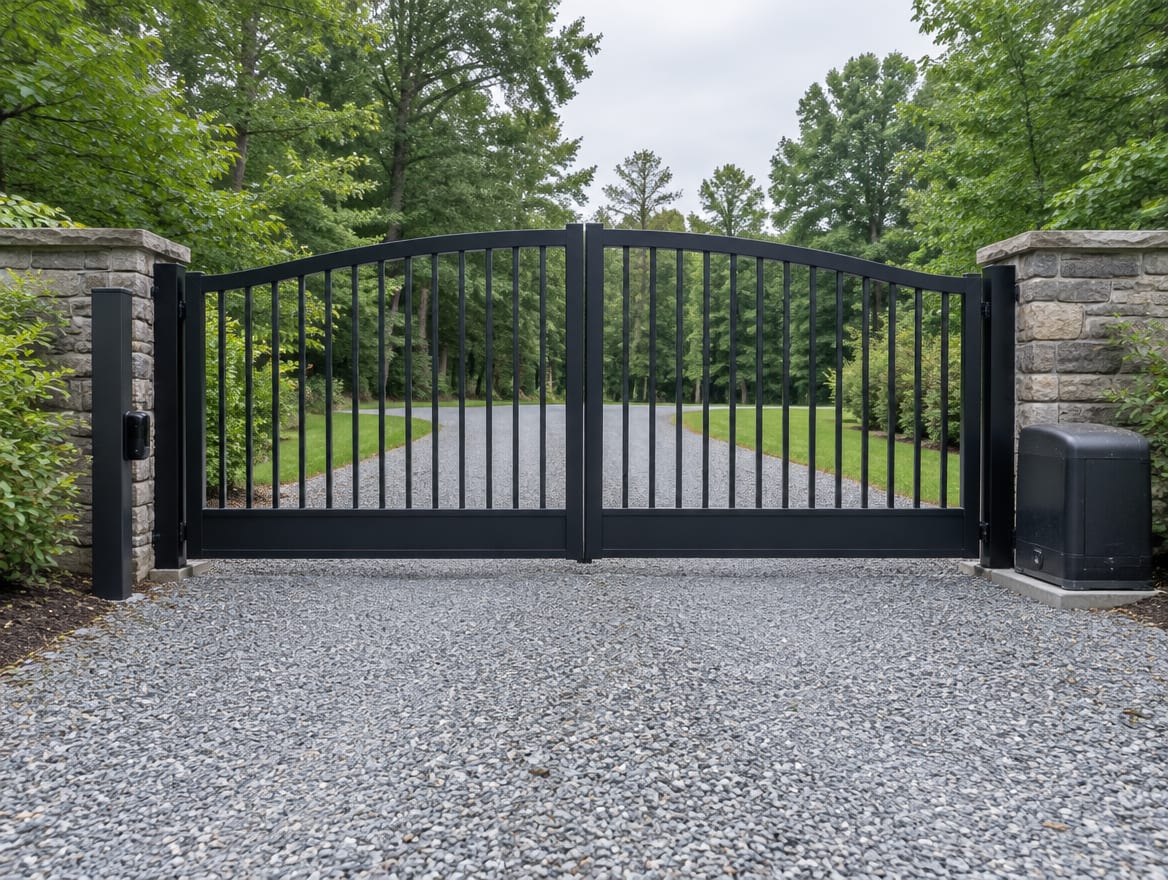
A town can require a building permit for the gate structure and a separate electrical permit or inspection for the operator, wiring and power supply. Before you wire or run the gate, ask the local building department and the electrical inspection agency which permits and inspection certificates apply. Our automatic gates page covers what the system needs from the site.
Which code edition applies
The 2025 Uniform Code took effect on December 31, 2025, and building permit applications filed from that date must comply with it. The 2020 code ran from May 12, 2020. The pool provisions moved from Section R326 in the 2020 code to R328 in the 2025 code, and R326 in 2025 addresses habitable attics. For an existing pool built under an earlier code, Property Maintenance Code Section 303.2 treats a permanent barrier maintained to the requirements in effect when the pool was installed as compliant, and the scope of permitted work and the local code official decide how a replacement fence is judged.
Check yourself
1. What is the minimum height of a pool barrier under the 2025 Residential Code, Section R328?
2. What is the maximum gap allowed between grade and the bottom of a pool barrier?
3. Which way must a pool pedestrian gate open?
4. Under the 2025 Building Code, which listing must a vehicular gate opener carry?
Frequently Asked Questions
Q: Does my fence need an inspection? A: Not in Carmel, Yonkers or Clarkstown, where permits are not required for ordinary fences. In towns that issue fence permits, ask the building department which inspections apply.
Q: How high must a pool fence be? A: At least 48 inches above grade on the side facing away from the pool, under Section R328.4.2.1.
Q: What is the maximum gap under a pool fence? A: 2 inches, measured on the side facing away from the pool.
Q: Which way must a pool gate open? A: Outward, away from the pool. It must also be self-closing and self-latching.
Q: Does a driveway gate operator need a particular listing? A: Under the 2025 Building Code, Section 3110.3, it must be listed under UL 325, and the gate itself must be built to ASTM F2200.
Q: What if my existing pool fence was built under an older code? A: Property Maintenance Code Section 303.2 treats a barrier maintained to the rules in effect when the pool was installed as compliant. Ask the code official how a replacement is treated.
Inspections go well when the numbers are on the plan before the first post is set. Measure the height, the gap, the openings and the latch height, and confirm the footing depth with your building department.
At Portillo Fences and Gates, we install and repair fencing across Putnam, Westchester, Dutchess, Orange, Ulster and Rockland Counties, including pool fencing, gate installation, automatic gates and aluminum fencing. We build to the numbers your town enforces. Contact us for a free estimate, or call (845) 282-3336.