

August 22, 2026
- Property Lines
- Fence Setbacks
- Survey
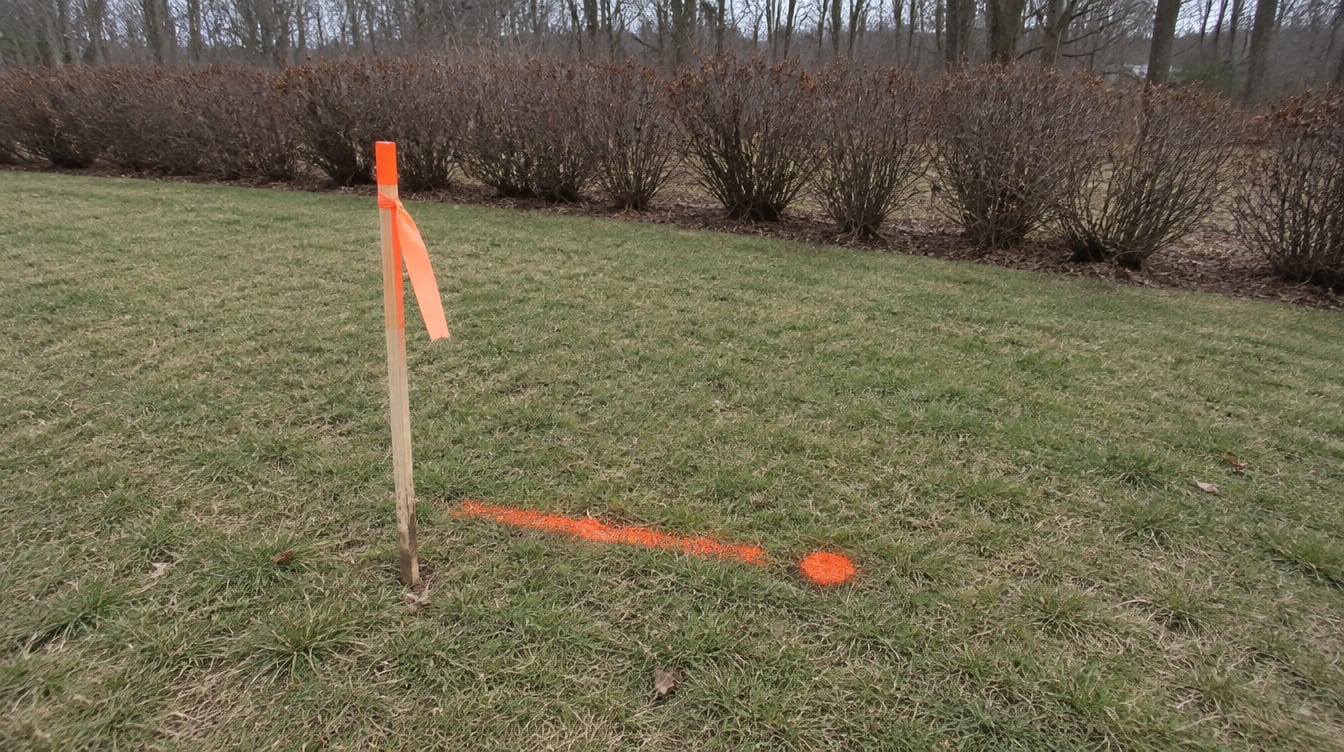
A utility markout does not show where your property ends. New York 811 flags underground utility lines, with a 24-inch tolerance zone on each side, and says nothing about boundaries. The only document that places a fence relative to the lot line is a survey by a New York licensed land surveyor.
Get the line settled before the first post hole, because a fence built on a neighbor's land is a dispute that costs more than the survey would have.
Key Takeaways
Markout is not a survey
811 marks utilities, and private lines such as sprinklers, wells, septic systems and invisible fences may need a separate private locator
A survey costs real money
Angi lists $500 to $3,000 for a New York City fence-land survey, which is a city market figure and not a Hudson Valley quote
Fences go inside the lot lines
White Plains and Yonkers both require it by code, and Southeast bars fences on public property including road rights-of-way
New York law on shared fences is narrow
Town Law Section 300 concerns division fences between adjoining lands and animals, and does not make every boundary fence a shared expense
A fence over 10 feet built to shut out light or air
can be adjudged a private nuisance under RPAPL Section 843
Utility markout versus property survey
Calling 811 before you dig is the right call, and it answers a different question. A markout identifies underground utility lines and structures with colored flags, stakes or paint. It does not establish a property line, find boundary monuments or confirm where a fence may legally go. Private lines, including sprinklers, wells, septic systems and homeowner-installed utilities, may need a separate private locating service.
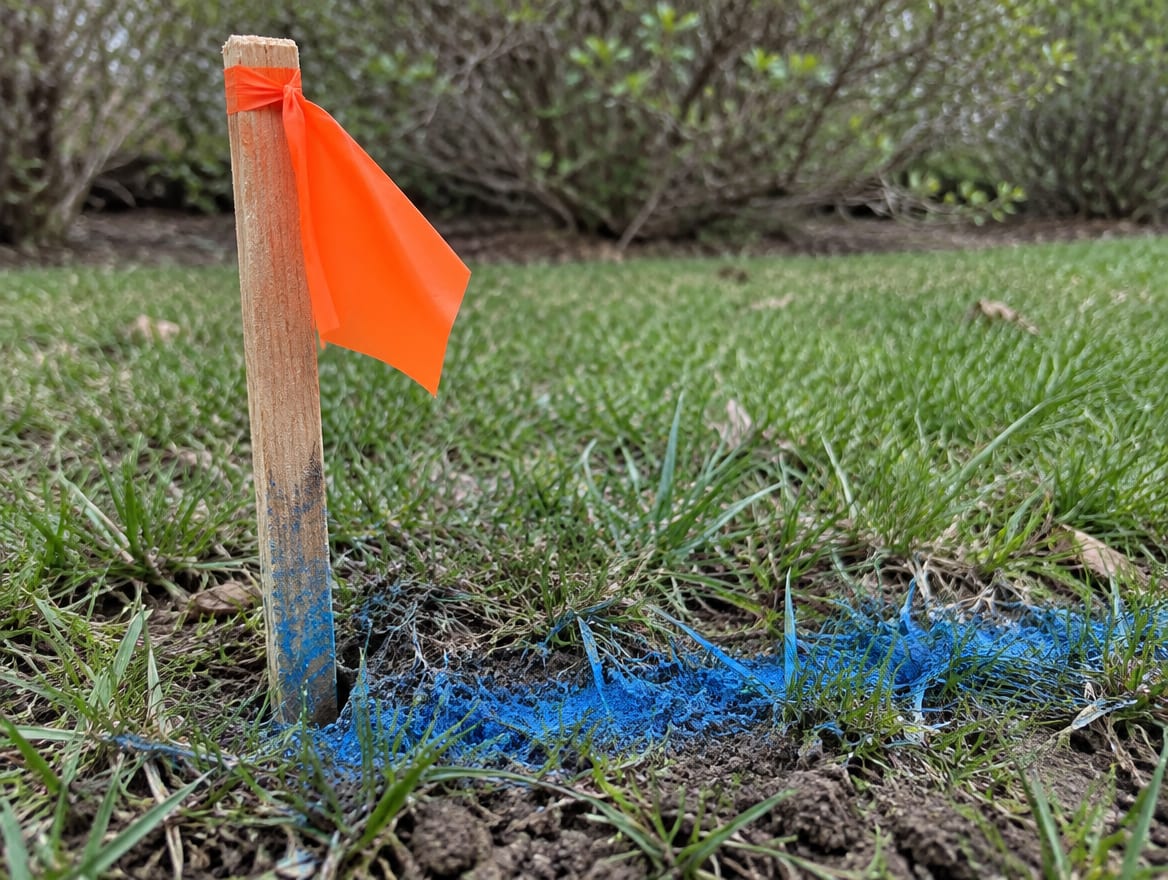
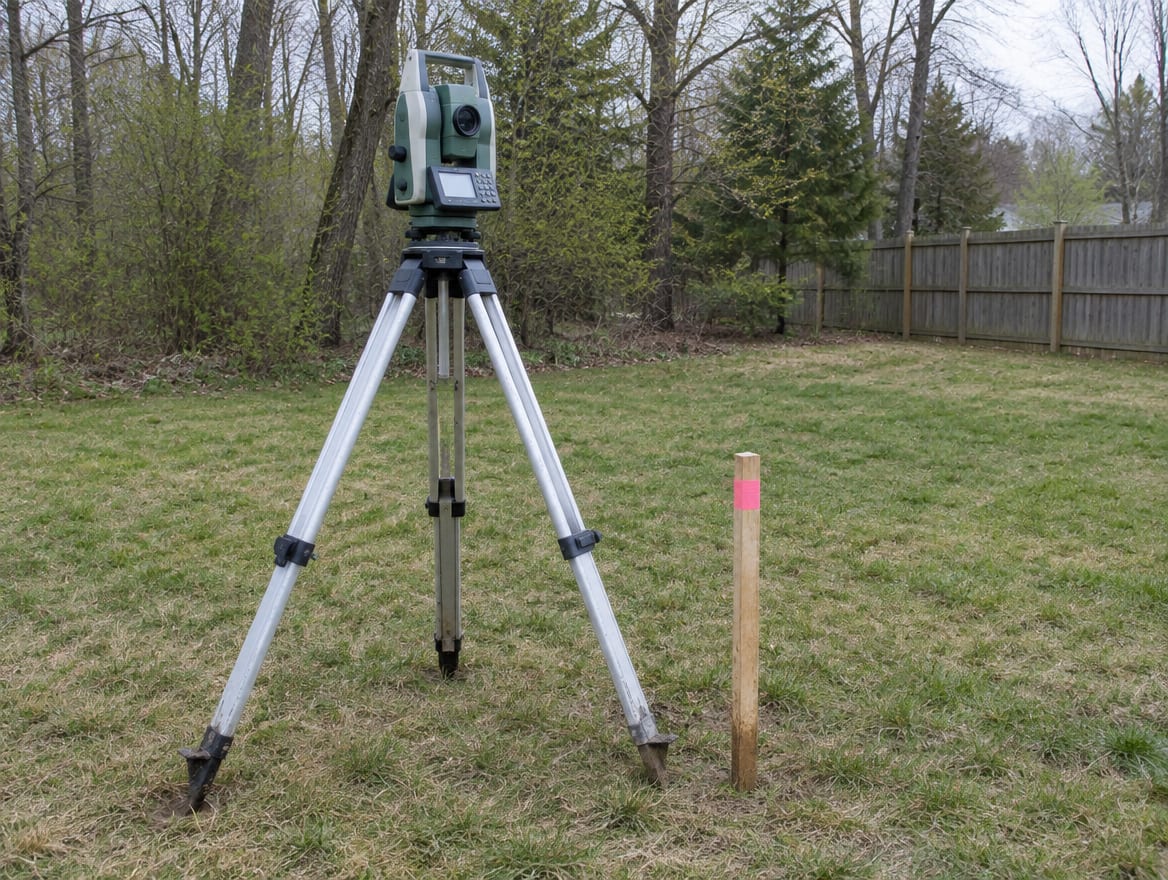
A survey does the boundary work. The New York State Education Department says a licensed land surveyor measures and plots the land, the lengths and directions of the boundary lines and the contour. A boundary survey can show whether a house or addition sits on the property described in the deed, whether one property encroaches on another, and whether construction is inside the lines. The state Department of Environmental Conservation describes the resulting map as defining the property corners and boundaries from the deed, subdivision plats, historical records, monuments and field measurements. Underground improvements and encroachments are not shown on a typical survey.
What a survey and a stake-out cost
Angi lists a New York, New York "fence land" survey at $500 to $3,000 and a broader New York survey range of $901 to $6,193. Both are New York City figures. Hudson Valley surveyors price a stake-out by property size, number of corners, topography, missing corners, ambiguity in the records and conflicting field evidence, and do not publish one fixed fee. Ask a New York licensed land surveyor for a written quote that says whether boundary research, corner recovery, line staking, a certified map and return visits are included. If you want stakes at the corners, make sure they are in the fee. Use a survey made for you as the current owner, not one made for a former owner. If two surveys disagree, the state advises having your surveyor contact the neighbor's surveyor.
What towns ask you to draw
Municipalities handle the drawing differently, so confirm the current checklist with your building or zoning office.
- Town of Southeast: a new fence needs elevation and plan drawings to scale that show the fence's location in relation to adjacent buildings, structures and property lines.
- City of Newburgh: a residential fence permit under City Code Section 166-3 needs a drawing of the design, style and materials, delivered to the Building Inspector's office and approved by the Supervisor.
- City of Yonkers: no fence permit, but its plan-review submissions need a survey by a licensed land surveyor showing property lines, rights-of-way, setbacks, easements, structures, fences, sidewalks and utilities.
- White Plains and Clarkstown: no fence permit.
Setbacks in six municipalities
Setbacks in six municipalities
3 feet high along any lot line and up to 6 feet behind the required front yard; up to 10 feet if set back from the lot line by two-thirds of the setback; no fences on public property, including road rights-of-way
Tap a row to open it.
In Southeast, front-yard setbacks are measured from the designated street line, front lot line or existing street line, whichever is farther from the street center line. Newburgh sets the exact street and right-of-way setback through the Engineering Department, so ask for that distance before placing the fence. District-specific yard dimensions vary by parcel in Southeast, Carmel, White Plains, Yonkers and Clarkstown, so confirm your zoning district, street classification, corner-lot status and required yard lines with the zoning office.
Who pays for a shared fence
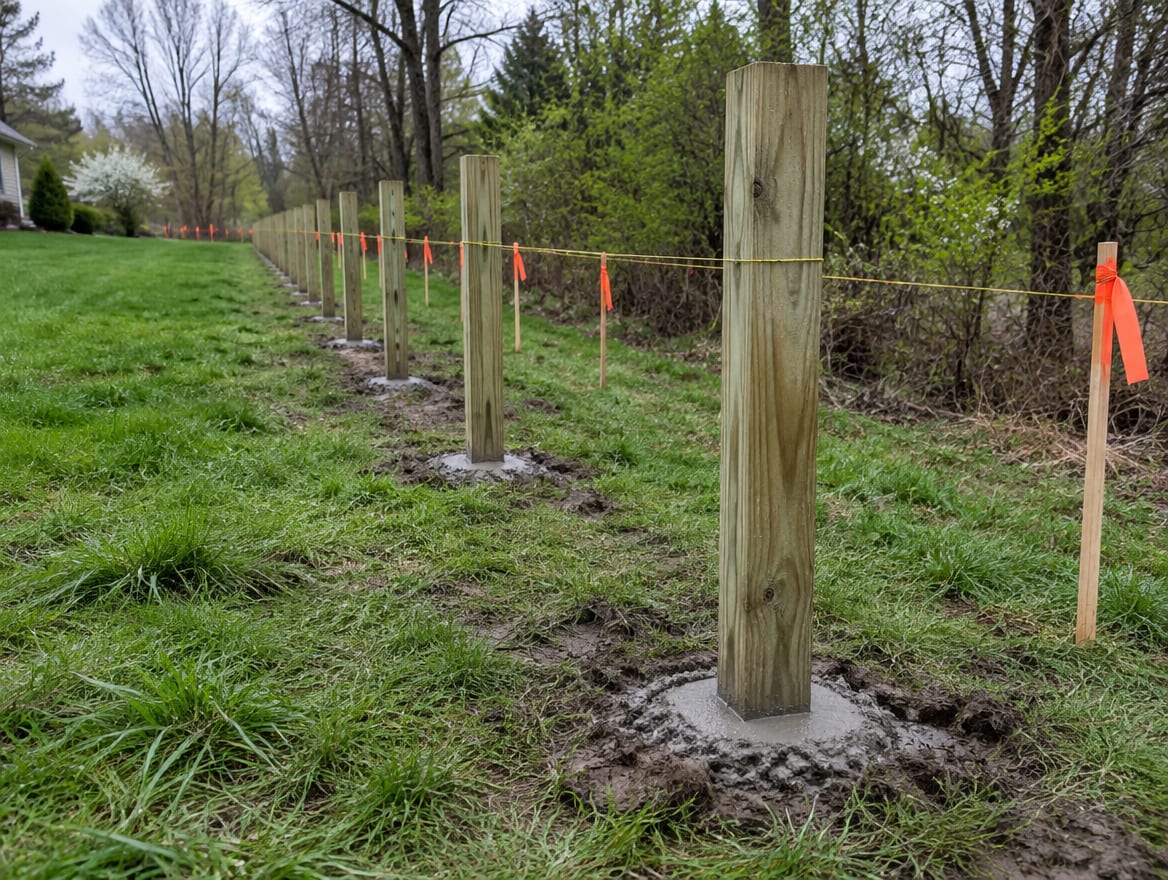
New York Town Law Article 18 covers division fences. Under Section 300, each owner of two adjoining tracts shall, unless they agree otherwise, make and maintain a just and equitable portion of the division fence between the lands, unless both owners agree to leave the lands open to animals lawfully on either property. The obligation is limited where the adjoining owner has not kept animals on the property within five years of the erection or repair. An owner who builds or repairs a division fence can recover 20 percent of the neighbor's proportionate cost for each year or part of a year in which the adjoining tract is regularly used for keeping animals during that five-year period.
If lands have been left open, Section 301 lets either owner enclose the land later by written notice, after which both must build and maintain their portions. Section 303 provides a fence-viewer process for disputes: each party chooses one fence viewer, and if one party does not choose after eight days' notice, the other may select both. The viewers examine the premises, hear the parties and file a written decision describing the fence and each party's portion, and the statute makes that decision final.
These sections concern division fences between enclosed lands and animals. They do not create a general rule that every residential boundary fence is jointly paid for, so talk to the neighbor and agree on a split in writing before building.
Spite fences and adverse possession
Two other statutes come up between neighbors. Under Real Property Actions and Proceedings Law Section 843, an owner who builds a fence over 10 feet high to exclude an adjoining owner or occupant from light or air can be sued, and the court can adjudge the fence a private nuisance and enjoin its maintenance.
For adverse possession, Section 501 says an adverse possessor gains title when the limitations period expires, if the occupancy has been adverse, under claim of right, open and notorious, continuous, exclusive and actual. Section 543 says de minimis non-structural encroachments, including fences, hedges, shrubbery, plantings, sheds and non-structural walls, are deemed permissive and non-adverse, and so is lawn mowing across the line. Whether a particular fence is de minimis is a legal question for an attorney.
If a fence may cross the line
The state guidance supports this order:
1. Get or confirm a current survey from a New York licensed land surveyor. 2. Have the surveyor identify the boundary and any apparent encroachment. 3. If surveys conflict, ask the surveyors to talk to each other. 4. Keep the survey, deed, filed maps, photographs, notices and correspondence. 5. Get legal advice before demanding removal, signing an easement or starting a court action.
Check yourself
1. How wide is the tolerance zone on each side of a marked utility line in a New York 811 markout?
2. What does Angi list for a New York, New York fence-land survey?
3. What does Town Law Section 300 concern?
4. Under RPAPL Section 843, a fence over what height built to exclude a neighbor's light or air can be adjudged a private nuisance?
Frequently Asked Questions
Q: Does an 811 markout show my property line? A: No. It marks underground utilities only. A boundary survey by a licensed land surveyor shows the line.
Q: Do I need a survey to put up a fence? A: It depends on your municipality's application. Southeast asks for scaled drawings showing the fence relative to property lines, and Yonkers plan review asks for a licensed surveyor's map. Confirm with your building office, and consider one anyway if the line is uncertain.
Q: How close to the property line can a fence go? A: White Plains and Yonkers require fences inside all lot lines, Newburgh sets no side or rear setback, and Southeast and Clarkstown have set-back rules for taller fences. Your zoning district controls.
Q: Does my neighbor have to pay half? A: Not as a general rule. Town Law Section 300 applies to division fences between adjoining lands and animals. Agree on a split in writing.
Q: Can a fence on the line give a neighbor my land? A: Section 543 treats de minimis non-structural encroachments such as fences as permissive and non-adverse. Ask a lawyer about your facts.
Q: What is the first step if my neighbor's fence is on my land? A: Confirm a current survey from a licensed land surveyor, then preserve your records and get legal advice before demanding removal.
A fence is cheap to place correctly and expensive to move. Confirm the line, confirm the setback and confirm what your town wants on the application before anything goes in the ground.
At Portillo Fences and Gates, we install and repair fencing across Putnam, Westchester, Dutchess, Orange, Ulster and Rockland Counties, from wood and vinyl to aluminum and residential fencing. We build to the line your survey shows and the setback your town sets. Contact us for a free estimate, or call (845) 282-3336.