

August 28, 2026
- Fence Posts
- Frost Depth
- Fence Repair
New York does not assign one frost depth to the state or to a county. The Residential Code of New York State leaves it to each city, town or village to enter its own minimum footing depth in Table R301.2(1), so the number for your fence is the one your municipality has entered. The Town of New Castle in Westchester County publishes 42 inches.
Ask your building department for your municipality's entry before anyone sets a post, and have the depth written on the quote.
Key Takeaways
The depth is local
the 2020 RCNYS directs each jurisdiction to enter its value in Table R301.2(1), and 19 NYCRR Section 1202.12 requires the city, town or village to establish it
Published example
the Town of New Castle, Westchester County, lists 42 inches in its project design criteria
Vinyl and aluminum instructions say the same thing
dig to the frost line, with one vinyl system also stating 30 inches deep at minimum
Gate, corner and end posts
they may need a larger hole, reinforcement or a deeper footing than line posts
Heaved post repair
one Westchester County provider lists $150 to $300 per post on one page and $200 to $700 on another
Where the number comes from
Table R301.2(1) of the 2020 Residential Code, in footnote b, tells each local jurisdiction to enter the minimum footing depth below finished grade. Section R403.1.4.1 requires foundations, piers and other permanent supports to be protected from frost. State guidance says local officials may consider the air-freezing index, soil type, water table depth, local history and field experience. If the municipality has not set the criteria, the owner has to provide them, prepared by a New York licensed design professional.
Two towns inside one county can enter different numbers, and the value that governs your property is the municipality's entry. A county average does not replace it. For Putnam, Dutchess, Orange, Ulster and Rockland Counties, call the building department for the city, town or village where the property sits and ask for the frost depth entered for your address.
What the post manufacturers say
Post depth for a fence has two separate questions: frost protection and structure. Frost depth answers the first. The rule of thumb for the second is general trade guidance, not a code number.
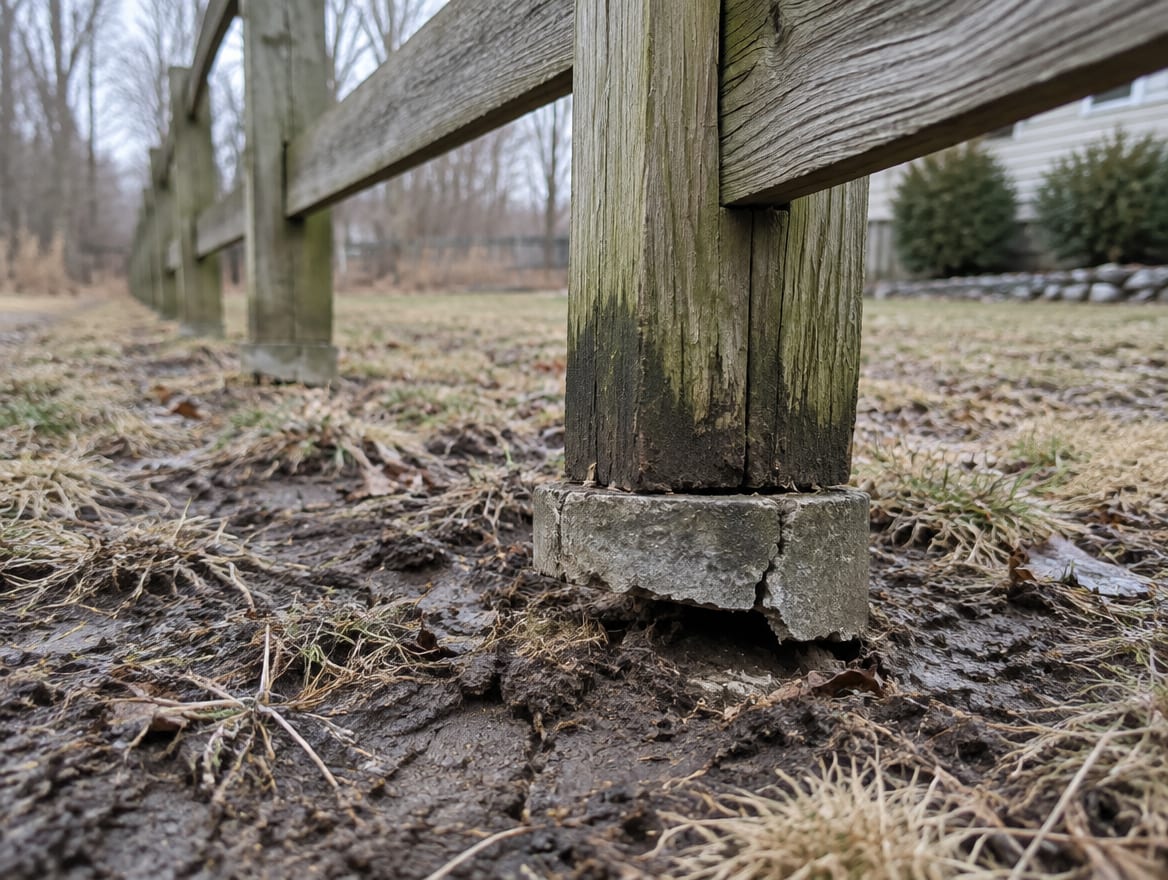
- Wood: Lowe's gives a general guideline of about one-third to one-half of the above-ground post height, and states that local code and frost line control. That is trade guidance, not a New York code requirement.
- Vinyl: the Bufftech installation manual from Hoover Fence says to dig holes 30 inches deep or to the frost line, with approximately 12-inch holes for 5-by-5 inch posts. Gate posts may need aluminum stiffeners or reinforcing steel. NMI Fence offers a "one-third plus six inches" planning formula and notes that frost-prone regions may need the bottom of the hole below the local frost line.
- Aluminum: UltraLox specifies a 6-inch diameter hole down to the specified frost line with a flared, mushroom-shaped bottom, concrete around the post, and soil packed over the concrete 3 to 4 inches below grade. Its illustrated example sets the post 24 inches deep where the frost line is 24 inches, but the written instruction is to use the applicable frost line.
For a Hudson Valley property, the municipality's frost entry answers the frost question, and the one-third or one-half figure is a separate planning rule for strength and wind. Gate, corner, end and high-wind posts may need a larger hole, reinforcement or a deeper footing than ordinary line posts.
How frost lifts a post
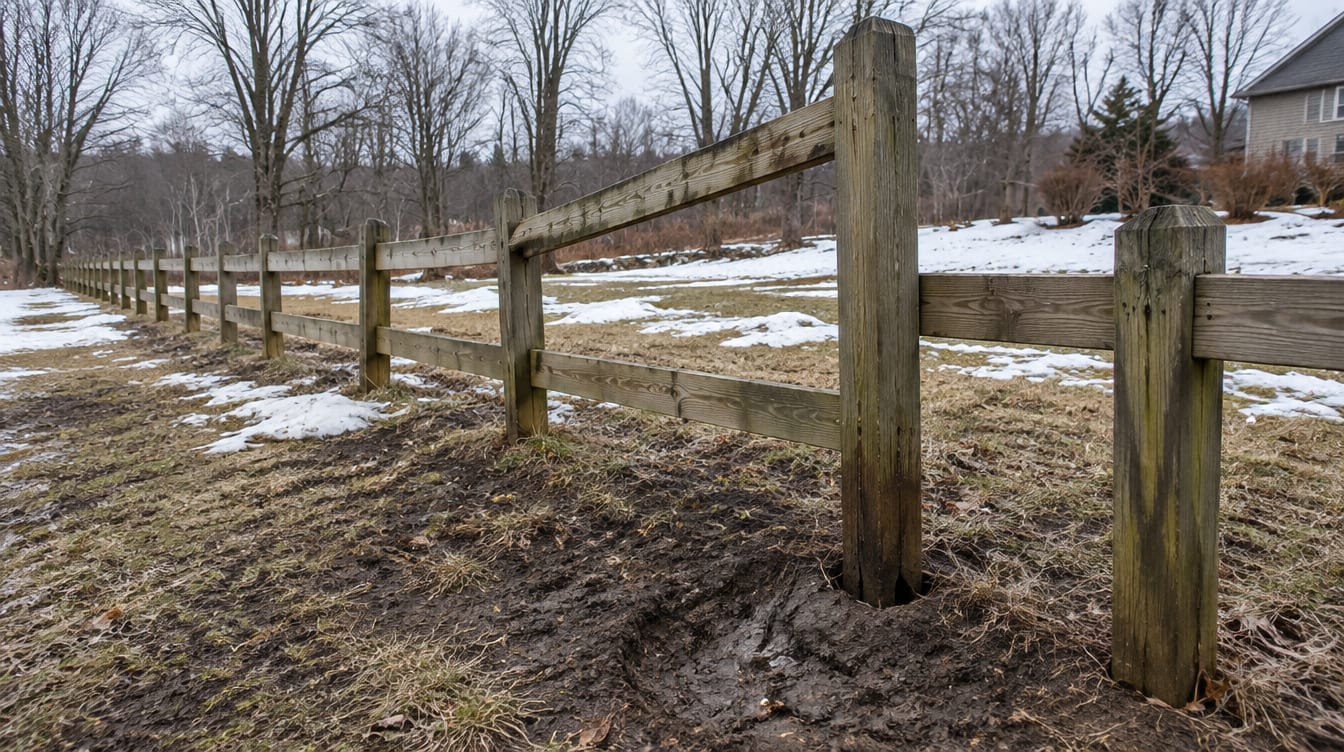
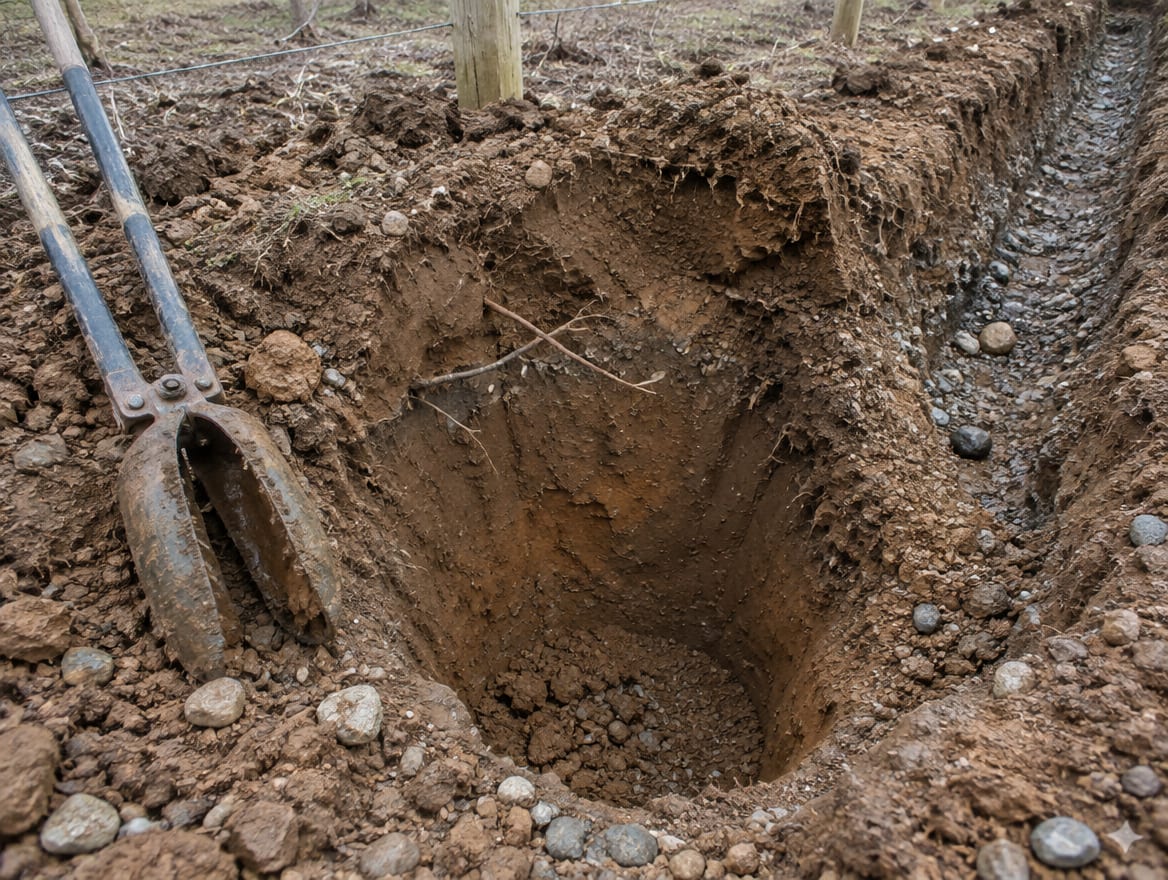
Frost lifting comes from soil and water. When the ground freezes, water moves through frost-susceptible soil toward the freezing front and forms ice lenses that expand the soil and raise the surrounding ground. Frozen soil that sticks to the side of a wood, concrete or metal post pulls on it, and the heaving soil can lift the post and its footing together. During the thaw the soil loses strength and may not settle back, so the post stays high, leaning or loose. Repeated freezing and thawing can move it a little more each winter.
Conditions that raise the risk:
- wet clay, silt and very fine sand, which the USDA Natural Resources Conservation Service lists as frost-susceptible soils
- a high water table, or water moving toward the freezing front
- poor surface drainage, roof runoff or standing water beside the fence
- posts set shallower than the active frost zone
- large, rough or irregular concrete surfaces that give frozen soil more to grip
- uneven soil, shade or snow conditions, which make neighboring posts heave by different amounts
- light fence lines and gate posts with little resistance to uplift
Coarse, free-draining sand and gravel are generally less susceptible, and drainage that keeps water away from the freezing zone reduces frost action. Drainage does not replace setting the post to the municipality's depth.
Gravel, concrete and the shape of the hole
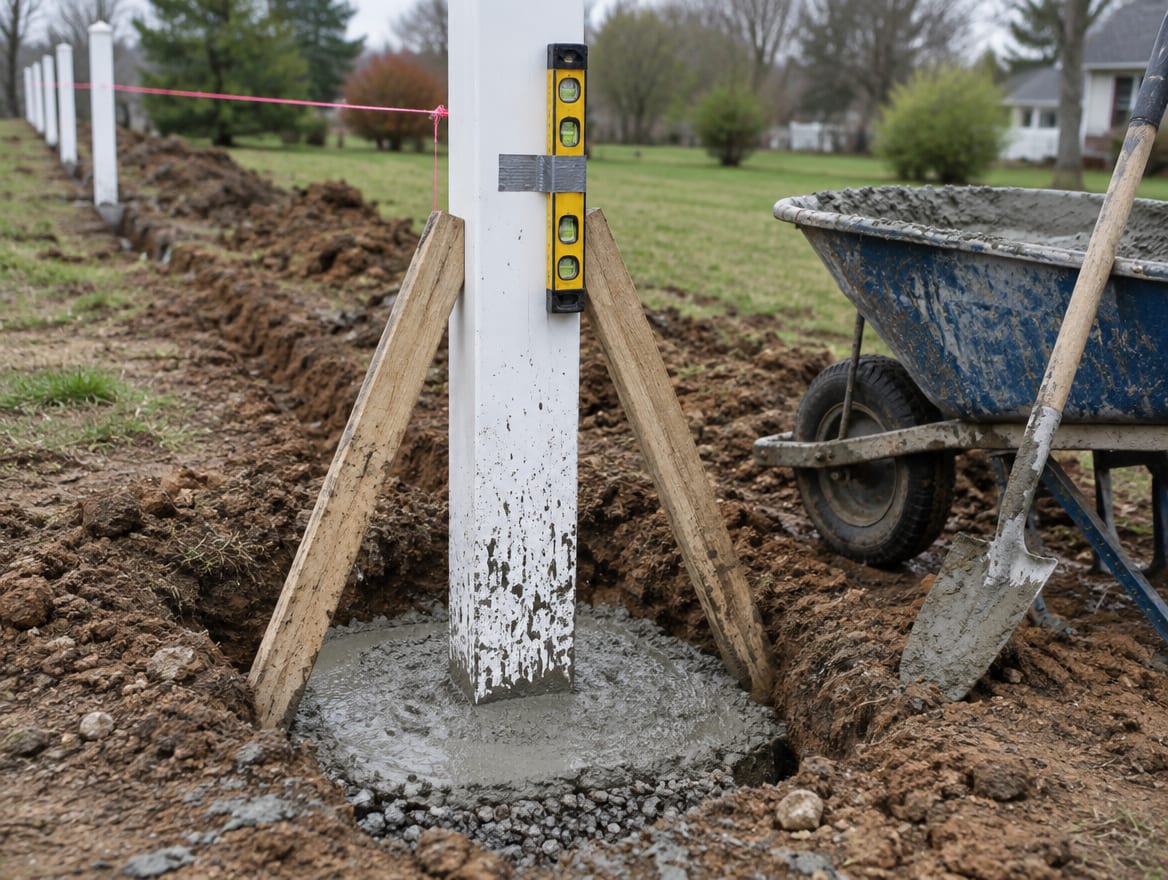
The manufacturer instructions set out the details. UltraLox calls for a flared aluminum post hole and for concrete below grade with soil over it. The Bufftech manual specifies concrete around vinyl posts, tamped to remove air pockets, filled to about 2 or 4 inches below grade. A belled or flared base can help resist uplift, but its dimensions depend on the product, the soil and local requirements.
Neither the UltraLox nor the Bufftech instructions call for a concrete crown above grade; both leave the concrete below grade with soil on top. Gravel at the bottom of the hole is common contractor practice; the Bufftech steps do not call for it. Gravel in the bottom of the hole helps drainage but does not stand in for reaching the frost depth or following the product instructions. Follow the manufacturer's installation instructions, and confirm any unusual footing detail with the building department or a design professional.
What heaved posts cost to fix
One Westchester County repair provider publishes these planning figures:
$250 to $600
Tap a row to open it.
The same provider shows different post ranges on different pages. A national repair guide lists $150 to $500 to reset or replace one post, and that figure is national, not Hudson Valley.
These are planning ranges, not quotes. Excavation depth, concrete removal, rock, wet soil, access, fence material, gate hardware, disposal and whether neighboring sections have to be taken apart all move the total. For a whole frost-heaved fence line, ask for a written estimate that lists post resetting, post replacement, concrete removal, drainage work, fence reassembly and disposal as separate lines.
Check yourself
1. Who sets the frost depth for fence footings in New York?
2. What frost depth does the Town of New Castle in Westchester County publish?
3. How wide are the holes the Bufftech manual calls for with 5-by-5 inch vinyl posts?
4. Which soil is generally less susceptible to frost heave?
Frequently Asked Questions
Q: What is the frost depth in the Hudson Valley? A: It is set by each city, town or village in Table R301.2(1), so there is no single figure. The Town of New Castle in Westchester County publishes 42 inches. For any other municipality, ask its building department.
Q: How deep should vinyl fence posts go? A: The Bufftech manual says 30 inches deep or to the frost line, with about 12-inch holes for 5-by-5 inch posts. Use your municipality's frost depth if it is deeper.
Q: Do aluminum posts need concrete? A: UltraLox instructions call for a 6-inch hole to the frost line with a flared bottom and concrete around the post, finished with soil 3 to 4 inches below grade.
Q: Why did my fence post lift out of the ground? A: Water in frost-susceptible soil forms ice lenses that raise the ground, and frozen soil gripping the post lifts it with the footing. Shallow posts, wet soil and poor drainage make it worse.
Q: Can a heaved post be reset instead of replaced? A: Sometimes. Ask for a written estimate that prices resetting and replacing separately, with the concrete removal and any drainage work.
A post set to the right depth in well-drained soil stays where it was put. The frost depth is the one number worth getting in writing before the digging starts.
At Portillo Fences and Gates, we install and repair fencing across Putnam, Westchester, Dutchess, Orange, Ulster and Rockland Counties, from wood, vinyl and aluminum installs to fence repair on posts that have heaved. We confirm the depth your building department requires before we dig. Contact us for a free estimate, or call (845) 282-3336.