

August 26, 2026
- Fence Repair
- Fence Replacement
- Hudson Valley
Repair a fence when the posts are sound and the damage is limited to boards, pickets, a panel or hardware. Replace it when posts have rotted or heaved along several sections, or when the repair bill is closing in on the price of new. In Westchester County, published figures run $250 to $600 for minor repairs, $1,000 to $3,000 for a partial replacement and $3,500 to $7,000 for a full one.
The deciding factor is almost always the posts, so start there.
Key Takeaways
Posts decide the question
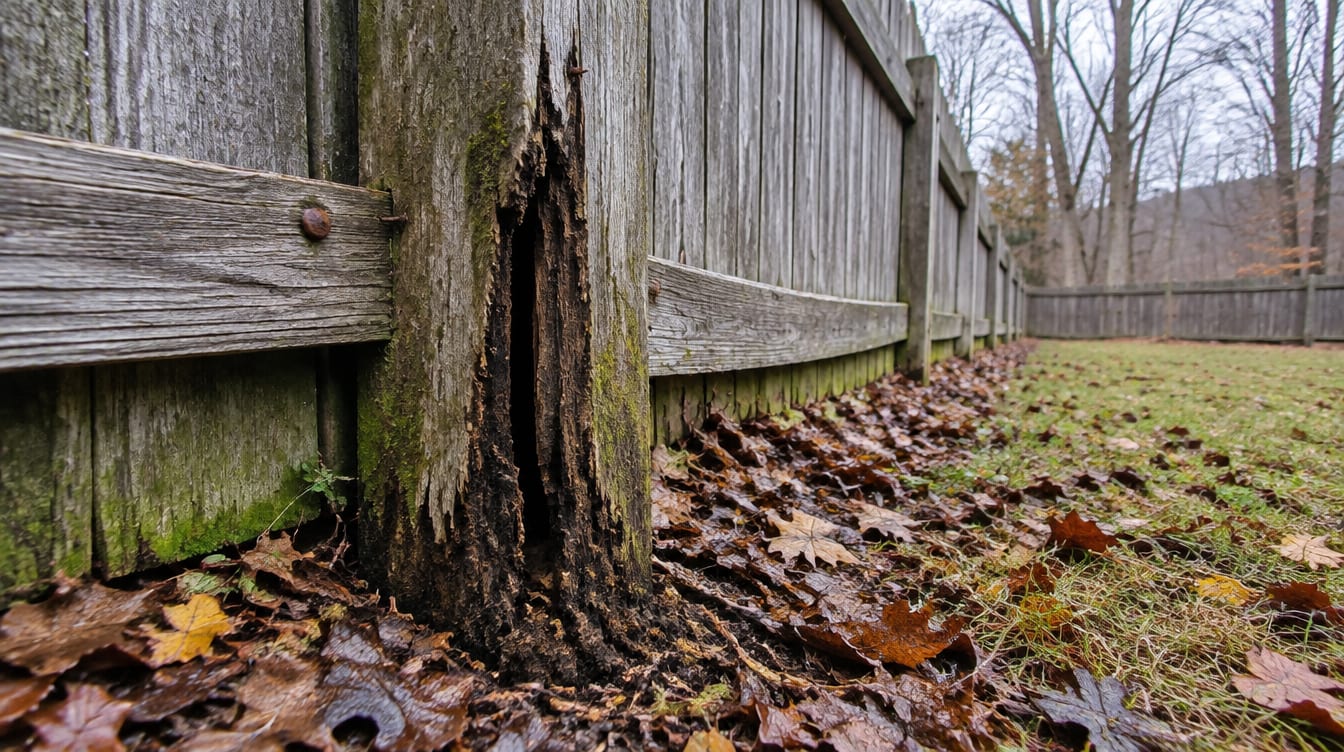
wood rots at the ground line, and a sound post can carry new boards or panels for years
Westchester repair costs
$250 to $600 for minor repairs, $1,000 to $3,000 for partial replacement, $3,500 to $7,000 for a full fence
Two published rules of thumb
Angi cites a 20% rule, and Fence Advisors says to replace when repair costs pass 50% of replacement cost
Frost lines run 42 to 48 inches
in published local tables for Dutchess, Ulster and Westchester towns, so a post set shallower than that can heave
Repair and replacement can be treated differently by your town
in Carmel and the Village of Chester, a nonconforming fence can be repaired but a new fence must meet current rules
Where wood fences fail first
Wood decay is concentrated where a post meets moist soil. The ground line wets and dries over and over, gets oxygen, and loses its preservative envelope to damage. The USDA Forest Products Laboratory states that ground-contact wood requires pressure treatment, and its handbook classes fence, deck and guardrail posts under AWPA Use Category 4A. Field-cut ends and drilled holes need compatible field treatment.
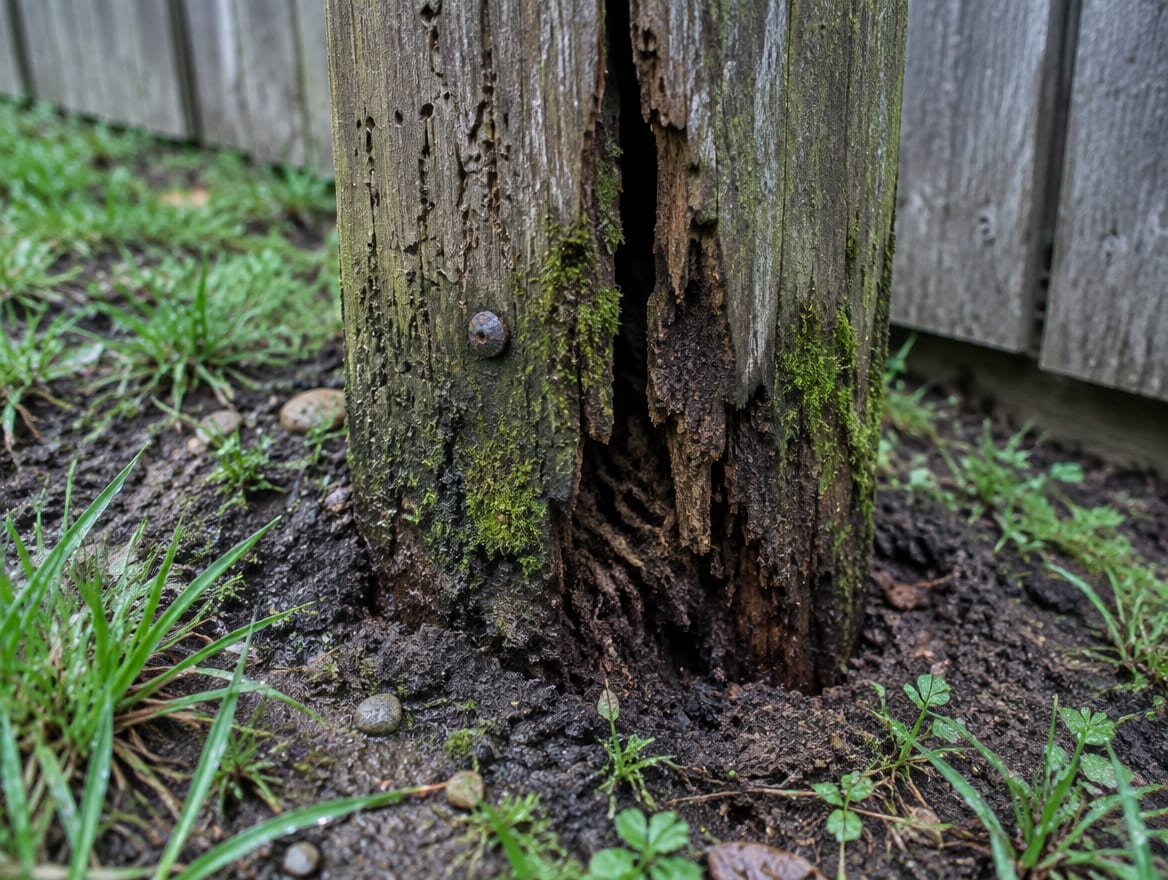
A USDA publication gives a historical service-life figure for fence posts in moist soil: untreated pine about 2 years, durable heartwood 8 to 15 years, and pressure-treated pine more than 30 years. Treat that as a historical figure, not a warranty. It does explain why a post that was never treated for ground contact is often the first thing to go.
If boards are the only thing failing, repair is straightforward. A few broken boards or one loose post on an otherwise solid fence is a repair. Rot at the base of several posts, or rot reaching the rails along a long run, points toward replacement.
Frost heave and post depth
A leaning fence is often a frost problem, not a rot problem. Frost heave needs three things: frost-susceptible soil, available water and freezing temperatures. USDA NRCS lists silts, clays and very fine sands as more susceptible than free-draining gravel and coarse sand. Concrete that flares wider at the top gives frost something to grab and lift.
The Residential Code of New York State requires exterior footings to be at least 12 inches below undisturbed ground, and Section R403.1.4.1 requires permanent supports to extend below the frost line. The local building authority supplies the frost-line value, and published local tables differ across the six counties:
- Town of Washington, Dutchess County: 42 inches
- Town of New Paltz, Ulster County: 48 inches, in project criteria dated August 25, 2015
- City of Peekskill, Westchester County: 42 inches, on a 2026 permit drawing
Confirm the applicable depth with the building department for your town and parcel, then have the footing depth matched to the frost line, the soil, the fence height and what the approving authority requires. If your posts were set shallower than the local frost line and are leaning, new boards will not hold them up.
What can be repaired in vinyl, aluminum and chain link
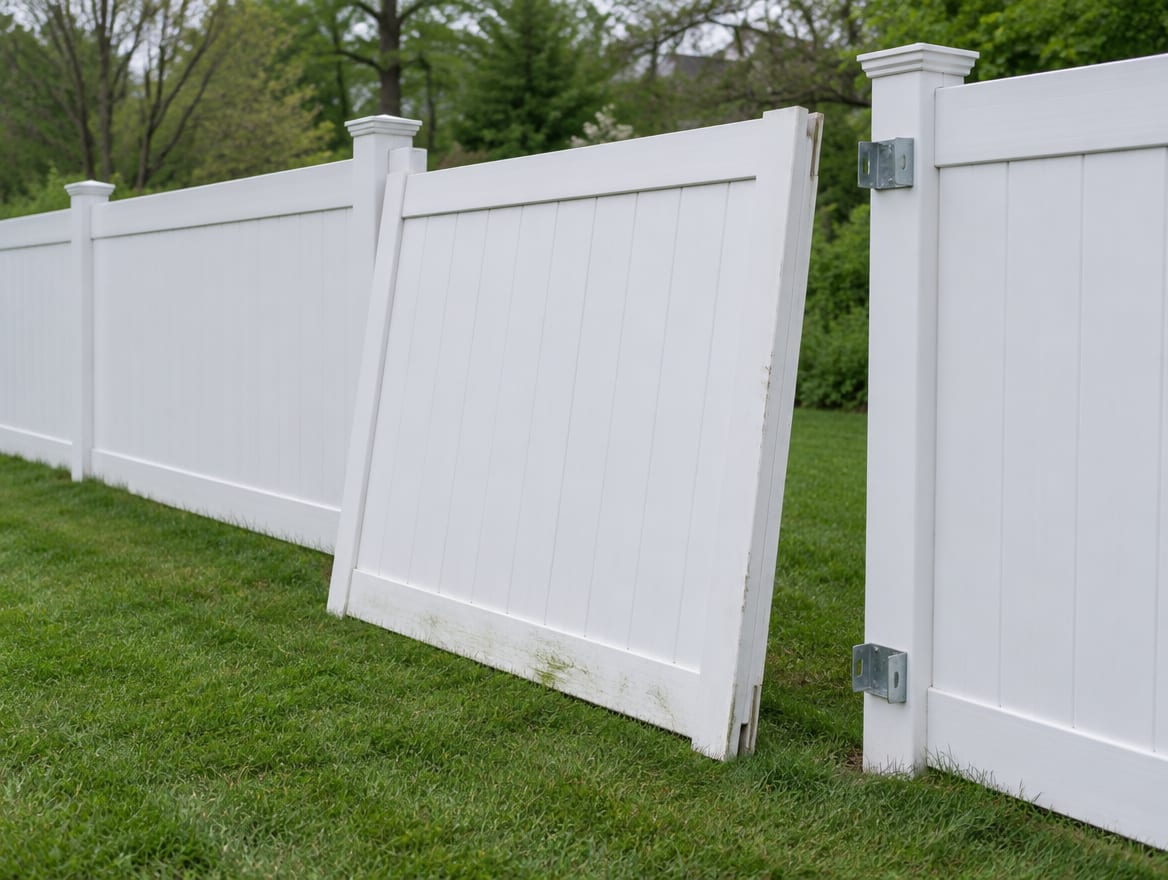
Vinyl is built from separate posts, rails and pickets, so a damaged picket or panel section can be swapped without disturbing the rest. Small holes and cracks take a compatible vinyl or epoxy patch, and a panel can come out of its brackets without removing both posts. Broader replacement makes sense when the supporting posts or several adjacent sections have failed, or when the original profile is discontinued and matching parts cannot be bought.
Aluminum is also assembled from separate posts, rails, pickets and brackets, with sections screwed between posts. A damaged section, rail or fastener can be replaced where the posts remain sound. Identify the manufacturer and model before ordering parts. Welded ornamental steel panels are replaced as whole panels.
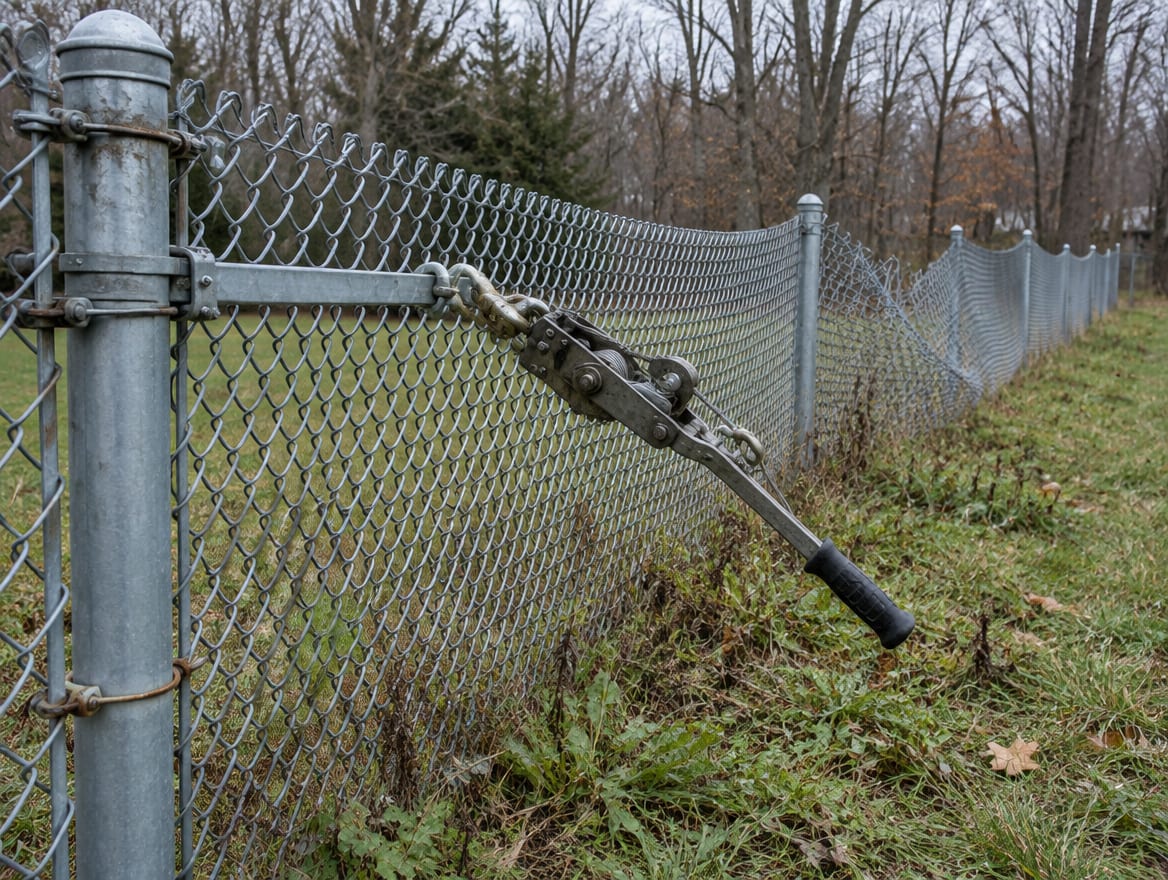
Chain link is designed around replaceable parts: fabric, rails, posts, tension bars, tension bands and fittings. A fabric run can be replaced between terminal posts, fabric can be spliced by weaving a new strand through the adjoining mesh, and a bent top rail can be replaced with a tapered rail and coupling. A damaged or unstable post means post replacement and reattaching the fabric and rails beside it.
What repair and replacement cost
Westchester County planning figures from local cost guides, 2026:
$250 to $600
Tap a row to open it.
A separate Westchester guide from June 2022 gave $12 to $38 per linear foot for a 4-foot fence, which is older and lower. National figures from Angi, updated July 2026, run $10 to $30 per linear foot for repairs, $300 to $900 for a typical repair project and $1,750 to $4,430 for a new fence. Fence Advisors' national guide lists post repair at $100 to $200, full post replacement at $200 to $500 with concrete, gate repair at $75 to $250, and straightening a leaning section at $150 to $400. National figures are not Hudson Valley quotes, so ask for local written prices that separate the post, panel, gate, removal and disposal.
Two published rules of thumb
Angi says professionals often use a 20% rule: when more than 20% of the fence needs repair, replacement may be the better use of money. It also says more than 30% rot in an individual post or panel favors replacing that piece, not necessarily the whole fence. Fence Advisors puts the line at 50%, saying to replace when repair costs cross half of replacement cost, and treats one or two failed posts on an otherwise solid fence as a repair job.
These are publishers' guidelines, not code. The practical test is to get a written repair estimate and a written replacement estimate for the same fence line, with removal, disposal, posts, gates and permit work in both, and compare them.
How your town treats a repair
Some towns draw a legal line between repair and rebuilding.
- Town of Carmel, Putnam County: under Town Code Section 156-19(A)(5), a fence that was legal when built may stay if it is maintained and repaired. Once it is removed, altered or reconstructed, the new fence has to meet the current provisions.
- Village of Chester, Orange County: under Village Code Section 98-13(G), a lawful nonconforming fence can be repainted, stained, waterproofed, repaired in a minor way or insubstantially altered. If it is less than 50% destroyed by fire, casualty or an act of God, it can be repaired as it was, without being enlarged or changed. Past 50%, it can only be rebuilt to current rules.
- Town of Poughkeepsie, Dutchess County: Section 210-69(A), amended March 18, 2026, requires a fence permit from the Zoning Department before any fence is installed.
- Town of Kent, Putnam County: a fence up to 6 feet high in the side or rear yard does not need a permit.
An over-height or old fence is not automatically protected. It had to be lawful when built, and the work has to stay repair. Before you pull posts, change the height or move the line, ask your zoning or building office whether the work counts as repair, alteration, reconstruction or a new fence, and gather prior permits, surveys and photographs of the existing fence. Confirm which municipality your parcel is in first, since the Village of Chester rule does not carry over to the Town of Chester.
Check yourself
1. What is the published Westchester range for a full fence replacement?
2. What service life does the USDA historical figure give for pressure-treated pine posts in moist soil?
3. Angi's rule of thumb says replacement may be the better use of money when more than what share of the fence needs repair?
4. Which town's code lets a fence that was legal when built stay if it is maintained and repaired, but makes a reconstructed fence meet current rules?
Frequently Asked Questions
Q: How long do pressure-treated fence posts last? A: A USDA publication gives more than 30 years for pressure-treated pine, against about 2 years for untreated pine in moist soil. That is a historical figure and not a warranty, and it depends on the treatment level, soil and drainage.
Q: Why is my fence leaning when the wood looks fine? A: Frost heave. Posts set above the local frost line, in silty or clay soil, get lifted and tilted by freezing. Published local frost lines in these counties run 42 to 48 inches.
Q: Can I replace just one panel of a vinyl or aluminum fence? A: Often yes, if the posts are sound and the profile is still sold. Identify the manufacturer and model first.
Q: Is 50% or 20% the right line? A: Both are published rules of thumb. Compare written estimates for repair and replacement on the same fence line and decide from the numbers.
Q: Do I need a permit to repair a fence? A: It depends on the town and on whether the work is repair or reconstruction. Ask the building or zoning office before you start.
Repair is the right answer more often than people expect, as long as the posts are standing in the right depth and the damage has not spread along the line. When the posts are the problem, replacing the fence usually costs less than repairing it twice.
At Portillo Fences and Gates, we install and repair fencing across Putnam, Westchester, Dutchess, Orange, Ulster and Rockland Counties, including fence repair, gate repair, wood fencing and chain link fencing. We look at the posts first and give you both numbers in writing. Contact us for a free estimate, or call (845) 282-3336.