

August 5, 2026
- Automatic Gates
- Gate Maintenance
- Winter
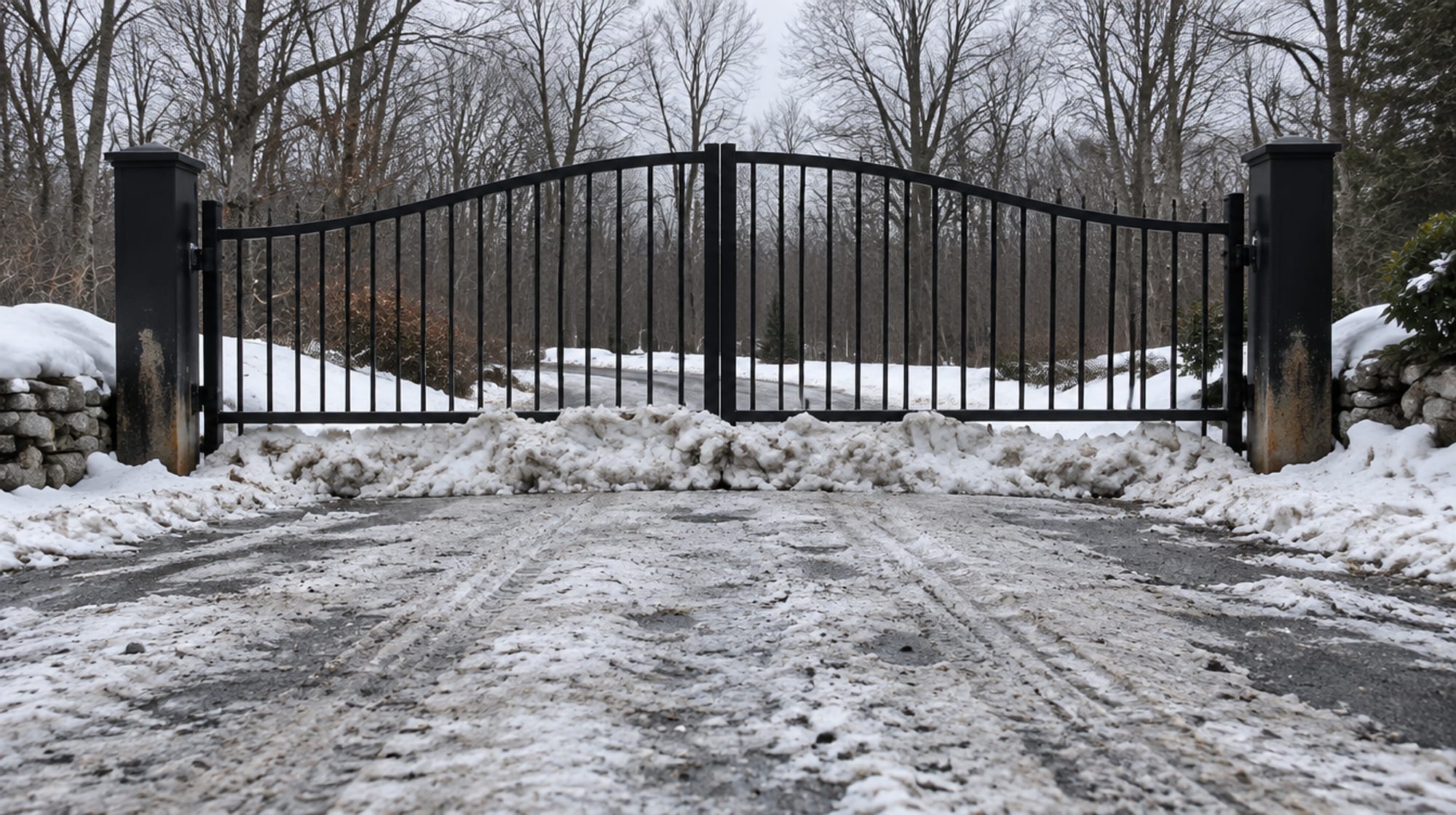
At 10°F, the FAAC and LiftMaster residential operators named in their manuals are still inside their published operating ranges, which start at -4°F, or -40°F with LiftMaster's optional heater. So, the cold-weather questions that remain are about everything around the operator: the backup battery, the ground under the gate, the track and leaf path, the sensors, and what road salt does to the metal.
Key Takeaways
Operating ranges
FAAC 415 and 770N, -20°C to +55°C (about -4°F to +131°F); LiftMaster RSW12UL and RSL12UL, -20°C to 60°C without the heater and -40°C to 60°C with it
Backup batteries carry a cold-weather warning
LiftMaster's 7Ah, 12V battery (part 29-NP712) should be replaced every 3 years, and the manuals warn that cold weather hurts battery performance
Frost heave moves driveways and posts
footing depth is set by the local jurisdiction, so confirm it with your building department
Snow and ice read as obstructions
anything that adds resistance, blocks a track or interrupts a photo eye can stop or reverse the gate
Road salt calls for a duplex coating
the American Galvanizers Association recommends hot-dip galvanizing plus paint or powder coating in de-icing-salt environments
Operating temperatures and what the manuals say about cold
The published ranges are:
- FAAC 415 residential swing operator: -20°C to +55°C, about -4°F to +131°F, for the 230V, 24V and 115V versions
- FAAC 455D control board: -20°C to +55°C
- FAAC 770N underground operator: -20°C to +55°C
- LiftMaster RSW12UL swing and RSL12UL slide operators: -20°C to 60°C (-4°F to 140°F) without the optional heater, and -40°C to 60°C (-40°F to 140°F) with it
Published operating temperature ranges for the operators and control board named here
-20°C to +55°C, about -4°F to +131°F, for the 230V, 24V and 115V versions
Tap a row to open it.
Ten degrees Fahrenheit is about -12.2°C, inside every one of those ranges. Treat the listed range as the working limit for your system. If a gate stalls or reverses in cold weather, have it inspected rather than waiting for a thaw.
The backup battery
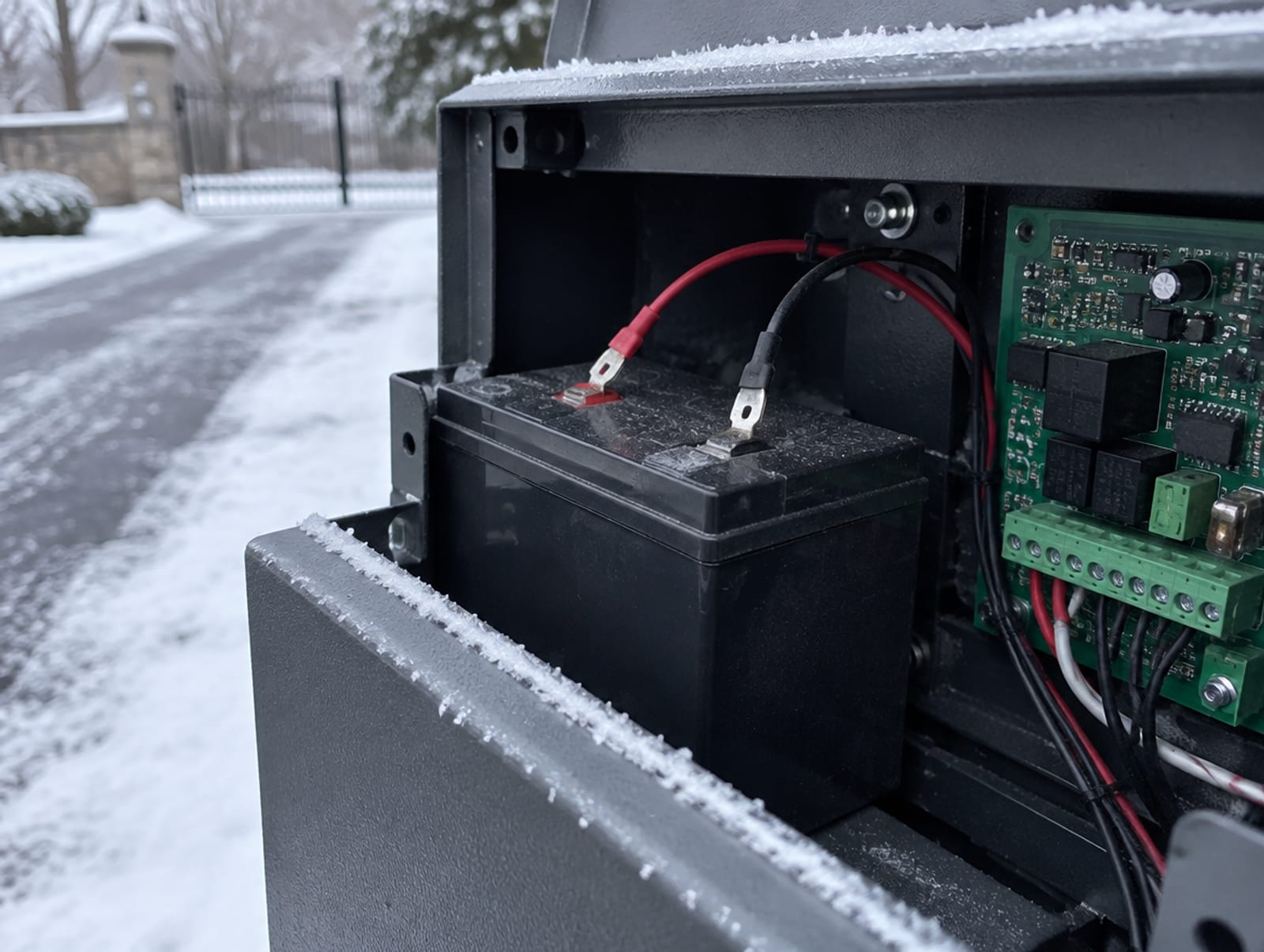
LiftMaster's RSL12UL and RSW12UL manuals say batteries degrade with temperature and use, and warn that they perform poorly in extremely cold weather. The standard battery is one 7Ah, 12V unit, LiftMaster part 29-NP712, and LiftMaster says to replace it every 3 years for best performance, with disposal as lead battery waste. The RSL12UL manual allows one 33Ah battery, model A12330SGLPK, with wiring kit K94-37236 instead, and the RSW12UL also needs the K10-36183 battery tray for that setup. The troubleshooting section treats a 12V battery below 10V as depleted.
FAAC's E124 documentation says battery operation continues until the charge drops to 16V, after which the board enters sleep mode and the automation does not operate until mains power returns.
Test the backup before winter: cut the power, cycle the gate, and replace the battery at the manufacturer's stated interval. LiftMaster also says solar-powered installations are not supported in areas with long periods of heavy fog, lake-effect snow or rain, and notes that winter cold and fewer sunlight hours affect solar performance.
Frost heave, footings and driveway movement
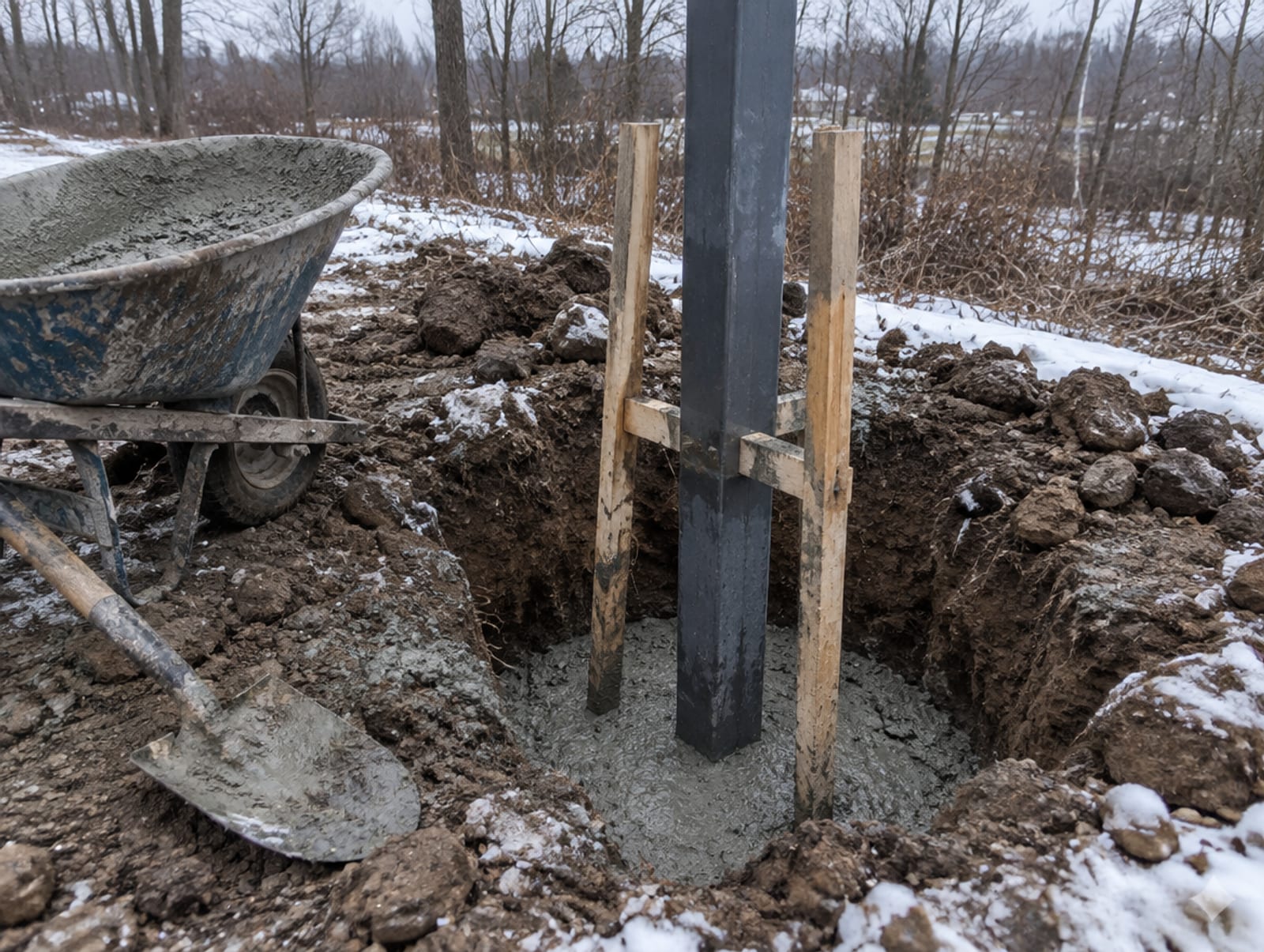
The 2025 Residential Code of New York State, Table R403.3(2), lists Dutchess, Orange, Putnam, Rockland and Westchester Counties in the 1,500-or-less air-freezing-index group. Ulster County is not listed there, so it falls in the table's "all counties not listed" category at 2,000. An air-freezing index is not a frost depth in inches. The code has the city, town or village set its own climatic and geographic design criteria, and where it has not, the owner provides information from a registered design professional under 19 NYCRR Section 1202.12. So, for a gate post or operator pad, confirm the footing depth with your building department or the project's design professional.
Frost heave needs water, freezing temperatures and frost-susceptible soil. NYSDOT says ice lenses form in those soils and can cause differential heave, which it calls particularly damaging, and that heave can raise pavement and cause bumps and cracks. A driveway under a gate path can rise unevenly through freeze and thaw. Penn State Extension gives a typical line-post depth of 36 inches and says corner and gateposts are often set deeper, commonly 48 inches. That is practice guidance for horse fencing, not a New York code requirement for automatic gates.
On the gate side, the RSW12UL manual requires the gate to be level, the posts plumb, the gate free to swing and not dragging across the ground. The RSL12UL specifies a concrete pad and at least 4 inches between the gate and the output sprocket. The FAAC 770N requires its box to be installed flat and includes a drain hole. Ground-movement clearance is a design decision for the installer, so ask how much clearance under the leaf your design leaves for a heaved driveway.
Snow, ice and obstruction detection
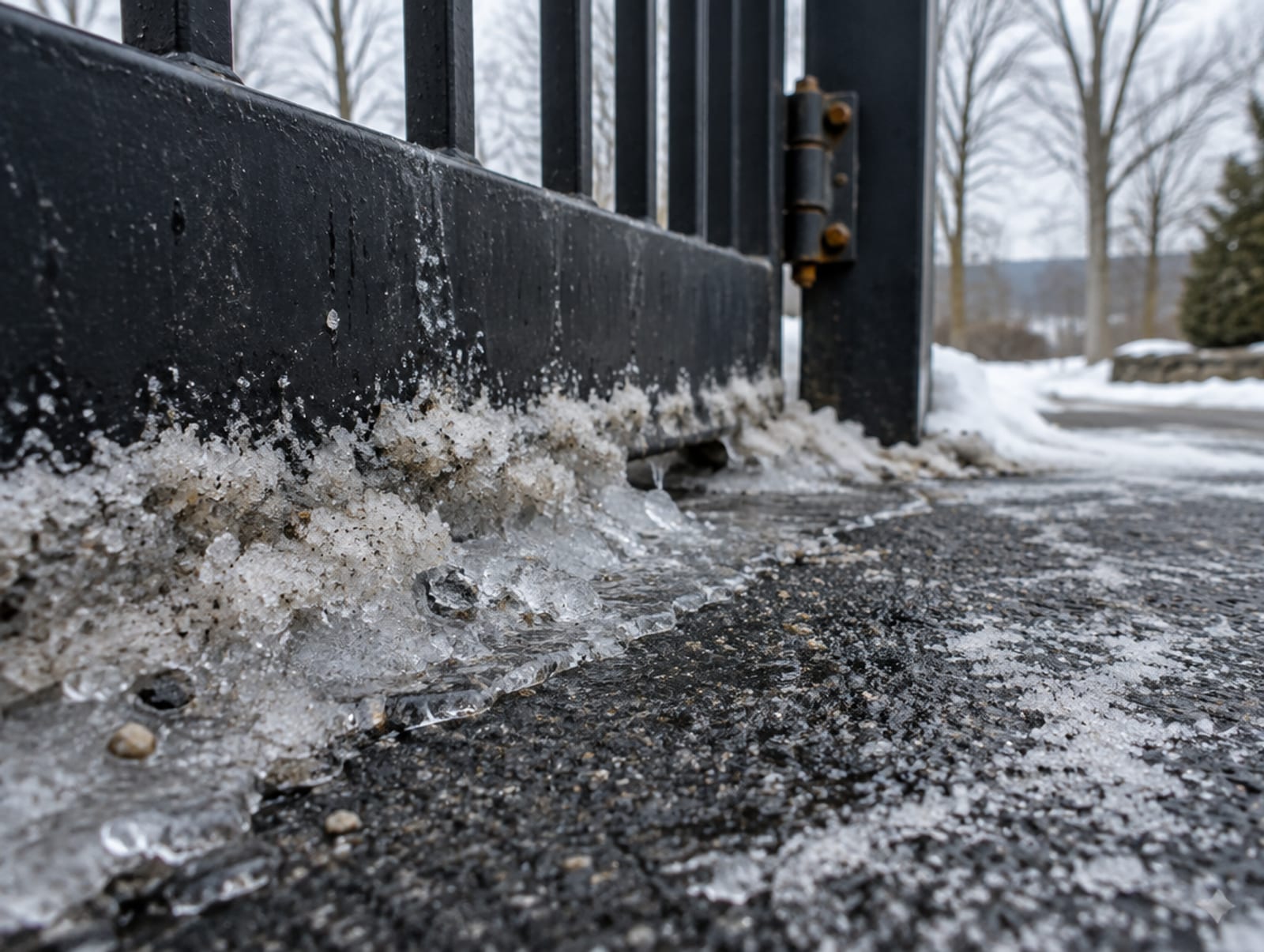
LiftMaster's manuals require the gate to be free of obstructions and every entrapment-protection device to be tested, and say a gate must not be activated unless it can be seen clearly and nothing blocks its travel. The RSL12UL's obstruction sensing can reverse or stop the gate. FAAC says photocells prevent leaf movement when an obstacle is in the protected area, and its E124 board reverses and stops the automation when a photocell or obstacle detection triggers. The system treats added resistance, a blocked track or an interrupted photo eye as an obstruction, and snow or ice can cause any of the three.
The winter routine follows from that. Clear snow and ice from the gate's path and from the safety devices before you operate the gate, and keep the track and the area under the leaf clear.
Lubricants
The FAAC 770N manual says to grease the rotation pin and ball and the lever pins, and never the release device. FAAC 415 instructions say to grease the fastening pins of the fittings. The LiftMaster RSL12UL manual says to lubricate the drive chain with lithium spray only and never with grease or silicone spray, and to keep chain sag to no more than 1 inch for every 10 feet of chain. Beyond that, follow the product's own maintenance instructions rather than adding lubricant to other parts.
Road salt and coatings
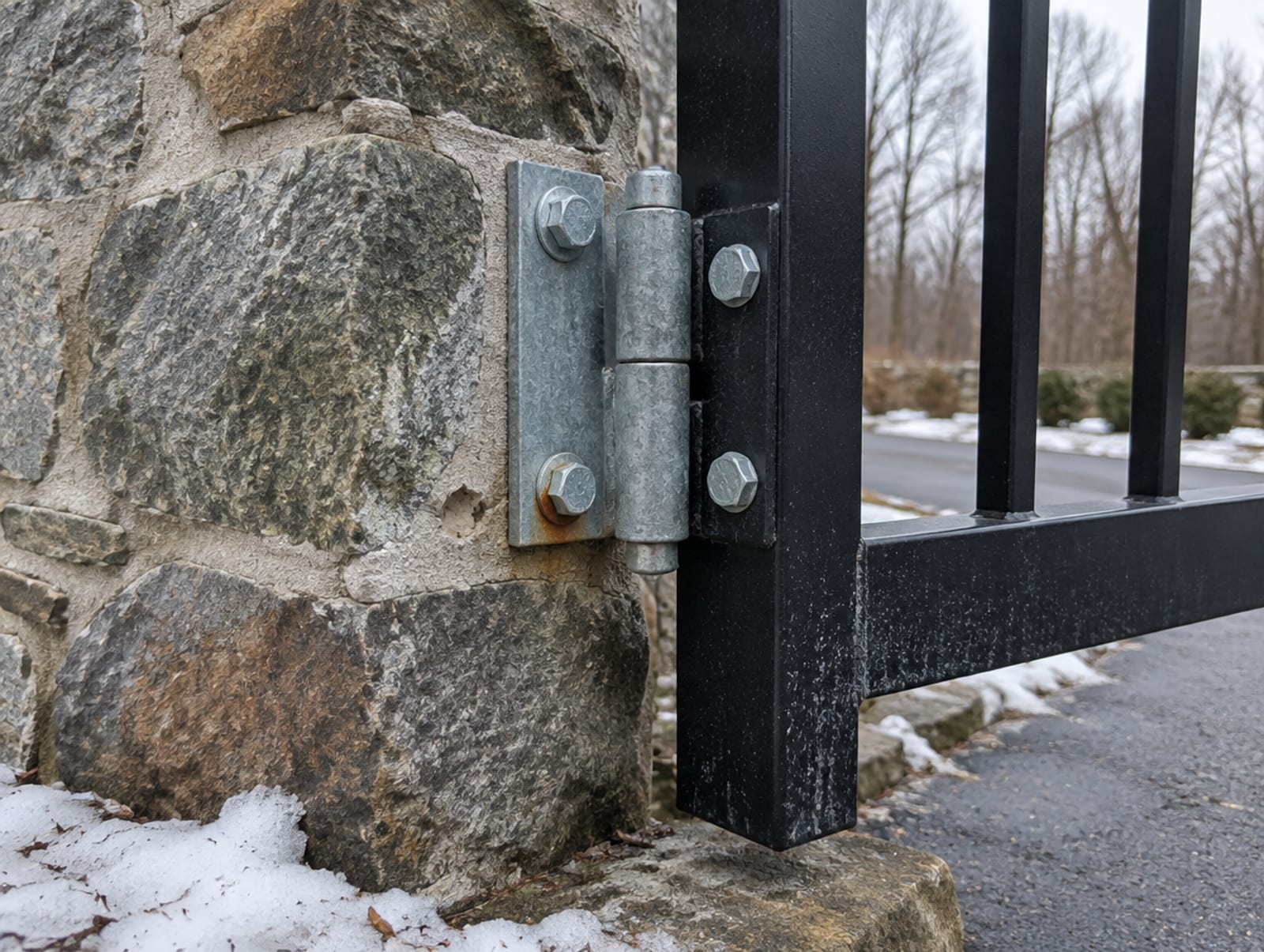
The American Galvanizers Association says hot-dip galvanizing forms a protective patina and that observed atmospheric corrosion rarely exceeds 0.3 mils a year in the environments in its data. Corrosion rates depend on moisture, wet and dry cycles, pollutants and chloride concentration. De-icing salt environments are among those AGA calls aggressive, and it recommends a duplex system there: hot-dip galvanizing plus paint or powder coating. The zinc provides barrier and cathodic protection, and the coating slows the zinc's consumption. Powder coat over galvanizing has to be prepared under ASTM D7803, and when it is damaged or poorly bonded, moisture and chlorides can reach the zinc or steel. AGA says the galvanized layer keeps protecting after the powder layer is damaged. Its example of a 120-year duplex life is an example, not a promise for any gate.
For your gate, that means asking what the frame and hardware are coated with, and whether the galvanizing is under the powder coat.
What warranties say about winter damage
The LiftMaster RSW12UL carries a three-year warranty for defects in materials or workmanship, and the RSL12UL manual has the same three-year language. Both exclude non-defect damage, improper installation, operation or care, failure to maintain, unauthorized repairs, alterations and battery replacement, along with gate hardware, rollers, alignment and hinges. The LA500UL product page lists a two-year operator warranty. LiftMaster's warranties do not name freezing, snow, ice, de-icing salt or corrosion as covered winter damage, so winter damage is subject to those exclusions.
FAAC's 415 and 770N manuals say that correct operation depends on following the instructions and using FAAC accessories and safety devices. For corrosion, salt, snow, ice or freeze damage on a FAAC operator, confirm the coverage with FAAC or the authorized dealer for the exact operator and installation.
Check yourself
1. What is the lowest temperature in the published range for the FAAC 415 operator?
2. How often does LiftMaster say to replace the standard backup battery?
3. Who sets the footing depth for a gate post in the Hudson Valley?
4. What coating system does the American Galvanizers Association recommend in de-icing-salt environments?
Frequently Asked Questions
Q: Will my gate stop working at 10°F? A: The named FAAC and LiftMaster operators are rated to -4°F, and LiftMaster's optional heater extends that to -40°F. A gate that stalls in the cold needs inspection.
Q: How often should I replace the backup battery? A: LiftMaster says every 3 years for best performance, using part 29-NP712 for the standard 7Ah battery. Test the backup before winter.
Q: Why does my gate reverse after a snowfall? A: Snow or ice that adds resistance, blocks the track or interrupts a photo eye can register as an obstruction. Clear the path and the safety devices first.
Q: What footing depth does a gate post need in the Hudson Valley? A: The local building department sets it. State code gives air-freezing-index groups, not a county frost depth in inches, so ask your department or a design professional.
Q: Does a warranty cover road-salt damage? A: LiftMaster's warranties do not list it as covered, and the exclusions for improper care, maintenance and gate hardware apply. Ask the dealer about FAAC coverage for your exact model.
A winter-ready gate has a battery tested before the first freeze, posts and pads set to your town's frost criteria, a track and photo eyes kept clear, and a coating specified for road salt. Check those four things and the operator's published range does the rest.
At Portillo Fences and Gates, we service automatic gates, handle gate repair and install inground motors and slide operators across Putnam, Westchester, Dutchess, Orange, Ulster and Rockland Counties. We check the battery, the sensors and the gate path before the cold arrives. Contact us to book a visit, or call (845) 282-3336.