

November 20, 2026
- fence maintenance
- vinyl fencing
- wood fencing
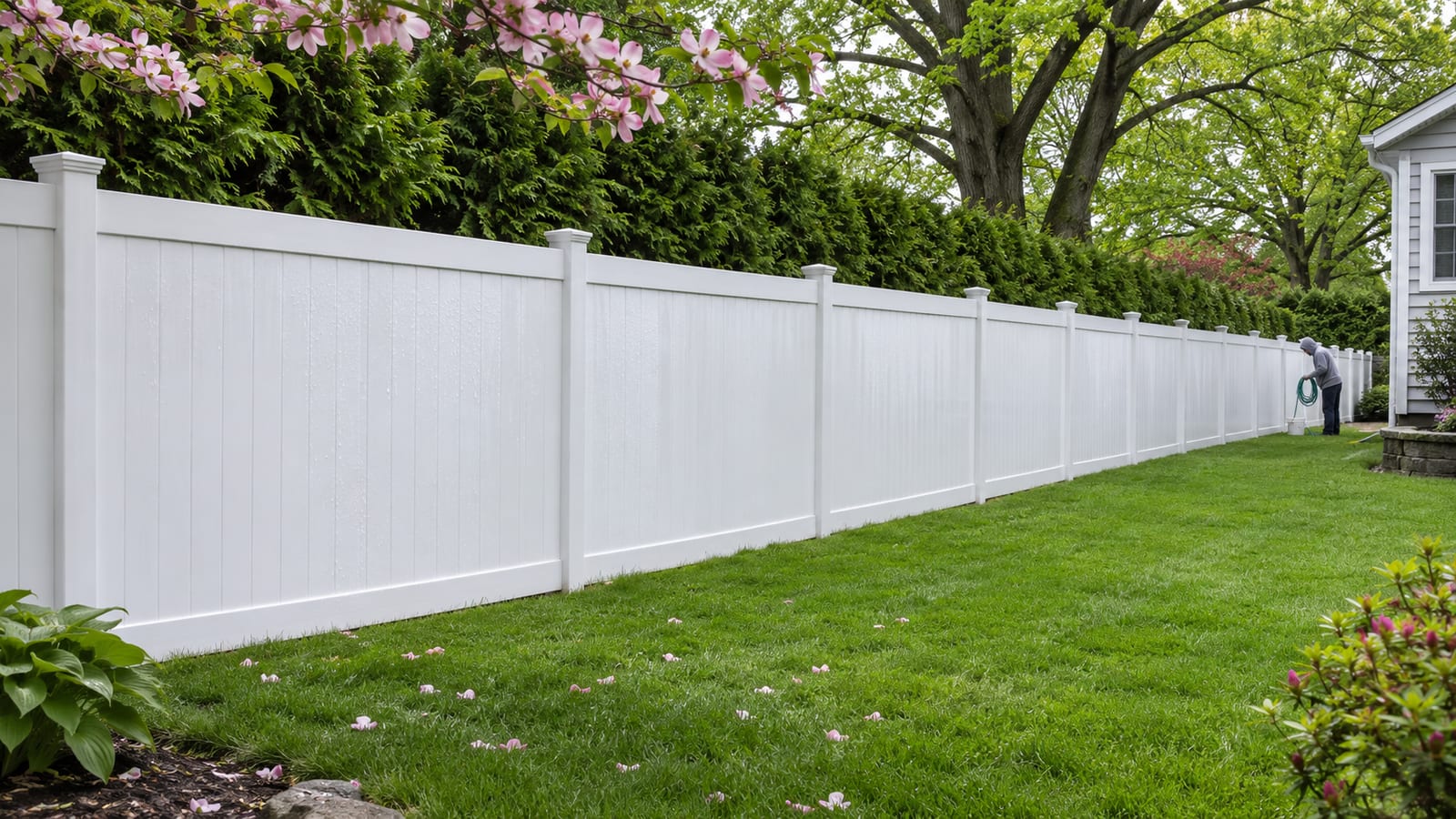
Wash a green vinyl fence with a hose, a soft brush and mild soap, and treat a mildewed wood fence with oxygen bleach, never a pressure washer on cedar. Most of the green and gray on a fence in Putnam, Westchester, Dutchess, Orange, Ulster or Rockland County is surface growth on dirt, and it comes off with a gentle wash.
The tool you pick matters more than the cleaner. Vinyl makers warn that harsh products and hard spray can mar the finish, and the cedar association says a pressure washer should never touch Western Red Cedar. Pressure-treated pine tolerates more, but only within limits.
Each vinyl maker and wood group has its own cleaner and pressure limits, and pros charge by the job or by the foot. Together they tell you whether this is a Saturday job or a phone call.
Key Takeaways
Vinyl first step
Start with a garden hose, a soft brush or cloth, and mild soap or car-wash soap, then rinse completely.
Pressure washers
Cedar should never be pressure washed, and vinyl needs a safe distance and careful, gradual approach.
Bleach and plants
Chlorine bleach can harm nearby plants, so wet them first, rinse well and never combine cleaning products.
How often
Vinyl wants a wash at least once a year, and cedar boards do best with a yearly cleaning.
Pro pricing
Published Connecticut fence-cleaning prices run about $150 to $450 per job, so get a written local quote.
Stain after cleaning
Wood that has been cleaned and dried is ready for a finish, which has its own guide.
Washing a vinyl fence with soap and a soft brush
Vinyl is smooth and non-porous, which is why a hose and mild soap handle most dirt. CertainTeed Bufftech recommends a garden hose and soapy water for soil, grime and chalk. Illusions points to a non-abrasive cleaner such as car-wash soap on a soft cloth or brush, and warns that the wrong cleaners or washers can damage the fence.
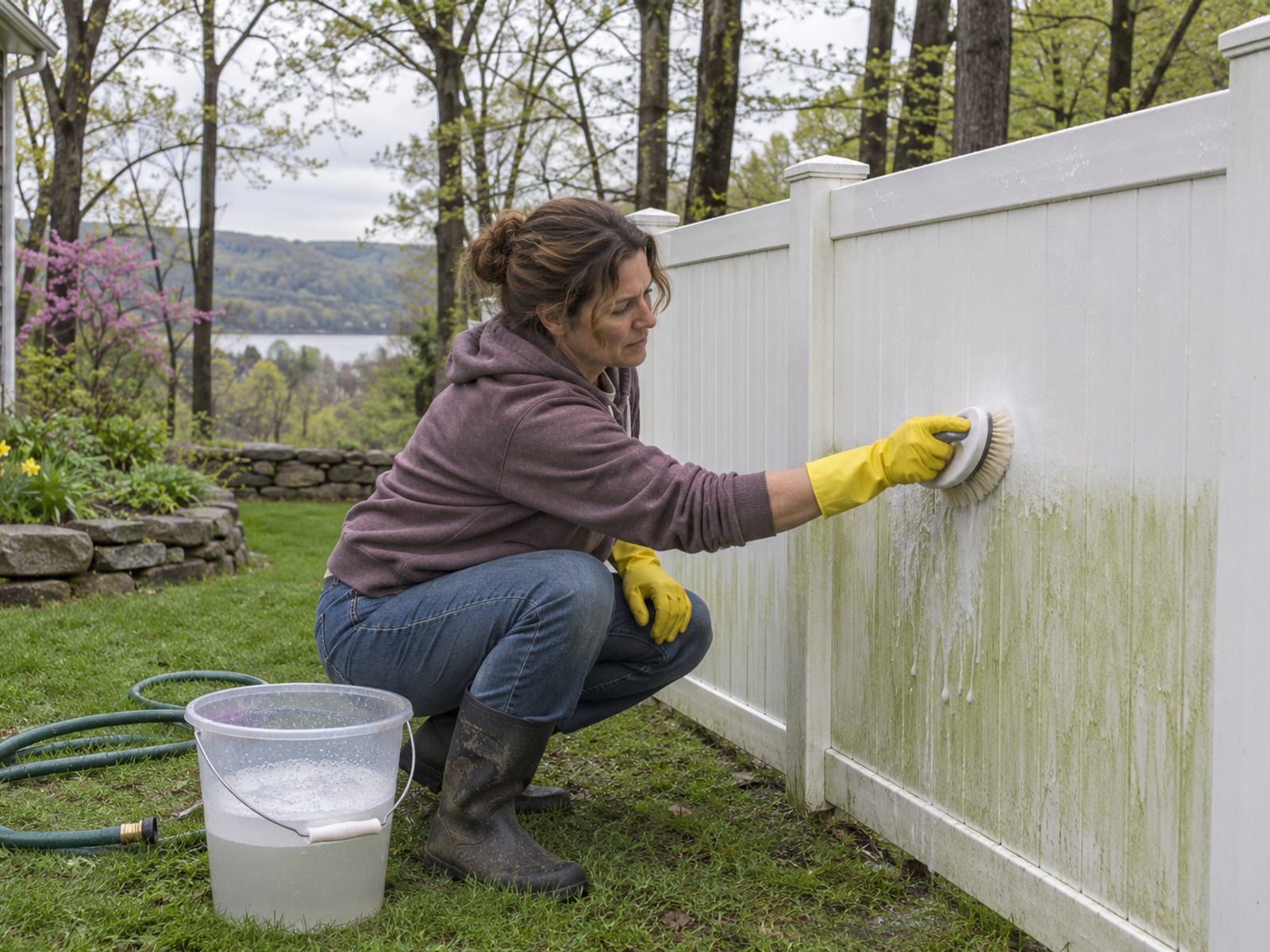
Homeland Vinyl Products suggests working in small sections with a soft cloth and rinsing thoroughly. Its list of general cleaners includes Ivory soap and water, Formula 409, Windex, Simple Green and Pine-Sol. It says to stay away from acetone, Goof Off, and cleaners built on esters, ethers, ketones or citrus-based citric acid.
VEKA also lists vinegar mixed with water and a Mr. Clean Magic Eraser as acceptable, though it says mildly abrasive cleaners can affect the surface. Test any product on a low, hidden spot first, work one panel at a time, and rinse until no suds remain.
Why vinyl turns green and what to do about it
Green on vinyl is usually algae, and black spotting is usually mildew sitting on a film of dirt. CertainTeed notes that mildew shows up first where rain does not reach, such as under eaves and porch enclosures. VEKA names dirt, mold and grime buildup as what dulls a fence.
In a shaded Hudson Valley yard the pattern is easy to read. A fence that stays damp after rain or sprinklers, gets little sun and collects leaves gives growth everything it needs. The fence is not defective; it is simply wet and dirty.
For the stubborn spots the makers differ, and that is worth knowing before you grab a bottle. CertainTeed and Homeland both give limited bleach-based instructions, while VEKA lists chlorine bleach among products to avoid. Follow the printed guidance for your own brand, use one product at a time, and rinse thoroughly between any two.
Do not paint or coat vinyl to hide stains. CertainTeed's warranty expressly voids coverage on a product painted, varnished or coated over the original finish. If your fence is under a warranty, our vinyl fencing page and the vinyl versus wood comparison over 20 years explain what these panels are built to handle.
Cleaning a wood fence: cedar and pressure-treated pine
Gray, fuzzy or blotchy wood needs a different approach, because wood fibers can be damaged. The Western Red Cedar Lumber Association recommends a restorative cleaner for dirt, old finishes and gray fibers, and a mild bleach solution for mold and mildew, with oxygen bleach preferred. It warns against making the solution stronger, since stronger mixes can harm the wood, and says the solution may need to sit for up to 30 minutes.
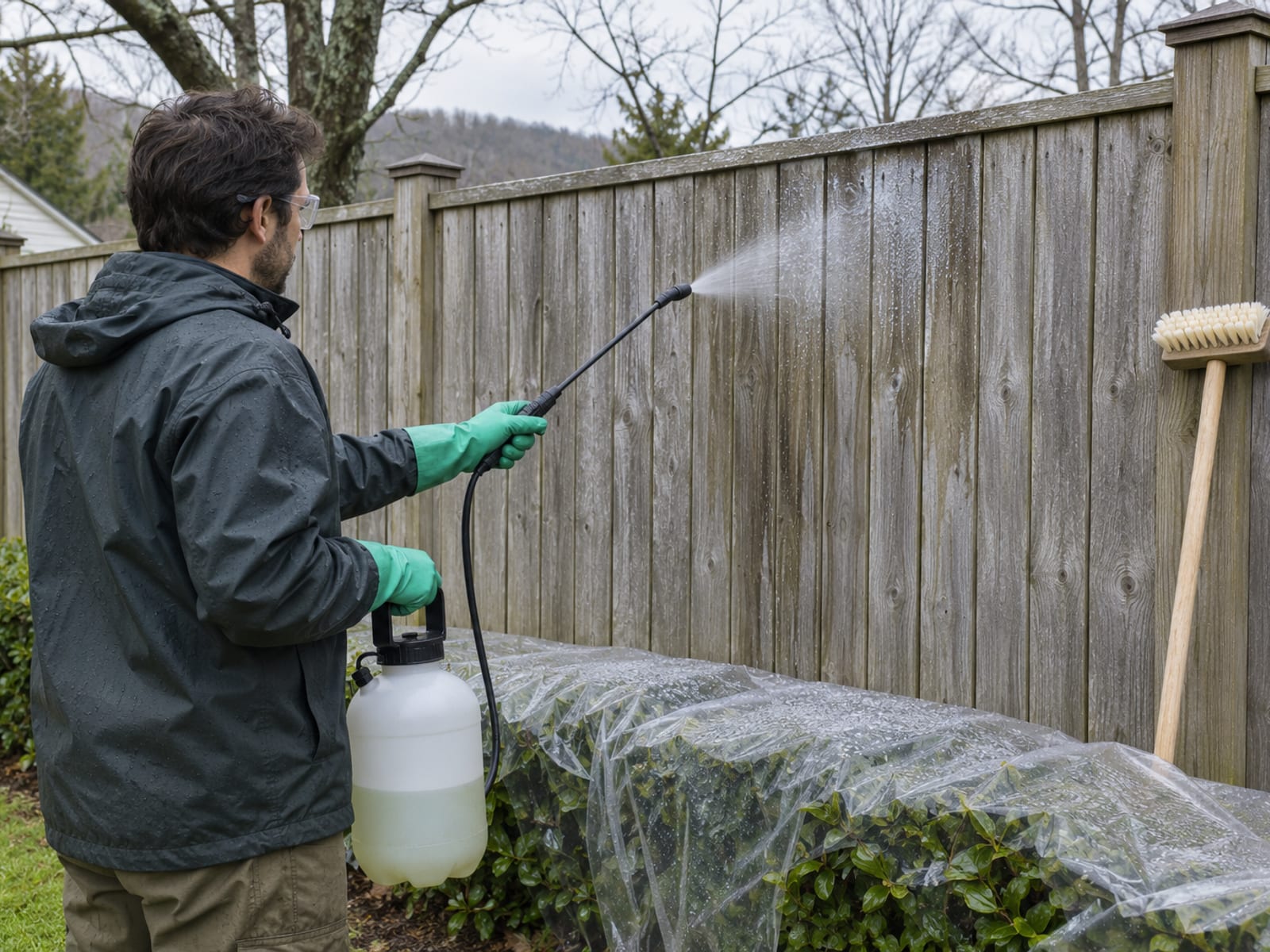
On pressure, cedar and treated pine part ways. WRCLA says never to use a pressure washer on Western Red Cedar, and its deck guidance adds that power washers can seriously damage cedar and that some restorers can strip weathered wood from the board. For pressure-treated wood, Viance guidance reported by Hotiv Landscaping calls for no more than 800 PSI, a white or green fan tip, and a nozzle held at least 8 inches away.
Stroke along the grain and pull back past 12 inches before you change direction. Too much pressure lifts the soft surface fibers, leaves a furry texture or grooves, and makes the wood take a finish unevenly.
Pressure and cleaner guidance by material
Maker or group: ---
What it says: ---
Tap a row to open it.
The Wolman figure is a product-specific instruction from Rust-Oleum's technical data sheet, so do not treat it as a rule for cedar or for every treated fence. When in doubt, drop the pressure and use a brush. For choosing between the two woods in the first place, see cedar versus pressure-treated pine.
Bleach, plants and the products you should never combine
Chlorine bleach is where most fence cleaning goes wrong. WRCLA's cedar finishing guidance states that chlorine bleach destroys lignin in wood and can harm surrounding plants and gardens, which is why it prefers oxygen bleach for cedar. If a lawn, hedge or flower bed runs along the fence, wet the plants with clean water before you start and again after you rinse.
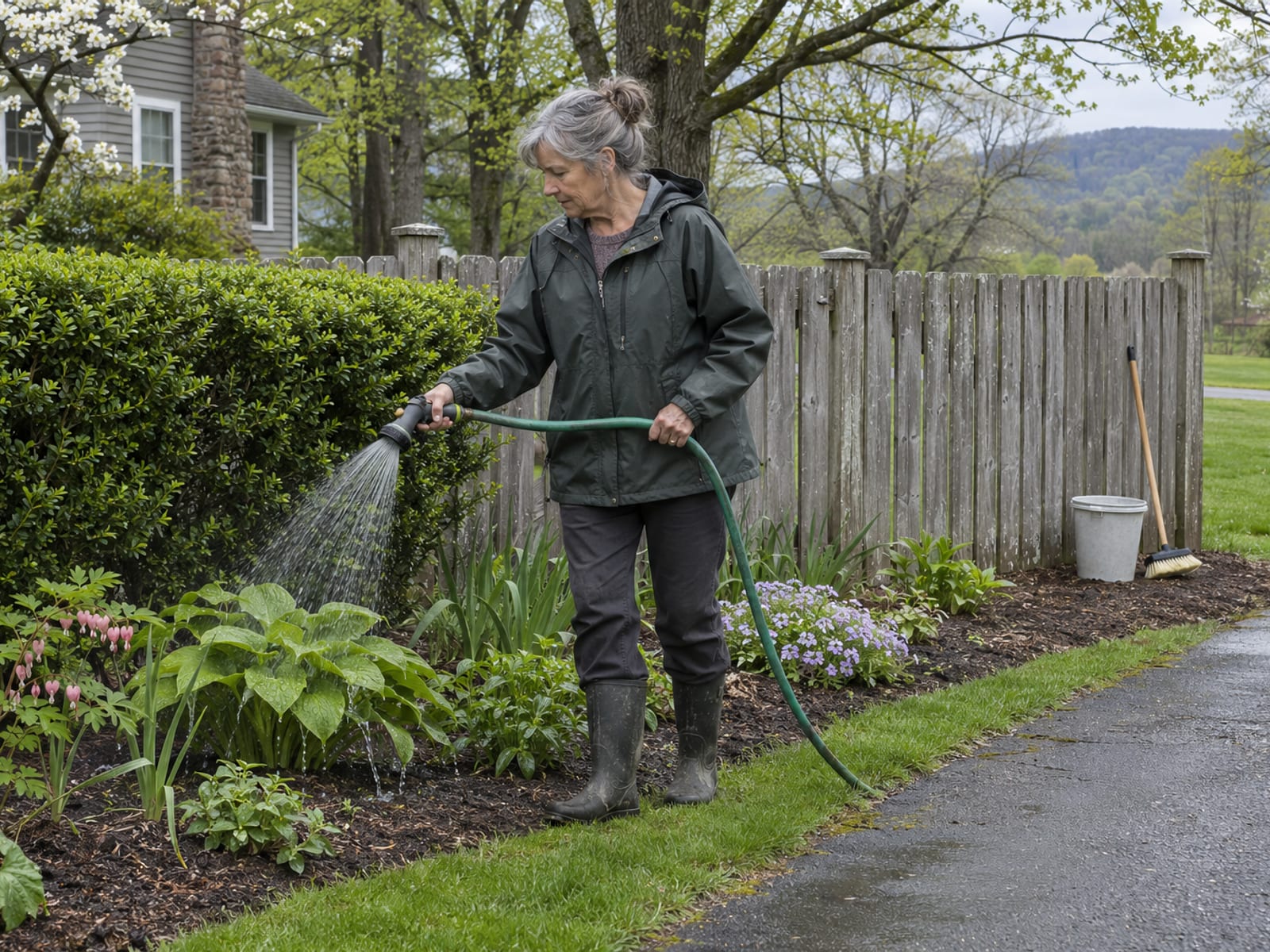
Never mix cleaning products. Use one cleaner at a time, rinse the fence fully with a hose before trying something else, and do not combine bleach with vinegar, ammonia or any other cleaner. Wear gloves and eye protection, and work on a mild, still day so spray stays where you aim it.
Read the label of anything you buy, and stay within the strength the maker gives. Both WRCLA and CertainTeed warn that stronger concentrations can damage the material. Once the wood is clean and fully dry, it is ready for a finish; our guide to staining and sealing a wood fence picks up from there.
How often to clean a fence
For vinyl, VEKA recommends cleaning at least once a year. Homeland and CertainTeed describe routine hose and soapy-water cleaning but do not set a fixed schedule. Northernline, a vinyl maker, suggests a light rinse every month or two and a soapy wash each season or whenever buildup appears.
For cedar, Sound Cedar Lumber recommends cleaning fence boards once a year to remove dirt and mildew and prevent discoloration, and the WRCLA restoration guide recommends an annual spring cleaning for cedar decks. A fence in deep shade or beside a damp lawn may need attention as soon as growth shows instead of waiting for spring.
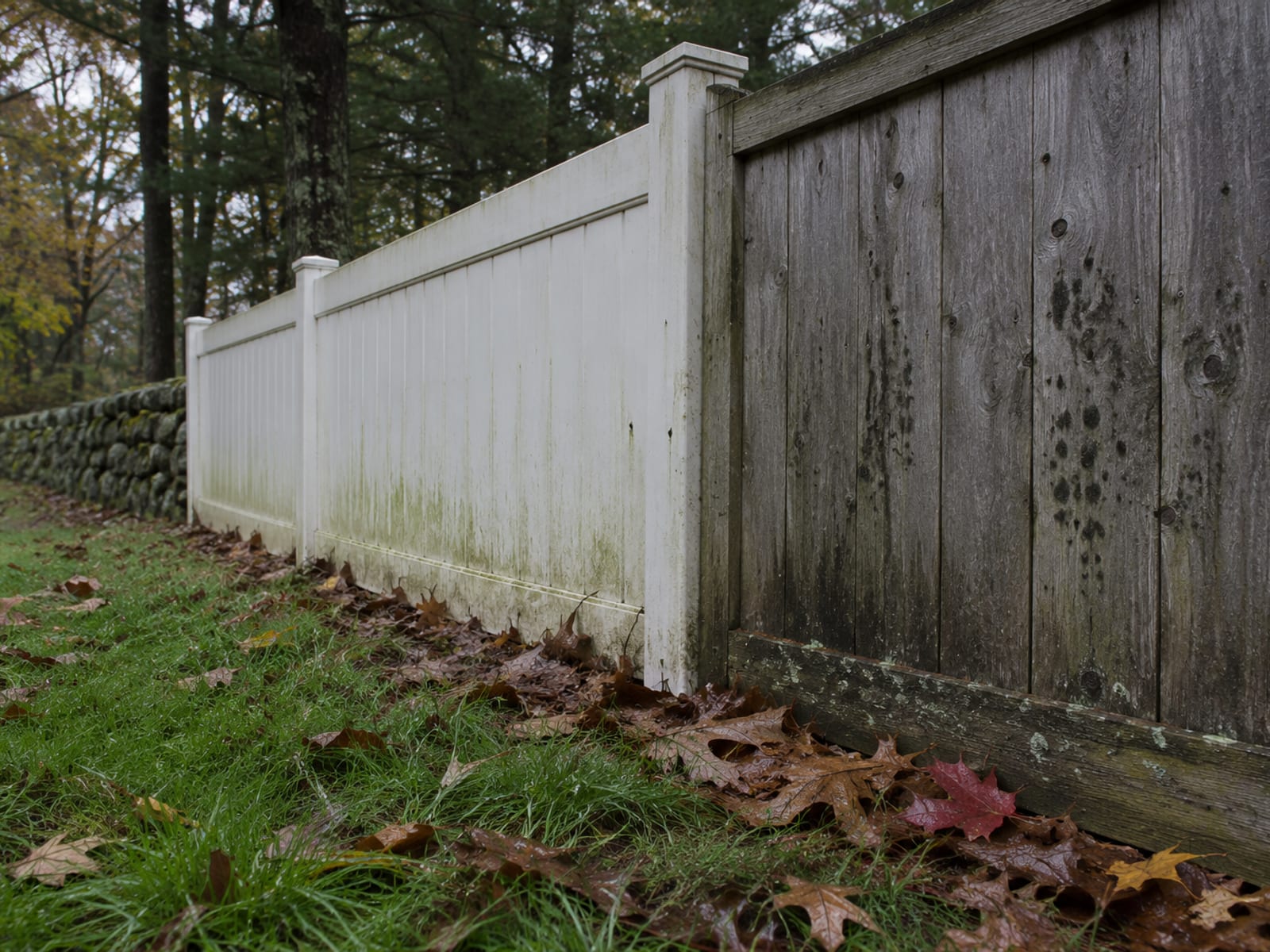
A good habit is to rinse leaves and dirt off in spring and again in fall, and to wash with soap as soon as you see green or gray. Small, early jobs take minutes. A fence left for years takes an afternoon and more scrubbing.
What a pro charges to clean a fence
Published prices near the six counties are thin, so quote the source and the region. These are fence-cleaning prices from contractors in Connecticut and one whole-home price list from Putnam County, New York.
Published fence and exterior cleaning prices
Published price: ---
What affects it: ---
Tap a row to open it.
Use the Connecticut figures as outside-market context, not as a Hudson Valley rate. For a local price, ask for a written fence-only quote that states the material, fence length, height, number of sides, gates, access, and whether plant protection is included.
A pro earns the fee when the fence is long, tall or on a slope, when both faces need washing, when cedar needs the right cleaner and no pressure washer, or when a warranty is at stake. If the real problem is rot, lean or loose boards, cleaning will not fix it, and fence repair is the better call.
Frequently Asked Questions
What is the safest way to clean a green vinyl fence?
Use a garden hose, a soft brush or cloth, and mild soap or car-wash soap, working one section at a time and rinsing completely. Test any new product on a hidden spot first. Avoid abrasive pads and the solvents Homeland lists as off limits, such as acetone and Goof Off.
Can I pressure wash a vinyl fence?
VEKA permits it only for heavy buildup and only with care. Remove or secure caps and accessories, start at a safe distance, and move closer gradually, because concentrated pressure can permanently damage the fence. CertainTeed does not publish a PSI limit, so a hose and brush is the safer default.
Can I pressure wash a cedar fence?
No. The Western Red Cedar Lumber Association says never to use a pressure washer on Western Red Cedar. Use warm soapy water for dirt and diluted oxygen bleach for mildew, with a soft brush and a thorough rinse.
Is bleach safe to use on a fence near plants?
Chlorine bleach can harm surrounding plants and gardens, and it destroys lignin in wood. Oxygen bleach is the cedar association's preferred choice. Wet nearby plants first, rinse them after, and never combine bleach with another cleaner.
How often should I clean my fence?
VEKA recommends a vinyl wash at least once a year, and Sound Cedar Lumber recommends a yearly cleaning for cedar boards. A shaded or damp fence may need a wash as soon as green or gray growth appears.
Check yourself
1. What does the Western Red Cedar Lumber Association say about pressure washers on cedar?
2. What is the first cleaning step most vinyl makers describe?
3. What can painting or coating over vinyl's original finish do under CertainTeed's warranty?
4. What PSI limit does Viance guidance give for pressure-treated wood?
5. What should you do with cleaning products?
A hose, a soft brush and mild soap handle most vinyl, oxygen bleach and a brush handle most mildewed wood, and the pressure washer stays in the garage for cedar. Wash early, rinse the plants, and get a written quote when the fence is long or the finish is on the line.
Portillo Fences and Gates builds and repairs fences and gates in Putnam, Westchester, Dutchess, Orange, Ulster and Rockland counties. See our vinyl fencing and wood fencing pages, then use our contact page or call (845) 282-3336.