

November 23, 2026
- dog fencing
- fence design
- gates
- wood fencing
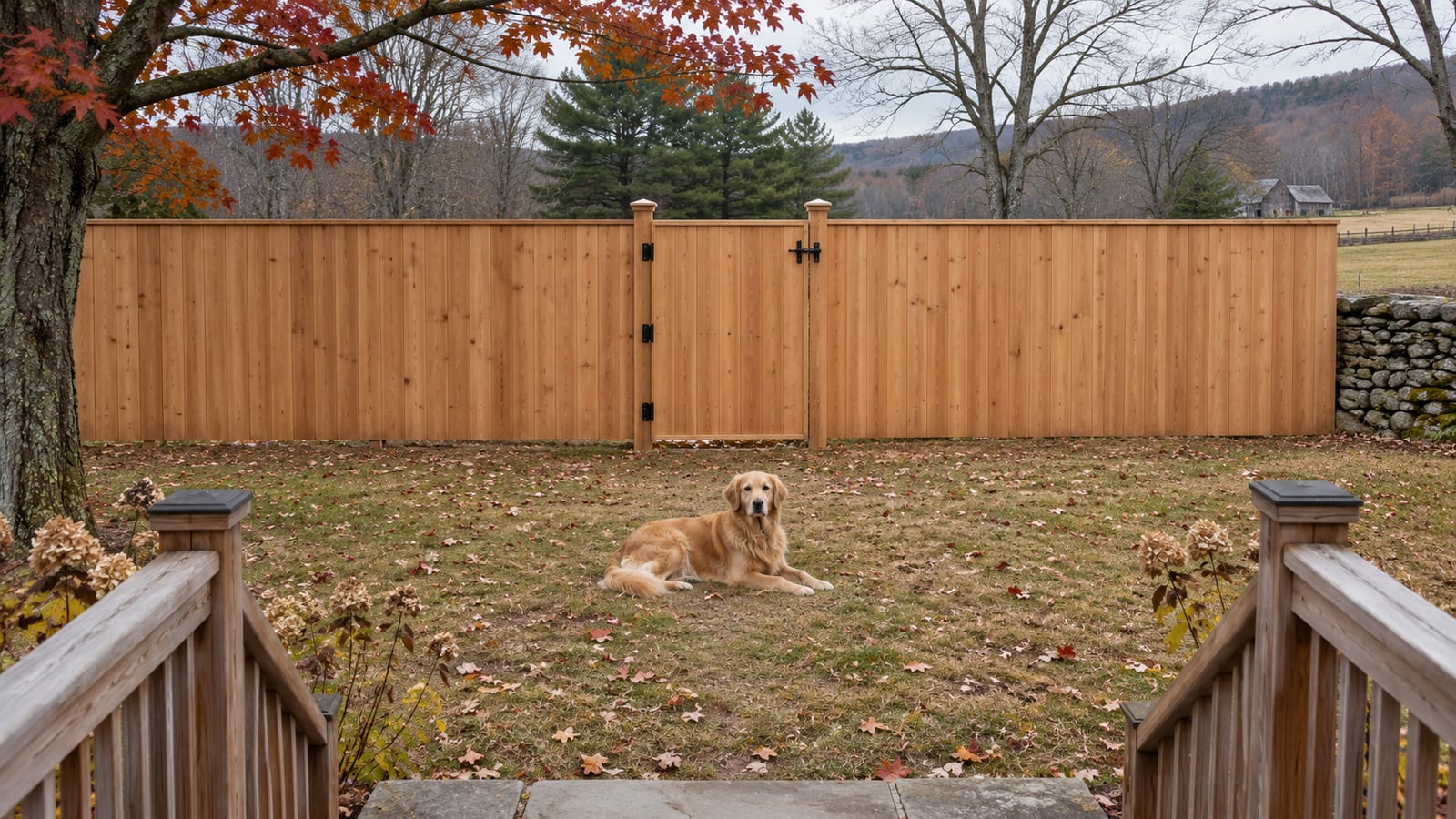
A fence that holds a dog needs three things: enough height with a smooth inside face, a bottom that cannot be dug under, and a gate that closes and latches by itself. The height depends on the dog. A fence that stops a beagle may not slow a dog that climbs, so the design matters as much as the number of feet.
Most escapes happen at the weak points, not in the middle of a panel. A dog that cannot go over will test the corners, the gaps beside the posts and the space under the gate. Fix those and the fence does its job.
The sections below cover height and anti-climb details from animal-care groups, how deep and how wide a dig barrier runs, how big an opening can be, and what a few local codes say about dogs and fences in the Hudson Valley.
Key Takeaways
Height
No single height suits every dog, so match the fence to how your dog actually jumps and climbs.
Smooth inside
Horizontal rails and cross-pieces on the dog's side work like a ladder, so keep that face flat.
Dig barrier
A wire L-footer or a buried bottom edge, 1 to 2 feet deep or wide, is the most common fix for diggers.
Openings
If your dog's head fits through a gap, the gap is too big, including the one under the gate.
Gate
Use a gate that closes by itself and a latch your dog cannot lift or nose open.
Local rules
Dog-at-large and electric fence rules are set by each town or village, so confirm yours with the clerk.
How Tall Should a Dog Fence Be?
Start with the dog, not a catalog number. The American Kennel Club recommends a high, strong fence with bottom barriers for dogs that jump, climb, dig or push through fencing. East Bay SPCA notes that some dogs can jump 6 to 8 feet, which is why height alone never guarantees a determined jumper stays in.
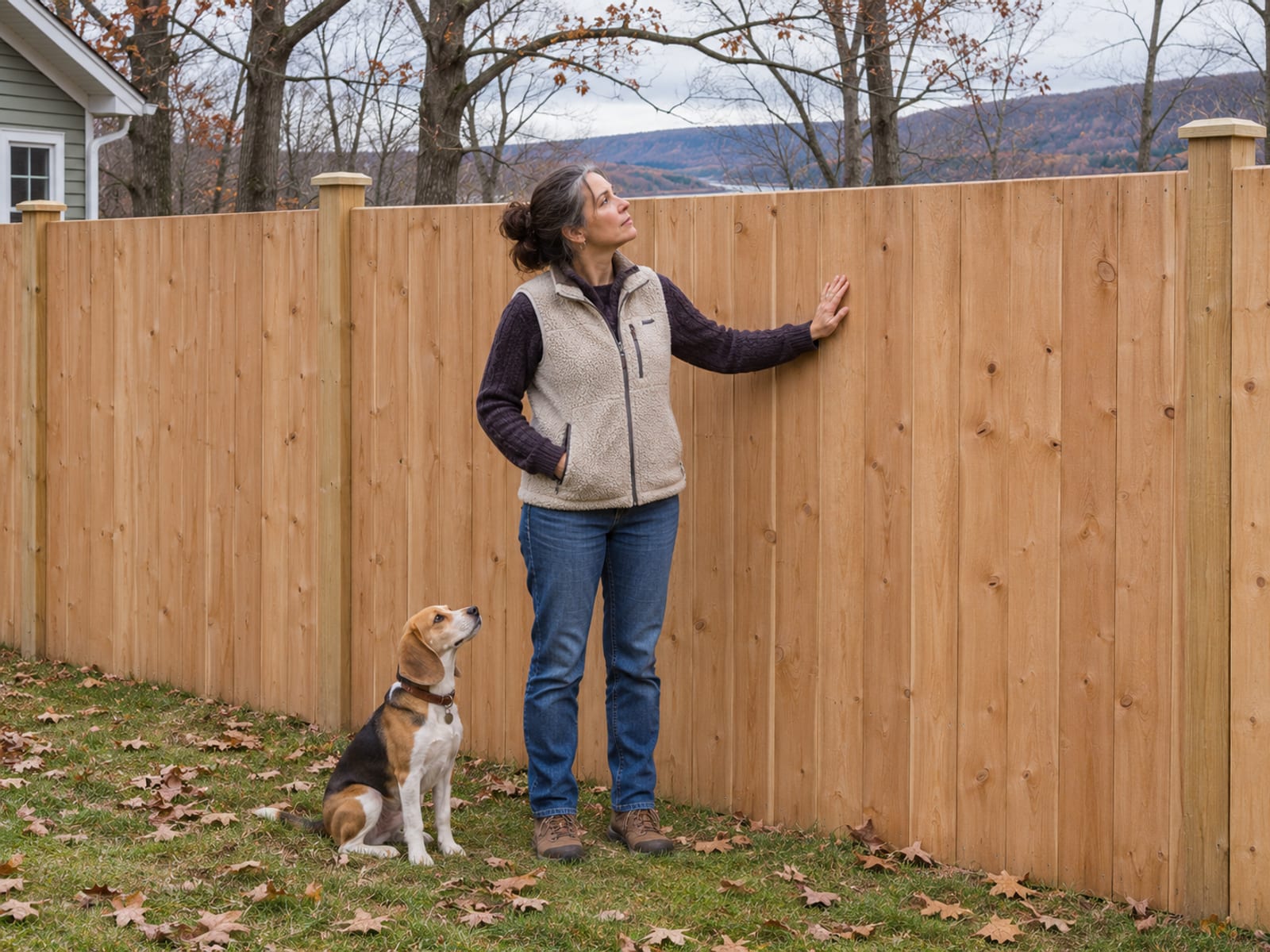
Some published numbers help you plan. A veterinary kennel-design reference recommends fencing at least 5 feet high to discourage climbing. Coyote Roller, a maker of top-rail rollers, recommends a minimum 6-foot fence for its product. That is a product requirement, not a rule for every dog.
Check what your town allows before you pick a height. Height caps for rear-yard fences are set town by town; the Village of Washingtonville, for one, caps side and rear fences at 6 feet. Our guide to New York fence height limits by municipality shows how to find yours, and your town hall can confirm it before you sign a quote.
Stopping a Dog That Climbs or Jumps
Climbers use footholds. Keep the inside face of the fence smooth, with no horizontal rails or cross-pieces on the dog's side. East Bay SPCA notes that horizontal cross-pieces make climbing easier. On a wood fence, that means putting the rails on the outside and the flat boards toward the yard.
Then look at the top and the ground around the fence. The Sacramento SPCA describes an inward-sloping extension at about 45 degrees and a rolling bar at the top of the fence. A roller spins under a dog's paws, so there is nothing to grip while pulling over.
Furniture, wood piles, bins, rocks and sheds near the fence give a dog a launch point. AKC recommends removing them or moving them well back. If you want one of the top additions, ask for it at the quote stage, because it changes the post height and the cost.
Our wood fencing and vinyl fencing pages cover the two materials most often used for a solid, smooth face on the dog's side.
Solid or See-Through When Your Dog Barks at Passersby
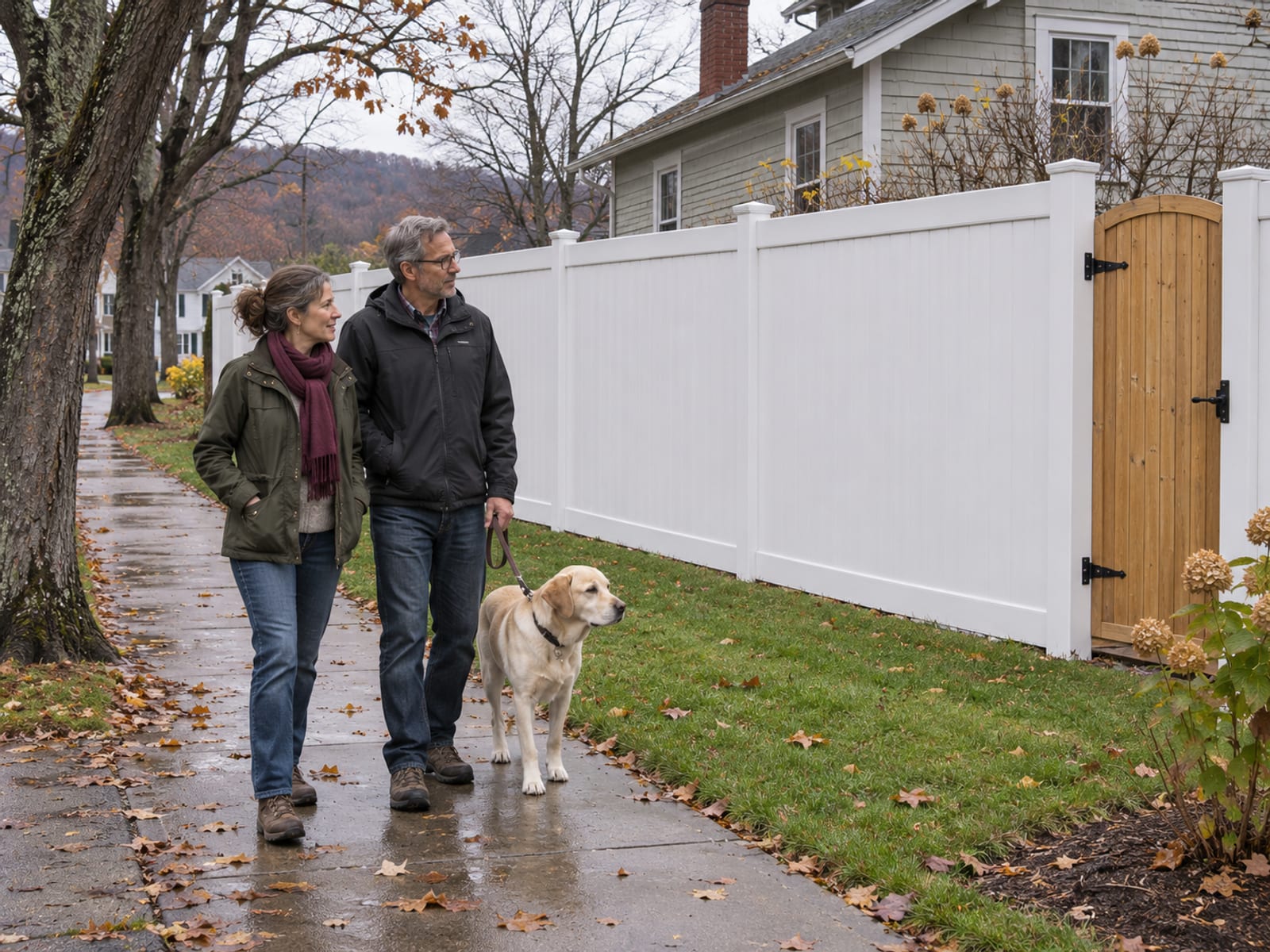
If your dog barks at people, dogs or wildlife going by, the fence you choose changes how much it sees. For territorial or reactive barking, the ASPCA recommends limiting the dog's ability to see or hear passersby, including secure, opaque fencing around the areas the dog uses outside.
A solid wood or vinyl fence cuts the visual triggers. A see-through chain-link or ornamental fence lets the dog watch everything that passes, which can feed fence-running and frustration barking. Chain link can work for a dog that stays calm, but its open mesh also gives a climbing dog a grip.
A solid fence is not a complete answer. Barking also comes from sounds, anxiety and boredom. The ASPCA suggests training the dog to move away from the boundary and settle somewhere else, and pairing the fence with exercise and supervision.
Stopping a Dog That Digs Under the Fence
The most common fix is a wire barrier that runs from the base of the fence into the ground or across the soil on the dog's side. Published dimensions vary, and the table sets them side by side.
Dig-barrier figures by source
---
Tap a row to open it.
The Fence Deck Supply figures are trade guidance, not veterinary or government standards. AKC describes an L-footer as chicken wire, hardware cloth or chain-link attached to the base and facing inward. It can be buried or held down with rocks, gravel, mulch or planters. In Hudson Valley soil, a trench through rock or roots changes the work, so ask your contractor which detail fits your lot.
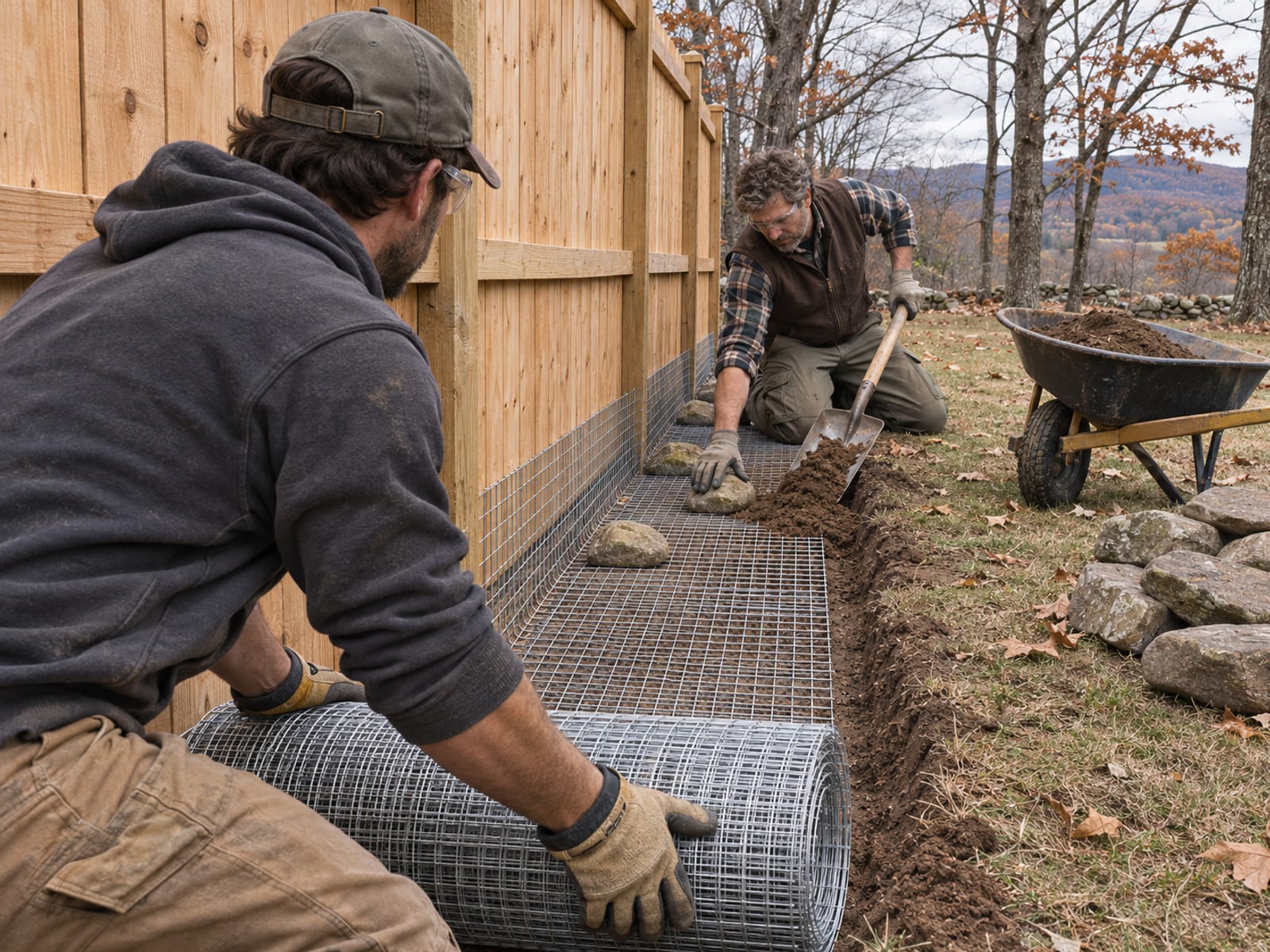
Pay attention to corners, gate posts and low spots, where dogs dig first. The barrier has to run across the gate opening and around the whole perimeter. Digging often has a cause. UC Davis Veterinary Medicine and the ASPCA both point to exercise, enrichment and finding the reason, and advise against punishing a dog after the fact.
Materials, Gaps and Self-Closing Gates
No residential fence material is chew-proof. A dog that chews can damage wood, vinyl, wire coatings and weak gate parts, so look for loose boards, damaged mesh and new openings once a season. Purrfect Fence lists vinyl, block walls and wood privacy fencing with the smooth side facing the dog as practical choices for dogs that cannot clear 6 feet. Rough wood, chain-link mesh and horizontal rails can all give a dog something to grip.
Gaps matter as much as height. Fence Deck Supply gives these maximum openings:
Maximum opening by dog size (contractor practice)
---
Tap a row to open it.
These are trade figures, not a veterinary standard. The safe measurement depends on your smallest dog, how much a puppy will grow, and the size of the dog's head. If the head fits, the opening is unsafe. Check beside posts, at corners, on slopes and at gate hinges.
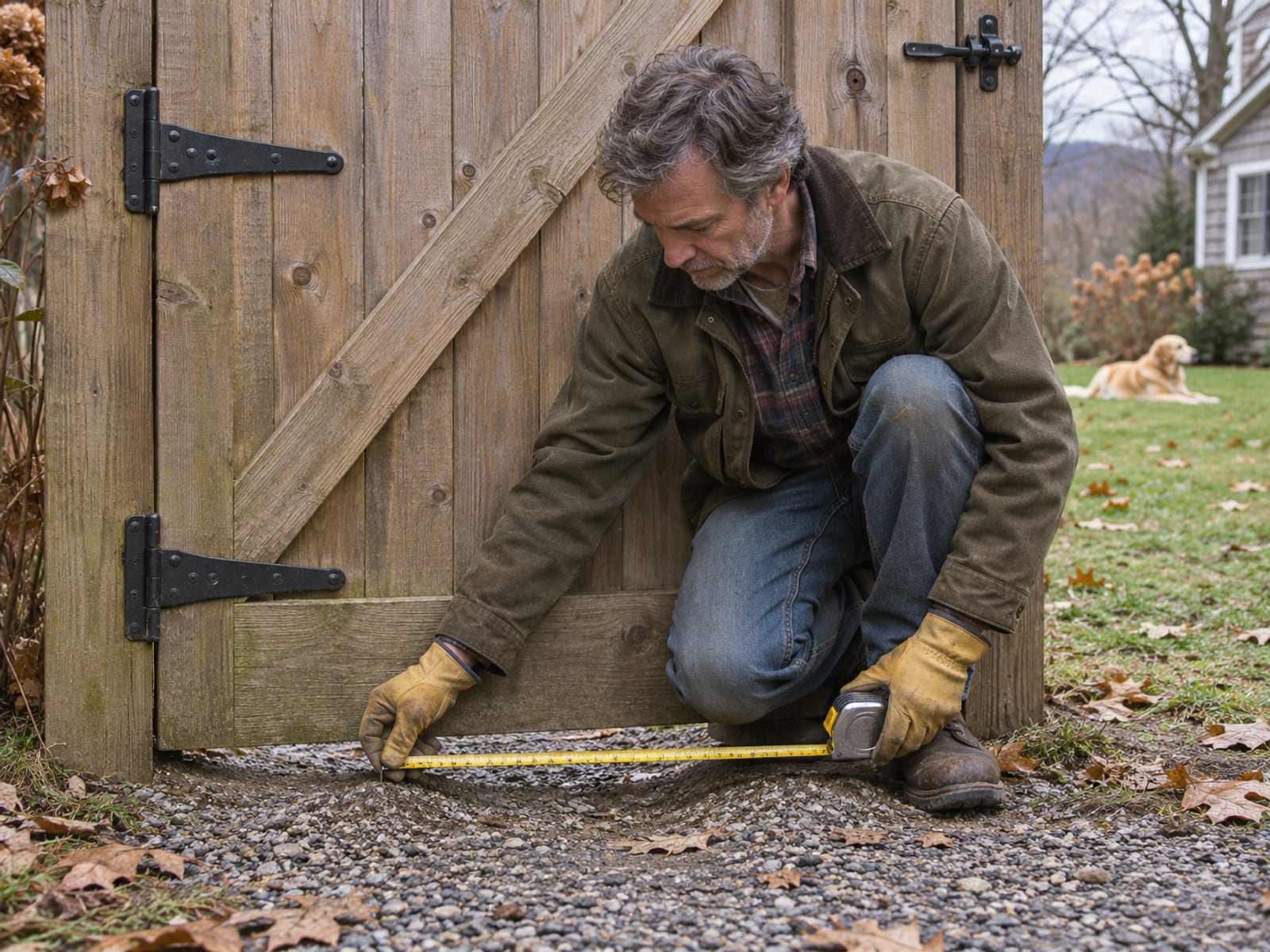
The gate is the usual failure. Use one that closes on its own and a latch the dog cannot lift or nose open. AKC suggests a lock or hook-and-eye closure when a gate blows open or the latch does not stay shut. The National Great Pyrenees Rescue recommends automatic or self-latching hardware set high enough that a dog cannot interfere with it. Our guide to gate latches, locks and hinges covers the hardware, and our gates page lists the gate types we build.
Invisible Fences and Dog-at-Large Rules in Your Town
Local rules in our service area do address invisible fencing and dogs at large, and they differ from town to town. These examples show the range. Confirm your own town or village code before you rely on any of them.
In the Village of Washingtonville, Orange County, Local Law No. 1 of 2013, section 74-2 requires an owner to restrain a dog off the premises by leash, rope, chain, cage or motor vehicle. A buried electric fence is not a defense. Anyone using one must post "Electric Fence" signs at each corner facing the street, each no larger than 2 square feet. The village's zoning chapter, section 315-17(B), also caps side and rear fences at 6 feet and requires at least one self-closing gate.
In the Town of Rockland, Rockland County, Chapter 51, sections 51-2 and 51-3 define "at large" as an unleashed dog off the owner's premises. In the Village of Mamaroneck, Westchester County, sections 156-2 and 156-4 require a leash off the owner's premises and keep dog enclosures and runs at least 30 feet from a residential building and out of the front yard.
If your dog could reach a sidewalk or a neighbor's yard, ask the clerk or code office in your town about the current rule before you choose an invisible fence over a physical one.
Frequently Asked Questions
What height fence stops a dog from jumping?
No single height suits every dog. AKC recommends a high, strong fence with bottom barriers, and East Bay SPCA notes some dogs can jump 6 to 8 feet. A veterinary kennel-design reference suggests at least 5 feet to discourage climbing. Match the height and anti-climb details to what your own dog actually does.
How deep should I bury a fence to stop digging?
Published figures run from 12 inches to 2 feet. The Humane Society says 1 to 2 feet below the surface, and Best Friends says 18 to 24 inches deep. Another option is an L-footer that lies at least 12 inches into the yard. Ask your contractor which detail works on your soil.
Is a solid fence better than chain link for a barking dog?
For territorial barking at passersby, the ASPCA recommends opaque fencing so the dog sees less. Chain link lets the dog watch people and animals go by. A solid fence helps, but training, exercise and supervision still matter.
How wide can a gap be before a small dog squeezes through?
One fence-supply guide gives 2 inches for toy breeds and puppies, 3 inches for small dogs under 25 pounds and 4 inches for medium and large dogs. It also gives 2 inches under a gate. If your dog's head fits through an opening, the opening is too big.
Do I need a self-closing gate?
It is the safest choice, since a gate left open is the easiest escape. The Village of Washingtonville requires at least one self-closing gate on side and rear yard fences. Other towns set their own rules, so ask your town hall.
Can I use an invisible fence instead?
Some towns regulate them. Washingtonville requires "Electric Fence" signs at the street corners and says a buried fence is not a defense if the dog leaves the property. Check your own town or village code first.
Check yourself
1. Which side of a dog fence should stay smooth, without horizontal rails?
2. What does a wire L-footer do?
3. How large can an opening be for a medium or large dog, according to the contractor guide above?
4. What does the ASPCA suggest for a dog that barks at passersby?
5. What does Washingtonville's zoning code require for side and rear yard fences?
Fence your dog the way the dog behaves: a smooth inside face, a dig barrier along the bottom, openings smaller than the dog's head and a gate that latches itself. Then confirm the height and any dog rules with your town before building.
Portillo Fences and Gates builds wood, vinyl and chain-link fences and gates for homeowners in Putnam, Westchester, Dutchess, Orange, Ulster and Rockland counties. See our wood fencing and gates pages, then use our contact page or call (845) 282-3336 to talk through the fence your dog needs.