

November 22, 2026
- privacy fence
- fence styles
- wood fence
- vinyl fence
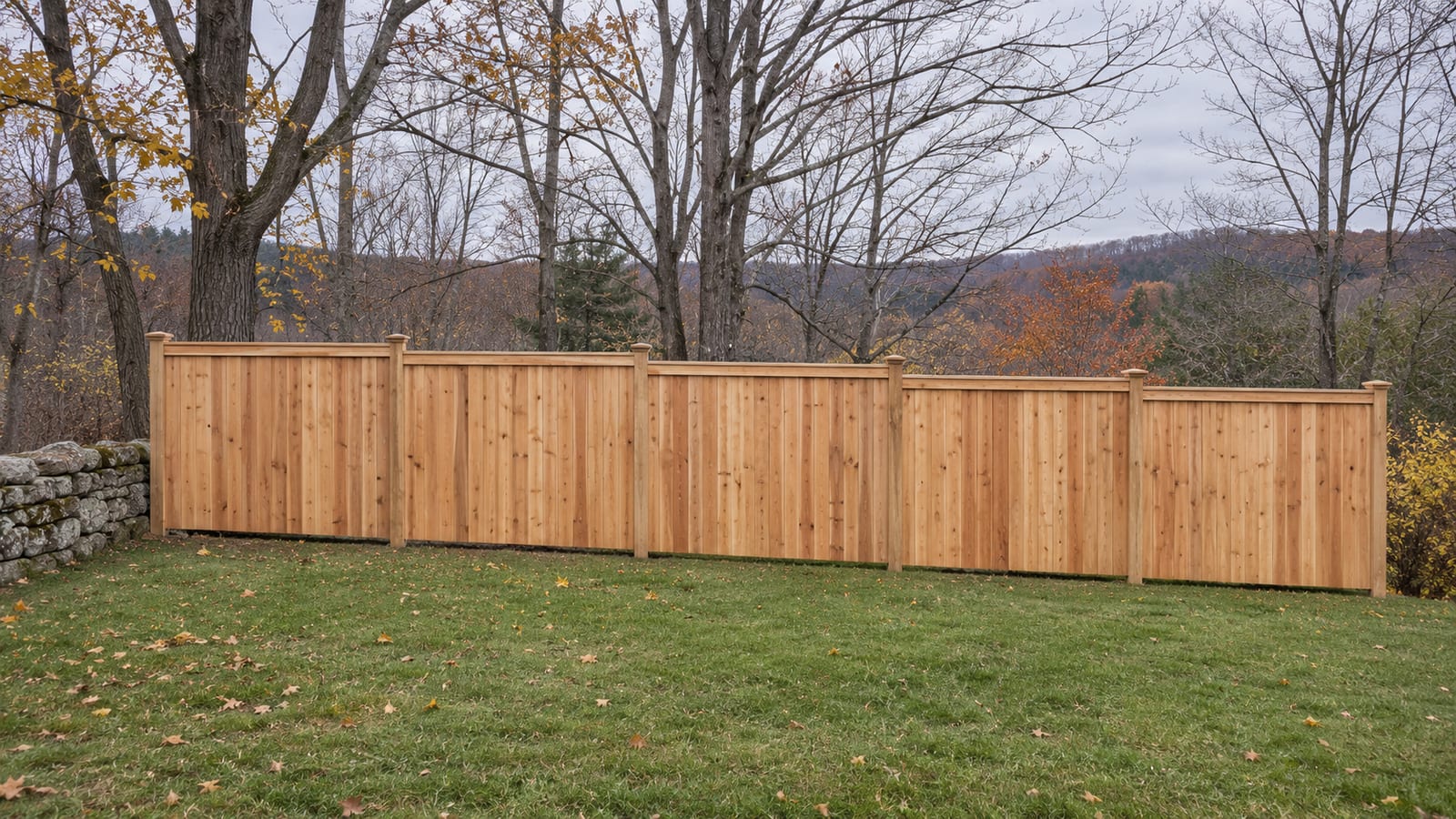
Stockade, board on board and tongue-and-groove vinyl give you a fence with no gaps from any angle. Shadowbox, horizontal slat and lattice-top fences block the view straight on but let air, light and some sightline through. Which one fits depends on how private you need to be and how much wind your yard takes.
Most of the differences come down to four things: how the boards are laid, which side faces out, how the fence handles wind, and what a town allows. Each style below is described by how it is built, so you can picture it standing along your property line.
If you are in Putnam, Westchester, Dutchess, Orange, Ulster or Rockland County, local height and finished-side rules apply to every style, and they vary a lot from one town to the next.
Key Takeaways
Full privacy
Stockade, board on board and tongue-and-groove vinyl leave no gaps from any viewing angle.
Semi-private
Shadowbox, horizontal slat and lattice-top fences block the straight-on view but are not fully opaque.
Dog-ear is a top cut
The angled picket tops can be added to stockade, board on board or shadowbox construction.
Wind
A solid fence takes more wind pressure on its posts and rails than a semi-open fence of the same height.
Horizontal boards
They need extra rails because each board spans between posts and can sag or cup.
Town rules
Height limits and finished-side wording differ from town to town, so confirm yours before you order.
How private each style really is
A stockade fence sets vertical pickets tight against each other, so nothing shows through. Home Depot's wood-fence installation guide describes privacy construction as pickets butted together without a gap. The Academy Fence wood fencing catalog lists stockade, solid board and dog-ear as separate profiles.
Board on board uses two overlapping rows of pickets on the same side of the rails. Fiberon's fencing installation guide calls it full privacy and gives a layout spacing of about 2-3/4 inches before the overlapping pickets go on. Even when the boards shrink, the second row covers the gap.
Shadowbox alternates the pickets from one side of the rails to the other. Looking straight on, the boards cover the open spaces. From an angle you see slivers through the gaps, so it is semi-private. Eastern Wood Fence's product catalog lists its 210-style panel with about a 1/2-inch overlap between boards on opposite faces and 2-1/2 to 2-3/4 inches between boards.
Horizontal slat fences run boards sideways between the posts, usually with deliberate gaps. How private they are depends on board width, gap size and viewing angle. Catalyst's 2026 catalog describes horizontal vinyl slats as semi-private with evenly spaced gaps.
Vinyl privacy panels use interlocking tongue-and-groove pickets. Home Depot's Veranda Dover system states its pickets give gap-free privacy. A lattice-top fence puts a solid panel below and open crisscross lattice above, which adds decoration and filtered views but is not full privacy. Barrette's vinyl fence kit manual lists full-privacy and lattice-top panels as separate styles.
Dog-ear is a different kind of word. It describes the angled, clipped corners on top of each picket, usually cut at about 45 degrees. It is a top profile, so you can order dog-ear pickets in a stockade, board on board or shadowbox layout.
Which side faces out, and how each looks from both sides
A standard stockade has one finished face, with the rails and structure more visible from the other side. Board on board is the same: the continuous picket face is the finished side, and the rail side is less finished unless the panel is built to look good both ways.
Shadowbox is the style built to look alike from both sides, because the boards alternate across the rails. Tri-State Fence's price list calls board-on-board or shadow board a good-neighbor fence that is attractive on both sides and gives privacy with airflow. We cover the finished-side question in more detail in the good-neighbor fence post.
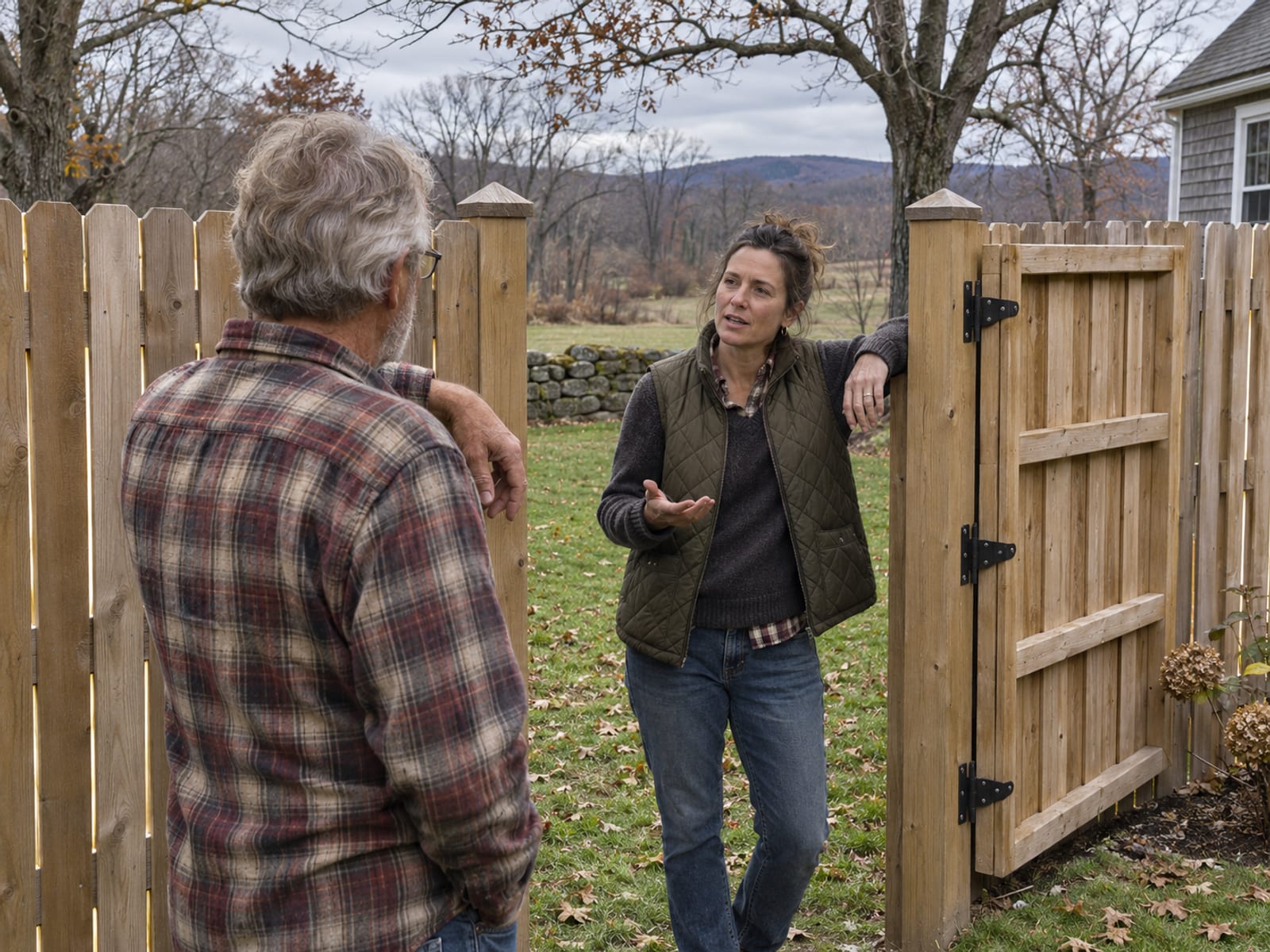
A double-sided horizontal system, such as Elite's PrivacyGard H.A.S.P., can look finished from both sides. A conventional wood horizontal build may show rails, blocking or fasteners on the back.
Vinyl panels are usually factory-finished on both exposed faces. Reinforcement and appearance vary by product, so check the sample or shop drawing before you order. The same goes for any wood board width or overlap: manufacturer dimensions are not universal, and an installer's layout changes them.
Wind, sagging and framing
A solid fence catches more wind than a semi-open fence of the same height. FenceTrac explains in its patio privacy fencing guide that solid infill blocks direct wind and builds higher pressure on the windward face. Its semi-privacy wind guide adds that spaced boards let air through, which lowers the pressure difference and the demand on posts and footings.
Board-and-board construction has an old record here. A Washington State fence and gate guide describes it as a baffle-like arrangement that breaks up strong wind currents while still letting air circulate.
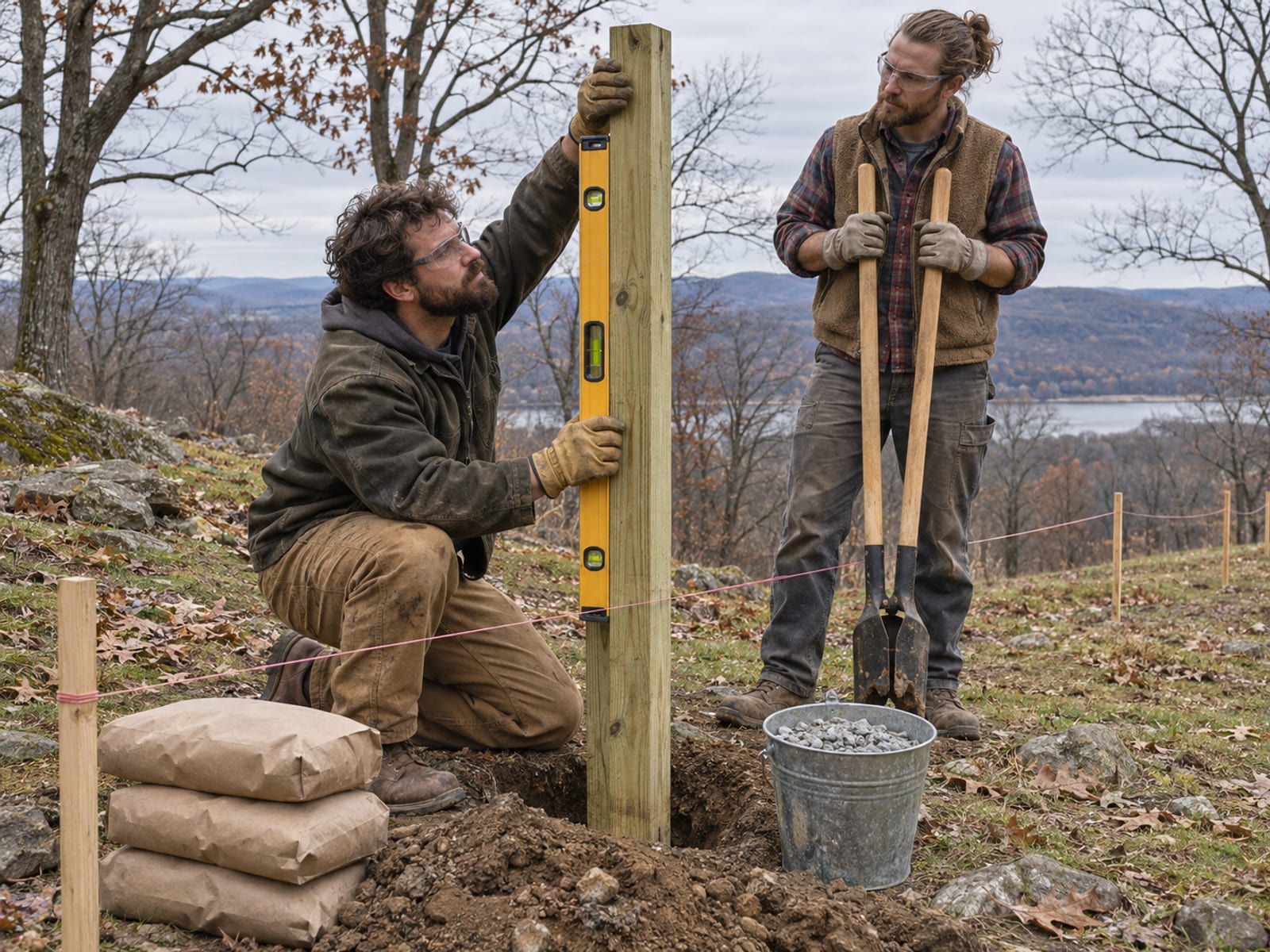
Wind performance also depends on post spacing, post size, embedment, soil, fence height and corners. A semi-open pattern lowers exposure, but it does not promise your fence will survive a storm. A solid privacy gate is a large wind sail with its own sagging and latch-alignment forces, so treat gates separately.
Horizontal boards need more framing attention. Each board spans between posts, so gravity and seasonal moisture can bow, cup or sag it. Home Depot's installation guide recommends three backer rails for fences 6 feet and higher, two for shorter ones, set on edge to resist sagging. Trex's guidance on horizontal fences says a vertical back-bracing rail can be added when pickets stay bowed after the needed gaps are provided.
Upkeep by style
Wood in any of these styles is not maintenance free. A pressure-treated wood care guide says treatment protects against decay and termites but does not stop weathering from wetting, drying and sunlight, or cracking and warping. It recommends a water-repellent finish and says to apply a semitransparent stain to a clean, dry surface.
For stockade, check posts, rails, pickets and fasteners for rot, looseness and splitting, and replace damaged pickets one at a time while the rails and posts are sound. For board on board, check both faces, because the second layer can hide moisture damage or loose fasteners. For shadowbox, keep the gaps clear of leaves and vines so the boards can dry, and look over the fasteners after high winds.
Horizontal wood needs a check along the full length of each board for cupping, bowing and cracking, with boards kept clear of soil and mulch. Dog-ear tops shed some water compared with flat-cut tops, but they do not stop checking, splitting or rot.
Vinyl needs no staining or painting. Wash dirt and mildew with a cleaner the maker approves, and look for cracks, loose connections and storm movement. Freedom Outdoor Living describes its shadowbox vinyl as low maintenance with a no-sag truss system, though damage still needs repair. A lattice top is the delicate part of any panel, so inspect its thin members for cracks and broken intersections. Whatever you choose, look at the whole fence each season and after major storms. For a longer comparison of wood and vinyl, see vinyl vs wood over 20 years.
What your town allows
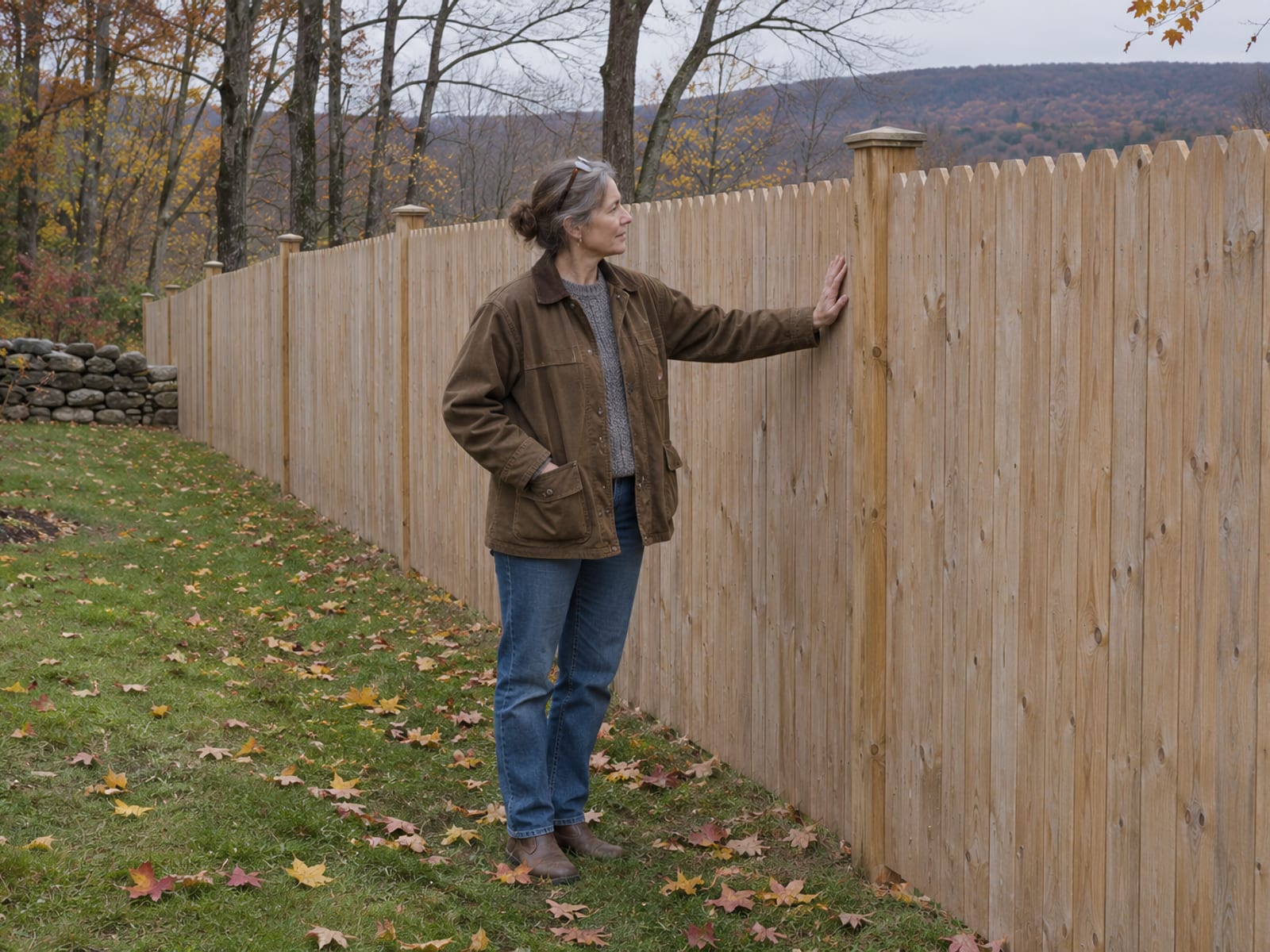
A 6-foot privacy fence is allowed in many rear and side yards but limited in some front yards, and the finished-side wording changes from one code to the next. These sections come from town codes on eCode360.
In Dutchess County, Pleasant Valley's Article IV allows 6 feet on side and rear lines not next to a street, set at least 18 inches from the neighbor, with the finished side facing outward. Milan, § 190-12, allows 8 feet in side and back yards, finished face toward the abutting property, and requires a permit. The Town of Poughkeepsie, § 210-69, requires a permit and allows up to 8 feet behind the front building line.
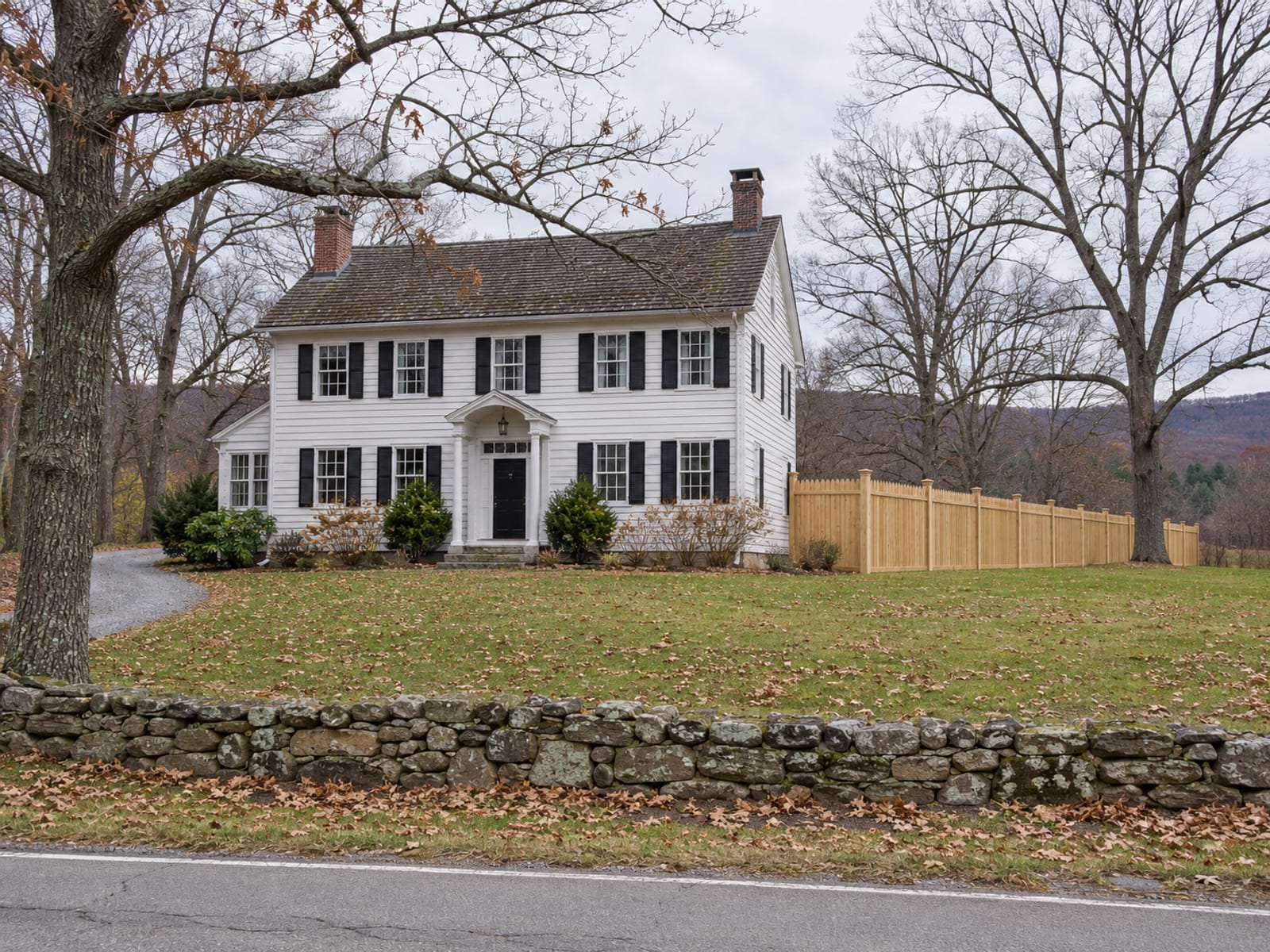
In Putnam County, Putnam Valley, Article VIII, § 165-15(I), caps side and rear fences at 6 feet and front-property-line fences at 4 feet, and wants the good side toward the neighbor or road. In Westchester, Cortlandt, § 307-10(D), allows 6 feet in front and side yards and 8 feet in rear yards. Rye Brook, § 240-6, allows 4 feet in front and 6 feet in rear or side yards. Harrison, § 235-8, allows 4 feet in front and 6 feet 6 inches in rear or side yards.
Height limits and finished-side rules in six towns
Section: ---
Height limit: ---
Finished side: ---
Tap a row to open it.
Every municipality in all six counties has its own code, and zoning district, corner lots, setbacks and permits all matter. Call the building or zoning office before you order a style. Our posts on New York fence height limits by municipality, Putnam County fence permits by town and Westchester fence permits by municipality go further on permits.
What each style costs
Costs depend on height, wood species, slope, rock, gates and removal. For a full look at price drivers and the lowest-cost choices, see the cheapest privacy fence post. The figures below are quoted per source with the region, never averaged, and all are for a 6-foot fence unless noted. Gates, removal and difficult access often add to them.
PR Fence in Massachusetts publishes its rates assuming a typical 120- to 200-foot job on flat ground, with gates priced separately. CalcFence's 2026 cost-per-foot guide gives national figures for material and labor before gates, removal and permits. Neither is a Hudson Valley quote, so use them to compare styles, not to budget a job.
Installed cost per linear foot, 6-foot privacy fence, by source
Source and region: ---
Per linear foot installed: ---
Tap a row to open it.
Lattice-top fences are priced by the exact height, material, lower panel and cap, so ask for a quote that names each. For horizontal wood, ask the quote to state board width, gap, post spacing, framing and species. For any style, ask the quote to say the style, height, wood, board count, finished-side treatment and whether gates or removal are included. Our fence estimate checklist lists more of what to look for.
Frequently Asked Questions
Which privacy fence style is fully private?
Stockade, board on board and tongue-and-groove vinyl panels have no open gaps. Shadowbox, horizontal slat and lattice-top styles are semi-private: the straight-on view is blocked, but gaps show from some angles or through the lattice.
Is a dog-ear fence a different style?
Dog-ear is the angled cut on the top of each picket, usually about 45 degrees. You can have it on a stockade, board on board or shadowbox fence, so the privacy level comes from the way the pickets are laid.
Which style handles wind best?
A semi-open style such as shadowbox lets air pass through, which lowers pressure on the posts and rails compared with a solid fence of the same height. Post size, depth, spacing and gate placement still decide how a fence holds up.
Do horizontal fences sag?
Wood boards can bow, cup or sag because each one spans between posts. Home Depot's guide recommends three backer rails for fences 6 feet and higher, set on edge, and Trex says a vertical back-bracing rail can be added if boards stay bowed.
Does the finished side have to face my neighbor?
Many towns say so. Pleasant Valley wants it outward, Milan toward the abutting property and Rye Brook toward the exterior. Check the section for your town, since the wording varies.
Does vinyl need staining?
No. Vinyl does not need staining or painting. Wash it with a cleaner the maker approves and inspect the rails, posts and connections after storms.
Check yourself
1. Which of these styles has no open gaps from any angle?
2. What is dog-ear?
3. How many backer rails does Home Depot's guide recommend for fences 6 feet and higher?
4. How high may side and back yard fences be in the Town of Milan under § 190-12?
5. Which kind of fence takes less wind pressure on its posts and rails?
Pick the level of privacy you need first, then check what your wind exposure and your town allow, and let those narrow the list. A fully private fence suits a yard that wants no sightline at all, while a shadowbox or horizontal design suits a windy spot or a line you want to keep open.
Portillo Fences and Gates builds wood and vinyl privacy fences in Putnam, Westchester, Dutchess, Orange, Ulster and Rockland counties. To talk through styles for your property, use our contact page or call (845) 282-3336.