

November 11, 2026
- good neighbor fence
- fence law
- property lines
- wood fencing
New York has no statewide rule that the finished side of a fence must face your neighbor. The rule comes from your town or village, and the wording differs from one code to the next. Putnam Valley, Mount Pleasant and the Village of Warwick all have one; other places are silent.
Cost sharing works the same way. New York's partition fence law, Town Law Article 18, is built around adjoining land where animals are kept. For an ordinary backyard privacy fence, who pays is usually a matter of agreement between you and the neighbor.
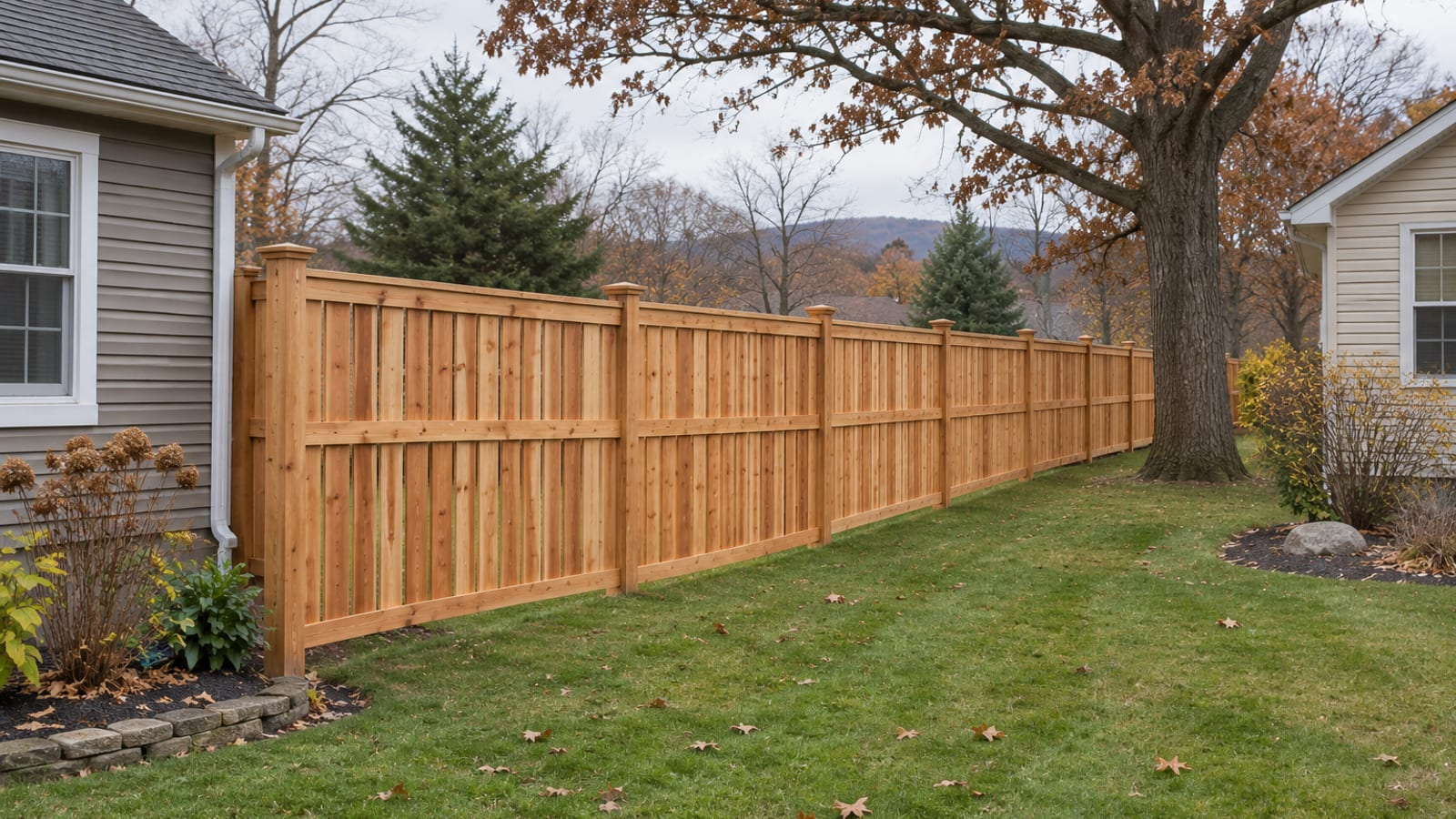
A "good neighbor" fence is the style that solves the facing question without a fight, because both yards get a finished-looking face. That means three local codes, a handful of styles, a narrow state statute and a few steps that keep a shared line friendly.
Key Takeaways
No statewide rule
New York has no state law that makes the finished side face the neighbor, so the town or village code decides.
Three codes confirmed
Putnam Valley, Mount Pleasant and the Village of Warwick each require the good side to face outward in set situations.
Shadowbox solves it
Alternating boards give both yards a finished-looking face, though you still need to meet height, setback and permit rules.
Partition law is narrow
Town Law Article 18 centers on adjoining owners who keep livestock, not on neighbors in a subdivision.
Agreement decides cost
Put the fence location, style, payment and upkeep in writing before the first post goes in.
Survey first
A licensed survey tells you where the line is, and a fence alone does not prove it.
Which Side of the Fence Faces the Neighbor
The good side is the face without the rails and posts showing. On a standard wood privacy fence, one face is flat boards and the other shows the frame. Where a code speaks to this, it tells you which face goes toward the neighbor, the road or the outside of your lot.
Ask your town or village building office, not a neighbor, which rule applies. A fence can be built correctly for the style and still fail inspection because the frame faces the wrong way.
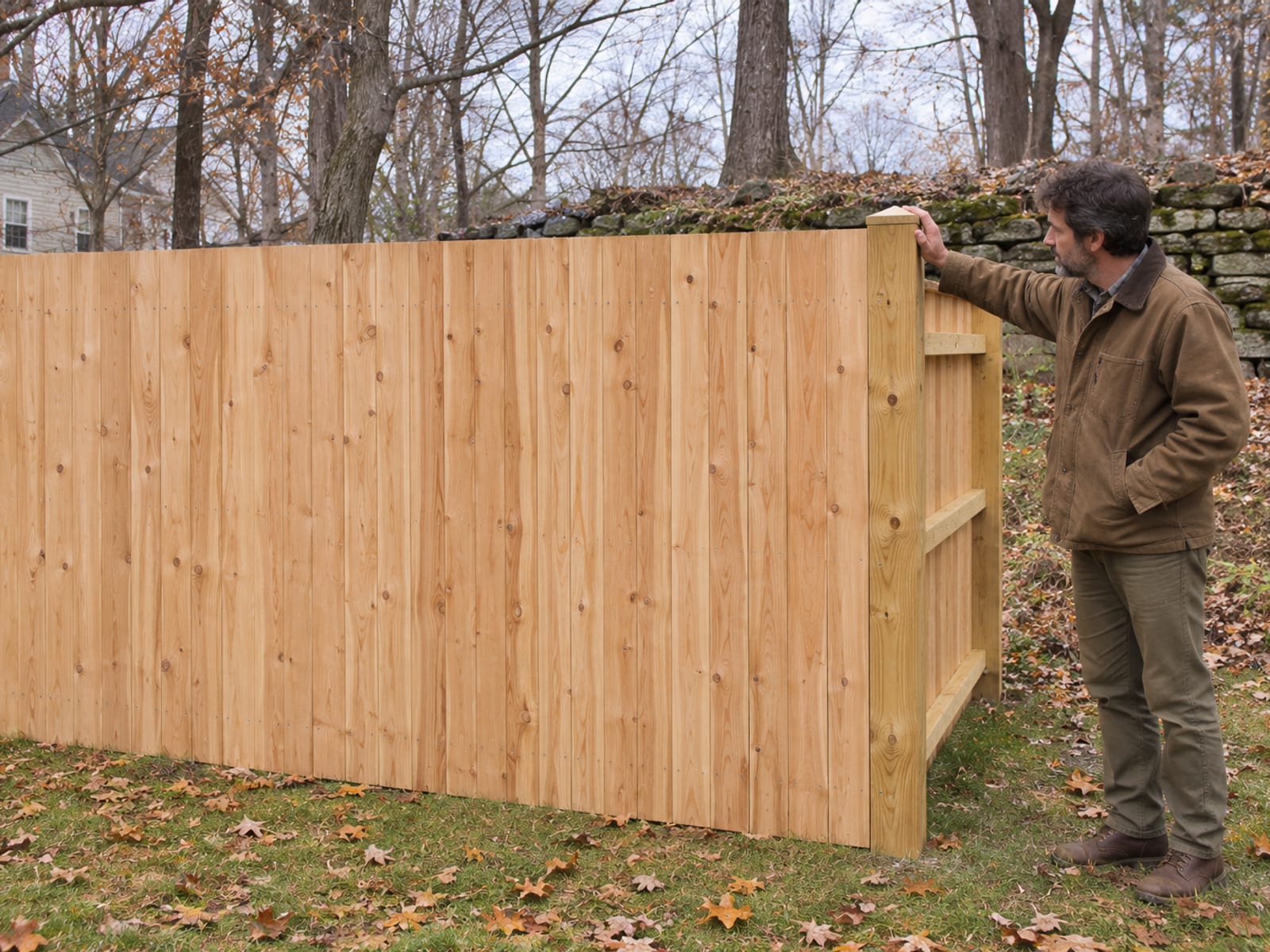
Chain link and ornamental metal look nearly the same from both sides, so facing rarely matters for them. It matters most for wood privacy fences with exposed rails.
What Three Local Codes Say
Three jurisdictions in the six counties have written the rule down. Each one is different, so read the section that covers your lot.
In Putnam Valley, Putnam County, zoning code Article VIII, § 165-13(I)(1) covers fences within five feet of a property line or roadway. The good or finished side must face the adjacent property or roadway, and the same section requires a permit in that situation.
In the Town of Mount Pleasant, Westchester County, zoning code § 218-6 says that when a fence has a good side, it faces the neighboring property and the support side faces the owner or installer. The code also keeps fences within the property lines and sets an eight-inch setback unless the Building Inspector reduces it.
In the Village of Warwick, Orange County, zoning code § 145-52 allows fences up to 3 1/2 feet along a lot line and up to 6 1/2 feet behind the required front yard. Under subsection C, the good side, defined as the side without visible posts, must face the neighboring property.
Finished-side rules in three confirmed jurisdictions
Code section: ---
Which face goes outward: ---
Other limits in the same code: ---
Tap a row to open it.
Other towns and villages in Putnam, Westchester, Dutchess, Orange, Ulster and Rockland may have their own wording or none at all. Check the fence chapter of your municipal code, and for heights see New York fence height limits by municipality, Putnam County fence permits by town and Westchester County fence permits by municipality.
Good Neighbor Fence Styles
A good neighbor fence is any build where neither yard is stuck looking at the structural side. Shadowbox is the best known. Vertical boards alternate from one side of the horizontal rails to the other, so each yard sees a finished-looking face, and the gaps let air through. Master Halco's style sheet labels it as alternating vertical boards with the rails visible behind them. Eastern Wood Fence describes its 210 panel as a board-on-board shadowbox with alternating boards on opposite sides of the rails.
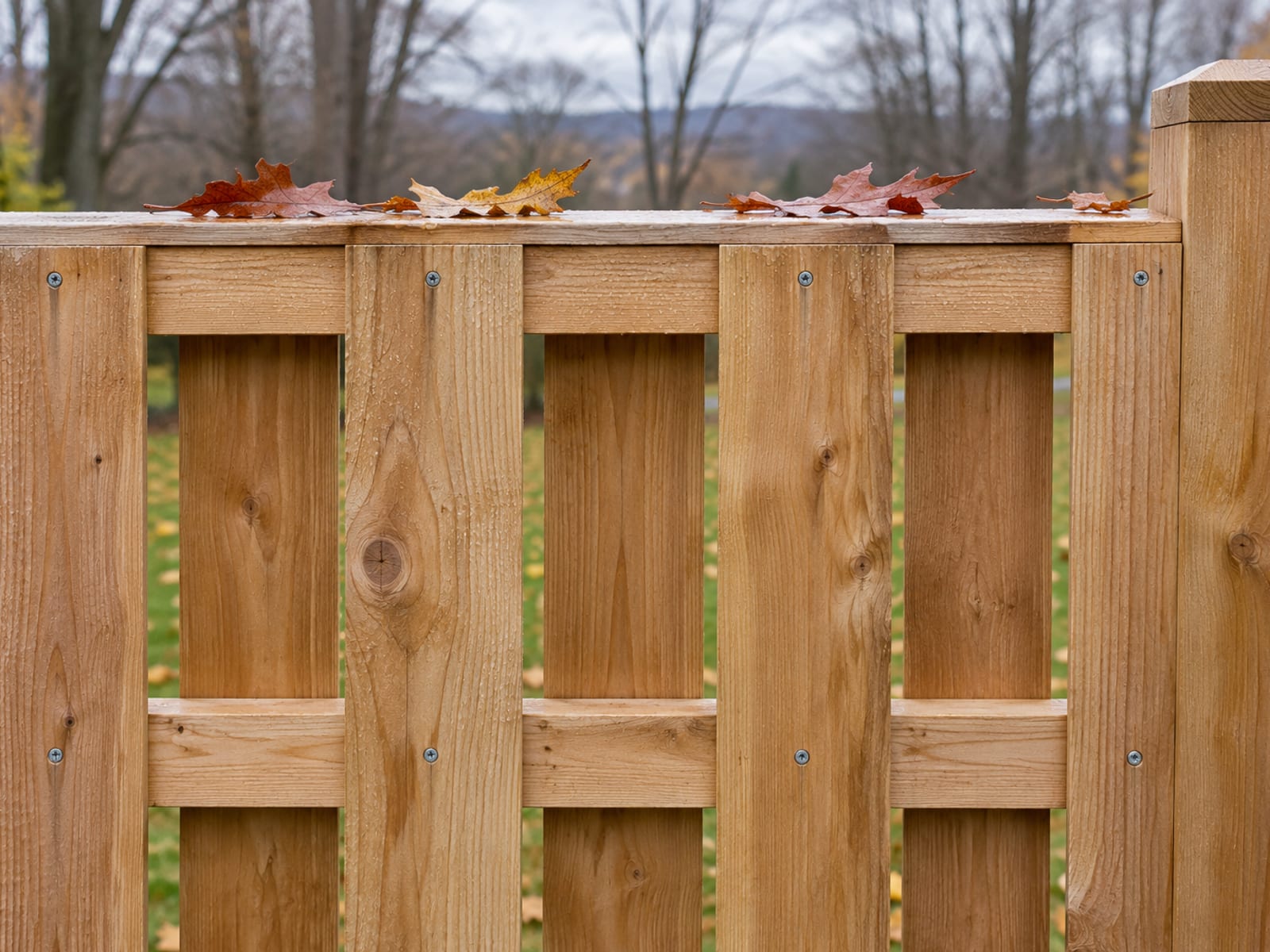
Board-on-board uses overlapping vertical boards that cover the gaps, so it gives more privacy than a spaced shadowbox. A solid privacy fence can also be finished on both faces by adding facing boards to each side, but that takes more material than a one-sided panel.
Fence styles and what each yard sees
How it is built: ---
What the neighbor sees: ---
Tap a row to open it.
A shadowbox does not exempt you from the rest of the code. Height, setback, permit and access rules still apply. For wood options in the six counties, see wood fence installation, and for a low-upkeep alternative, vinyl fencing.
Who Pays for a Shared Fence in New York
Start with what the statute says, because the answer is narrower than most people expect. Town Law § 300 says each owner of adjoining tracts must make and maintain a "just and equitable portion" of the division fence, unless the owners agree to leave the lands open.
Then the section limits itself. An adjoining owner who does not keep animals on the land within five years after the fence is erected or repaired is not obligated under the article. Where the neighbor does keep animals, the owner who built can recover 20% of the other owner's proportionate cost for each year, or part of a year, within that five-year period.
The Department of Taxation and Finance legal opinion SBEA No. 11 reads the contribution rule as aimed at adjoining owners who keep livestock. If both keep livestock, each must contribute to the division fence unless they agree to leave the lands open. Cornell Small Farms gives the same rural picture and notes that local rules vary by municipality.
So, for a privacy fence in a typical subdivision, Article 18 does not automatically make your neighbor pay half. Cost sharing there is normally a matter of agreement, unless a local rule, recorded covenant, easement, court order or livestock obligation says otherwise.
What Fence Viewers Do When Neighbors Disagree
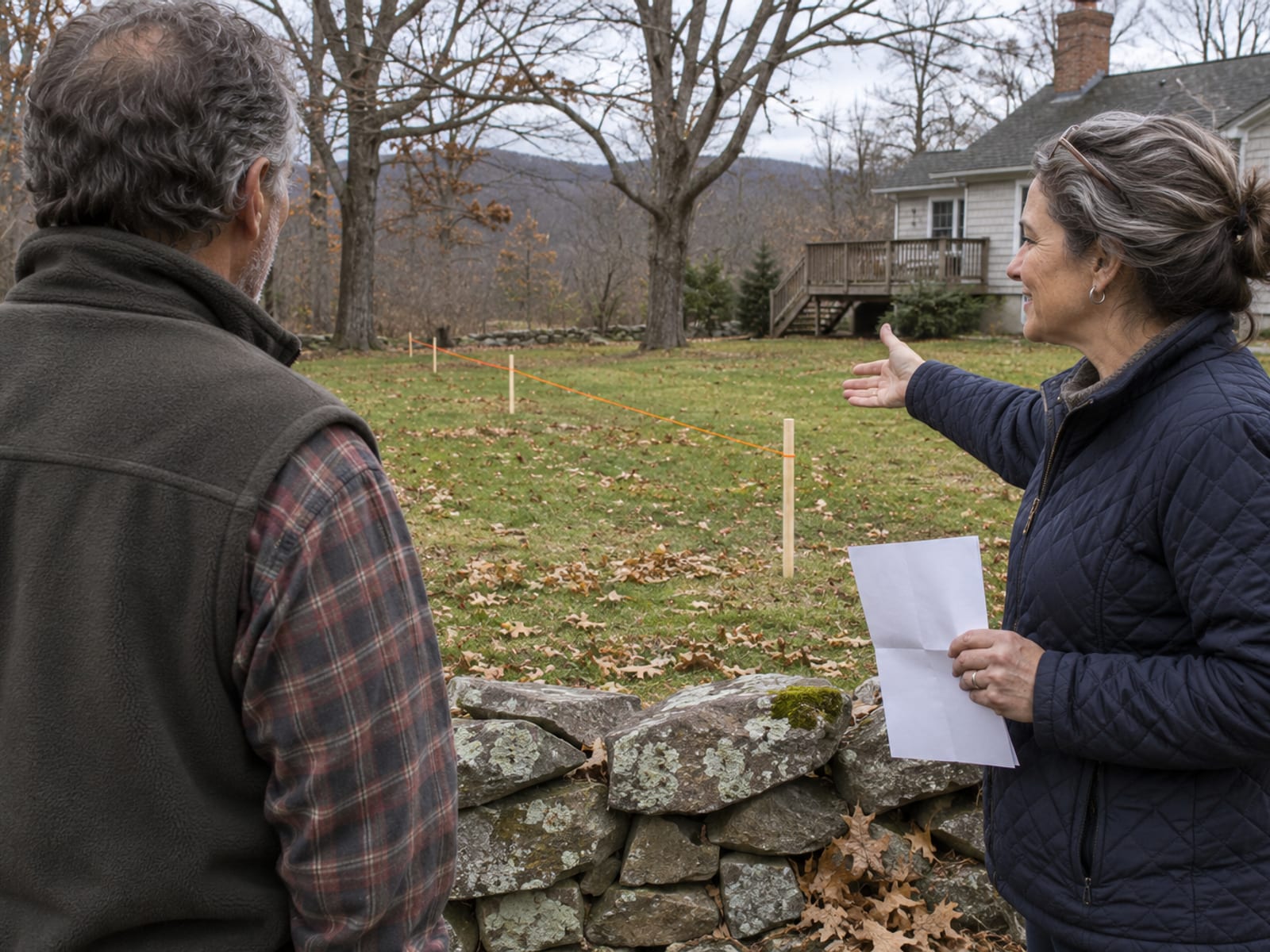
Where Article 18 does apply, it has a procedure. Under Town Law § 303, a dispute over liability, the proportion of the fence or the part each owner must maintain goes to two fence viewers, one chosen by each party. If one party does not choose after eight days' notice, the other may choose both.
The viewers give reasonable notice, inspect the premises, hear the parties and file a written decision with the town clerk. The decision describes the fence and each party's share, and it is final as to the parties and those holding under them. Section 304 lets the viewers examine witnesses and issue subpoenas.
Section 305 covers a required fence that is not built or repaired. After written request and one month of neglect or refusal, the injured party may make or repair the fence and recover the expense and costs from the party who failed to act. Section 325 treats villages and cities as towns for these provisions and has village trustees or city legislative members act as fence viewers.
None of this is legal advice. If a dispute is already open or the fence sits on the boundary, talk to a New York attorney before you build.
Building on Your Side, on the Line, or Next to a Neighbor
A fence built entirely on one owner's land is generally that owner's installation and responsibility, subject to zoning, permits, easements, covenants and access rights. New York State Agriculture and Markets guidance separates an interior fence from a boundary-line fence and recommends confirming the location from survey records, boundary monuments or a licensed survey.
A fence on the line can quietly become the line. In Manieri v. Ebers, 2025 NY Slip Op. 05514, a Greenwood Lake case, the Appellate Division held that a fence could mark the practical boundary where it was clearly demarcated and both owners accepted it for more than ten years. The court relied on surveys and on evidence that the owners and their predecessors understood the fence to mark the line.
Placement can also cost you the fence. In Matter of Vigliotti v. Nia, 2025 NY Slip Op. 02592, a court ordered a fence removed because it blocked a neighbor's access to a crawl space, a water line and a gas line, even though it stood on the installer's own property.
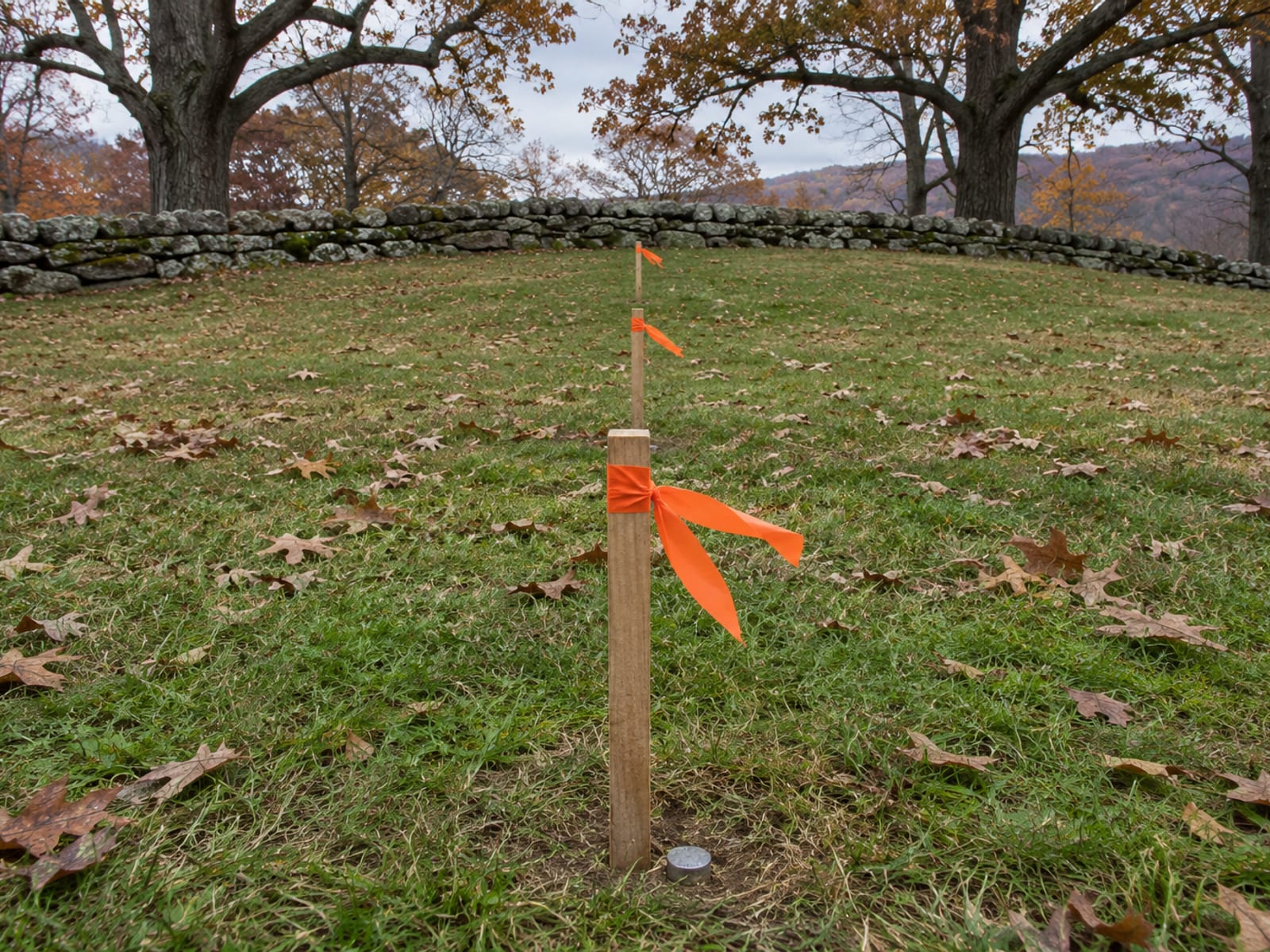
If you want to attach a gate, planter, light or screen to a neighbor's fence, get the fence owner's written permission first. For setbacks and survey basics, see fence property lines and setbacks in New York.
Steps That Keep a Shared Line Friendly
Do these in order, and most disputes never start.
1. Get a current survey, or find the monuments on an existing one. Agriculture and Markets guidance recommends a licensed surveyor or engineer for boundary-line fences. 2. Read your town or village fence code for facing, height, setback and permit rules. 3. Check recorded easements, subdivision covenants, HOA rules and utility access before setting posts. 4. Talk to the neighbor before work starts, and write down the surveyed line, the fence location, style, height, which face points where, gate locations, payment, upkeep, repairs, access for work and what happens if either house sells. 5. If a division-fence dispute does exist, give written notice before invoking the fence viewers, because § 303 builds in eight days' notice.
Do not treat an old fence as proof of the boundary. New York courts accept a fence as the practical line only with a clear boundary and long mutual acceptance, so a survey and a signed note protect both of you.
Frequently Asked Questions
Does the good side of my fence have to face my neighbor in New York?
Not under state law. Local codes decide. Putnam Valley, Mount Pleasant and the Village of Warwick require it in the situations described above, and other towns and villages may differ or say nothing. Call your building office before you order materials.
Does my neighbor have to pay half of my fence?
Usually not for a suburban privacy fence. Town Law § 300 ties cost sharing to adjoining owners who keep animals, so ordinary neighbors normally settle it by agreement. A local rule, covenant or easement can change that, so check yours and ask an attorney if you are unsure.
What is the difference between shadowbox and board-on-board?
Shadowbox alternates vertical boards on opposite sides of the rails with gaps between them, so both yards get a finished-looking face and air passes through. Board-on-board overlaps boards to cover the gaps, which gives more privacy.
Can I build my fence right on the property line?
Check your code first. Mount Pleasant sets an eight-inch setback unless the Building Inspector reduces it, and Warwick allows 3 1/2 feet along a lot line. A licensed survey shows where the line is, and a written agreement with the neighbor covers the rest.
Can I attach something to my neighbor's fence?
Get the fence owner's written permission first. A written agreement is the safe route, along with a check of easements, covenants and HOA rules.
Who do I ask about my specific lot?
Start with your town or village building department for facing, height and permits, a licensed surveyor for the line, and a New York attorney for cost-sharing questions or an open dispute.
Check yourself
1. What decides which side of a fence must face the neighbor in New York?
2. Under Mount Pleasant zoning code § 218-6, which side of a fence with a good side faces the neighboring property?
3. What does Town Law § 300 center on?
4. How many days' notice does Town Law § 303 give before the other party may choose both fence viewers?
5. In Matter of Vigliotti v. Nia, why did a court order a fence removed?
A good neighbor fence is a style choice plus a few paperwork steps: pick a design that looks finished from both yards, confirm the facing rule in your town code, and agree on location and cost in writing after a survey. The state's partition fence law will rarely do that work for you.
Portillo Fences and Gates builds fences and gates in Putnam, Westchester, Dutchess, Orange, Ulster and Rockland counties. To plan a shared-line fence, see our wood fencing and vinyl fencing pages, then use our contact page or call (845) 282-3336.