

November 9, 2026
- gate repair
- gate remotes
- automatic gates
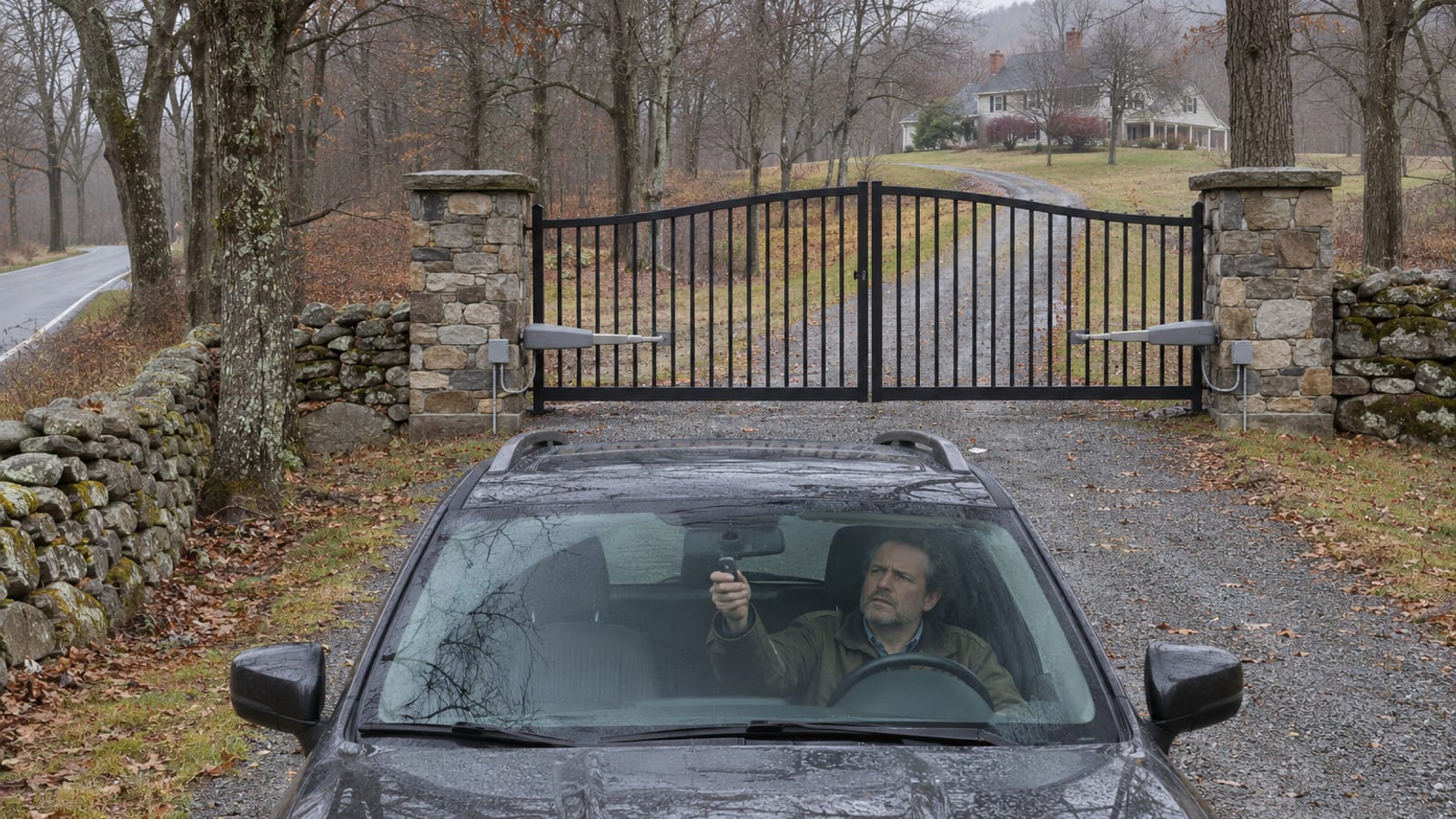
You press the button and the gate does nothing, or it only opens when you are parked at the post. Start with the battery, then walk up to the operator and try again. If the remote works at arm's length but not from the driveway, the problem is usually the receiver, its antenna or interference, not the remote.
That one test splits most remote problems into two piles. A dead remote is a five-minute fix at home. A weak receiver or a wrong code family needs a different kind of fix, and buying a new remote for it wastes money.
Below is a test order you can run in the yard, how reprogramming works on FAAC, LiftMaster and Viking Access equipment, what "universal" really covers, and what Hudson Valley area contractors publish for remote and receiver work.
Key Takeaways
Battery first
Replace the remote battery with the type the remote specifies, then confirm the remote's light responds before you test anything else.
Close range matters
A remote that works only near the operator points to the antenna, the receiver or interference, not to a dead remote.
Wired control test
If a keypad or wired control opens the gate, the motor is probably fine and the fault sits in the radio path.
Match the code family
A remote must match the receiver's frequency and its coding system, and a matching frequency alone does not make it compatible.
Brand steps differ
FAAC, LiftMaster and Viking each have their own learning procedure, so never apply one brand's steps to another.
Get an itemized quote
Published prices swing from $25 to $380 depending on whether they cover programming only or a receiver and new remotes.
Start With the Battery and a Close-Range Test
Replace the remote battery with the type printed on the remote or in its manual, then watch the remote's indicator light as you press a button. A Viking FA-XT4-RC remote, for example, takes an alkaline 23A battery, according to Viking's FA-XT4-RC installation guide. A remote with a flat battery is the cheapest problem on this page, so rule it out first.
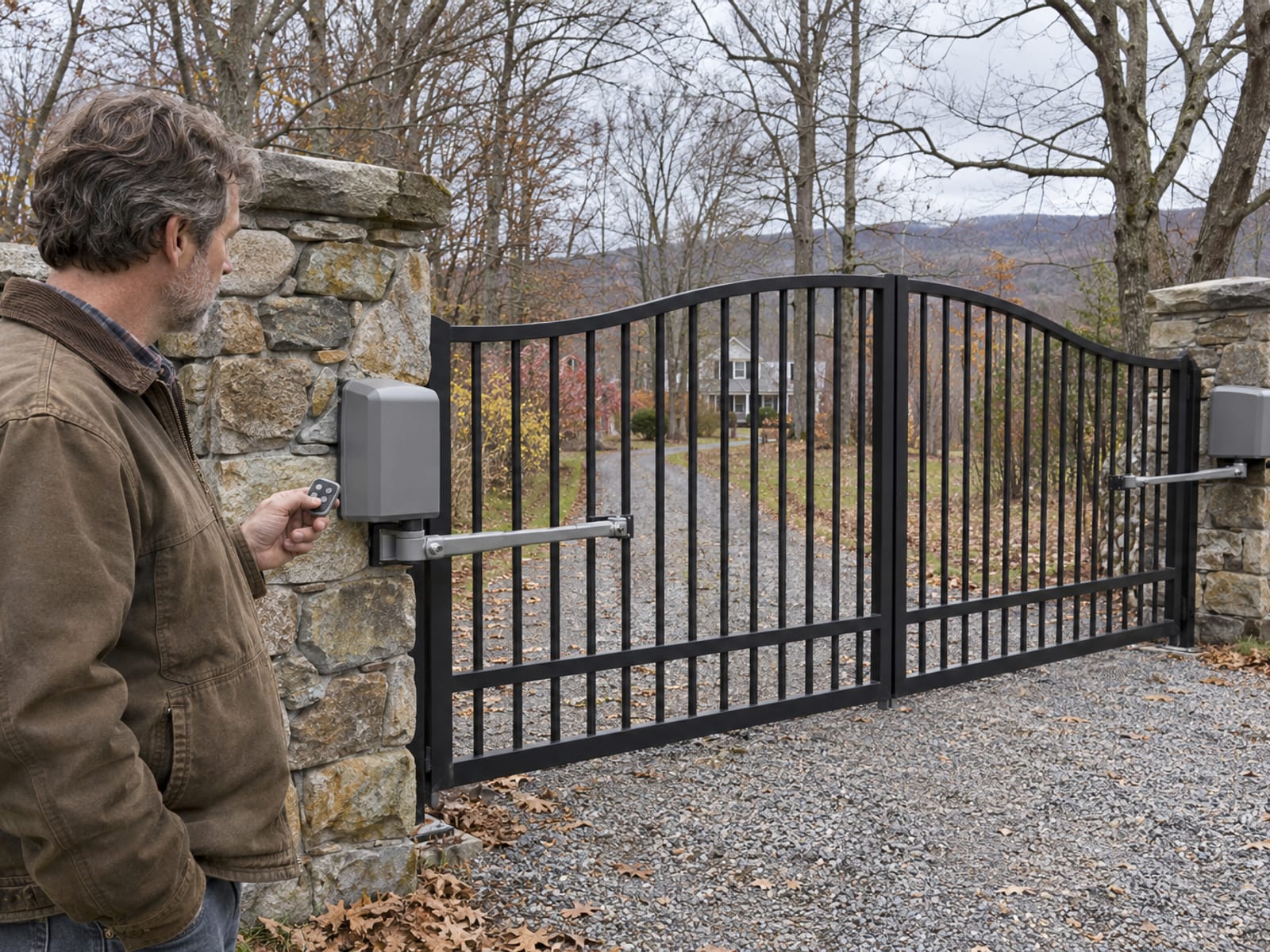
Next, walk to the operator and press the button from a few feet away. This is the most useful test you can run. LiftMaster's RSL12UL installation manual lists poor radio reception, a failed transmitter, the operator antenna and the antenna wire as the causes of wireless commands that do not work. It tells the technician to watch the XMITTER light, relearn the transmitter and try the remote close to the operator.
If the gate responds up close and ignores you at the street, the remote is working. Something between the remote and the receiver is weakening the signal, and the next section covers what to look for.
Tell a Remote Problem From a Receiver Problem
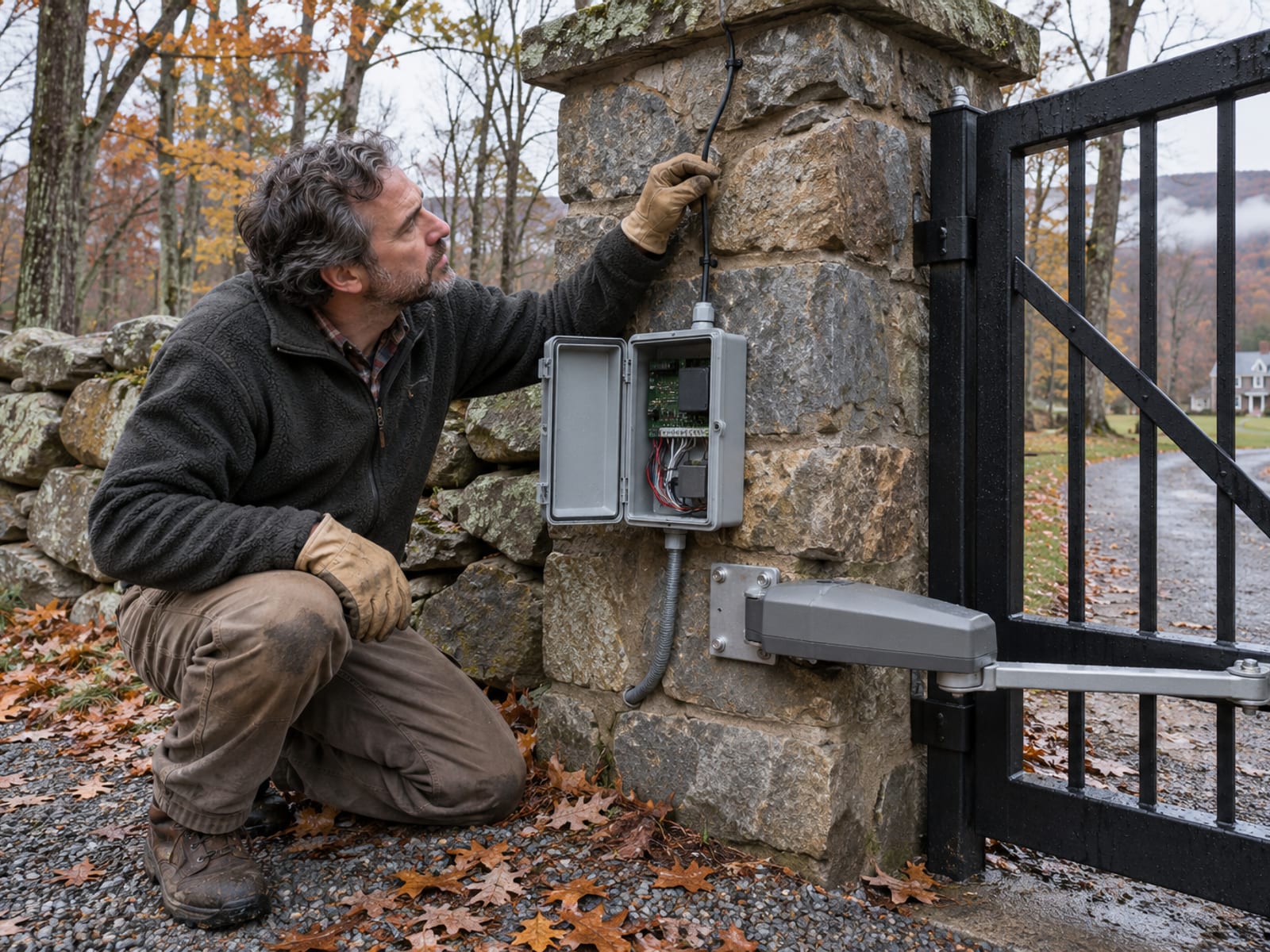
Use a second control to sort the fault. Try the wired keypad, a wall button or the manual operator control. If any of those opens the gate, the motor and main control board are probably running, and the fault is in the transmitter, the programming, the receiver or the antenna. If you have a second remote that is known to work with the gate, try it too. When several remotes fail, the receiver or its antenna is a better suspect than every remote dying at once.
The pattern of failure tells you where to look. One remote fails while another works: suspect that remote's battery, a worn button or lost programming. Several remotes fail at driveway distance but work near the operator: suspect antenna routing, metal shielding around the receiver, grounding or interference. Several remotes fail even beside the operator: suspect receiver power, receiver memory, a code mismatch or a failed radio section on the control board.
Interference is worth ruling out before you pay anyone. LiftMaster's 8500 manual warns that some LED bulbs can reduce remote range and performance. Switch off nearby LED lighting, transformers and Wi-Fi equipment for a minute and retest. If range comes back, the gate has a neighbor in the radio band, and moving the antenna is cheaper than replacing the receiver.
Grounding matters too. LiftMaster's CSW200UL manual says poor grounding reduces remote range and makes the operator more open to lightning and surge damage. It also says an external receiver should use shielded wire and be mounted away from the operator to avoid interference.
Why an Older Remote Stops Working With a Newer Receiver
When a receiver is replaced, old remotes often stop working, and the reason is rarely a defect. A replacement receiver may use a different frequency, a different code family, a different encryption method or a different enrollment process. A remote has to match all of them.
FAAC uses several radio families. Its 433 MHz transmitter page lists the XT4 433 RC and XT 433 SLH LR at 433.92 MHz, and the FAAC Omni system sheet lists coding families SLH, SLHP, SL, DS and RC. The FAAC receiver decides which one it accepts. LiftMaster gate operators with a built-in Security+ 2.0 receiver use an encrypted rolling code, and the SL3000UL product guide specifies a tri-band receiver at 310, 315 and 390 MHz. Viking's Konnect page describes a 433 MHz rolling code that changes each time the transmitter is used.
Frequencies and code systems named in the makers' documents
Frequency: ---
Code system: ---
Tap a row to open it.
The practical result: a 433.92 MHz FAAC or Viking transmitter is not built for a 315 MHz LiftMaster receiver, so do not expect one to learn into the other. Even when two products share a frequency, a fixed-code, dip-switch, Security+ or FAAC SLH remote can still be the wrong protocol. Security+ 2.0 is an encrypted system, not just a frequency, so the receiver and transmitter have to share the same logic.
Reprogramming a Remote: FAAC, LiftMaster and Viking Differ
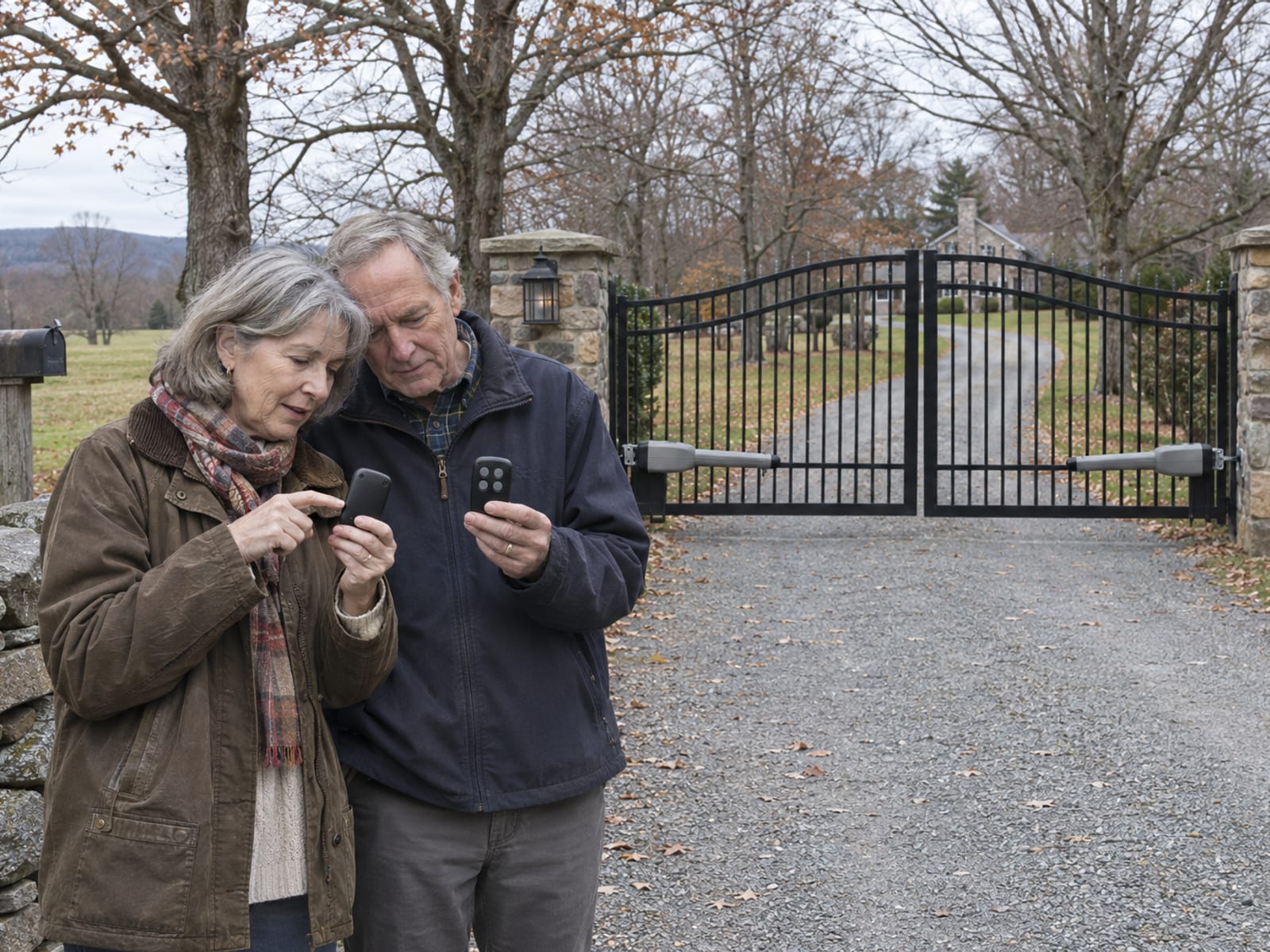
Programming steps belong to the exact receiver and control board, not to the brand's whole product line. Use your operator's own manual. For LiftMaster steps beyond the basics below, see our LiftMaster gate opener guide; for Mighty Mule and Ghost Controls equipment, see the Mighty Mule gate opener problems and Ghost Controls repair posts.
On a LiftMaster RSW12UL swing operator, the installation manual (section "Programming") offers three enrollment choices. You press and release LEARN, then press the remote button to use it as open, close and stop on one button. You can also press OPEN first for open only, or choose a function for each separate button. The operator leaves learning mode on its own after a successful enrollment. Under "Erase All Codes," you press and release LEARN, press and hold it again until the green XMITTER light flashes (about six seconds), then release; every remote code is gone. That operator stores up to 50 Security+ 2.0 remotes or KPW250 keypads.
FAAC's XT4 433 RC remote adds a transmitter without opening the control board. Per the FAAC 433 MHz transmitter page (section "XT4 433 RC Remote Programming"), you press P1 and P2 together on a stored transmitter for two seconds, release, and press the stored button. The steps repeat for each button. The XT 433 SLH LR uses a different method, documented in the FAAC XT 433 SLH LR manual, where the old and new transmitters are held face to face.
Viking's FA-XT4-RC guide (section "Enable learning on the receiver") has you press SW1 for one second until DL1 flashes, then within five seconds hold the new transmitter button until DL1 lights steadily for one second. The receiver stays in learning mode for 10 seconds. FAAC and Viking pages give no single erase-all procedure; erasing depends on the receiver or control board, so find that board's manual, or have a technician do it.
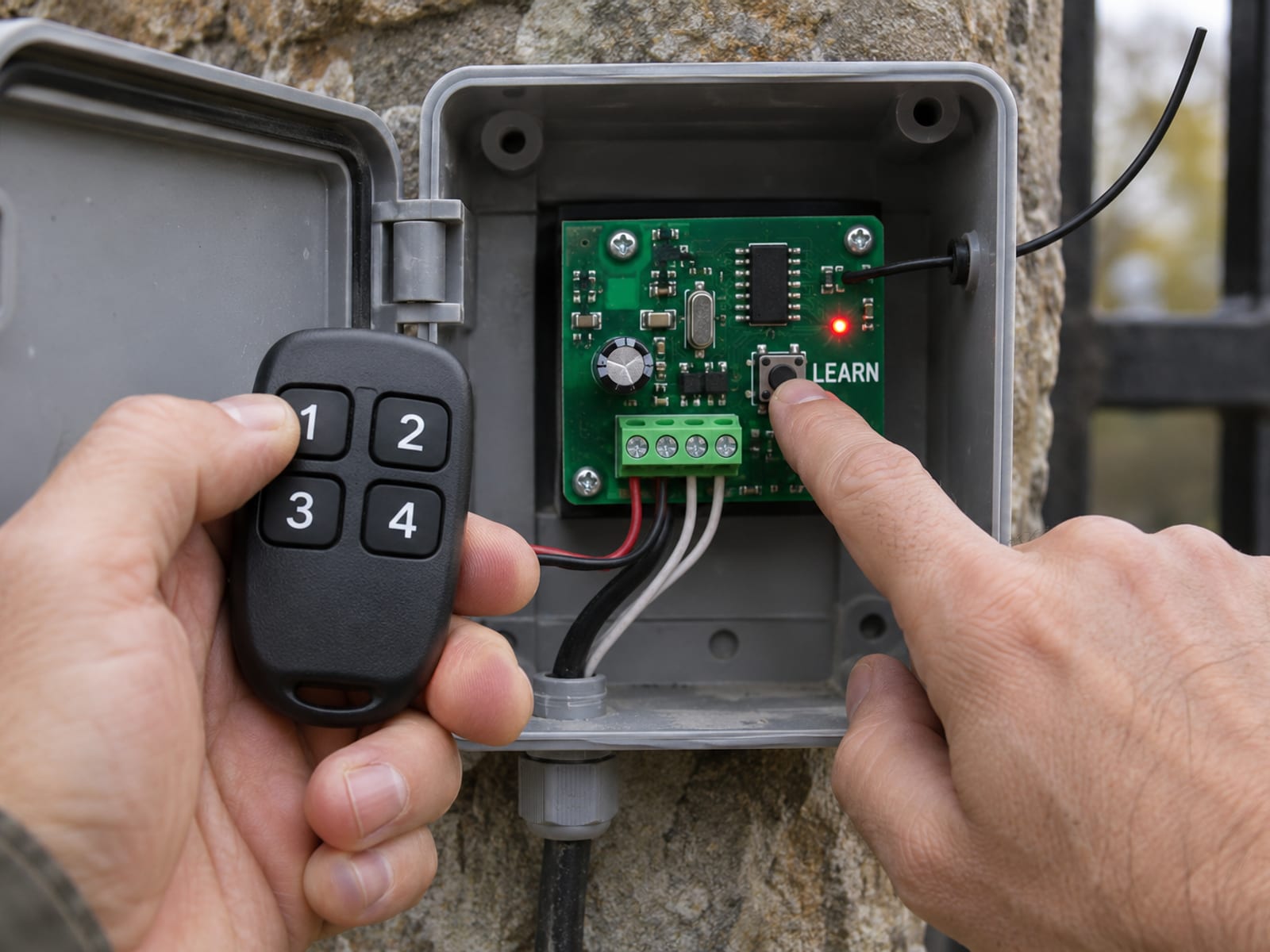
Universal Remotes and Replacement Receivers
"Universal" means compatible with a published list, not with every gate opener. LiftMaster's L992U product page lists Security+ 3.0, Security+ 2.0 at 315 and 390 MHz, older Security+ at 315 and 390 MHz, Linear MegaCode at 318 MHz, Stanley Secure Code at 310 MHz, Wayne-Dalton and Ryobi at 372.5 MHz, Guardian at 303 MHz and Sommer at 310 MHz. It controls up to two gates or garage doors and needs a compatible learn-button or code family. Chamberlain's supported universal remotes page shows the supported list varies by remote model.
Before you buy any universal remote, check three things:
- The remote supports your receiver's frequency.
- It supports the receiver's coding system, not just the carrier frequency.
- Your exact opener and receiver model numbers appear on the maker's current compatibility chart.
Rolling-code systems need enrollment at the receiver, so a remote that only looks the same or shares a frequency will not work. Dip-switch and fixed-code systems may need a remote that matches the exact switch count.
When the original receiver is obsolete, a universal receiver can be the better route than hunting remotes. LiftMaster's 850LM and 860LM guide describes a retrofit receiver for LiftMaster Security+ 2.0 remotes at 310, 315 and 390 MHz. It has relay outputs for an existing operator, holds up to 50 remotes on channel 1 and 20 on channels 2 and 3, and has 15-foot and 25-foot antenna extension kits for moving the antenna away from metal. It is not compatible with myQ-enabled garage door openers.
An external receiver has to match the remote's protocol, give the right relay output, accept the operator's control voltage, sit in a weatherproof enclosure and leave the safety devices and entrapment protection working. That wiring is a job for a technician; see UL 325 entrapment protection for why those safety devices matter.
What Remote and Receiver Repairs Cost
Prices for this work come from a handful of published price lists, and no one schedule covers the Hudson Valley. Each figure below is quoted with its own scope, because some prices cover programming only and others include a receiver and new remotes.
Published prices for remote and receiver work in New York
Service: ---
Price: ---
Tap a row to open it.
Prices come from Scarsdale Security Systems' 2024 maintenance plans guide and listings for Scarsdale, Irvington and White Plains. Parts are extra on the Scarsdale Security Systems schedule. These are what other companies publish, not what Portillo charges.
The wide spread has a simple cause. A $25 remote service is a programming visit. A $380 job usually includes a receiver and new remotes. Ask for an estimate that lists diagnosis, programming, antenna work, receiver parts, weatherproofing, labor and any return visit, so you can compare like with like. A wired keypad or a smartphone entry system can also replace the remote problem for good; the gate keypads and phone entry post covers those options, and why your automatic gate stopped working covers failures where the motor itself will not run.
Frequently Asked Questions
Why does my gate remote only work when I am close to the gate?
A weak signal at distance usually points to the receiver, its antenna or interference rather than the remote. LiftMaster's manuals tell technicians to inspect the antenna and its wire, and they warn that LED bulbs and poor grounding can cut range. Try the remote near the operator, switch off nearby LED lights and check the antenna wire for damage.
Can I use a universal remote on my gate opener?
Sometimes. A universal remote works only if its published compatibility list includes your receiver's frequency and code family. A garage-door remote may not work on a gate receiver at all, so match your opener and receiver model numbers against the maker's current chart before you order.
How do I erase old remotes from my gate opener?
On a LiftMaster RSW12UL, press and release LEARN, then press and hold it until the green XMITTER light flashes, about six seconds. FAAC and Viking erase steps depend on the receiver or control board, so use that board's manual or ask a technician.
Why did my remote stop working after the receiver was replaced?
A new receiver may use another frequency, code family or enrollment process. A 433.92 MHz FAAC or Viking remote is not made for a 315 MHz LiftMaster receiver, so old remotes may need re-enrolling or replacing with ones that match the new receiver.
Can I program the remote myself?
On many operators you can, using the exact manual for your receiver. Each brand's steps differ, so a LiftMaster LEARN-button routine should not be tried on a FAAC or Viking receiver.
How much does it cost to fix a gate remote in the Hudson Valley?
Published Westchester prices run from $25 for a programming service to $380 for receiver replacement with new remotes, depending on scope. Ask for an itemized estimate.
Check yourself
1. Your remote opens the gate only when you stand near the operator. What does that most likely point to?
2. What does a working wired keypad tell you when the remotes fail?
3. What must a universal remote match besides frequency?
4. On the LiftMaster RSW12UL, how long do you hold LEARN to erase all remote codes?
5. Can a 433.92 MHz FAAC or Viking remote work with a 315 MHz LiftMaster receiver?
Work through the battery, the close-range test, a wired control and a second remote, and you will know whether you need a new battery, a reprogrammed remote or a receiver visit. Match any replacement to your receiver's frequency and code family, and get a written estimate that separates the receiver from the labor.
If you want a technician to look at it, Portillo Fences and Gates repairs existing automatic gates of any brand through our gate repair service, and our smart entry options replace the remote altogether, serving Putnam, Westchester, Dutchess, Orange, Ulster and Rockland counties. Use our contact page or call (845) 282-3336.