

September 12, 2026
- Pool Fencing
- Pool Barrier Code
- New York Code
A residential pool in New York needs a permanent barrier at least 48 inches high, with no more than 2 inches of clearance between the ground and the bottom of the barrier, and gates that close and latch on their own. Those figures come from Section R328 of the 2025 Residential Code of New York State, which has applied to permit applications in Putnam, Westchester, Dutchess, Orange, Ulster and Rockland Counties since December 31, 2025.
The rest of the code is detail, and the details are where pool fences fail.
Key Takeaways
Height
the top of the barrier at least 48 inches above grade, measured on the side facing away from the pool
Clearance
no more than 2 inches between grade and the bottom of the barrier
Gates
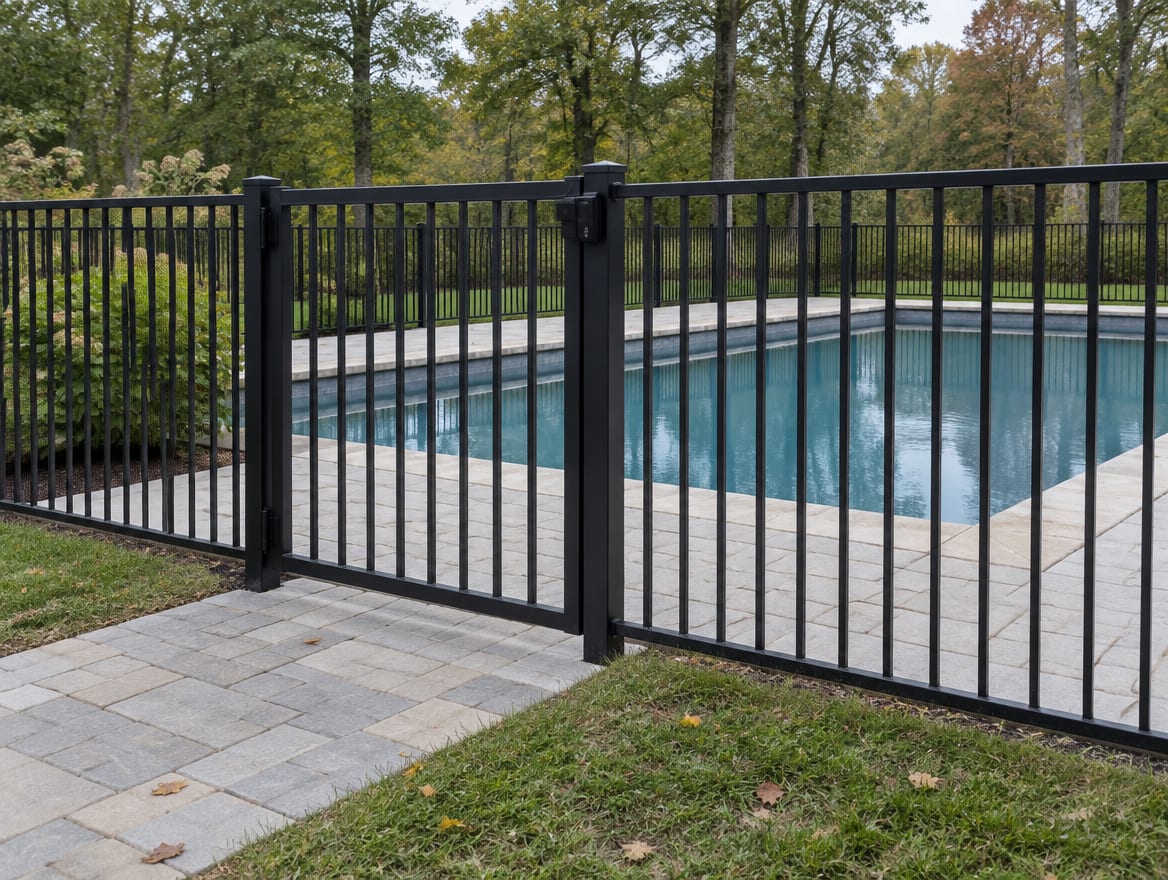
self-closing, self-latching, opening outward, with a latch release at least 54 inches high if reachable from outside
Pool alarm
required for a pool or spa installed or substantially modified after December 14, 2006, built to ASTM F2208
What counts as a pool
any structure that holds water more than 24 inches deep at any point, including hot tubs, spas and wading pools
Which code applies
The 2025 Residential Code of New York State took effect on December 31, 2025, and building permit applications from that date must comply with the 2025 Uniform Code. The pool provisions sit in Section R328, "Swimming Pools, Spas and Hot Tubs," and the barrier rules in Sections R328.4 through R328.4.4. The 2020 code, in force from May 12, 2020, had them in Section R326. The 2025 edition moved them, and R326 in the current code covers habitable attics.
Section R328.1.1 says the requirements are in addition to, and not a replacement for, other federal, state and local laws. Your town can add to them, and several do.
What counts as a pool
Section R328.2 defines a swimming pool as any structure, basin, chamber or tank intended for swimming, diving, recreational bathing or wading that holds, or can hold, water more than 24 inches deep at any point. It covers in-ground, above-ground, on-ground and indoor pools, hot tubs, spas and wading pools. Section R328.4.2 requires a pool, spa or hot tub to be completely enclosed by a permanent barrier, with an exception for a hot tub or spa that has an ASTM F1346 safety cover. During construction, a temporary barrier has the same 48-inch minimum.
Height and clearance
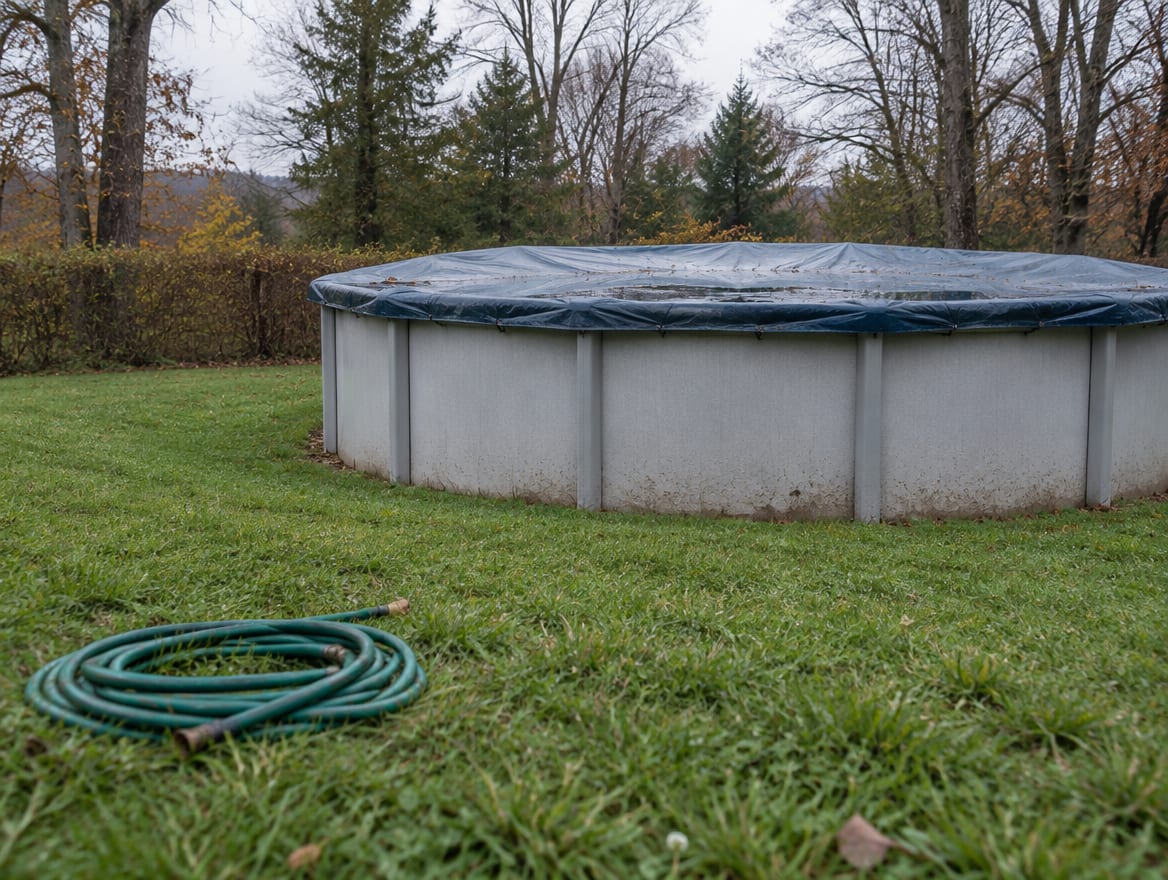
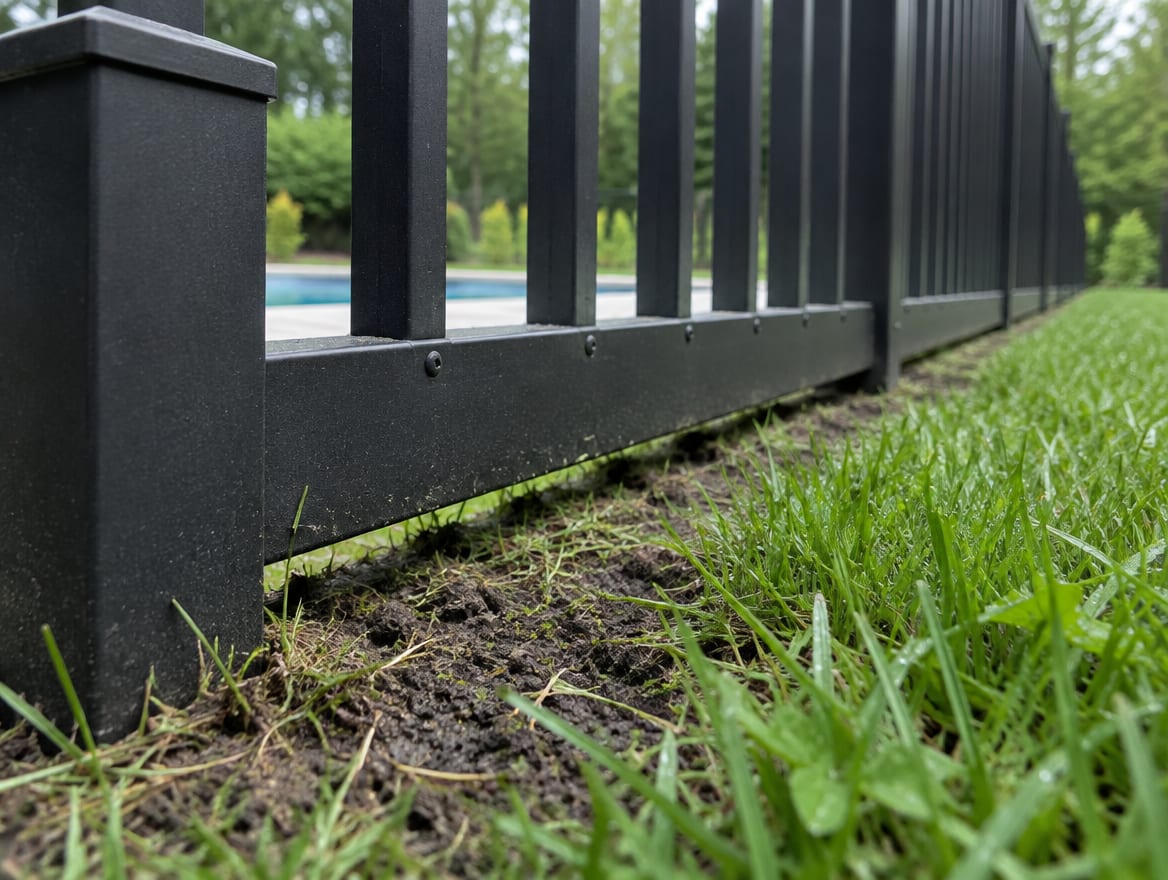
The top of the barrier must be at least 48 inches above grade, and the vertical clearance between grade and the bottom of the barrier must be no more than 2 inches. Both are measured on the side of the barrier that faces away from the pool (Section R328.4.2.1). A 2-inch gap is small enough that mulch settling or a dip in the lawn can put a fence out of compliance, so check clearance at the lowest point along the line.
Openings
The maximum opening depends on how the barrier is built:
Maximum opening: Vertical members no more than 1¾ inches apart; decorative cutouts 1¾ inches
Section: R328.4.2.3
Tap a row to open it.
Chain link reads two ways. Section R328.4.2.5 states the maximum chain-link mesh as "a 1¾ inch (57 mm) square," unless vertical slats reduce the openings to no more than 1¾ inches. Other RCNYS opening provisions state 1¾ inches (44 mm) as a width, and the International Swimming Pool and Spa Code reading commonly tied to chain link is 1¾ inches. These documents are not written identically, so ask your building department which figure it enforces before you buy mesh. A mesh of 1¾ inches or smaller meets either reading.
Gates
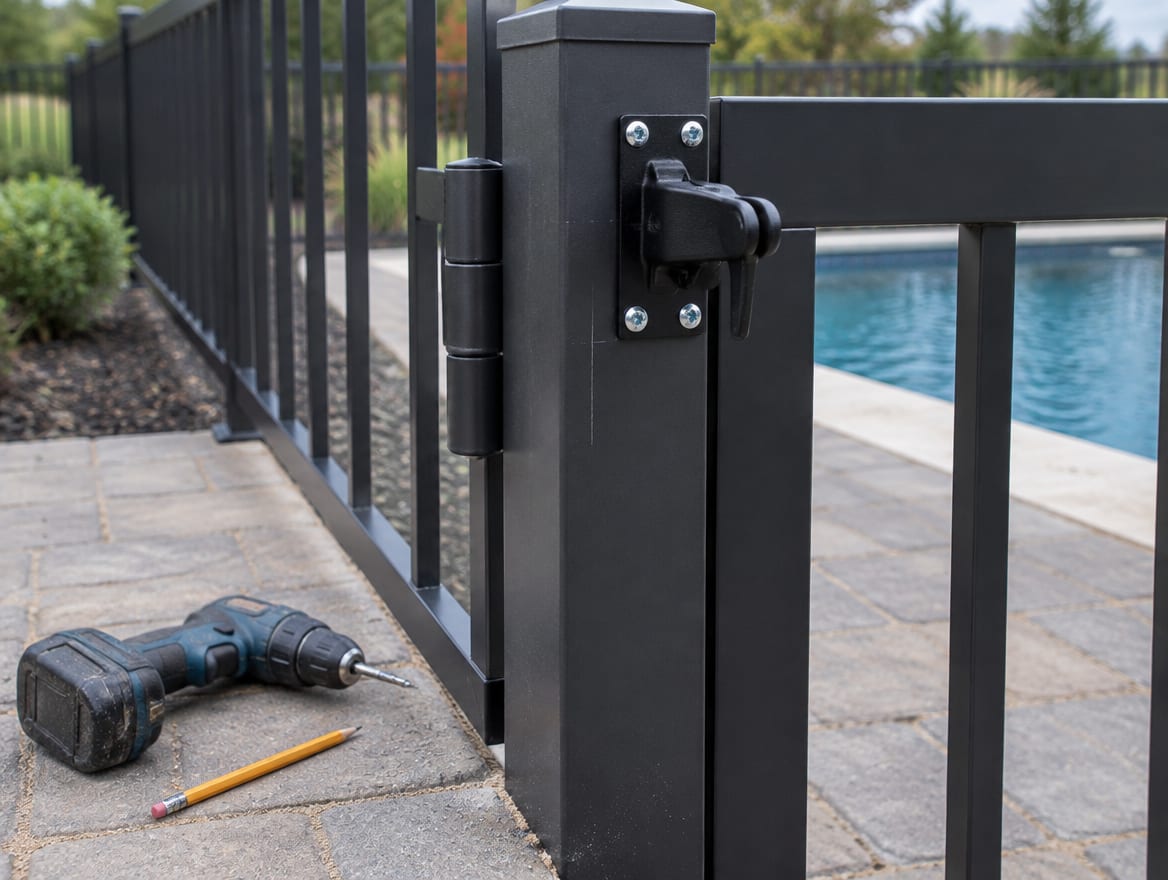
Section R328.4.2.7 requires gates to meet the height, clearance and opening rules above and the three gate rules that follow:
- Self-closing and outward-opening (R328.4.2.7.1): all gates self-closing, and a pedestrian access gate opens outward, away from the pool
- Self-latching (R328.4.2.7.2): all gates self-latching, with the release at least 54 inches above the finished floor or ground if it is accessed from outside the barrier and is not self-locking. For a self-locking mechanism, such as a key, electronic opener or integral combination lock, the control and the release can be no higher than 54 inches. At a private pool where the only release is on the pool side, the release must be at least 3 inches below the top of the gate.
- Locked when not in use (R328.4.2.7.3): securely locked when the pool is not in use or supervised
House walls as part of the barrier
Section R328.4.2.8 lets a wall of the dwelling serve as part of the barrier if the wall meets the barrier requirements in R328.4.2.1 through R328.4.2.6 and satisfies the door, window or other approved-protection conditions in that section. Where a door forming part of the barrier has an alarm, the deactivation switch must be at least 54 inches above the threshold, or 48 inches in an Accessible, Type A or Type B dwelling unit (R328.4.2.8.1). The wall of a multiple dwelling can serve only if there is no direct access from the dwelling to the pool (R328.4.2.8.2). Whether your house wall can count is a local code official's call, so ask before you plan the fence around it. Our pool fencing page shows barrier options that leave the house wall out.
Alarms
The code requires an alarm on the pool itself, not only on the doors. Section R328.6 requires an approved pool alarm on any pool or spa installed, constructed or substantially modified after December 14, 2006, built to ASTM F2208 and installed and maintained to the manufacturer's instructions. The alarm must detect entry anywhere on the pool surface, using more than one alarm if needed, and must sound poolside and inside the dwelling where monitored. A hot tub or spa with an ASTM F1346 safety cover is excepted, and so is a pool with an ASTM F1346 automatic power safety cover.
Doors that form part of a house-wall barrier carry their own alarm: audible when opened, active within 7 seconds, sounding for at least 30 seconds, heard throughout the house, automatically resetting, with temporary deactivation limited to 15 seconds for one opening.
What the six counties add
- Westchester County: local zoning Section 60-423.82 says swimming pool enclosures must comply with the New York State Uniform Code, and adds no separate barrier figure.
- Town of Ossining: a building permit is required for pools more than 24 inches deep, and the town publishes the state barrier figures along with local permit, setback and temporary-enclosure instructions.
- Putnam Valley: fences enclosing swimming pools must meet the state code and be at least 4 feet high.
- Dutchess County: the Sanitary Code, Sections 6.2 through 6.4, requires health-plan approval and a county permit for public and regulated pools, and Section 22.3(B) requires pools at child-care facilities to be properly fenced.
- Town of Pawling, Dutchess County: a temporary fence during construction, no filling the pool until the required barrier is up, and a building permit before an in-ground pool is built.
- Town of Ulster, Ulster County: its building department publishes a Swimming Pool Barrier Code and requires compliance with town requirements and state codes.
For any other municipality, confirm the local building department's and zoning office's requirements before you finalize the barrier design.
Existing pools and replacement fences
For a pool built under an earlier code, 2025 Property Maintenance Code Section 303.2 treats a permanent barrier installed and maintained to the requirements in effect when the pool was installed as compliant. A replacement fence does not automatically mean the whole pool must be brought up to every current new-construction provision. The code history, the scope of the permitted work and the local code official's decision control, so ask the official before you remove an old barrier.
Check yourself
1. What is the maximum gap between the ground and the bottom of a pool barrier in New York?
2. How high must the top of a pool barrier be above grade?
3. Section R328.6 requires a pool alarm built to which standard?
4. A structure counts as a pool once it can hold water deeper than what?
Frequently Asked Questions
Q: How tall does a pool fence have to be in New York? A: At least 48 inches above grade, measured on the side facing away from the pool, under Section R328.4.2.1.
Q: How big can the gap under the fence be? A: No more than 2 inches between grade and the bottom of the barrier.
Q: Do all pool gates have to be self-closing? A: Yes, all gates are self-closing and self-latching, and a pedestrian gate opens outward, away from the pool.
Q: Do I need a fence around a hot tub? A: A hot tub or spa needs a permanent barrier unless it has an ASTM F1346 safety cover. Both are covered by the 24-inch depth definition.
Q: Does my pool need an alarm? A: If it was installed, built or substantially modified after December 14, 2006, yes, built to ASTM F2208, unless it has a qualifying safety cover.
Q: Can chain link be a pool barrier? A: Section R328.4.2.5 addresses it with a mesh limit that reads two ways. Ask your building department which figure it enforces, and use 1¾ inches or smaller to be safe on both.
A pool barrier is measured, not estimated. Write down the height, the clearance, the opening size, the gate swing and the latch height, and give that list to the contractor and to your building department before work begins.
At Portillo Fences and Gates, we install and repair fencing across Putnam, Westchester, Dutchess, Orange, Ulster and Rockland Counties, including pool fencing, aluminum fencing, gate installation and vinyl fencing. We build pool barriers to the 2025 code figures and confirm your town's additions first. Contact us for a free estimate, or call (845) 282-3336.