

October 19, 2026
- wood fencing
- fence posts
- fence repair
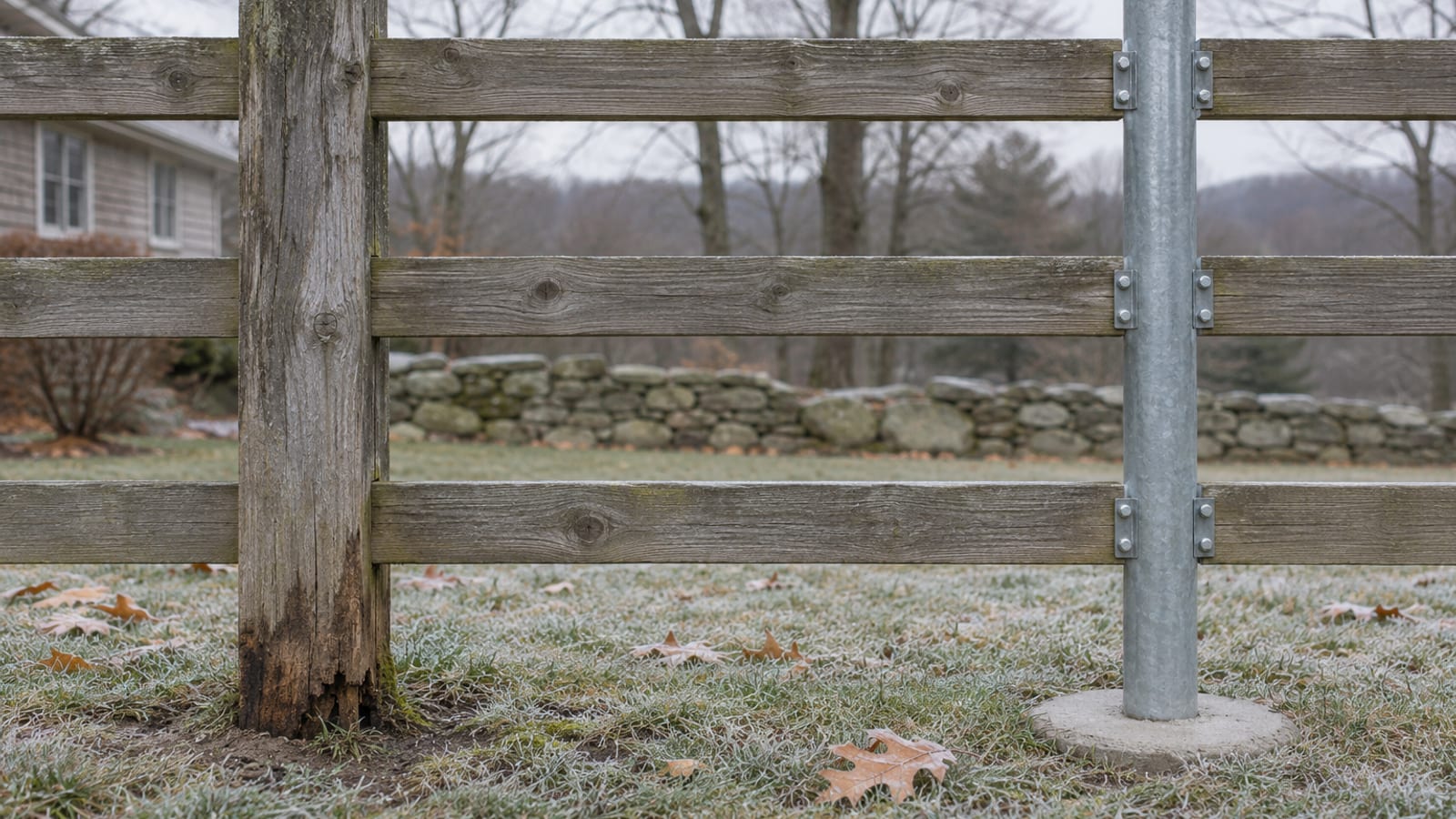
Pressure-treated pine posts rated for ground contact have a published life of 25 to 30 years or more. Galvanized steel posts will not rot at all, but they cost more than twice as much as a basic treated 4x4 and still move if frost gets under them.
If you are building or rebuilding a wood privacy fence in the Hudson Valley, that is the trade. Wood posts are cheap and fail at the soil line. Steel posts cost more up front and avoid decay, but frost, rock and shallow setting still decide how the fence holds.
Steel posts can also go into an existing wood fence line, as long as the rails and boards are still sound. Below are the lifespan figures from the wood and steel makers, the prices, the setting method and how to hide a steel post behind a wood fence.
Key Takeaways
Wood life
Pressure-treated Southern Pine is estimated at 25 to 30 years in the ground, and treated red cedar at 20 to 25 years.
Steel rating
Master Halco rates its PostMaster line post at 81.2 mph, against 59 mph for a 4x4 redwood post and 49 mph for a 4x4 cedar post.
Frost still applies
A steel post does not rot, but frost heave depends on soil, drainage and footing depth, so your town's frost depth still controls the hole.
Cost gap
One contractor's 100-foot comparison puts steel posts and hardware at $350 to $650, against $150 to $250 for pressure-treated 4x4 posts.
Retrofit
A steel post can replace a rotted wood post if the rails and boards are sound, but it is a repair job and not a drop-in swap.
Looks
A single cover board over each steel post gives you a wood fence that looks the same from both sides of the property line.
How long wood posts last in the ground
The American Wood Protection Association (AWPA) sorts treated wood by exposure. AWPA's homeowner guide says ground-contact products need UC4A or higher. UC4A is ground contact, general use, and sawn fence posts are a listed UC4A application. UC4B is ground contact, heavy duty, meant for parts that are hard to replace.
The difference shows up in the chemical. For Southern Pine treated with ACQ Type B or C, AWPA lists 0.40 pounds per cubic foot for UC4A and 0.60 for UC4B. AWPA does not put a number of years on either category.
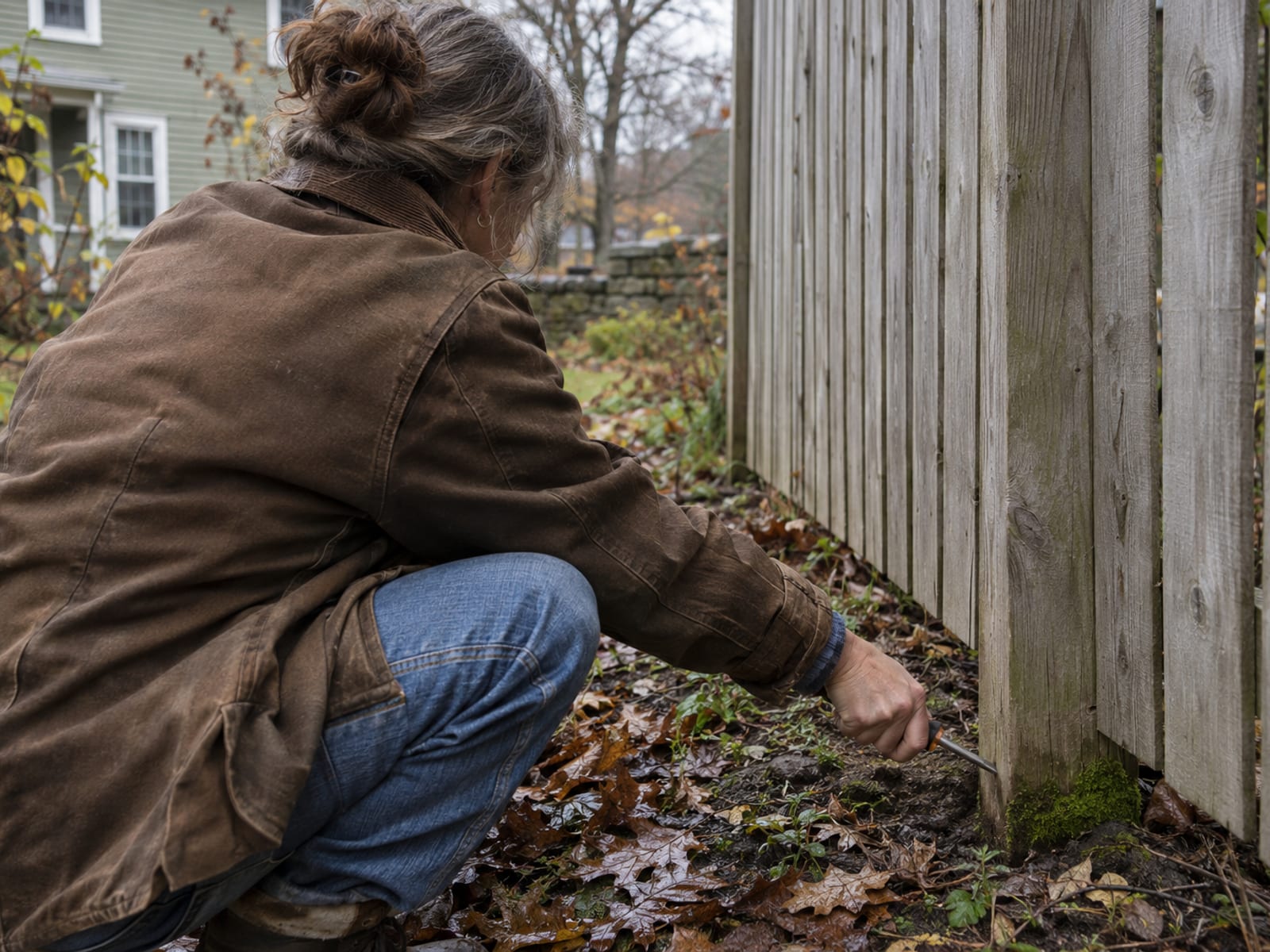
Years come from extension and forestry publications. A USDA Forest Service publication says untreated pine in moist soil may last only 2 years, durable heartwood 8 to 15 years, and pressure-treated pine more than 30 years. A University of Tennessee Extension table, reproduced in an Alabama Cooperative Extension pocket guide, gives the figures in the table below.
Published wood post life in ground contact
Estimated life: ---
Source: ---
Tap a row to open it.
These are estimates for the species and treatment, not promises for your yard. Drainage, soil, how deep the post sits, cut ends and a weed trimmer nicking the base can all shorten a post's life. Real Cedar lists 4x4 and 6x6 as common cedar fence-post sizes. Cedar life varies with the post and the site, so when you price cedar posts, ask for the species, whether they are treated, and the warranty. Our cedar vs pressure-treated pine comparison covers the boards as well.
What galvanized steel posts are rated for
Master Halco makes the PostMaster line, which is the product most wood-fence builders mean when they say steel posts. Its PostMaster Plus specification lists a 4.5 inch by 1.5 inch line post in 0.100 inch steel, 0.12 inch steel for corner posts, and a G90 zinc coating of 0.90 ounces per square foot under ASTM A653.
The wind figure comes from Master Halco's December 2024 contractor brochure. It lists an 81.2 mph ultimate windload for the line post (ASCE 7-10 and IBC 2012) and compares it with 59 mph for a 4x4 redwood post and 49 mph for a 4x4 cedar post. Those are the maker's own comparison figures for its own product, not a rating for every wood post or every fence design.
The warranty is the other number to read closely. The residential warranty is a limited lifetime warranty against defects in material or workmanship, including structural failure. "Lifetime" means as long as the original purchaser owns the home, and structural failure means a permanent bend of more than 5%. The PostMaster v3 warranty excludes improper installation, installation and removal labor, and harsh industrial, coastal or marine environments.
The warranty PDF leaves its own wind-speed limit blank, so ask for the current warranty document for the exact product version you are buying.
Master Halco PostMaster figures
Figure: ---
Document: ---
Tap a row to open it.
Frost, rock and how steel posts get set
Master Halco documents two ways to set a PostMaster post. A powered post driver can drive it, or you can set it in concrete. For the concrete method, the traditional vertical installation guide calls for a hole 6 to 10 inches across, 30 inches deep for corner and gate posts and 24 inches deep for line posts. It says exact depth and diameter depend on local conditions. The specification gives a more conservative detail of 30 inches below grade in firm soil with 3,000 psi concrete.
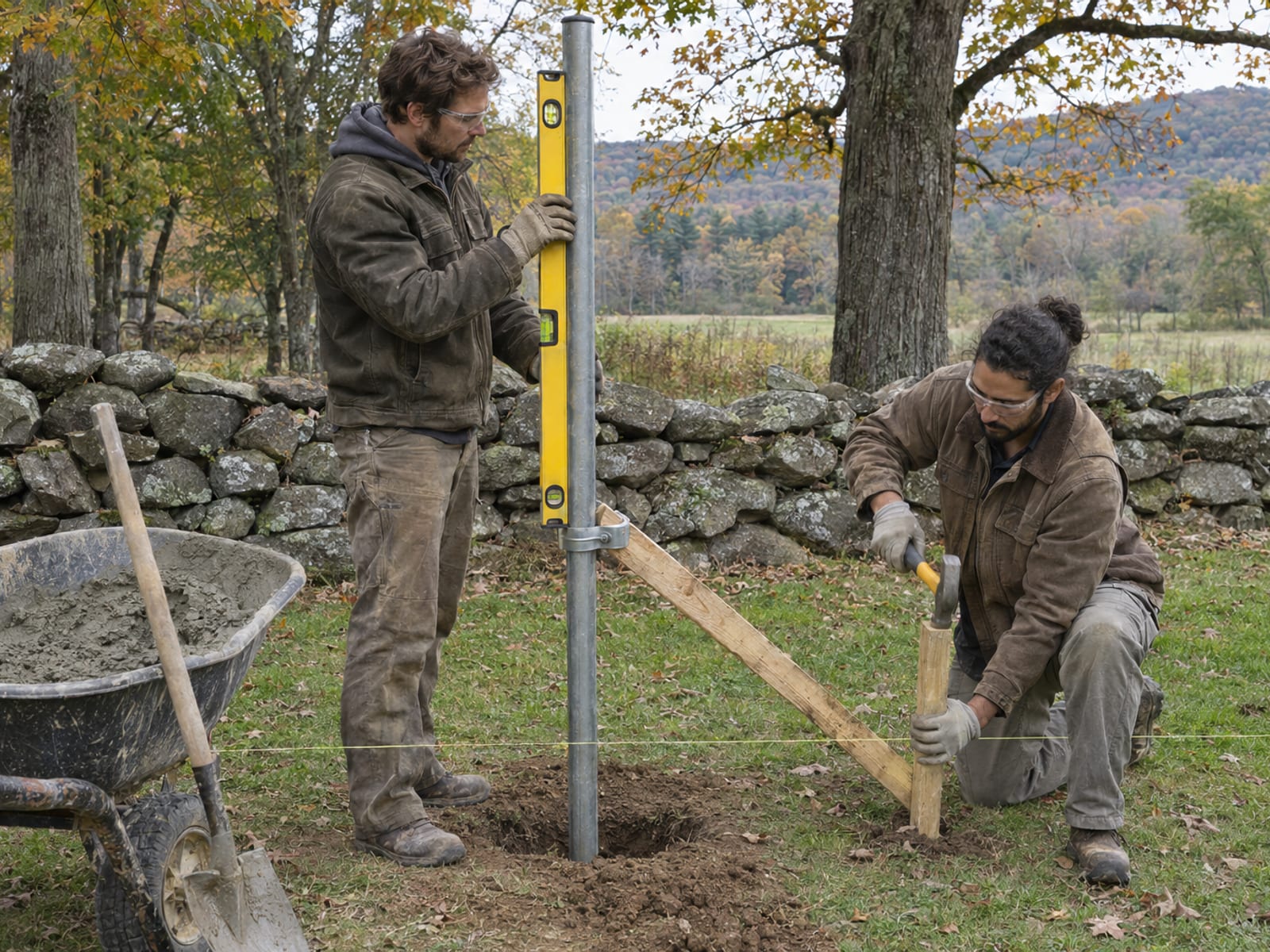
Those manufacturer depths are a starting point. Steel does not stop frost heave, which is driven by freezing water in frost-susceptible soil and by the depth and shape of the footing. The Hudson Valley frost-depth guide lists wet clay, silt, high water tables, poor drainage and shallow posts as the risk factors, and your municipality sets the depth you have to reach.
Rock changes the plan. A driven post can hit refusal on a ledge and stop short of its depth, and a concrete-set post still needs a hole dug through the rock. Ask the installer how they would handle both in your yard before you pay for a post that cannot be driven.
Rails attach to the post's hat side, using standard 2x4 or 2x6 rails and #8 or #9 countersunk deck screws or 1/4 inch lag screws. The flanges help the post hold the rail and reduce splitting.
Replacing rotted wood posts with steel
Steel can go into an existing wood fence line, but plan it as a repair. One fencing contractor, Brentwood Fence, describes the method for a post that has rotted inside its old concrete footing. Support the fence, remove the rotted wood and loosen or remove the old footing, set a new galvanized steel pipe plumb, pour fresh concrete around it, then attach metal post brackets and reconnect the existing rails.
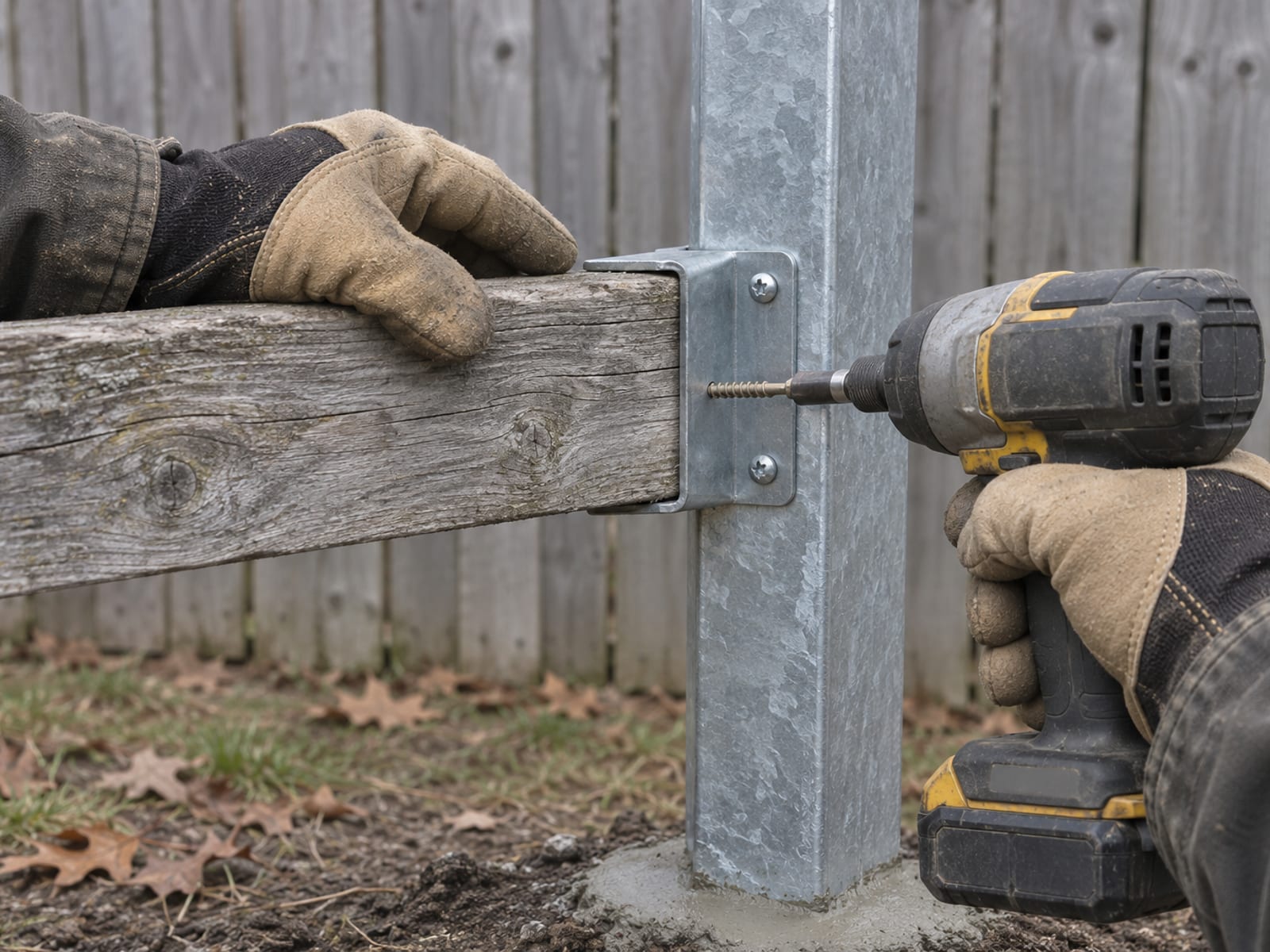
That is contractor practice. Master Halco's own installation guides are written for building a new fence, so there is no manufacturer procedure for retrofitting an old line.
A retrofit makes sense when the rails, boards, gates and neighboring posts are sound, the spacing matches the new post, the old concrete can be removed, and the new post gets enough embedment for the fence height. If the rails or boards are also damaged, the job starts to look like a partial or full rebuild. Our fence repair or replace guide walks through that decision.
What each costs
Material prices and installed prices are different numbers, so keep them apart when you compare quotes. The suppliers that publish per-post prices list these.
Published per-post prices, by supplier
Post: ---
Price each: ---
Tap a row to open it.
The wood prices are for different post styles, so do not average them. Prices are from the Home Depot listing, RSF Fence Supply and the Tri-State April 2025 price sheet. Local availability, delivery and quantity pricing will differ, so confirm them with the supplier.
Installed prices vary more. MeasureFence's October 2026 New York estimate gives $33 to $54 per linear foot installed for a 6-foot cedar privacy fence, including posts, concrete and labor. An 8-foot wood fence runs $40 to $65 per linear foot. Pressure-treated pine runs about 8 percent less than cedar, per the same guide. For a wider look, see what a fence costs in the Hudson Valley.
Brentwood Fence, 100-foot comparison
All-wood fence: ---
Steel-post fence: ---
Tap a row to open it.
That comparison is contractor-published pricing and not a six-county quote. The gap is real but smaller than the post prices suggest, because labor, boards, rails and gates cost the same on either fence. Ask for a written estimate that lists post material, the setting method, a rock allowance, concrete, removal, gates and labor on separate lines.
Hiding steel posts and keeping a good-neighbor fence
A steel post behind a wood fence does not have to show. Master Halco's installation guide specifies 1x6 cover boards over its posts, and its product page says the post can be covered to make a good-neighbor fence. The contractor brochure adds that a post can also be left exposed as an accent.
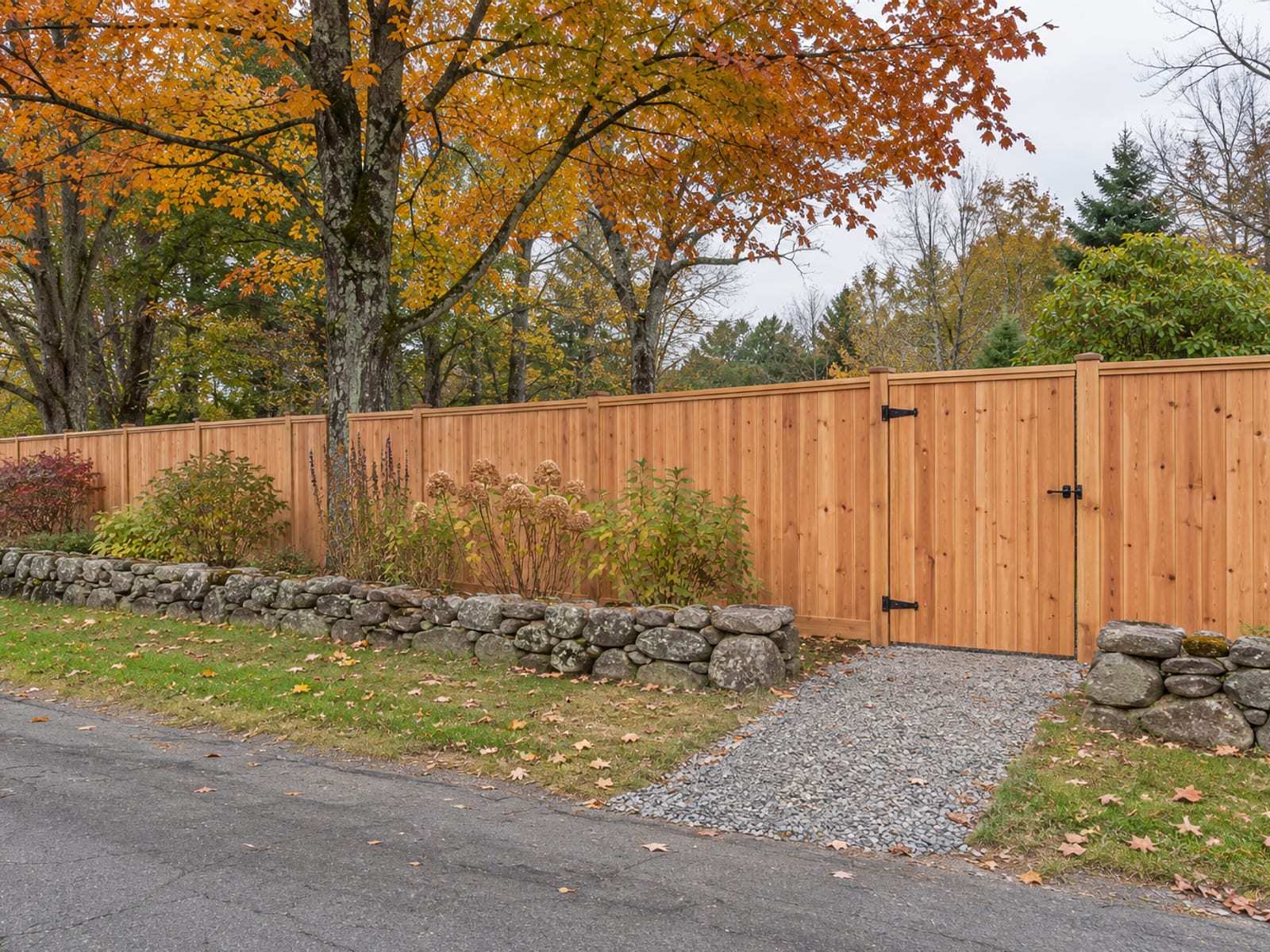
Steel posts do not change which side of the fence is the finished side. That depends on rail placement, board orientation, cover boards and whether both faces get the same finish. A two-sided design with cover boards on both faces avoids the usual problem of one neighbor seeing the rails and the other seeing the boards.
Cover boards add material and labor and can widen the fence slightly. They also do not replace the property-line check. Confirm the line, setbacks and height limits before any footing goes in, using our guide to fence property lines and setbacks.
Frequently Asked Questions
How long do pressure-treated wood fence posts last?
A USDA Forest Service publication says pressure-treated pine may last more than 30 years, and a University of Tennessee Extension table estimates 25 to 30 years for pressure-treated Southern Pine. Drainage, soil and installation depth can move that number up or down.
How long do galvanized steel fence posts last?
Master Halco backs its PostMaster posts with a limited lifetime residential warranty, which lasts as long as the original purchaser owns the home. The warranty covers defects and structural failure, defined as a permanent bend of more than 5%. It excludes improper installation and harsh industrial, coastal or marine environments.
Do steel posts stop frost heave?
No. Frost heave comes from freezing water in frost-susceptible soil and from the depth and shape of the footing. Steel avoids rot, but the hole still has to reach your town's frost depth, with good drainage.
Can I put steel posts in a fence I already have?
Yes, if the rails, boards and neighboring posts are sound. The contractor method is to remove the rotted post and its footing, set a steel post in fresh concrete, and reattach the rails with metal brackets. A contractor should inspect the spacing and the old concrete first.
Will steel posts make my wood fence look different?
Not if you cover them. Master Halco specifies a 1x6 cover board over each post, and cover boards on both faces give a finished look from both properties. Cover boards add some material and labor.
Do steel posts cost more than wood posts?
Yes, per post. A galvanized PostMaster line post is listed at $37.88 to $41.97 each, against $15.50 for an 8-foot pressure-treated 4x4 flat-top post at one New Jersey supplier. Installed fence prices differ by much less than the post prices do.
Check yourself
1. What does AWPA call the exposure category for ground contact, general use, which includes sawn fence posts?
2. What does Master Halco define as structural failure under its residential warranty?
3. Does a galvanized steel post prevent frost heave?
4. In Master Halco's brochure, which post has the higher windload rating?
5. What does a contractor do first when replacing a post that has rotted inside its old concrete footing?
For most wood fences, treated posts set below frost depth with good drainage are the lower-cost choice and last decades. Steel makes sense when you want a post that cannot rot, or when a rotted post in a good fence needs replacing and you can budget for the extra material and the cover boards.
Portillo Fences and Gates builds and repairs wood fences in Putnam, Westchester, Dutchess, Orange, Ulster and Rockland counties. See our wood fencing and fence repair pages, then use our contact page or call (845) 282-3336 for a written estimate with the post material, setting method and rock allowance on separate lines.