

October 5, 2026
- cable railing
- deck railings
- stair railings
- railing code
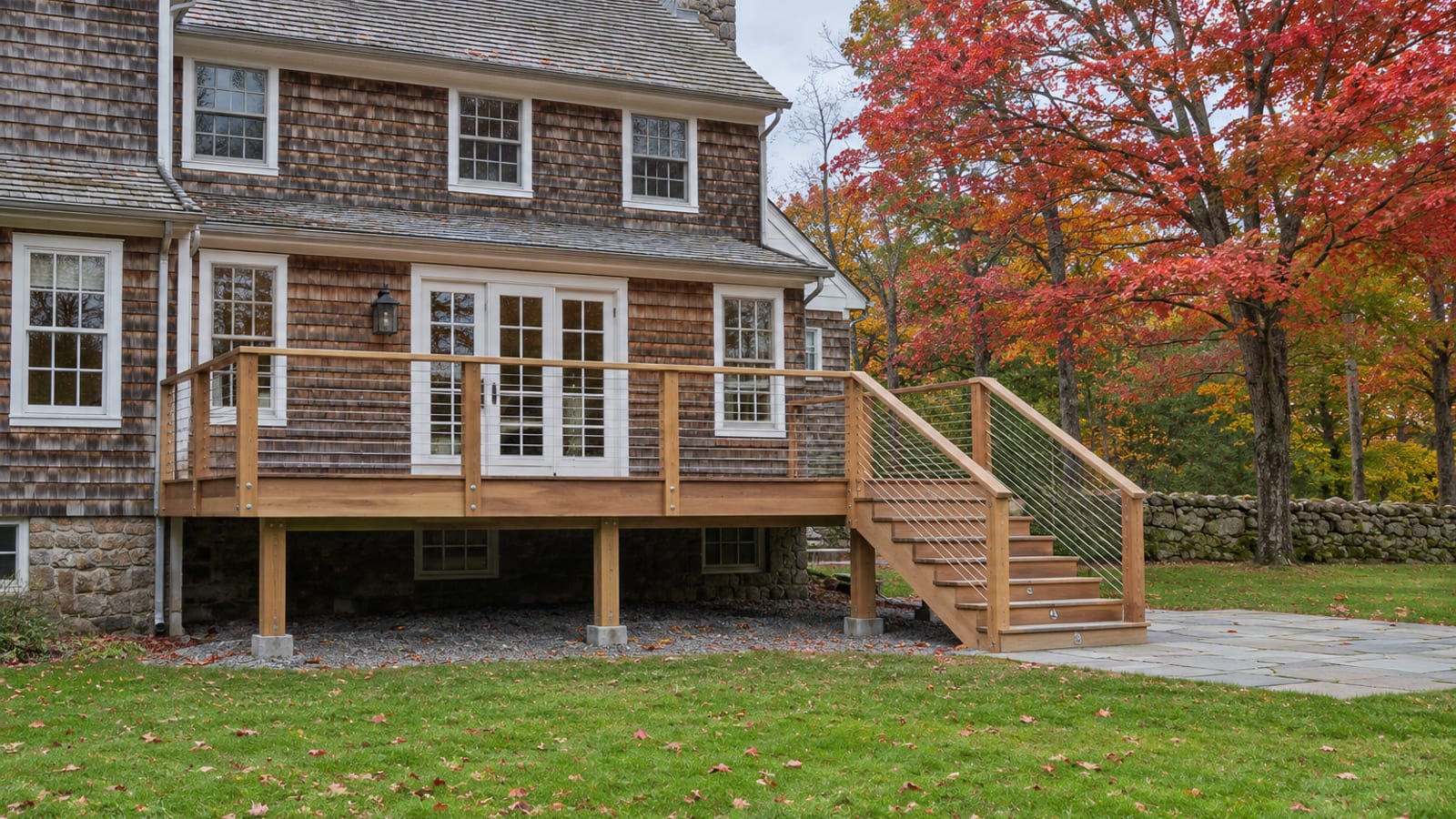
A guard on a deck or stair has to stop a 4-inch sphere from passing through it, and cable railing meets that rule only when the cables sit close enough together and stay tight. Most makers set their cables about 3 inches apart. Installed prices run from roughly $75 to $285 per linear foot depending on the source and the post material.
If you like the open look of cable, you are choosing a system that needs more of the right parts than a picket rail does: stronger end posts, a post every 4 feet or less, and tension that holds through a Hudson Valley winter. Each of those has a published figure, and the figures follow.
Your building department has the last word on what passes in your town. Bring the product documents and a drawing of the layout, and you will get a yes or a specific list of changes.
Key Takeaways
Sphere rule
Required guards must stop a 4-inch sphere, and the test applies to the cable system as installed, not as measured before it is tensioned.
Spacing
Feeney, Atlantis and Keuka all publish about 3 inches between cables, and Ultra-tec publishes 3 1/8 inches.
Posts
Atlantis, Keuka and Ultra-tec cap post or brace spacing at 48 inches, and end posts must resist the combined pull of every cable.
Price
Published installed prices range from $75 to $285 per linear foot, so ask for an itemized local quote instead of trusting an average.
Winter
Cable tension moves with temperature, so adjust on a mild day and inspect at least once a year.
Stainless grade
Type 316 or 316L resists road salt and chlorides better than 304, and the grade can affect your warranty.
What the code asks of cable infill
The 2025 Residential Code of New York State, Section R321.1.3, requires guards to stop a 4-inch sphere from the walking surface up to the required guard height. The IRC uses the same rule in Section R312.1.3. Both allow looser openings on stairs: a 6-inch sphere for the triangle formed by the tread, riser and bottom rail, and a 4 3/8-inch sphere for openings on the open side of a stair.
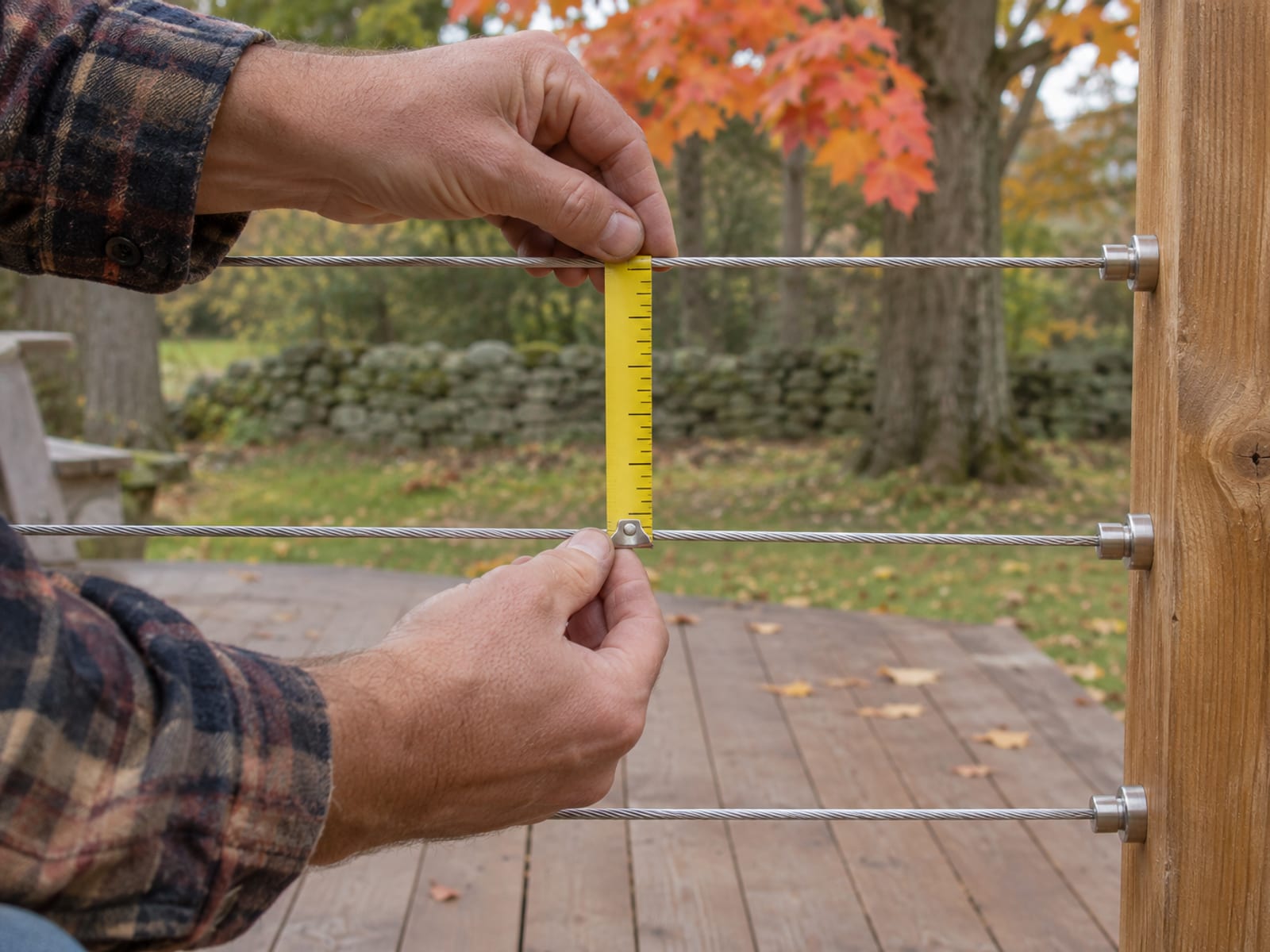
The sphere has to stay out of the opening on the finished, loaded railing. Cable moves when you push on it, posts can shift, and fittings can give a little. Any of that can open a gap larger than the number you measured at the factory.
Structure is a separate test. The RCNYS Table R301.5 calls for a 200-pound concentrated load on guards and handrails and a 50-pound load on the infill over a 1-square-foot area. A cable assembly has to pass the opening rule and the load rule, and the posts carry both.
The code does not ban cable railing on a one- or two-family deck, and it does not set a separate climbability test for it. The opening size, guard height and loads are what apply. For height rules, see our post on deck and porch guard heights in New York.
Spacing, posts and tension, by manufacturer
Makers publish their own numbers, and they are not interchangeable. Feeney recommends cables 3 inches on center because that leaves room for up to 1 inch of deflection between neighbors while staying under the 4-inch limit, according to Feeney's CableRail FAQ. Atlantis's RailEasy guidance also uses 3 inches, with mid-posts 4 feet apart.
Stabilizers can stretch an Atlantis span to as much as 7 feet, but a stabilizer is not a structural post. Keuka's spacing guide sets about 3 inches and a 48-inch maximum post spacing. Ultra-tec's design notes call for 3 1/8 inches between cables, braces or posts no more than 48 inches apart, and a minimum tension of 225 pounds.
Published cable railing figures by maker
Cable spacing: ---
Post or brace spacing: ---
Tension: ---
Tap a row to open it.
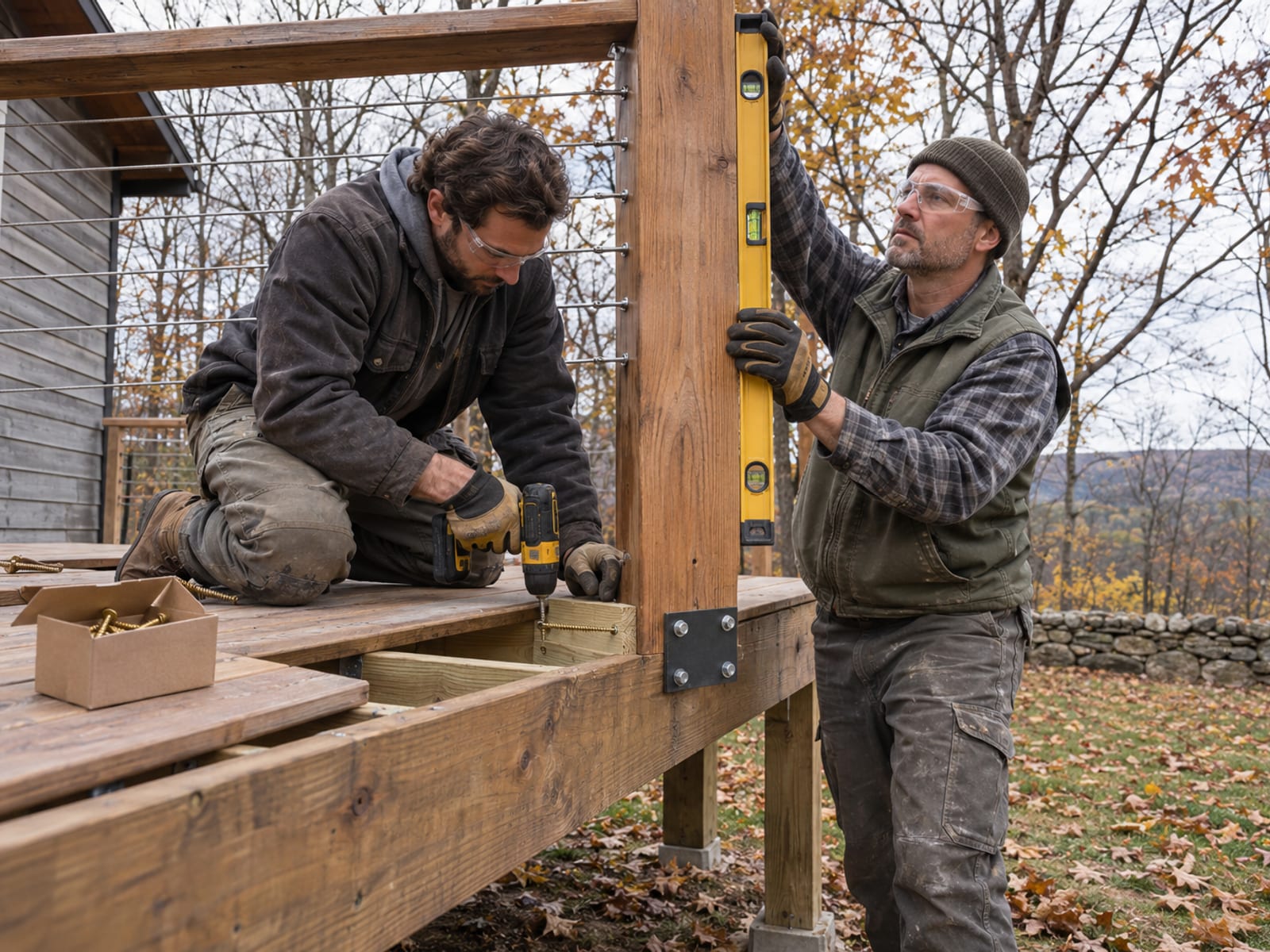
End posts are where most of the work hides. All the cable tension ends up at the end and corner posts, so they have to resist it without leaning. Atlantis asks for at least a 4-inch by 4-inch post for its standard system. Ultra-tec says its posts must not deflect perceptibly at 225 pounds.
Feeney suggests a bottom rail on 42-inch systems and keeps single-corner runs to 30 feet, with no more than two corner posts in a run. A 225-pound Ultra-tec figure cannot stand in for Trex's 100 pounds. Use the numbers that come with the exact product.
What cable railing costs installed
Published prices differ by region, year and what the number includes, so here they are one source at a time.
Installed cable railing, per linear foot, by source
Region and date: ---
Cable railing price: ---
Tap a row to open it.
The labor-only Connecticut number is the one people misread. It is not a complete system price, and it looks cheap next to $135 because the hardware, posts and top rail are not in it. When a quote comes back at one number per foot, ask what is inside it.
Cost climbs with corners, stairs, structural reinforcement, masonry anchoring, long cable runs, extra posts, tough access, and any permit or engineering requirement. How does it compare with other rail types? The HomeAdvisor deck-railing data from 2025 puts aluminum at $40 to $70 per linear foot, composite at $15 to $30, stainless steel at $30 to $80 and cable at $50 to $200. HomeGuide's 2026 outdoor handrail data lists aluminum and steel at $40 to $60, composite at $40 to $75 and cable at $50 to $200.
The Northeast planning figures from July 2026 are aluminum at $98, steel at $130 and stainless cable at $135. Cable usually costs more than basic aluminum picket or composite because of the tensioned runs, end fittings and heavier end posts. If you are weighing materials, our porch railing comparison covers vinyl, aluminum and steel.
Winter, tension and stainless grade
Stainless cable expands in heat and contracts in cold. Trex warns that cable pulled tight on a very cold day can loosen when it warms up, and cable pulled tight on a scorching day can over-stress posts and fittings once it cools. Trex recommends adjusting in moderate weather.
New systems also need a couple of adjustments early on as the cables stretch and relax. Keuka's care guidance adds that wood posts shrink and shift, which changes tension, and asks for an inspection at least once a year. Check the posts, attachments and fittings before you tighten anything, because a loose post is a structural problem, not a tension problem.
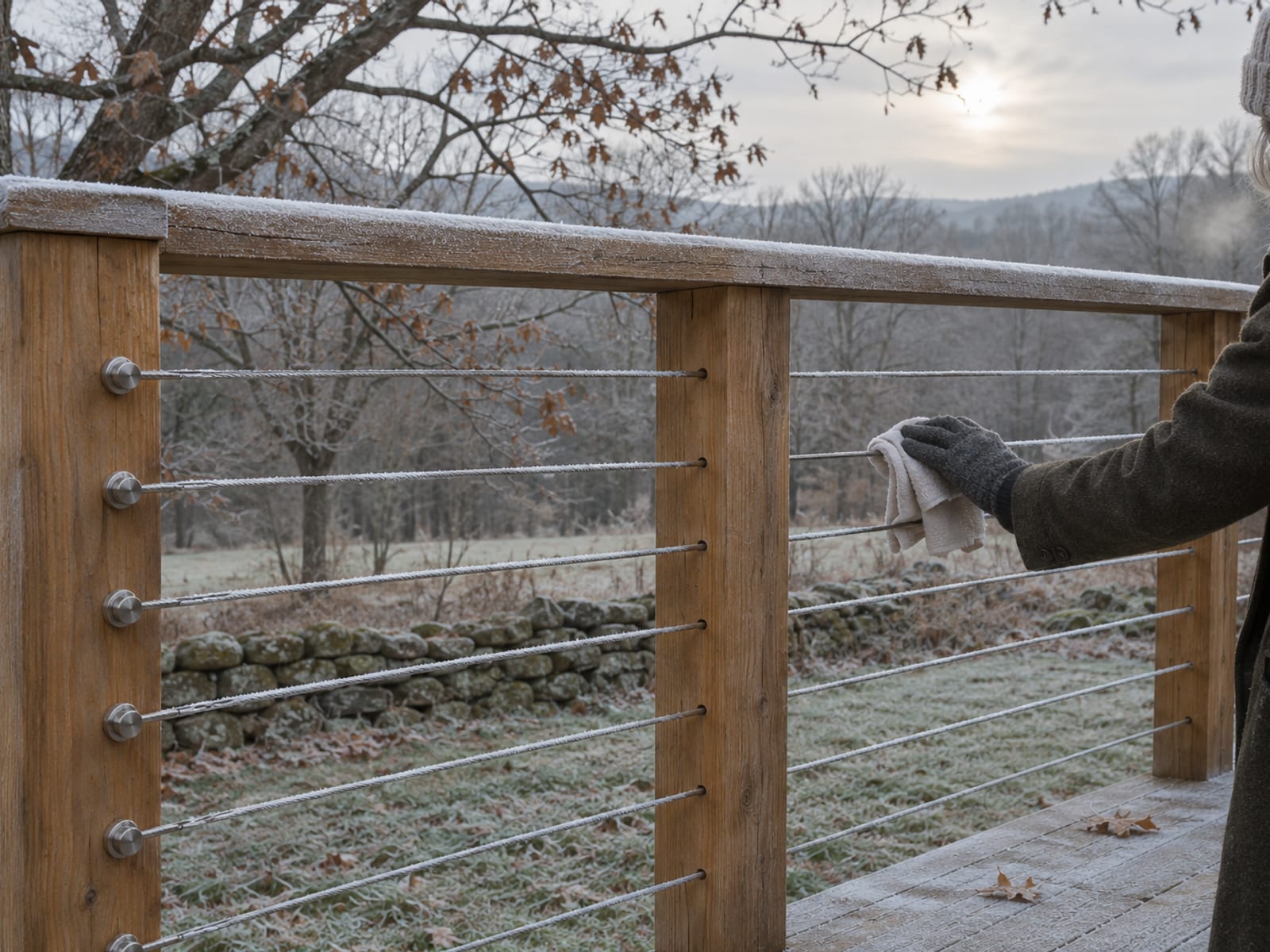
Ultra-tec points out that a stainless frame moves with stainless cable, which limits the tension swing. Aluminum, carbon steel and wood frames move differently from the cable. The practical takeaway for a wood deck is to expect to touch up tension more often than on an all-stainless frame.
Grade matters near roads. Atlantis specifies 316L marine-grade cable, Feeney describes its components as 316-grade, and Keuka says its stainless and black oxide products start as 316. Type 304 is common outdoors, but 316 or 316L resists chlorides from road salt, de-icing salts, pool chemicals and salt air better. Hudson Valley roads get salted, so ask for the exact grade in writing.
Cleaning and warranty limits
Atlantis recommends a first cleaning to remove oil and fingerprints, then mild car-wash soap once or twice a year, or more often near salt water or a pool. Atlantis says incidental salt water or chlorine can corrode aluminum and 316L stainless that is not reasonably maintained.
Keuka suggests a fresh-water rinse or a lint-free wipe, drying the stainless, and checking cables, fittings, posts and mounts. For black cable and fittings, it recommends a damp lint-free cloth followed by Boeshield T-9. Feeney asks for cleaning once or twice a year, more in harsh conditions, and requires quarterly cleaning within 1 mile of salt or brackish water to keep its product-care warranty.
Warranties have limits you can lose by accident. Feeney lists failure to clean as directed, mixing its fittings or cable with another maker's parts, straying from its installation parameters, and skipping the product instructions or local code. Read the warranty before you buy parts from two different suppliers.
For a deck near a road or a pool, plan on a spring cleaning and a fall check. Rinse off the salt after the plows stop, wipe the cables, and look for broken strands, bent hardware or a post that has started to move.
Getting a cable railing approved
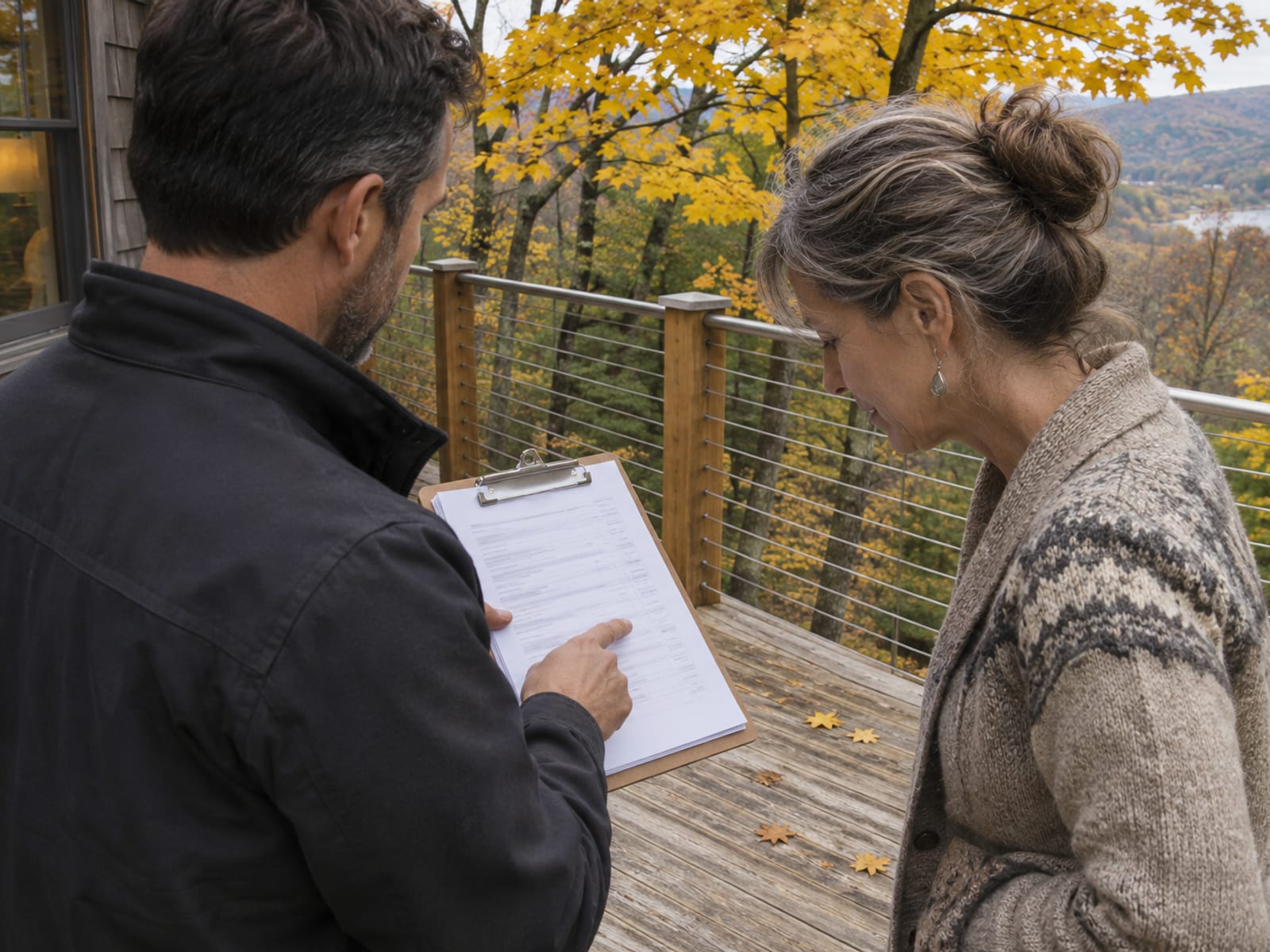
Ask the building department in your town whether it wants a drawing before you buy anything. The answer comes from the state code and the product documents, and the local office decides how it reads your layout in Putnam, Westchester, Dutchess, Orange, Ulster or Rockland County. Send the layout, the manufacturer's spacing and post instructions, and how the end posts attach to the frame.
Ask your installer the same questions: which cable grade, what post material and spacing, how the end posts are braced, and how the quote splits stairs, corners and top rail. Written answers to those four points tell you more than a per-foot price.
Frequently Asked Questions
Does cable railing pass inspection on a deck?
It can. The code sets a 4-inch sphere limit on the installed guard, and the 200-pound and 50-pound load tests apply too. Makers publish spacing of about 3 inches and posts no more than 4 feet apart for that reason. Check with your building department before you start.
How far apart should the cables be?
Feeney, Atlantis and Keuka publish about 3 inches, and Ultra-tec publishes 3 1/8 inches. Feeney explains that 3 inches leaves room for up to 1 inch of deflection between cables. Follow the instructions for the exact product you buy.
How much does cable railing cost per foot?
HomeGuide's national 2024 figures run from $75 to $95 with wood posts up to $285 for stainless steel. HomeAdvisor's 2025 national range is $75 to $260. The Northeast planning figure from July 2026 is $135 for stainless cable. Ask for an itemized quote that lists posts, cable grade, stairs and corners.
Do cables loosen in winter?
Temperature changes tension, and new systems need a couple of early adjustments as the cable settles. Trex recommends adjusting in moderate weather, and Keuka asks for a check at least once a year. Look at the posts and fittings before you tighten.
Is 316 stainless worth asking for?
Where road salt, de-icing salt, pool chemicals or salt air reach the railing, 316 or 316L resists chlorides better than 304. Atlantis specifies 316L, and Feeney and Keuka describe their stainless as 316. Ask for the grade in writing.
Check yourself
1. What sphere size must a required guard stop on a deck?
2. What cable spacing do Feeney and Atlantis publish?
3. What maximum post or brace spacing do Keuka and Ultra-tec publish?
4. What minimum cable tension does Ultra-tec require?
5. Which stainless grade resists road-salt chlorides better?
Cable railing works on a deck or stair when the spacing, posts and tension match the maker's instructions and your building department accepts the layout. Price it per source, ask what the per-foot number includes, and plan on a yearly check and a good rinse after salt season.
If you are weighing cable against wood, aluminum or custom steel, Portillo Fences and Gates installs railings and custom steel railings for homes in Putnam, Westchester, Dutchess, Orange, Ulster and Rockland counties. Contact us or call (845) 282-3336 for a quote.