

September 6, 2026
- Pool Fencing
- Building Code
- Pool Barrier
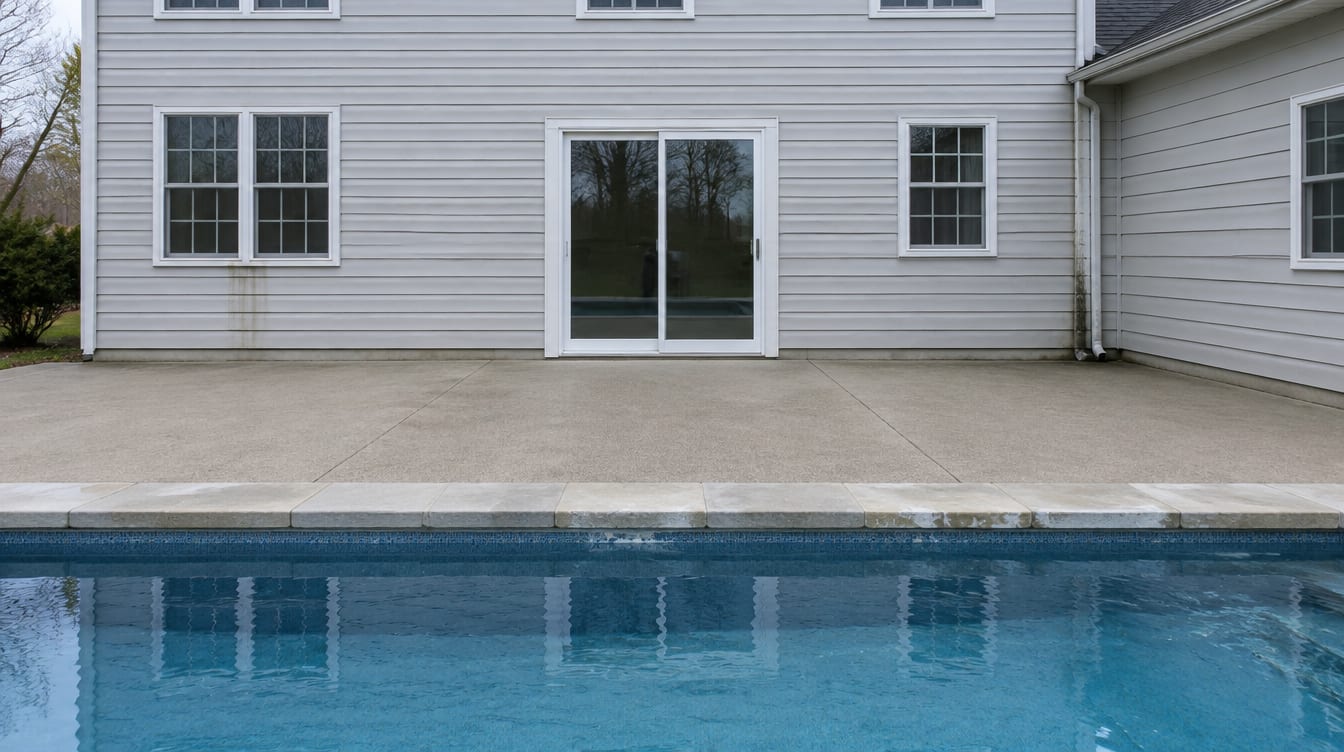
If your pool sits against the back of the house, the code lets the house wall count as one side of the barrier, with conditions. Under Section R328.4.2.8 of the 2025 Residential Code of New York State, every door with direct access to the pool needs an alarm that activates within 7 seconds, sounds for at least 30 seconds and resets itself. The 2024 International Swimming Pool and Spa Code handles the same wall in Section 305.4 with different wording.
The two documents do not match, so the first step is to find out which one your building department applies, before you price the fence on the other three sides.
Key Takeaways
RCNYS Section R328.4.2.8
a wall of a dwelling and its accessory structures may serve as part of the barrier when the door and window conditions are met
ISPSC Section 305.4
a wall of a dwelling or structure may serve as part of the barrier, with its own list of alarm, safety cover and self-latching options
Alarm timing under the RCNYS
activation within 7 seconds, continuous sound for at least 30 seconds, automatic reset, and temporary deactivation for one opening of no more than 15 seconds
Deactivation switch height
at least 54 inches above the finished floor, or 48 to 54 inches in required Accessible, Type A or Type B units
Written confirmation first
ask the building department which edition, which openings and which solution before anyone quotes the enclosure
What each document says
Both documents allow the wall, and both put the conditions on the doors, gates and low windows that open through it. They differ in how they list the protections.
2025 RCNYS, R328.4.2.8: A wall or walls of a dwelling and accessory structures may serve as part of the barrier
2024 ISPSC, 305.4: A wall of a dwelling or structure may serve as part of the barrier
Tap a row to open it.
The RCNYS requires the wall to meet Sections R328.4.2.1 through R328.4.2.6 and then offers two paths: door alarms and low-window protection, or other approved protection no less effective, such as self-closing and self-latching devices. The 2020 code carried the same provision in Section R326.4.2.8, also titled "Dwelling wall as barrier."
These are different readings of the wall and its openings. Which one governs depends on the code edition and local adoption that applies to your permit.
The door alarm in detail
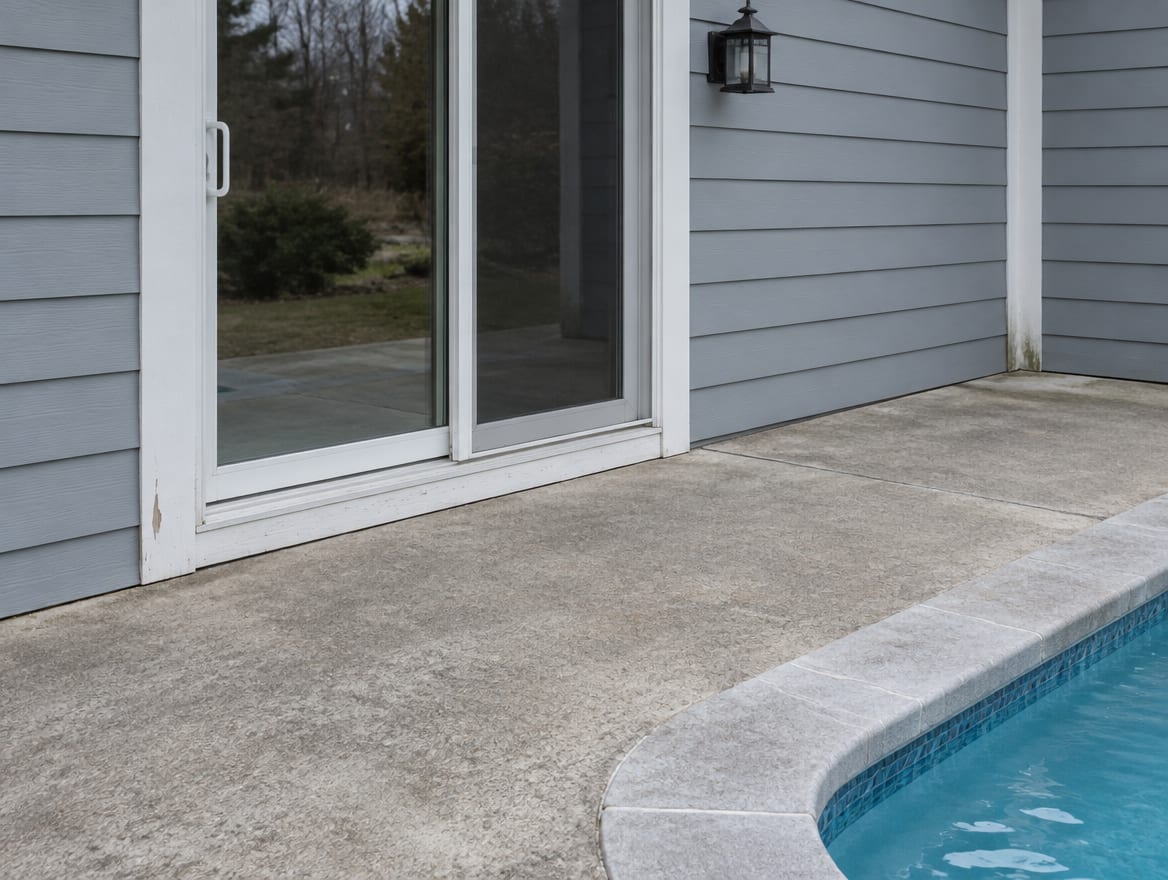
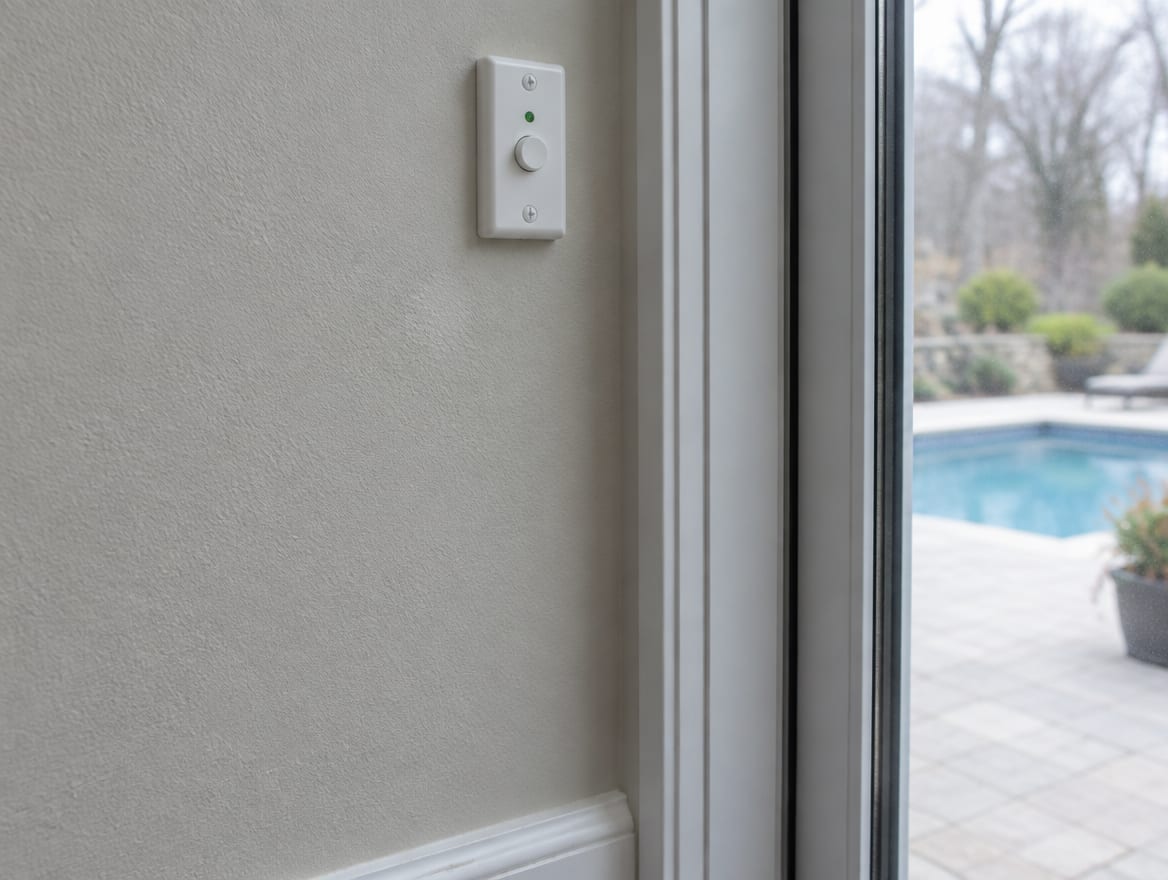
Under the 2025 RCNYS, a direct-access door needs an alarm that sounds when the door or its screen is opened. The alarm must:
- activate within 7 seconds of the opening
- sound continuously for at least 30 seconds
- be audible throughout the house during normal household activities
- reset automatically under all conditions
- allow temporary deactivation for one opening for no more than 15 seconds
The deactivation switch sits at least 54 inches above the threshold in most houses, or between 48 and 54 inches in required Accessible, Type A or Type B units. Under the ISPSC, the switch height is also specified, and the alarm must carry the UL 2017 listing and label, but Section 305.4 does not state a decibel level, a delay, a minimum sound duration or a reset behavior. Neither adopted text states an 85 dBA minimum. That figure appears in a 2024 ISPSC code-change proposal, not in the text of Section 305.4.
The pool alarm is a separate rule
A different requirement covers the water. Section R328.6 of the 2025 RCNYS requires an approved pool alarm complying with ASTM F2208 on a pool or spa installed, constructed or substantially modified after December 14, 2006, installed and maintained to the manufacturer's instructions. It exempts a hot tub or spa with an ASTM F1346 safety cover, and a swimming pool, other than a hot tub or spa, with an ASTM F1346 automatic power safety cover.
R328.6 does not replace the door alarm in R328.4.2.8, and R328.4.2.8 does not state a construction-date threshold of its own. If your pool is older, ask the building department which edition and which alteration rules apply to the existing pool and barrier.
What local building departments publish
- Town of Kent (Putnam): its pool page reproduces the New York barrier provisions and states the post-December 14, 2006 pool alarm rule.
- Town of Ossining (Westchester): doors with direct access to the pool through the wall must have an alarm giving an audible warning when the door and screen are opened, and the town points to 19 NYCRR Part 1228 for the pool alarm rules.
- Town of Greenburgh (Westchester): Section 285-36G(14) lets a dwelling wall serve as part of the enclosure under stated conditions.
- Town of Scarsdale (Westchester): its building page links a "2020 NYS Dwelling Wall as Barrier" document covering windows and doors.
- Town of Poughkeepsie (Dutchess): its pool permit packet reproduces R326.4.2.8, including the 7-second, 30-second, automatic reset and 15-second provisions.
- Town of Wawarsing (Ulster): its permit application says that where a dwelling wall serves as part of the barrier, the pool must have a powered safety cover or the direct-access doors must have an audible UL 2017 alarm.
For Orange and Rockland Counties and for any town not listed, the building department with jurisdiction over your address is the office to ask.
If the house wall is not the barrier
The codes name three practical approaches.
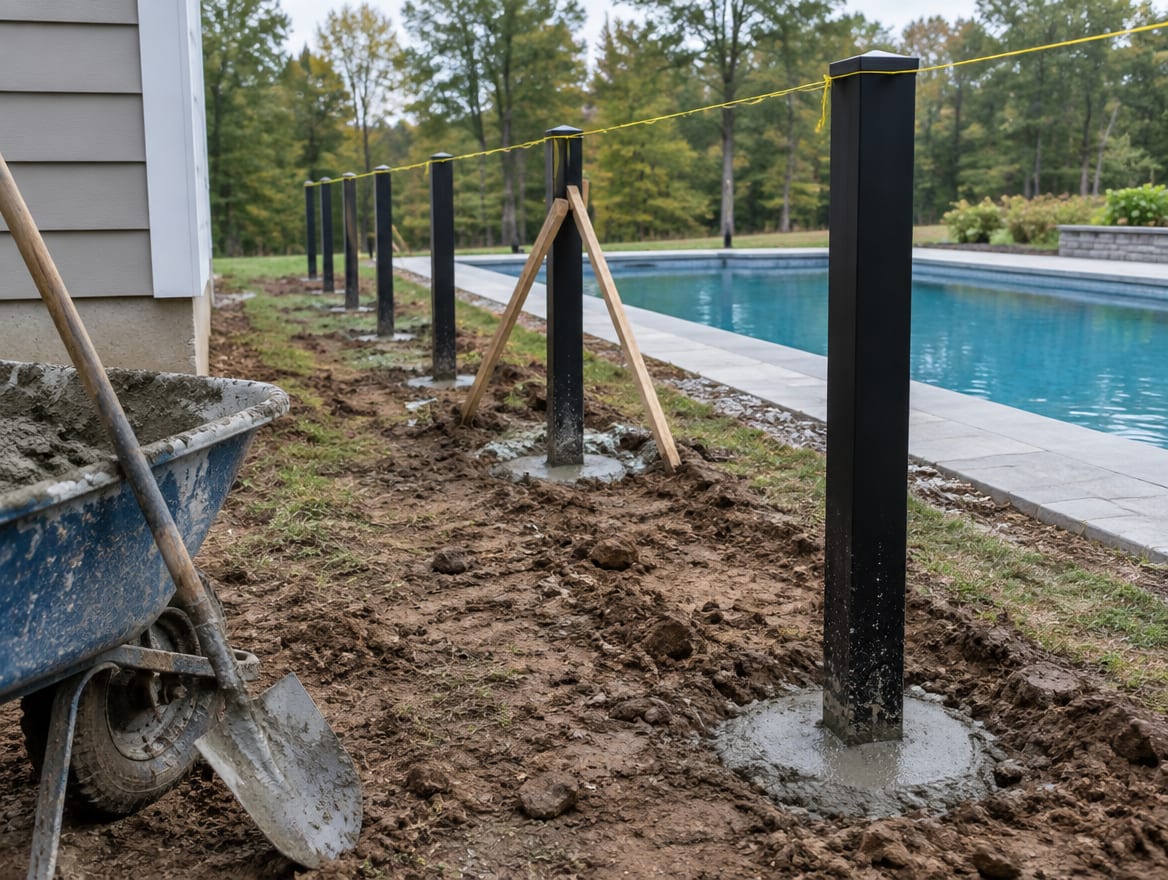
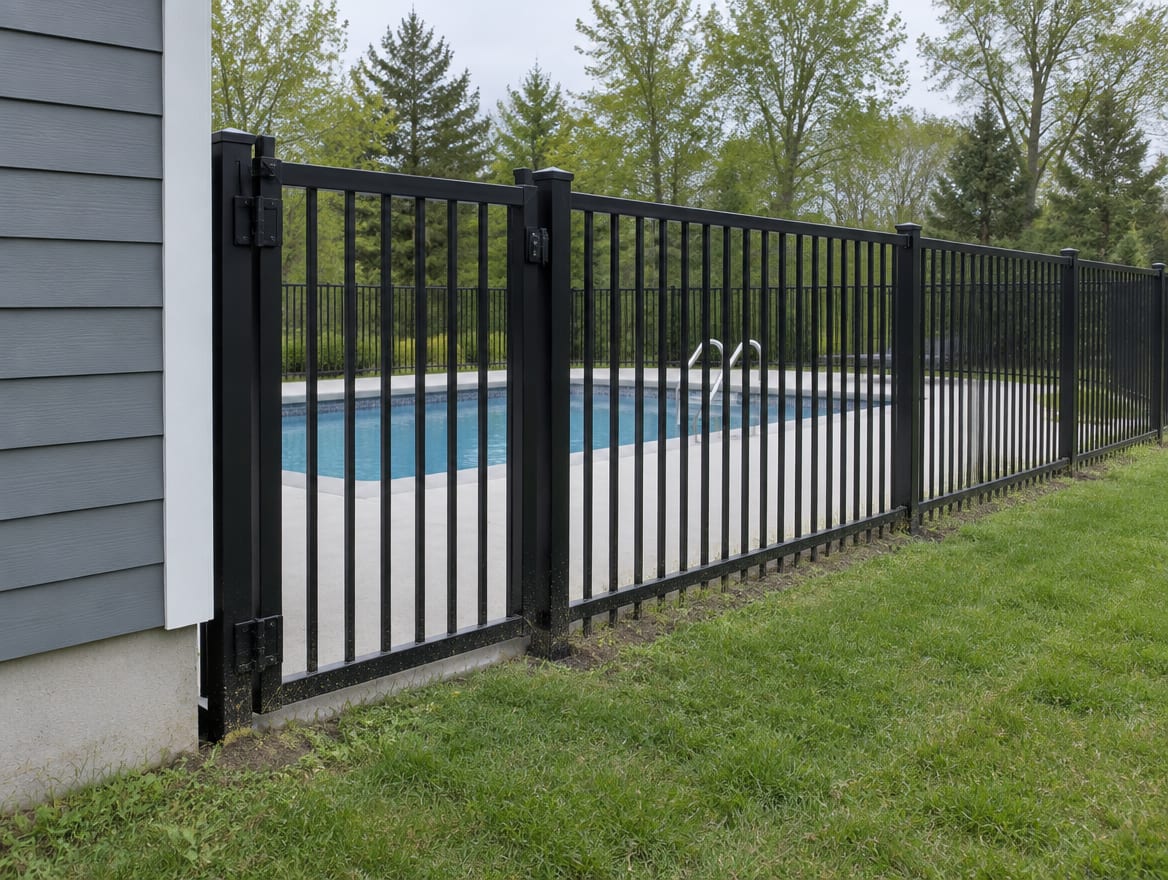
A separate fence between the house and the pool. Section R328.4.2 requires the pool to be completely enclosed by a permanent barrier that meets Sections R328.4.2.1 through R328.4.2.6. That means a fence contractor installs the missing segment with its posts, panels and self-closing, self-latching gate hardware. Under R328.4.2.1 the top of the barrier is at least 48 inches above grade, and the bottom clearance to grade is no more than 2 inches. The house doors and windows are then no longer relied on as barrier, though the pool alarm rule may still apply.
A safety cover. ISPSC Section 305.4 names a cover listed and labeled under ASTM F1346. Section R328.6 treats an automatic power safety cover as an exception to the pool alarm requirement. The cover is pool equipment, not fence work, and it has to be approved for the use.
Protection at the openings. The wall stays part of the barrier, and alarms or approved self-closing, self-latching protection go on the qualifying doors and windows. That adds door hardware, alarm equipment, switch placement and inspection coordination in place of another fence run.
A safety cover and a separate fence are alternatives in the cited provisions, so the code does not call for both.
Written confirmation before you buy or build
Ask the building department to put these in writing: the code edition that governs the permit; whether the dwelling wall may be used; which doors, screens, windows and gates count as direct access; whether the department applies the RCNYS or the ISPSC reading; whether the accepted solution is an alarm, self-closing and self-latching protection, a safety cover, a separate fence or a combination; the required alarm listing, timing and switch height; and whether your pool's construction date triggers the Section R328.6 pool alarm. Ossining's building page states the door alarm condition, and Poughkeepsie's permit packet reproduces the barrier language and the conditions attached to permit plans.
Request this before construction, before a purchase if you are buying a house with this layout, and before any fence quote.
Check yourself
1. A pool alarm under Section R328.6 must comply with which standard?
2. Section R328.6 applies to a pool installed, constructed or substantially modified after which date?
3. If a separate fence goes between the house and the pool, how much clearance can there be between grade and the bottom of the barrier?
4. What exempts a hot tub or spa from the pool alarm requirement in Section R328.6?
Frequently Asked Questions
Q: Can the back of my house be one side of the pool barrier? A: Yes, under RCNYS Section R328.4.2.8 and ISPSC Section 305.4, if the doors and low windows that open to the pool have the alarm or approved protection each document lists.
Q: Do I need a door alarm? A: Under the 2025 RCNYS, direct-access doors need an alarm unless other approved protection provides equal protection. Your building department decides which option it accepts.
Q: How high should the alarm switch be? A: At least 54 inches above the finished floor in most dwellings, and 48 to 54 inches in required Accessible, Type A or Type B units.
Q: Does a safety cover replace the fence? A: A safety cover and a separate fence are alternatives in the cited provisions. The cover has to be listed to ASTM F1346 and approved for the code use.
Q: Is the pool alarm the same as the door alarm? A: No. The pool alarm in Section R328.6 is a water alarm complying with ASTM F2208, and it applies to pools installed or substantially modified after December 14, 2006.
How a pool meets the barrier rules depends on where the house sits against the water. When the building department has named the edition and the option it accepts, the fence work is a defined job with a defined scope.
At Portillo Fences and Gates, we install and repair fencing across Putnam, Westchester, Dutchess, Orange, Ulster and Rockland Counties, including pool fencing in aluminum and vinyl with self-closing, self-latching gates. We price the enclosure after your building department confirms how the house wall is treated. Contact us for a free estimate, or call (845) 282-3336.