

November 4, 2026
- fence repair
- fence posts
- wood fence
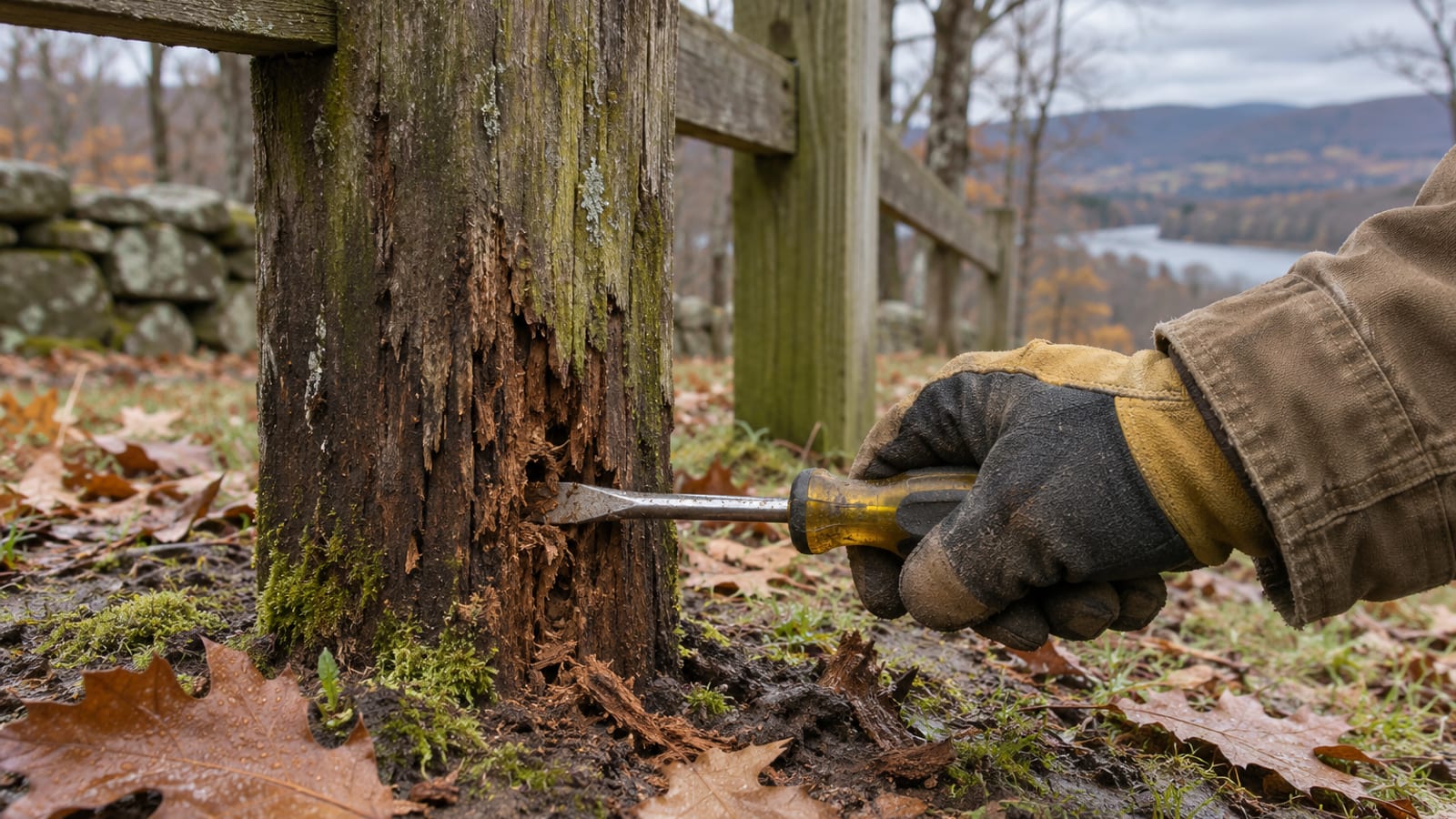
A leaning post can usually be saved if the wood below the ground line is still sound. If that wood is soft, hollow or snapped, the post has to be replaced, and no brace will change that. Probing the post at grade tells you which one you have in about ten minutes.
Most posts lean for one of five reasons: rot at the ground line, frost heave, wind on a solid fence, a footing that was set too shallow, or water that sits around the base. Each leaves different signs, and the signs decide whether you are looking at a reset, a mender or a new post.
Below: how to read the post, what a repair kit can and cannot fix, how a single post is swapped out of a standing fence, and what the work costs.
Key Takeaways
Probe first
Push a screwdriver into the post at and just below the ground line, because soft or hollow wood means the post is past repairing.
Sound wood can be saved
A post with firm wood and a loose footing can often be reset or reinforced with a steel mender or a concrete spur.
Snapped posts get replaced
A post that has broken off or lost most of its underground length needs a new post, not a bracket.
Old concrete is the hard part
Breaking out the old footing is what turns a quick post swap into a larger repair.
Several posts change the job
Posts leaning together, soft at the base or moving at a corner or gate call for a full fence-line check.
Price by scope
Ask for an itemized estimate that lists the post, the footing removal, reattachment, disposal and any rock or access charges.
How to tell why the post is leaning
Start with the wood. Kentucky Extension explains that untreated posts rot first at the ground line, where water and air meet. Scrape the post at grade and just below it. Soft, spongy, flaking or hollow wood means rot. HUD's Rehab Guide tells you to dig down one side of a wobbly post to see the lower section: if it is sound, resetting may be enough, and if the end is rotted, replacement is the lasting fix.
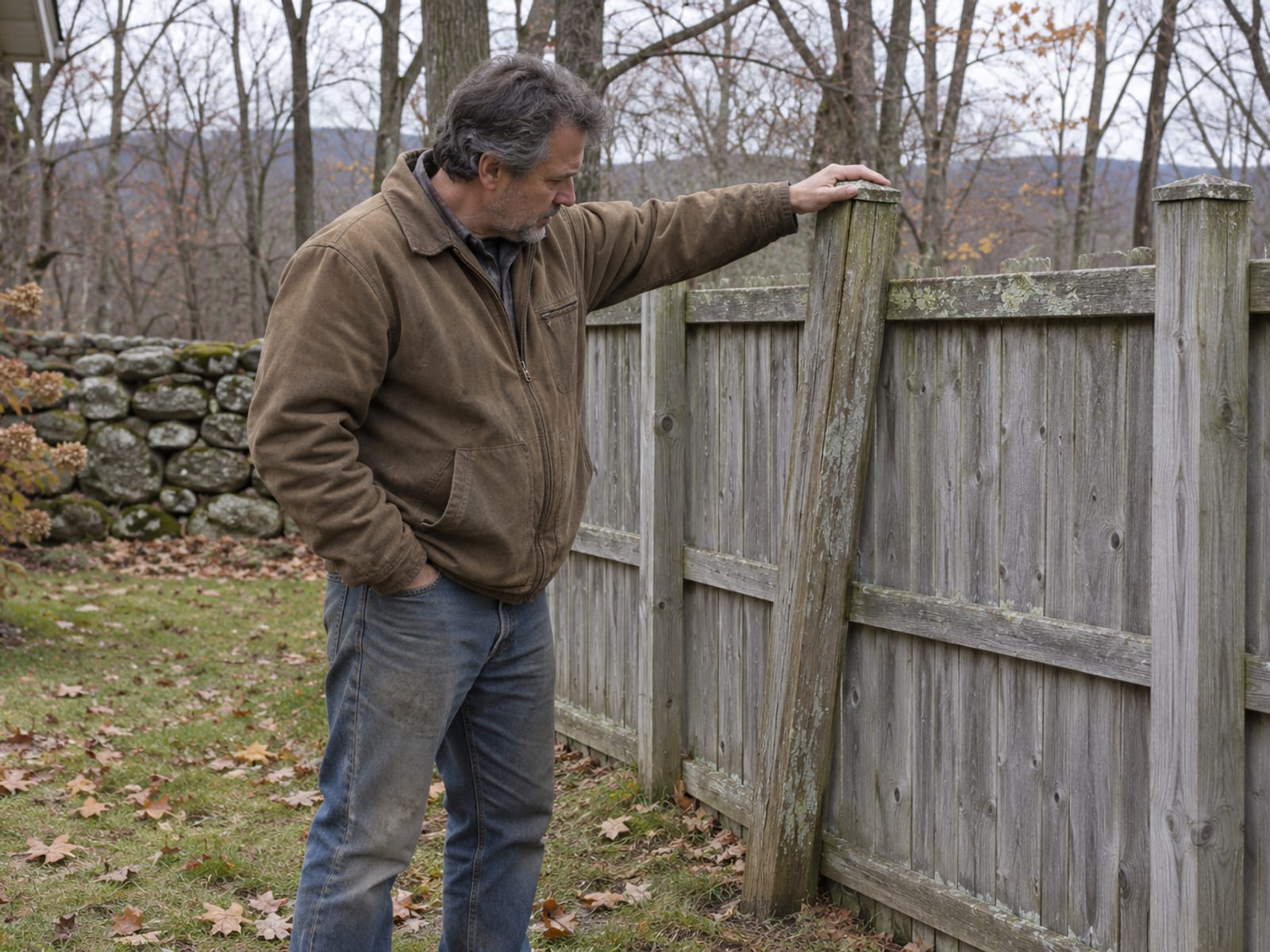
Frost heave looks different. The post may be solid but sits higher than its neighbors, with disturbed soil around it or an exposed band of wood that used to be underground. It tends to show up after a winter. How deep a post has to go in your town is covered in frost depth for fence posts in the Hudson Valley, so it is not repeated here.
Wind is the third cause. A solid privacy fence catches far more wind than a picket or chain-link fence. When several neighboring posts lean the same way, rails pull loose or a gate post shifts, wind is the likely cause. A single post that fails in a storm often had rot or a shallow footing before the wind arrived.
Footing problems show up with firm wood. Cornell's wood post fence detail draws a treated post set plumb, with a 3-foot minimum foundation dimension, gravel below the post and the surface pitched to drain. The USDA-based horse facilities handbook notes that poor tamping lets posts loosen, lean and fall. Voids around the concrete or a footing that is visibly shallow point here. Standing water, downspouts that empty near the post and mulch piled against the wood speed up all of it.
When a brace or mender is enough
A repair kit works only when there is good wood left to hold it. Simpson Strong-Tie's E-Z Mender is a steel bracket for reinforcing an existing timber post without pulling it out. The installation instructions say to prop the neighboring fence sections, clear the dirt, drive the plate at least 28 cm (about 11 inches) into the ground beside the post or between the post and its concrete, fasten it with the specified connectors and fill the cavity with concrete. It can go on one side or in pairs, and it tells the installer to check local building-department requirements.
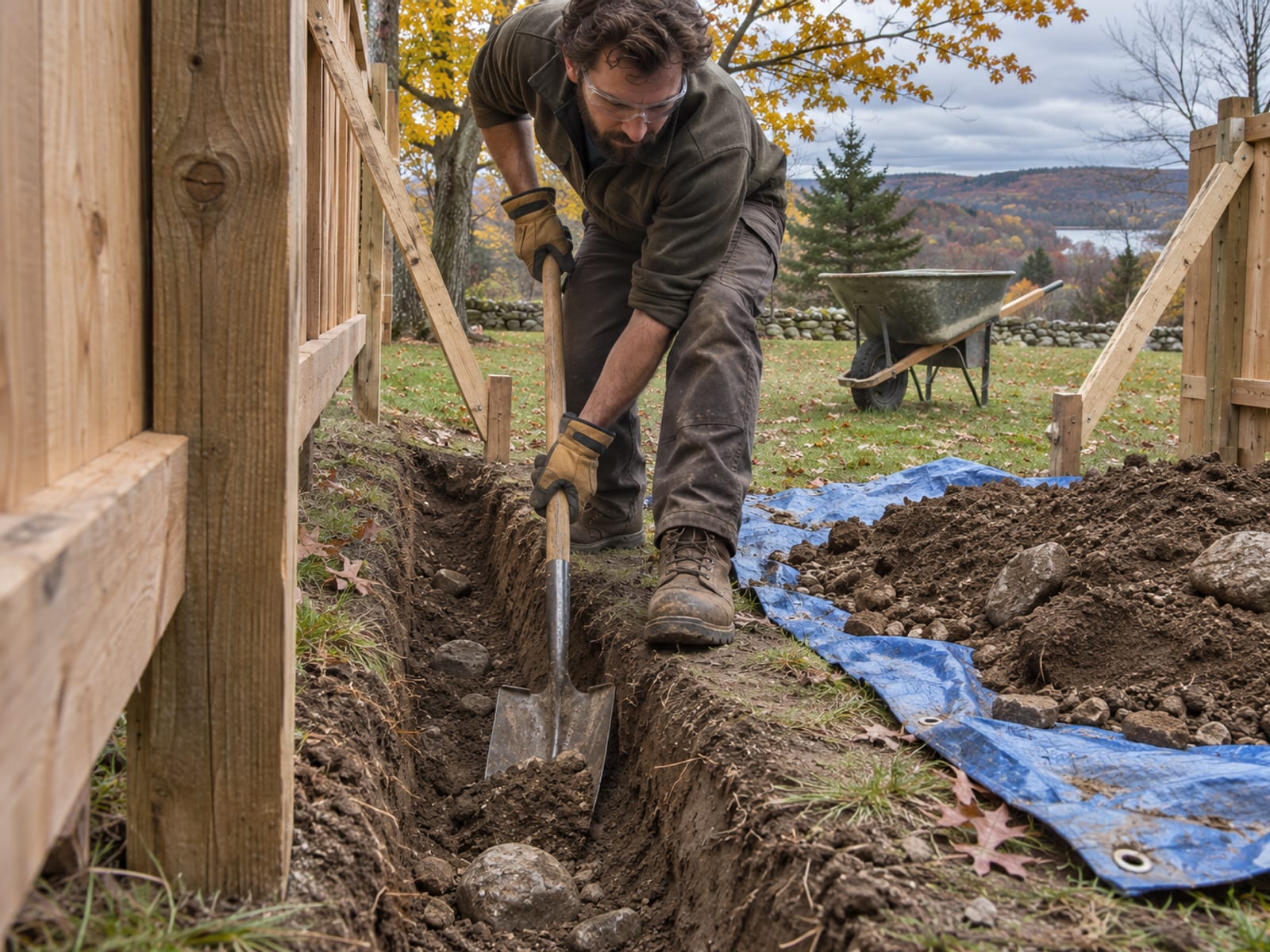
A concrete spur is the other common repair. B&Q's guidance describes supporting the fence, digging roughly 45 to 60 cm (about 18 to 24 inches) beside the post, cutting away the rotten wood, bolting the spur to the sound part of the post and setting the spur in concrete. DIY Doctor gives a similar method and adds that a post rotted through may have to be replaced.
Both methods have limits that the makers' own instructions imply. Neither removes rot, and neither helps a post that has failed above the ground. B&Q says that if most of the underground part of the post is rotten or the post has snapped, replace the whole post. A Canadian repair contractor, Lean On Me, documents menders and spikes failing where the original post was badly rotted, where concrete left no room for the plate, or where a shallow repair met freeze and thaw. Hudson Valley winters make that last case worth planning around.
If your post is steel or you are weighing steel for the replacement, steel versus wood fence posts covers that choice.
Replacing one post without taking the fence down
A single post can come out of a standing fence. The order matters more than the muscle.
Brace the neighboring sections first so the panels and rails do not carry the damaged post's load. On slotted panels, lift or slide the panels clear of the post. On rails or pickets fastened directly to the post, remove the screws or cut the accessible nails so the sections can move without splitting sound boards. Then dig around the post and its footing and clear soil, roots and debris from the full perimeter.
The old concrete is the slow part. B&Q suggests cutting a notch in the old post above grade and levering it out with a demolition bar. Concrete left in the hole gets broken up with a cold chisel and hammer or an electric breaker, and a post puller helps on a larger footing. Look in the empty hole for voids, standing water and signs that the neighboring posts are moving too.
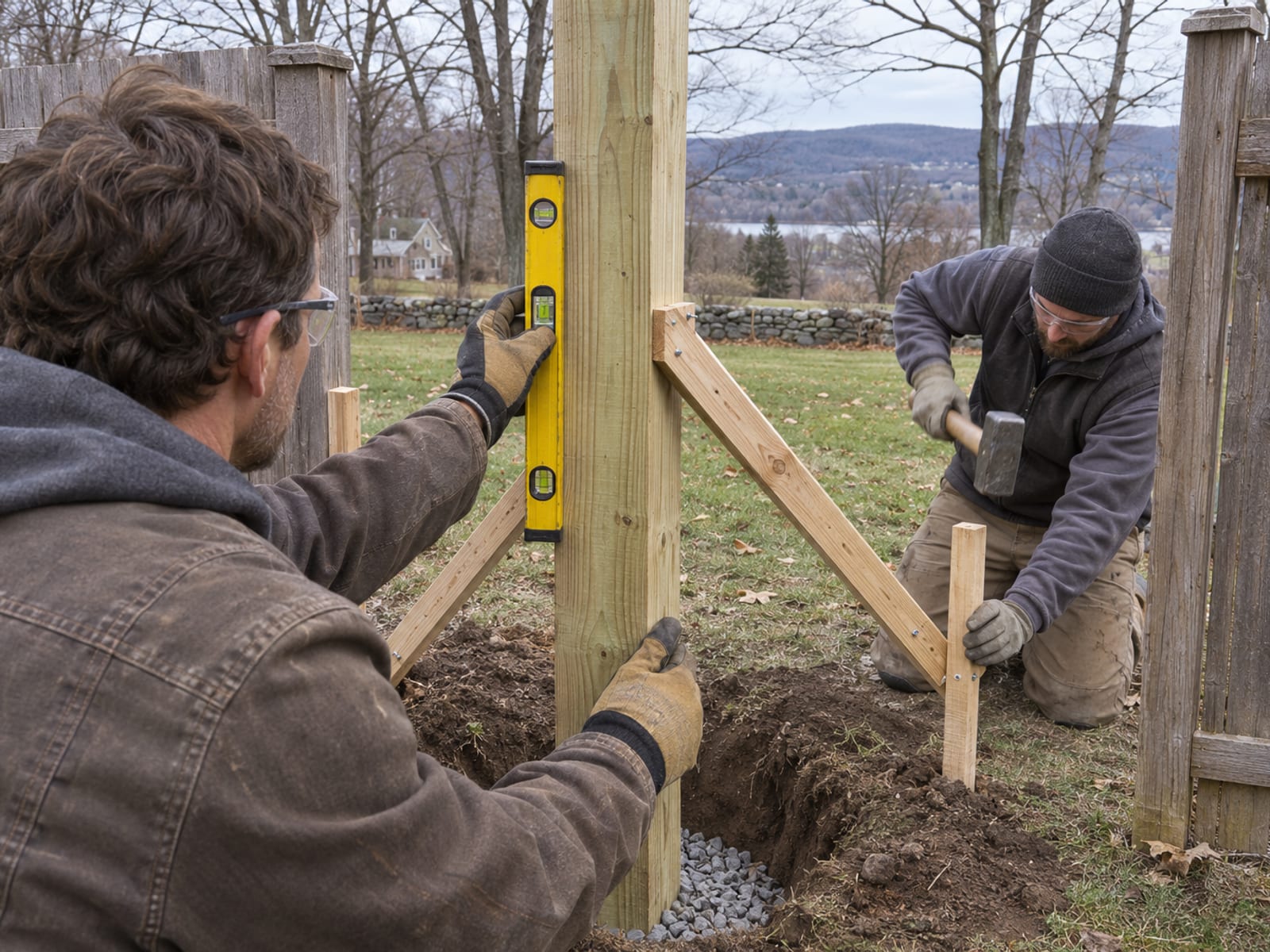
Match the new post to the original size and set it in the original location so panel spacing stays right. Use a post treated for ground contact. Cornell's detail puts tamped gravel under the post, and HUD describes an 8 to 12 inch hole with gravel at the base and concrete placed and tamped in lifts, with the top of the concrete shaped to shed water away from the wood. Brace the post in two directions, check that it is plumb, and let the footing cure before you load it. Then reattach the panels, replace any damaged fasteners and check the whole run again.
What a post repair costs
Price depends on scope, and a reset, a replacement, a gate post and a full section are different jobs. These are figures from published documents, each with its region and scope. None is a quote for your fence.
Published fence post figures, by source and scope
Region and date: ---
Figure: ---
What it covers: ---
Tap a row to open it.
Read the three together and the lesson is how much the site moves the number. The Northeast cedar addendum shows rock and old concrete turning a 10 to 30 minute dig into an hourly charge. The Rye Brook estimate is a single line item that cannot be divided into a per-post price. The Monroe County bid packet is commercial chain link, not a home wood fence, but it shows a per-post figure more than doubling the engineer's estimate once excavation and site conditions are priced.
For your own estimate, ask for the line items to be separate: the post, the concrete, removal of the old footing, reattachment of rails and pickets, disposal, and any rock or access charges. Whole-fence pricing is in what a fence costs in the Hudson Valley.
When one post means more are coming
One leaning post does not mean the whole fence is done. Several signs, though, point to a fence line that needs every post checked.
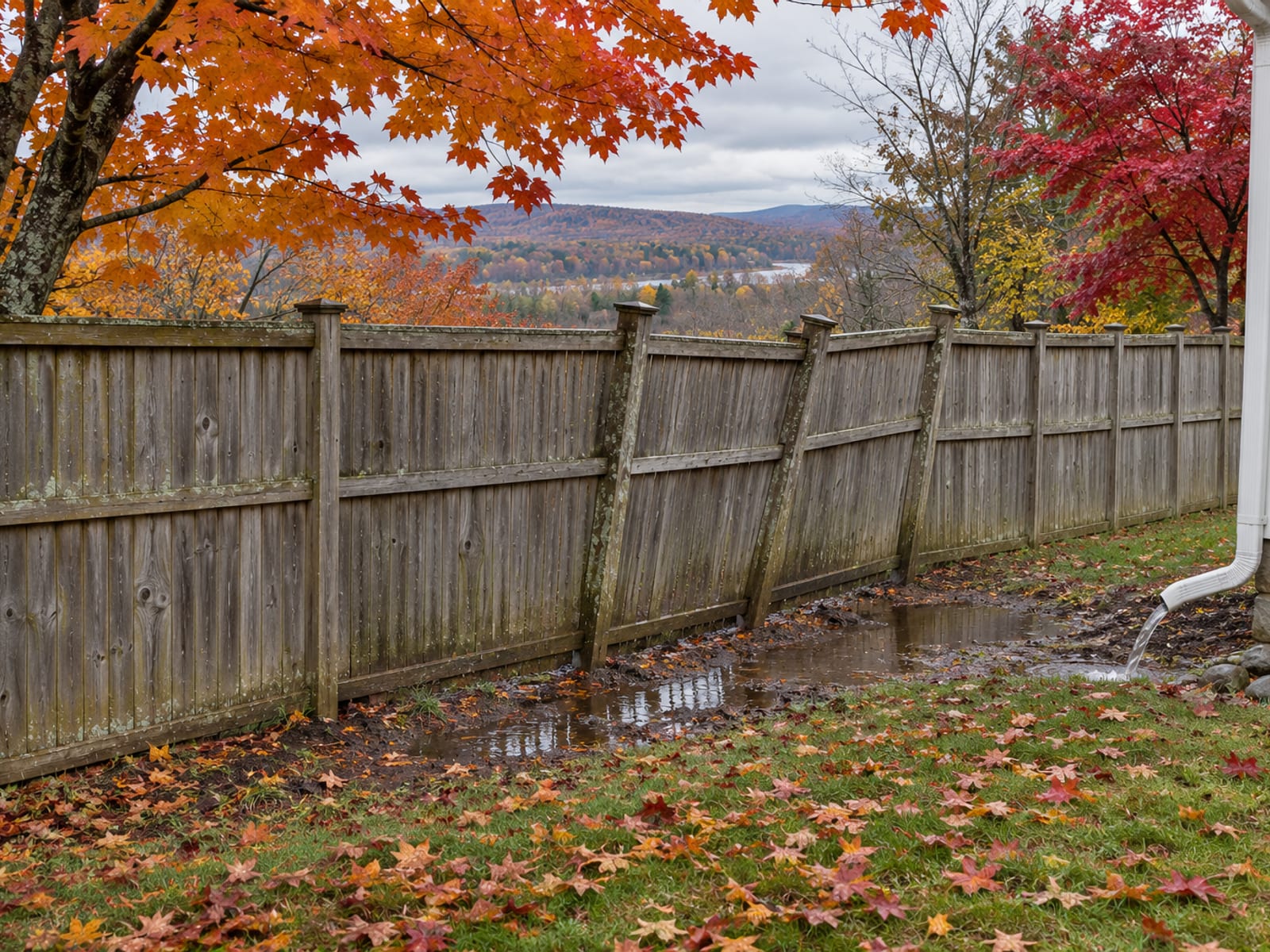
Look for several posts leaning the same direction or moving when pushed, and several soft or hollow at the ground line. Watch for a line that rises and falls after winter, rails pulling away from posts, popped fasteners, sagging panels, and a gate that drags or will not latch. Corner, end and gate posts carry more load than line posts, so movement there matters most. Soil that stays wet around the bases, or drainage that runs toward the fence, will keep causing the same failure.
HUD says that if inspection turns up many rotted posts, replacing the entire fence may be warranted. First Fence's maintenance guidance recommends checking every post for rot, decay, cracks, splits, insect damage, leaning and looseness, with extra attention to end and gate posts after bad weather. The same fence repaired again and again is also a reason to look at the whole line, and fence repair or replace in the Hudson Valley lays out how to weigh it.
Frequently Asked Questions
Can I straighten a leaning fence post by pushing it back and adding a brace?
Only if the wood below grade is sound and the footing has just shifted. Dig down one side, check the wood, and reset or reinforce the post. A brace on a rotted post props up a failure and does not repair it.
Will an E-Z Mender fix a rotted post?
Simpson's instructions describe it as a way to reinforce an existing post, driven in beside the post and fastened to it. The fasteners need sound wood to hold, so a post that is soft or rotted through is not a good candidate. Have the remaining wood checked before you buy one.
Do I have to remove the old concrete to replace a post?
Usually, yes. The new post goes in the same location so the panels and rails line up, and the old footing is in that spot. B&Q's method is to notch the old post and lever it out, then break up any concrete left in the hole.
Why did only one post fail?
A single failure after a storm often points to rot, a shallow footing or loose soil at that post that was there before the storm. Check the posts on both sides at the ground line before you assume it was a one-off.
Do I need to check anything before digging?
Yes. Underground lines can run along a fence line, so call 811 before you dig, and check your town's fence rules if the new post changes the fence's position or height. Fence repair in Brewster, NY covers permits and rocky ground in Putnam County.
Check yourself
1. Where does untreated wood fence post rot usually begin?
2. When is a steel mender or concrete spur a reasonable repair?
3. What does Cornell's wood post fence detail show under the post?
4. Which sign suggests the whole fence line needs a check, not one post?
5. What should an estimate for a post replacement list separately?
A leaning post is a question about what is happening below the ground line. Sound wood with a shifted footing can be reset or reinforced, while soft or snapped wood means a new post, and several posts failing together means a look at the whole run.
Portillo Fences and Gates repairs and replaces fence posts for homeowners in Putnam, Westchester, Dutchess, Orange, Ulster and Rockland Counties. See fence repair and wood fencing, then use the contact page or call (845) 282-3336 and we will look at the post with you.