

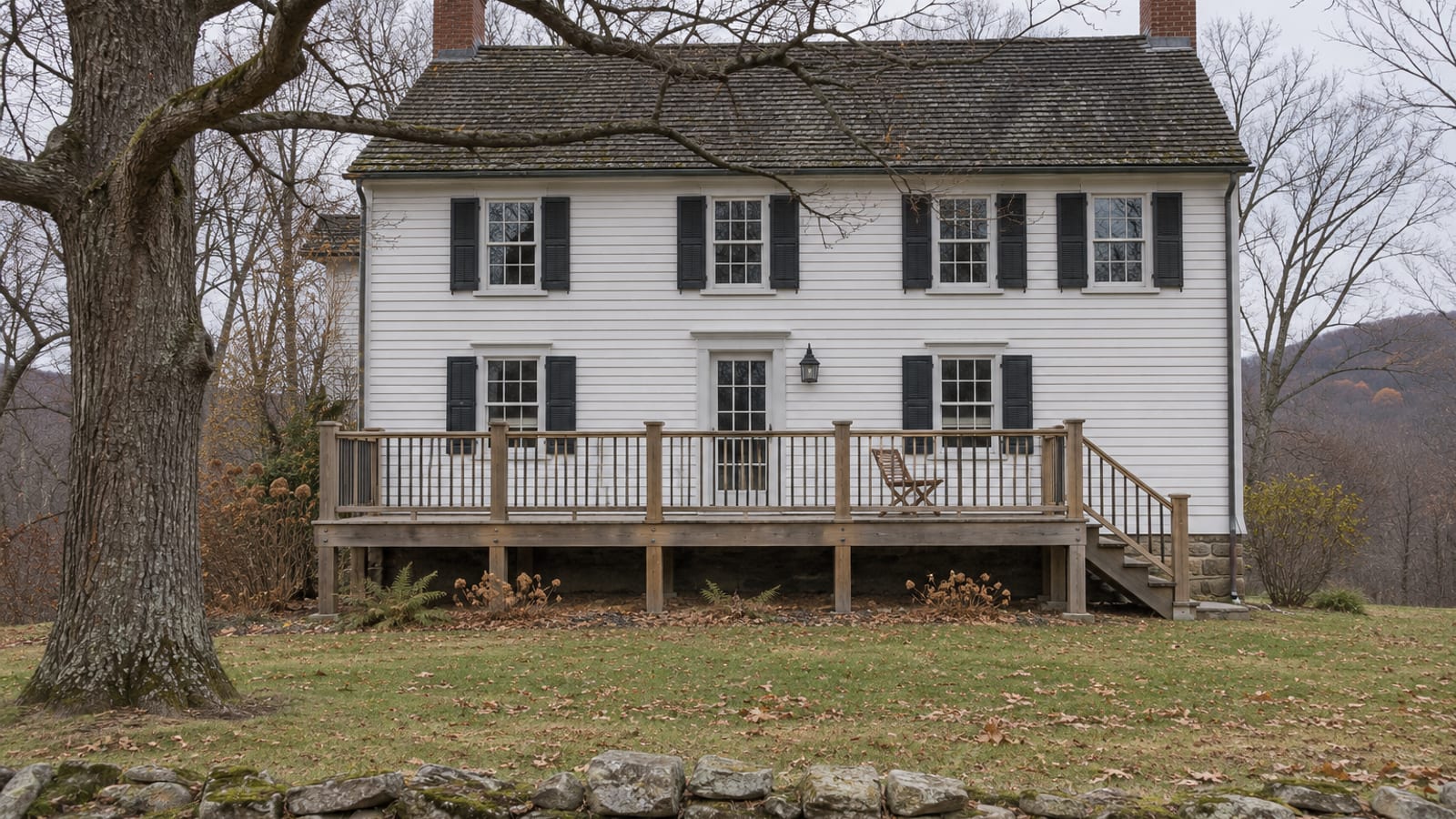
October 14, 2026
- deck railing
- railing materials
- railing cost
Pressure-treated wood is the cheapest deck railing you can buy, at $40 to $90 per linear foot installed in Connecticut, according to Area Renovation CT. Glass sits at the other end, at $180 to $350 or more for the same foot. Composite, vinyl, aluminum and powder-coated steel fall between them.
If you are building or redoing a deck in Putnam, Westchester, Dutchess, Orange, Ulster or Rockland County, the price on the quote is only part of the choice. Each material also asks for something different over the next 15 to 30 years: sealing, washing, or a look at the coating after a salty winter.
Below, each of the six materials is set side by side on installed cost, the warranty the manufacturer states, the upkeep it needs and how it handles a Hudson Valley winter. Height and spacing rules are covered in our guide to deck and porch guard heights.
Key Takeaways
Cheapest now
Pressure-treated wood has the lowest installed price in both the Connecticut and New York ranges, and it asks for the most sealing and repair.
Warranties differ
Composite warranties run 25 years, vinyl and aluminum carry limited lifetime terms on named systems, and steel carries at least 15 years on Fortress systems.
Glass costs most
Glass starts at $180 per linear foot in the Connecticut range and needs regular cleaning and engineered hardware.
Regional prices
Quote prices per source and region, because a Connecticut guide and a New York guide give different ranges for the same material.
Winter matters
Freeze and thaw, road salt and drifting snow affect every material, so anchoring and drainage matter as much as the material itself.
Tested systems
A railing passes inspection as a named, tested assembly, so ask for the evaluation report for the exact system you are buying.
What each material costs per linear foot
Published price ranges differ by source and by state, so the table keeps them apart instead of blending them. The Connecticut figures come from Area Renovation CT and the New York figures from Local Going Rate's New York deck guide, both read in November 2026.
Installed deck railing cost per linear foot, by source
Connecticut (Area Renovation CT): ---
New York (Local Going Rate): ---
Tap a row to open it.
Vinyl and powder-coated steel are not priced separately in either of those guides. For glass, Danbury Renovation, a Connecticut contractor, quotes $150 to $600 per linear foot installed, and the spread depends on framed versus frameless construction, glass thickness, access and anchorage.
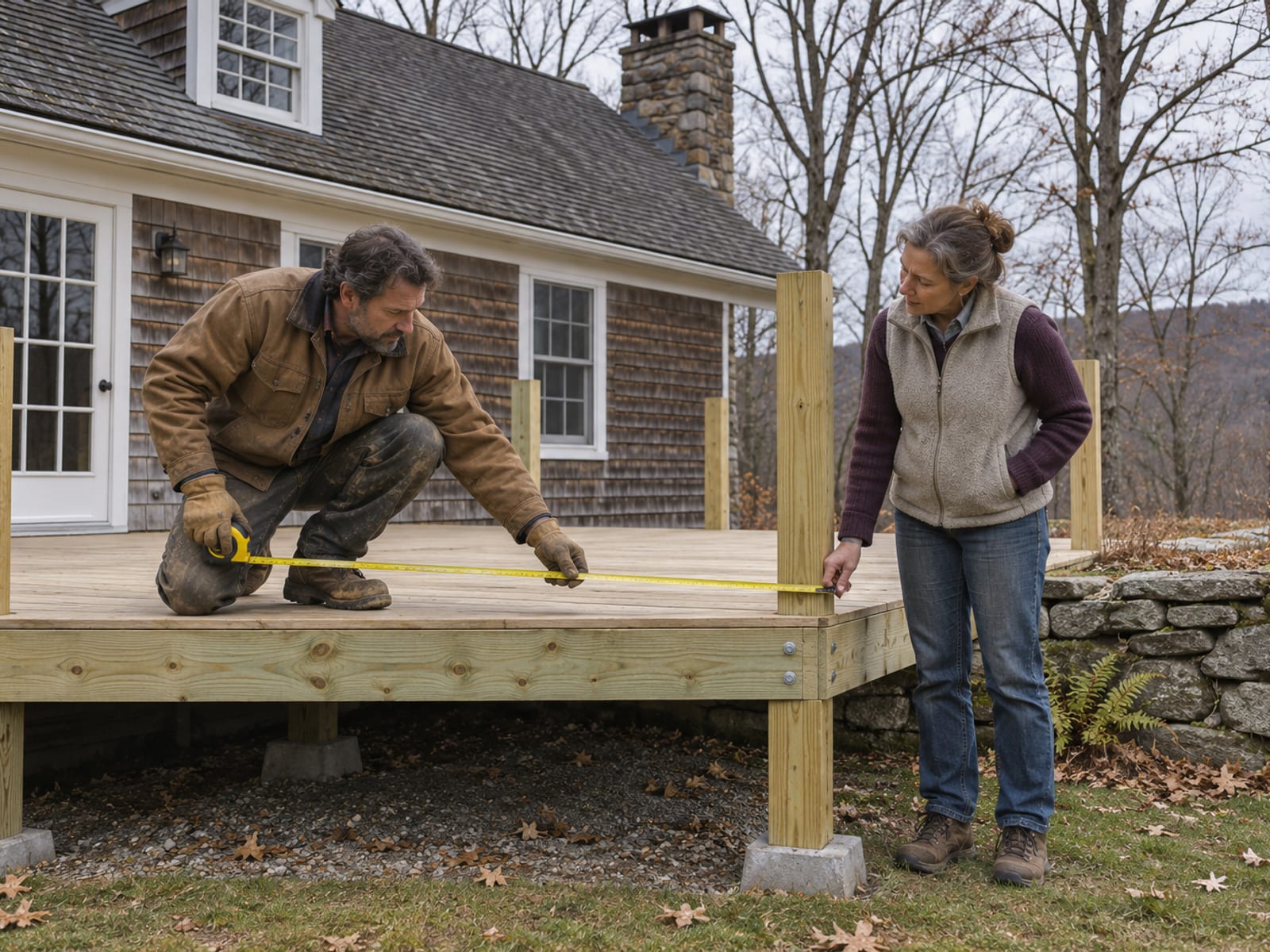
These are planning figures, not a Portillo quote. Demolition of the old railing, stair runs, post replacement, repairs to the deck frame, difficult access and custom fabrication all move the installed price, so a material-specific quote that names the system, infill, post spacing and finish is the only number you can compare.
Wood and cedar: the lowest price, the most upkeep
Wood is where most budgets start. In both regional ranges above, pressure-treated lumber has the lowest entry price. The trade is time: the CAA-Quebec homeowner's handbook states an average life of 15 years or more for pressure-treated lumber on decks and railings, and recommends a protective sealant every two or three years after the wood has dried.
Cedar costs more, at $60 to $130 per foot in the Connecticut range. The same handbook puts cedar over a pressure-treated structure at 20 to 30 years and recommends an anti-UV sealant to slow fading. A cedar railing warranty has to come from the specific supplier, so ask for it in writing.
A middle path is a wood rail with metal balusters. A Maryland contractor guide from PRG, useful as a Northeast comparison but not a Hudson Valley quote, lists $30 to $55 per linear foot for pressure-treated wood with wood balusters and $50 to $80 with aluminum balusters. You pay more up front, and you have fewer wood parts to coat and replace.
Composite and vinyl: less coating, with rules of their own
Composite railing costs more than basic wood in the Connecticut range, $80 to $180 per foot, and the payoff is less recurring coating work. Trex's residential warranty covers Transcend, Select and Enhance railing and Trex Signature aluminum railing for 25 years, and TimberTech's rail warranty covers residential rail products for 25 years, prorated. Trex recommends occasional washing with warm, soapy water, so composite is low-maintenance, not maintenance-free.
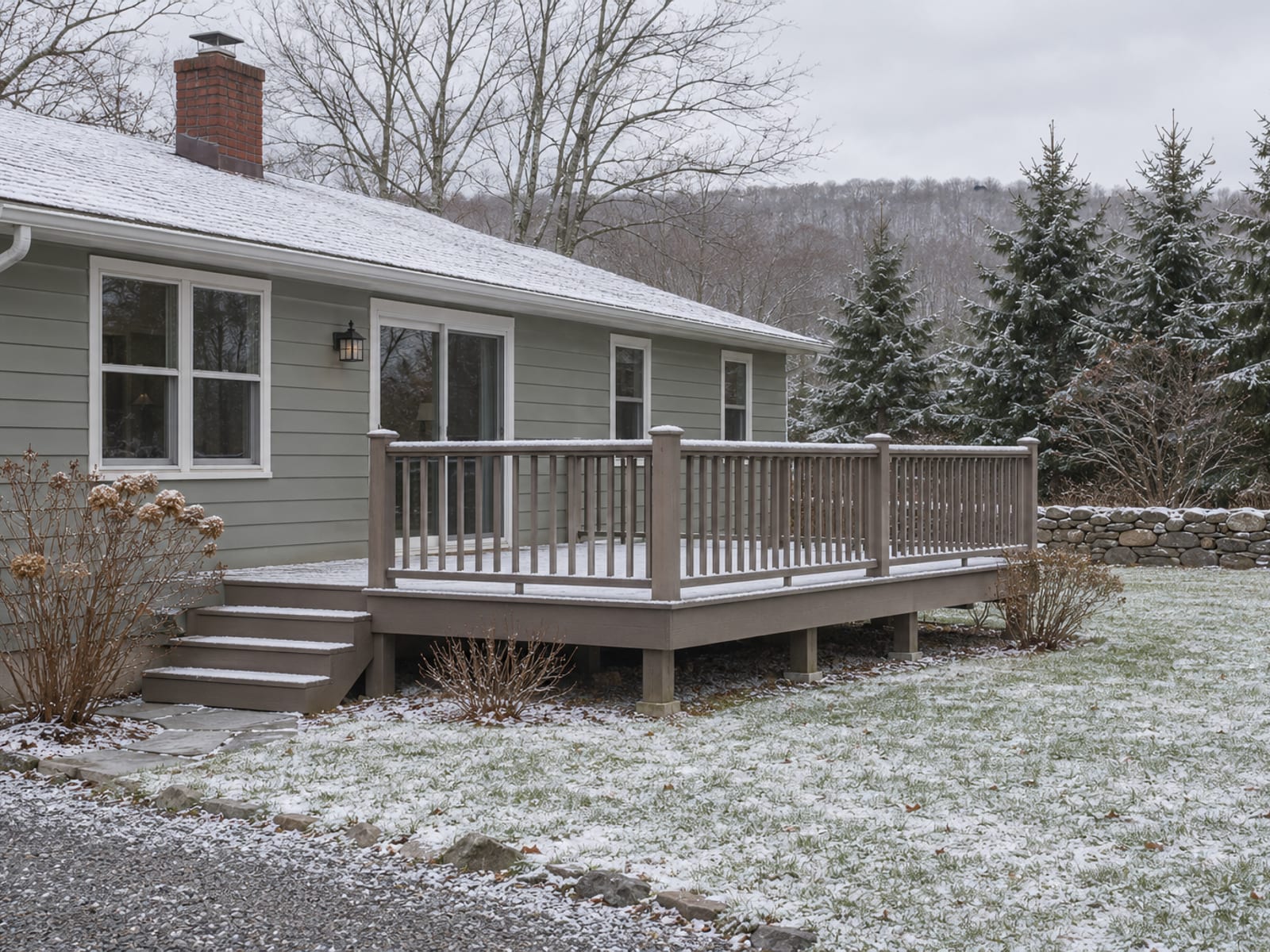
Vinyl kits are the other budget-minded choice. Color Guard and Envision's Fairway line both carry limited lifetime warranties against defects, and Envision's rails use aluminum reinforcement. Cleaning is water and a mild cleaner. The trade-offs are a more uniform look and thermal movement: PVC expands and contracts with temperature, so the kit's spacing, reinforcement and fastener instructions have to be followed exactly.
Aluminum, steel and glass
Aluminum costs more than basic wood and avoids rot. Fortress states that its residential aluminum railing has a limited lifetime warranty, and its powder coating is designed to resist humidity, cold and moisture. Duradek's Durarail system carries a 20-year structural warranty and a 10-year residential powder-coat warranty. Routine care is cleaning and a look over the finish. In the New York range, aluminum runs $48 to $125 per foot.
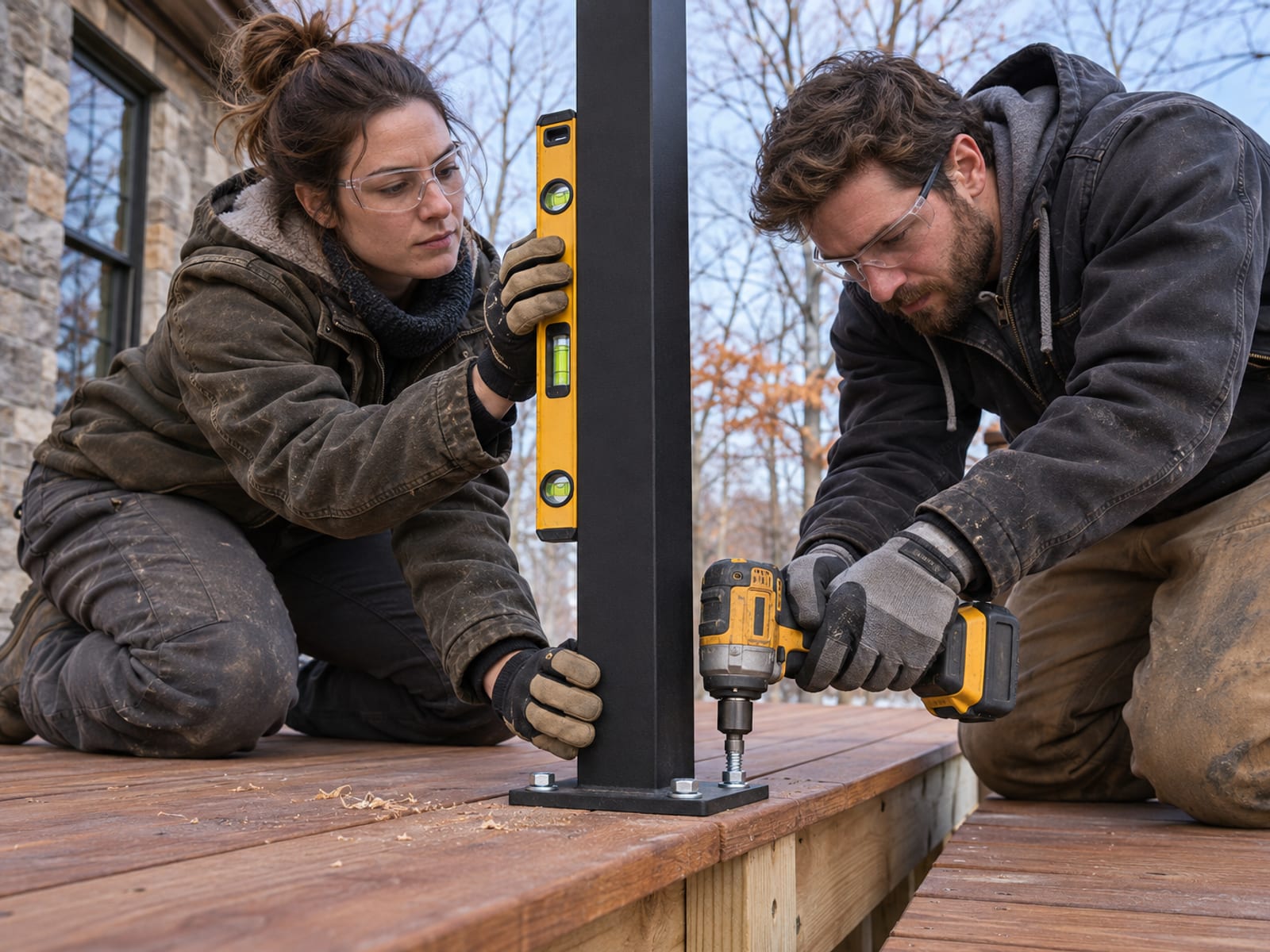
Powder-coated steel gives you a heavier, custom look and high strength. Fortress states a warranty of at least 15 years on its residential steel systems, which use pre-galvanized steel, zinc phosphate, e-coat and powder coating against rust. The care is the same: clean it, and check for chips, rust and loose hardware. Our own steel railing work is custom fabricated and installed, which is the route to take when a stock kit does not fit your stairs.
Glass is the premium choice. It keeps the view, and it costs the most in both the Connecticut range and the Danbury quote. Fortress states a limited lifetime warranty on its residential glass systems, and Duradek's component glass system carries the same 20-year structural and 10-year powder-coat terms as its aluminum rail. Viewrail describes glass systems as engineered assemblies of panels, posts, hardware and anchors, and there is no universal service-life figure, because panel type, hardware, sealants, exposure and impact risk all affect when parts are replaced. Cable railing sits near glass on price, at $105 to $230 per foot in the New York range, and has its own guide.
Stated warranty and upkeep by material
Stated warranty or life: ---
Upkeep: ---
Tap a row to open it.
A warranty is not a guaranteed service life. It applies to a named product, installed as instructed, and it has exclusions. Ask for the expected life of the exact system in your quote.
How each material handles a Hudson Valley winter
Wet wood absorbs and releases moisture through freeze and thaw cycles, which can cause checking, splitting, warping and loosened fasteners. That is why the sealing schedule above matters more here than in a dry climate. Cedar and unsealed wood also fade in the sun.
Composite and vinyl move with temperature, and their warranties exclude failures from improper installation or structural movement. TimberTech's care guidance warns against metal-edged shovels and abrasive ice-melt products, while Trex allows calcium chloride for ice and snow, followed by a rinse when practical.
On aluminum and steel, the risks are chipped coating, trapped water and winter salt. Aluminum does not rust like carbon steel, but damage to the finish, contact between different metals, de-icing chemicals and poor drainage can still cause deterioration. A small chip touched up early costs far less than a rusting post later.
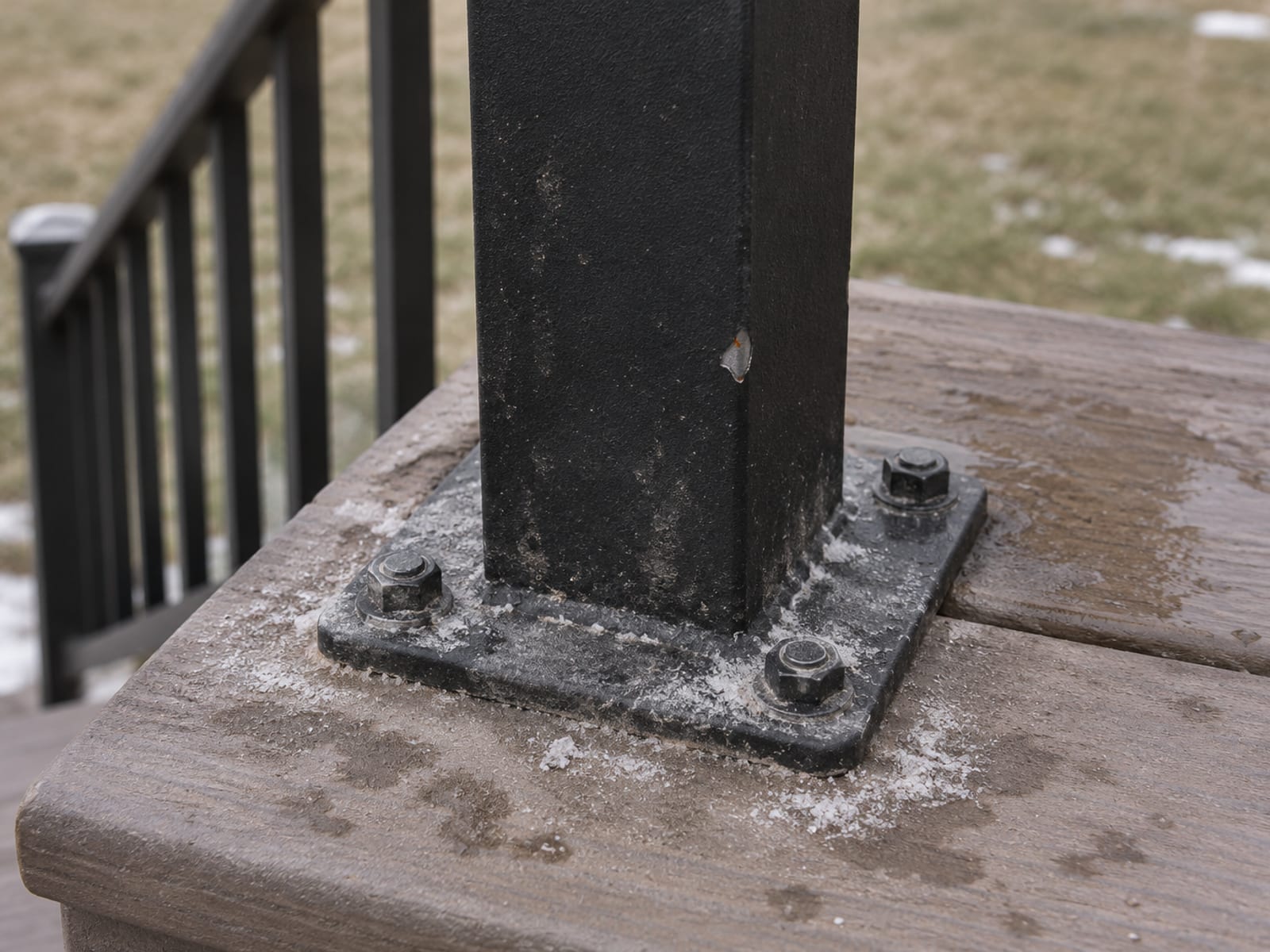
Snow load is where homeowners get a wrong idea. Fortress's published Pure View test report states that railing systems are not subject to long-term sustained loads such as snow loads in that test, so a guard-load test is not a snow-storage rating. If drifts pile against your railing, confirm the design with the manufacturer and your building official, using the complete assembly and its anchorage.
Tested systems and what an inspector checks
A material alone is not an approved guard. An evaluation report or test result applies to a named assembly, meaning the rail profiles, posts, brackets, fasteners, spans, infill and the connections to the structure. Railing types that commonly carry reports include composite and PVC guardrail kits, aluminum and steel systems, glass panel systems and engineered cable systems.
Some real examples show what that looks like. ICC-ES report ESR-5570 covers Gallagher's Longevity Railing 1000 through 4000 Series for exterior deck guardrail use. Intertek CCRR-0132 covers Trex Transcend, Select and Enhance guardrails, tested to ICC-ES AC174 and ASTM D7032, and CCRR-0202 covers Trex Signature railing, including glass-infill testing. ICC-ES lists AC174 as the acceptance criteria for guardrail systems.
This matters on inspection day because the report names the exact tested configuration. The inspector can compare your installed post spacing, fasteners, brackets and anchorage with the report and the installation instructions, and a general claim on a product label does not replace that report. Reports also commonly exclude the deck framing itself, so the railing report does not prove that the deck or its connections are adequate.
What the cheapest options save now and cost later
Pressure-treated wood with metal balusters saves the most at the start. The cost shows up as sealing every two or three years, plus board, fastener and baluster repairs as the wood moves. Vinyl kits keep the recurring work to washing, but they depend on correct reinforcement and spacing, and the look is more uniform than wood.
Composite and aluminum cost more on day one and take away most of the coating work. Steel and glass add a custom or open-view look, with a finish or glass hardware to keep up. If you plan to stay in the house for 15 years or more, compare the sealant and repair cost of wood against the higher up-front price of a system with a 25-year or lifetime warranty. For the porch version of this choice, see our comparison of porch railings in vinyl, aluminum and steel, and for local permit and price detail, railings in Brewster, NY.
Frequently Asked Questions
What is the cheapest deck railing?
Pressure-treated wood has the lowest installed price in both ranges here: $40 to $90 per linear foot in Connecticut and $27 to $63 in New York. Wood rails with aluminum balusters cost more than wood with wood balusters but reduce the wood parts that need coating.
How long does a composite or vinyl railing last?
Trex covers its railing for 25 years, and TimberTech covers residential rail products for 25 years, prorated. Color Guard and Envision vinyl carry limited lifetime warranties against defects. A warranty is coverage for a named product, not a guaranteed lifespan.
Does aluminum or steel railing rust in winter?
Aluminum does not rust like carbon steel, and powder-coated steel uses galvanizing, e-coat and powder coating against rust. Chipped coating, trapped water and road salt can still cause damage, so clean the railing and touch up chips early.
Is glass railing worth the extra cost?
Glass costs the most, from $180 per linear foot in the Connecticut range, and the Danbury Renovation range is $150 to $600. It keeps the view and needs regular cleaning. It also depends on engineered panels, hardware and anchors, so buy a complete tested system.
Can any railing be installed if the material is rated?
No. An evaluation report applies to a named assembly with specific posts, spans and connections. Your inspector compares the installed system with that report, so keep the report and installation instructions for your permit.
Check yourself
1. Which material has the lowest installed price in both the Connecticut and New York ranges?
2. How long is the Trex residential railing warranty?
3. What does an ICC-ES or Intertek evaluation report apply to?
4. What does CAA-Quebec recommend for pressure-treated wood after it dries?
5. Does a guard-load test tell you a railing is rated for snow storage?
The best railing is the one whose price, upkeep and tested system match how long you plan to be in the house. Wood saves the most at the start and asks the most later, while composite, vinyl, aluminum, steel and glass trade a higher first price for less recurring work and, in several cases, a longer warranty.
Portillo Fences and Gates installs railings for decks and porches in Putnam, Westchester, Dutchess, Orange, Ulster and Rockland counties. See our railing installation and custom steel railings pages, then use our contact page for a quote on your deck, or call (845) 282-3336.